enchanted_elixir

𝕸𝖊𝖗𝖈𝖊𝖓𝖆𝖗𝖞 𝕮𝖔𝖗𝖕 • 𝟐𝟎𝟐𝟐🥉• Inactive
Contributor
- Joined
- Apr 15, 2022
- Posts
- 24,663
- Reputation
- 44,124
NOOTROPICS
Biology • Pharmacology • Cognitive Enhancement • Practical Implementation
Biology • Pharmacology • Cognitive Enhancement • Practical Implementation
Preface
Ah, nootropics!
Few subjects sit at the intersection of as many interesting things: neuroscience, pharmacology, metabolism, psychology, learning, self-experimentation, and the ancient human desire to become more capable than we presently are. The word itself has acquired an almost magical aura. It evokes memory pills, limitless focus, genius in a capsule, and obscure compounds discussed in laboratories and internet forums. Yet behind the mythology is a real and difficult field: the attempt to understand the machinery of cognition well enough to alter it deliberately.
That is the purpose of this masterclass.
This guide is intended to explain what nootropics are, how the idea of nootropics came about, and how the modern field expanded from a narrow pharmacological category into a much larger landscape of nutrients, drugs, peptides, adaptogens, neurotechnologies, and behavioral interventions. More importantly, it is intended to provide the epistemic foundation required to reason about these interventions: the biology of the nervous system, the pharmacology of receptors and enzymes, the cellular metabolism that supplies cognition with energy, the physiology that constrains performance, and the methods by which a claim becomes warranted—or fails to.
The compounds are not intelligible without the system.
A list of substances can tell you what exists. It cannot tell you what any of them mean. To understand a cognitive intervention, you must understand the substrate into which it is introduced: the neurons, glia, networks, neurotransmitters, mitochondria, blood flow, endocrine signals, immune signals, sleep architecture, cognitive processes, and environmental conditions that jointly produce a cognitive state. This is why the book begins with foundations before it arrives at compounds.
What This Book Means by Nootropic
The original meaning of nootropic was relatively strict. Corneliu Giurgea used it to describe compounds that enhance learning and memory, protect the brain against disruptive conditions, facilitate communication within the nervous system, and do so with unusually low toxicity and without the conventional effects of psychostimulants or sedatives.
The contemporary meaning is much broader. Today, nootropic may refer to almost anything used with the intention of improving attention, memory, wakefulness, motivation, creativity, emotional regulation, stress resilience, neuroprotection, or long-term cognitive health.
This book uses both meanings, but it does not confuse them.
The narrow definition matters because it preserves a meaningful pharmacological category. The broad definition matters because cognition does not respect consumer categories. Sleep can improve memory more than a memory drug. Creatine can improve cognition under energetic stress without acting like a conventional psychoactive. Correcting iron, vitamin B12, thyroid, glucose, or sleep abnormalities may produce a greater cognitive improvement than adding a receptor-active compound. Exercise, meditation, neurofeedback, light, and environmental design can alter the same nervous system that drugs act upon.
Accordingly, this book treats a nootropic as any intervention deliberately evaluated for its capacity to improve or preserve a cognitive substrate or cognitive function. But every intervention remains classified by what it actually is: nutrient, drug, peptide, adaptogen, psychedelic, device, behavior, or environmental modification. Breadth of scope must not become looseness of language.
Cognitive Enhancement Versus Treatment
An intervention can appear to “enhance cognition” for several very different reasons:
- It can correct a deficiency.
- It can treat a disease or pathological state.
- It can restore function suppressed by sleep loss, stress, malnutrition, inflammation, or metabolic dysfunction.
- It can acutely increase performance while the compound is active.
- It can produce a durable biological adaptation.
- It can push an already healthy function beyond its ordinary baseline.
These are not equivalent achievements.
Moving a deficient system toward normal is generally easier than pushing a healthy system beyond its evolved operating range. Restoring sleep to a sleep-deprived person may produce an enormous improvement; adding a stimulant after sleep is already optimal may produce a smaller gain at a higher biological cost. A treatment effect observed in depression, traumatic brain injury, dementia, or ADHD cannot be assumed to transfer to a healthy person. Likewise, feeling stimulated is not the same as thinking better. Increased confidence, urgency, talkativeness, or willingness to work can be valuable, but none proves an improvement in memory, reasoning, accuracy, or learning.
The relevant question is therefore not merely, “Does this compound work?”
The real questions are:
- What state is the person starting from?
- What limiting factor is being acted upon?
- What biological mechanism is altered?
- What measurable function changes?
- Does the effect persist when the intervention is removed?
- What does the gain cost elsewhere in the system?
Enhancement is always enhancement relative to a baseline, an objective, and an alternative.
Why Mechanisms Matter
Mechanisms are not decorations placed beneath a claim to make it sound scientific. They are causal models. A good mechanistic account tells us what an intervention does: what a compound binds to, what changes after binding, which downstream systems are affected, how concentration and timing alter the response, and where the benefit may become a liability.
Mechanisms allow us to distinguish superficially similar outcomes. Wakefulness produced through adenosine antagonism is not identical to wakefulness produced through orexin signaling, catecholamine release, histamine, or correction of an energetic deficit. Two compounds may both improve attention while imposing radically different costs on sleep, blood pressure, anxiety, tolerance, or dependence. Conversely, compounds acting through different proximal targets may converge on the same downstream bottleneck and become redundant when stacked.
Mechanisms also expose trade-offs.
Biological dials are rarely monotonic. More dopamine is not simply better motivation. More glutamate is not simply better learning. More acetylcholine is not simply better memory. The same lever that produces a benefit at one dose, at a certain time, in one brain region, or under one initial state may produce noise, rigidity, insomnia, anxiety, excitotoxicity, or impaired performance at another dose, brain region, or time. The task is not to maximize a neurotransmitter. It is to place a dynamic system inside its useful operating window.
At the same time, mechanism is not proof. A plausible pathway can explain why an intervention might work; it cannot establish that the expected effect occurs in living humans at an achievable concentration. Mechanism earns a compound the right to be investigated. It does not earn it a conclusion.
This guide therefore applies a mechanism-or-readout gate: an intervention should identify either a defensible substrate mechanism or a measurable signal. Ideally, it should have both.
The Limits of Current Evidence
Nootropics research is an epistemically uneven landscape.
For some interventions, there are decades of human use, controlled trials, known pharmacokinetics, and reasonably characterized risks. For others, there are only animal studies, cell cultures, mechanistic inferences, small clinical trials, patents, anecdotes, or claims repeated until repetition begins to resemble evidence. Many of the most interesting compounds are interesting precisely because the evidence is immature.
Some questions are substantially reducible: we know the target, the dose-response curve, the half-life, the major interactions, and the population in which the effect was measured. Other questions are computationally or empirically irreducible: no amount of abstract reasoning can tell you with certainty how a particular compound will affect a particular person, under a particular sleep state, genetic background, medication profile, and cognitive task.
Make the reducible explicit; trial the irreducible only when it is ethical, reversible, measurable, and sufficiently safe.
The hierarchy of warrant used throughout this book is roughly:
- Replicated human evidence with meaningful cognitive or clinical outcomes.
- Convergent human evidence supported by pharmacology and measurable target engagement.
- Preliminary human evidence.
- Animal evidence with a plausible path to human translation.
- Cellular or mechanistic evidence.
- Structured within-subject observation.
- Anecdote, testimonial, marketing, and unsupported assertion.
Lower layers are not useless. They generate hypotheses. They simply should not be allowed to impersonate higher layers.
Interested sources are input, not authority. A vendor listing, influencer protocol, forum report, patent, or financially interested advocate may direct attention toward a worthwhile compound. None can substitute for independent evidence. Where sources disagree, the disagreement should be preserved rather than hidden.
Safety, Uncertainty, and Individual Variability
The nervous system is not an isolated machine. It is coupled to the cardiovascular, endocrine, immune, hepatic, renal, and metabolic systems. A compound selected for cognition may alter sleep, appetite, blood pressure, mood, clotting, hormones, liver enzymes, seizure threshold, or the metabolism of another drug. Conversely, those physiological systems affect the performance of the nervous system. A stack is not a list; it is an interaction network.
Individual variability enters at every layer:
- Genetics alter receptors, transporters, and metabolic enzymes.
- Disease changes both benefit and risk.
- Medications create interactions and contraindications.
- Sleep, diet, stress, and tolerance change the starting state.
- Product identity and purity determine whether the administered substance is even the intended one.
- Expectation changes subjective experience.
Irreversibility is therefore a hard gate. An intervention that is difficult to reverse, crosses a biological barrier, persistently changes signaling, or carries unknown long-term effects requires a higher evidence threshold regardless of its theoretical upside. Experimental peptides, research chemicals, prescription agents, and gray-market products do not become safer because they are described as nootropics.
The goal is not maximal intervention. It is the smallest set of inputs that reliably produces the desired state at an acceptable cost. An oversized stack is often evidence that the limiting factor has not been identified.
Foundations come first: sleep, exercise, metabolic health, nutrition, stress regulation, environmental structure, and correction of actual deficiencies. These are not boring preliminaries before the “real” cognitive enhancement begins. They are the causally upstream control systems that determine whether downstream interventions have anything stable to amplify—and correcting them can itself be cognitively enhancing.
How to Use This Guide

This guide is organized from substrate to intervention and from intervention to implementation.
Begin with the foundations even if you are primarily interested in a specific compound. Learn enough neuroscience and pharmacology to understand the language of targets, affinity, efficacy, half-life, exposure, tolerance, interactions, and dose-response. Then examine the compound classes by mechanism rather than by reputation.
When evaluating an intervention:
- Define the exact function you want to change.
- Establish a baseline.
- Examine the quality of the evidence, map the mechanism, pharmacokinetics, interactions, and plausible failure modes.
- Assess the ideal dose, ideal timing, administration route, and solubility of the compound.
- Change one variable at a time.
- Set up a trial and measure an outcome that could actually falsify your expectation. Ask: what outcome did this compound produce within the assigned time frame? Compare it with the desired outcome, then examine solubility, administration, dose, timing, diet, and other variables before deciding whether a better-controlled trial is justified.
- Remove what does not earn its place. This matters because an unexamined stack tends to inflate until it contains multiple redundant compounds.
Do not read the compound chapters as a shopping list. Read them as a map of possible control surfaces in the nervous system.
The final purpose of this book is not to tell you what to take. It is to make you difficult to mislead—by marketing, by mechanistic storytelling, by anecdotes, by novelty, and by your own desire for a compound to work. It is to replace the question “What is the best nootropic?” with a better question:
For this organism, in this state, pursuing this function, under these constraints, what is the most upstream, measurable, reversible, and evidence-warranted intervention?
That question is less exciting than a miracle pill.
It is also the beginning of real cognitive engineering.
Part I — Foundations of Nootropics, Neuroscience, and Pharmacology
Chapter 1 — What Is a Nootropic?
Chapter 1 — What Is a Nootropic?
The word nootropic is assembled from the Greek nous (mind) and tropein (to turn or bend), which gives us the literal object: something that turns the mind toward a more capable state. Its original meaning, however, was much narrower than the contemporary one. Corneliu Giurgea did not coin the word as a glamorous synonym for anything psychoactive that makes you feel more productive; he used it to name a special class of compounds that enhance learning and memory, increase the brain’s resistance to disruptive conditions, protect it from injury, facilitate cortical and subcortical communication, and do all of this with unusually low toxicity and without the dominant behavioral effects of conventional psychotropic drugs. The criteria jointly describe an intervention that makes the cognitive system work better while preserving the integrity of the system doing the work. That last clause is the load-bearing one: a compound which purchases four hours of intense output by degrading sleep, producing dependence, or borrowing performance from tomorrow may be useful, but it does not cleanly satisfy the original nootropic ideal.
Contemporary usage expanded because cognition itself ignores the boundary Giurgea drew. A stimulant can improve sustained attention and wakefulness; an anxiolytic can release working memory previously occupied by threat-monitoring; an antidepressant can restore motivation; a psychedelic can transiently increase cognitive flexibility; a nutrient can correct the energetic bottleneck suppressing all of them; and sleep, exercise, meditation, or neurofeedback can alter the same nervous system without being compounds at all. These interventions are not thereby pharmacologically equivalent. They differ in what they optimize (attention, working memory, long-term memory, learning rate, motivation, mental energy, creativity, mood regulation, stress resilience, neuroprotection, or healthy cognitive aging), in how they produce it, and in what they charge elsewhere. This book therefore uses nootropic broadly enough to investigate every intervention deliberately aimed at improving or preserving cognition, but narrowly enough to keep each thing classified by what it actually is: nootropic, stimulant, sedative, antidepressant, anxiolytic, psychedelic, recreational drug, performance-enhancing drug, nutrient, peptide, device, or behavior. A broad map is useful; collapsing every object on the map into one category is not.
The problem of enhancement begins at baseline. Correcting a vitamin deficiency, treating ADHD, restoring function after brain injury, reversing cognitive impairment caused by sleep loss, acutely pushing a healthy system beyond normal performance, and producing a durable improvement that remains after the compound clears may all appear as “better cognition,” but they are causally different achievements. The distinction matters because the lower the starting state, the larger and easier the apparent gain: returning a broken system to normal is not evidence that the same intervention will push an intact system above normal, and feeling stimulated is not evidence that memory, reasoning, accuracy, or learning improved. A real enhancement claim must therefore specify the initial state, the target function, the mechanism, the measurable change, the duration after clearance, and the biological cost. Without those variables, “this nootropic works” is not a conclusion, it is a misguided cope.
Chapter 2 — A Brief History of Nootropics

Humans attempted to alter cognition long before they possessed a word for a neurotransmitter. Ayurveda used Bacopa monnieri and other medhya rasayana herbs in pursuit of memory and intellect; traditional Chinese medicine used ginseng and Ginkgo biloba within broader theories of vitality and circulation; Greco-Roman and Indigenous traditions developed their own plants, tonics, stimulants, and sedatives; coffee and tea eventually made the deliberate pharmacological regulation of wakefulness an ordinary feature of civilization. These traditions were observations first and mechanisms second: people discovered that a plant changed memory, fatigue, mood, or alertness, retained what appeared useful, and explained the effect through the biological language available to them. Modern pharmacology inverted the order. Active compounds were isolated, doses standardized, receptors and neurotransmitter systems discovered, and the effect could finally be decomposed into a causal chain rather than inherited as a whole plant plus a story.
The modern nootropic begins with piracetam. Giurgea synthesized it during the twentieth-century expansion of psychopharmacology and found that it did not fit the existing bins: it was not a conventional stimulant, sedative, or tranquilizer, yet it appeared to influence learning and memory while exhibiting low acute toxicity. A new object required a new class, so nootropic was coined and the criteria in Chapter 1 were built around it. Once the class existed, the search space expanded: additional racetams, cholinergic compounds, monoaminergic agents, adaptogens, nutraceuticals, and neuroprotective compounds were investigated as different means of reaching overlapping cognitive ends. In parallel, prescription medicine developed methylphenidate, amphetamines, modafinil, and acetylcholinesterase inhibitors for defined disorders; healthy people then noticed the obvious adjacent possibility and used some of them off-label. Treatment and enhancement, previously separated in theory, became separated mostly by the state of the person taking the drug.
Beginning in the 2000s, and especially as the 2010s and the current decade as of this writing progressed, the internet turned a specialist field into a distributed experiment. Nootropic communities pooled obscure papers, vendor catalogs, subjective reports, stacks, failures, and occasionally useful protocols; quantified-self culture added sleep data, biomarkers, cognitive tests, and the ambition to personalize the intervention to the organism instead of copying a population average. It also multiplied the noise, because a thousand anecdotes remain anecdotes, and novelty is very easy to mistake for progress. The frontier now includes peptides, neurotrophic and regenerative compounds, precision psychiatry, pharmacogenomics, consumer neurotechnology, brain-computer interfaces, synthetic biology, and AI-guided optimization.
Chapter 3 — Organization and Anatomy of the Nervous System
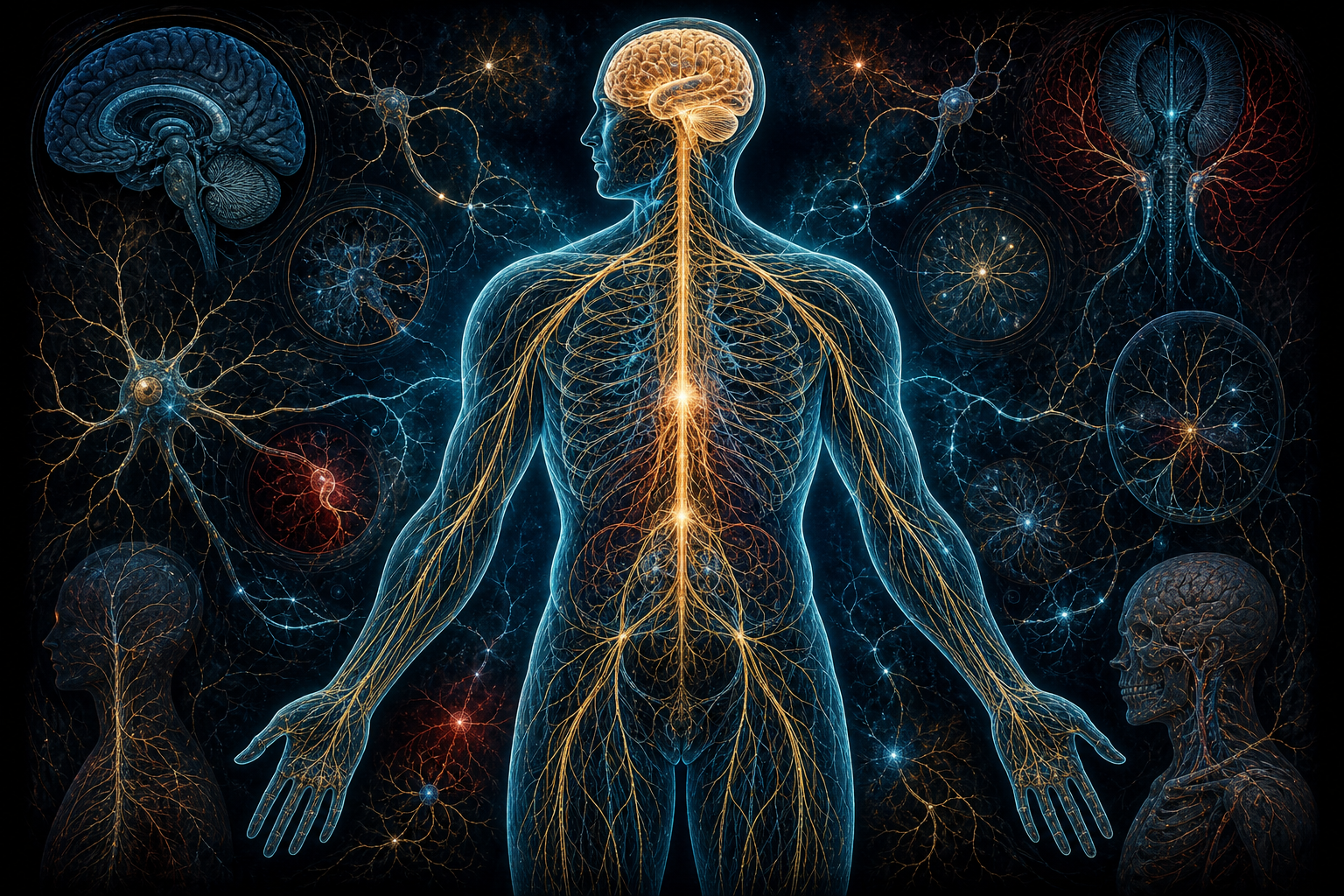
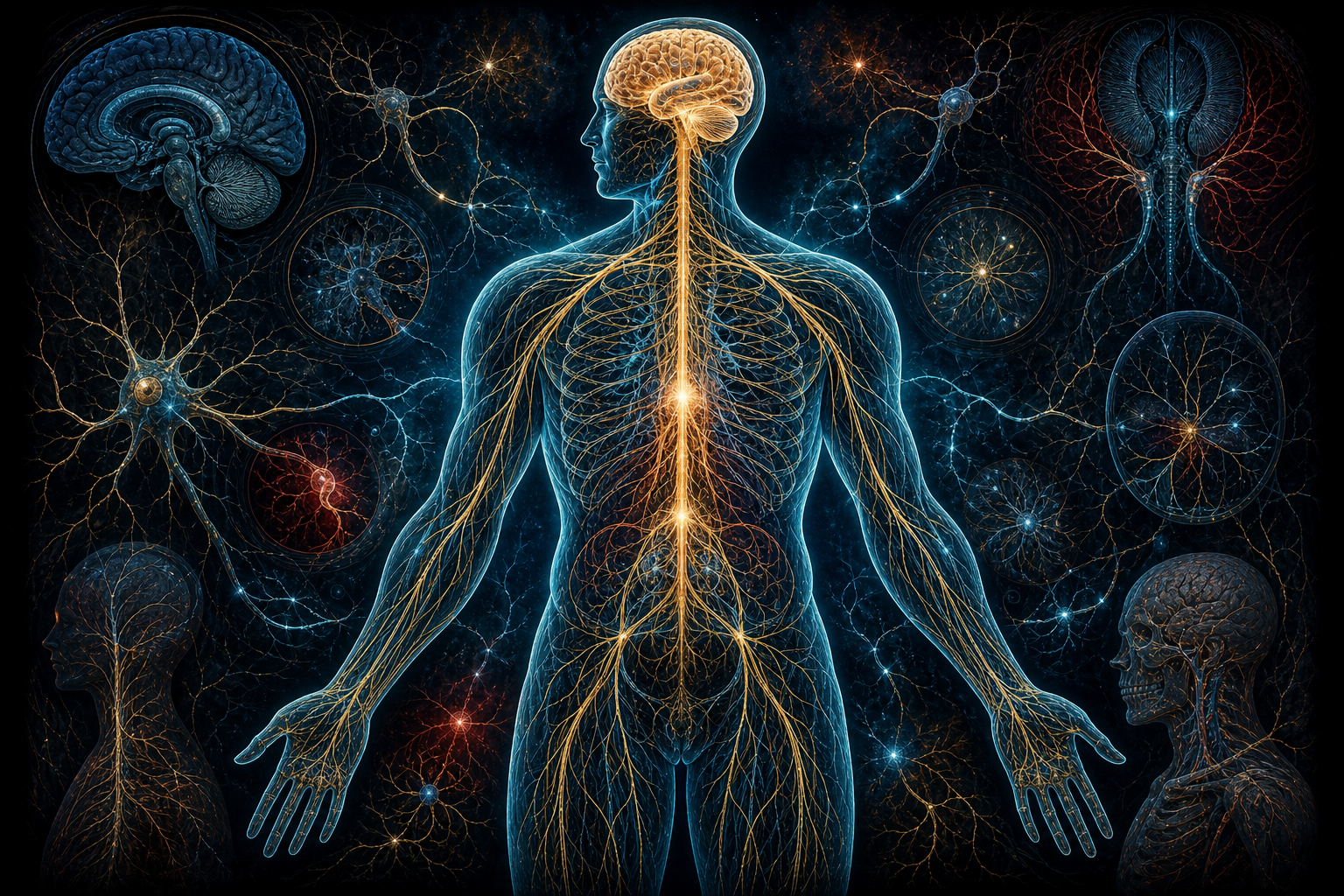
The nervous system is the body’s communication and control network. It detects what is happening outside you and inside you, organizes that information, predicts what may happen next, and sends instructions that change what your body does. Its two largest divisions are easy to locate. The central nervous system (CNS) is the brain and spinal cord: the main computation and integration center. The peripheral nervous system (PNS) is every nerve outside the brain and spinal cord: the wiring that carries sensory information toward the CNS and carries commands back toward the body. If you touch a hot pan, sensory nerves in your hand transmit information toward your spinal cord; the spinal cord can trigger a withdrawal reflex before the information has even finished reaching the brain. The brain then constructs the conscious experience—“that is hot and painful”—and updates what you are likely to do around the pan next time.
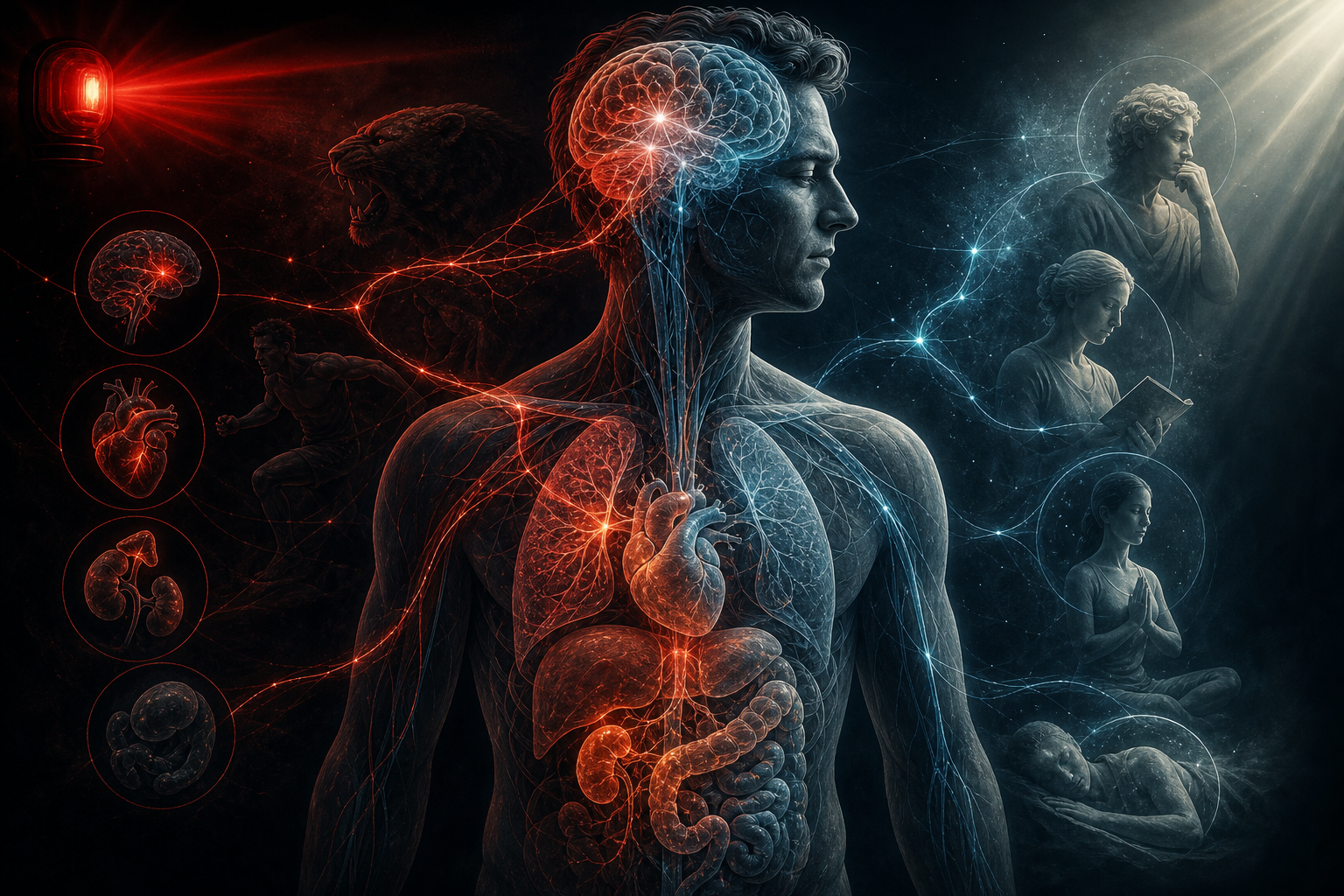
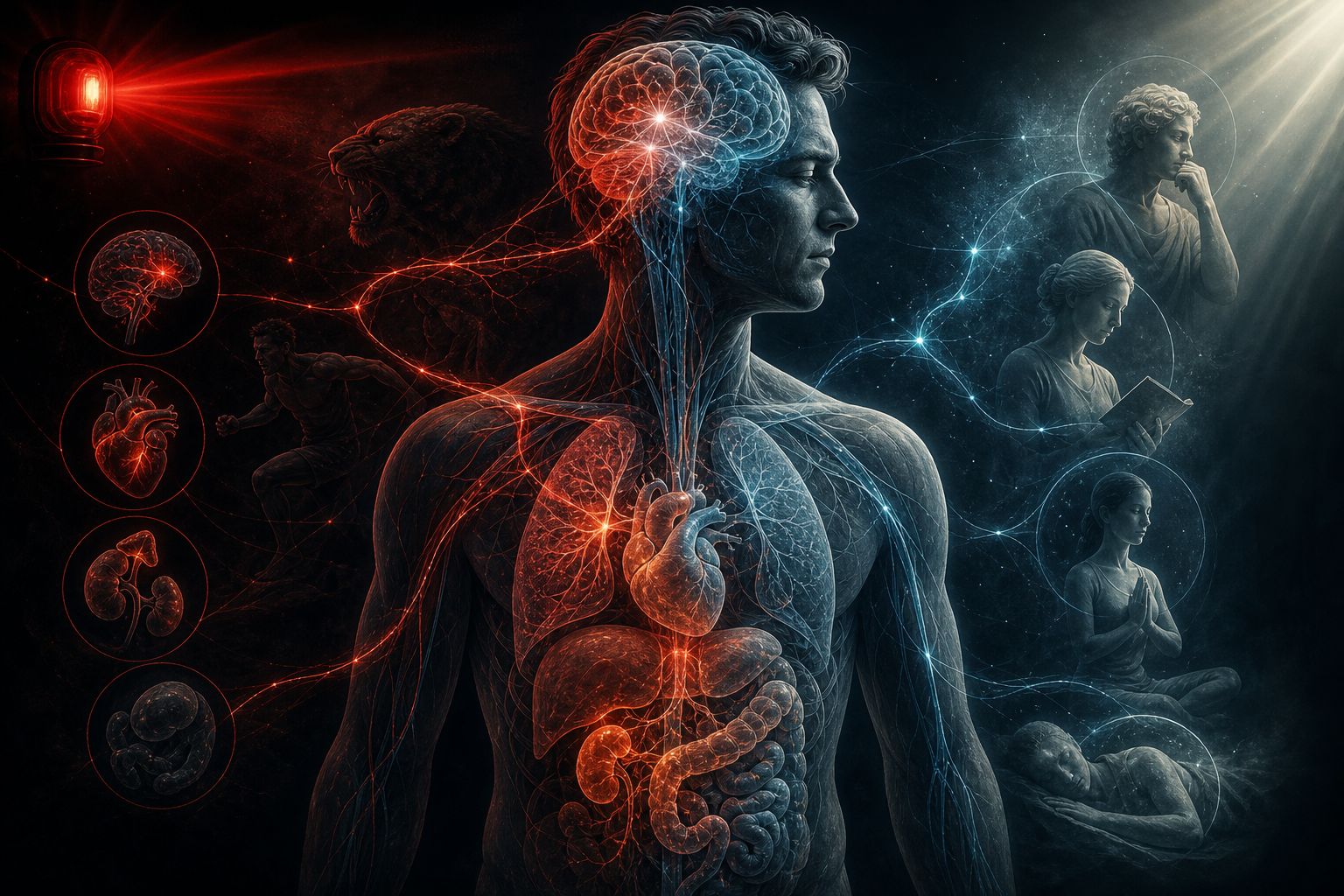
The peripheral system divides according to what it controls. The somatic nervous system carries sensation from the skin, muscles, and joints and controls voluntary skeletal movement, such as deciding to raise your hand or kick a soccer ball. The autonomic nervous system regulates functions that normally run without conscious supervision. Its sympathetic branch mobilizes the body for demand: it raises heart rate, redirects blood flow, dilates the pupils, and makes stored energy available. Its parasympathetic branch supports recovery: it slows the heart, promotes digestion, conserves energy, and helps the body return toward baseline. These are not simply “stress” and “relaxation” buttons; both branches remain active and continuously negotiate control. The enteric nervous system is the large network of neurons built into the digestive tract. It can organize many digestive operations locally, while still exchanging information with the brain through neural, immune, hormonal, and metabolic channels.
The brain is also organized into major structures. The cerebral cortex is the folded outer layer responsible for perception, language, voluntary action, planning, abstraction, and much of conscious thought. The frontal lobe is heavily involved in planning, working memory, inhibition, and voluntary control; the parietal lobe integrates touch, body position, quantity, and spatial relationships; the temporal lobe contributes hearing, language, object recognition, and memory; and the occipital lobe is primarily visual. Beneath the cortex, the basal ganglia help select actions, learn habits, and regulate movement. The thalamus routes and filters much of the information headed toward the cortex. The hypothalamus regulates hunger, thirst, temperature, hormones, circadian timing, and other survival variables. The hippocampus helps form and organize memories of events and places, while the amygdala helps assign emotional and threat-related importance. The cerebellum calibrates movement, timing, error correction, and prediction. The brainstem controls arousal, breathing, heart rate, and other functions whose interruption can end the entire system.
Do not imagine each region as a separate employee with one job. The brain performs most useful tasks through networks, meaning groups of distant regions that become coordinated for a shared operation. The executive-control network becomes important when you deliberately hold a goal in mind and resist distraction. Attention networks select information for deeper processing. The salience network helps determine what matters enough to interrupt you. Memory networks encode and retrieve experience. Sensorimotor networks coordinate sensation with movement. The default-mode network is active during self-generated thought, autobiographical reflection, imagination, and some forms of social reasoning. The regions are the anatomy; the networks are what the anatomy temporarily organizes itself into so it can perform a computation.
Finally, the brain and body are one coupled system. Endocrine signaling means hormones traveling through the blood to change the activity of distant tissues, including the brain. Immune signaling means immune cells and molecules communicating information about injury, infection, and inflammation. Interoception is the brain sensing the body’s internal condition—heartbeat, breathing effort, hunger, nausea, temperature, muscle tension—and converting it into feelings and action tendencies. What you experience as “mental” energy, anxiety, calmness, or motivation can therefore change when sleep, blood glucose, inflammation, hormones, breathing, or cardiovascular state changes. The useful mental model is not a brain sitting above and commanding a separate body. It is one distributed organism whose highest-bandwidth integrator happens to be inside the skull.
Chapter 4 — Neurons, Glia, Myelin, and Neural Communication
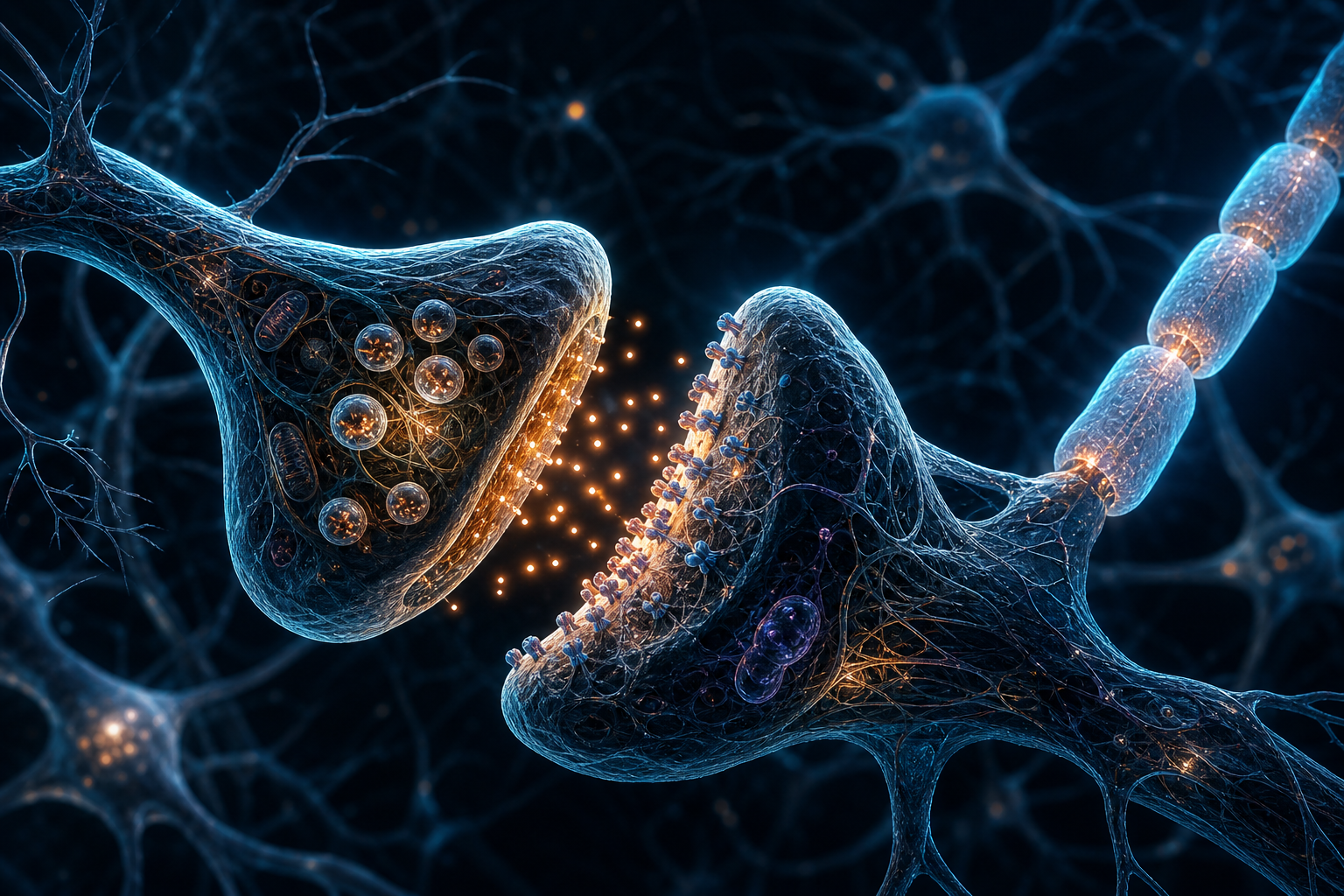
A neuron is a cell specialized to receive, process, and transmit information. The branching dendrites receive signals from other cells. The cell body contains the nucleus and performs much of the cell’s ordinary maintenance. Near the beginning of the axon, the neuron combines its incoming signals and decides whether the total is strong enough to send an electrical impulse. The axon then carries that impulse—sometimes only a fraction of an inch, sometimes from the spinal cord all the way to the foot—to the synaptic terminals, where the neuron communicates with the next cell. A single neuron can receive thousands of inputs, some telling it “fire” and others telling it “do not fire.” What it does is the result of their sum, timing, location, and importance.
The electrical impulse is called an action potential. Neurons keep electrically charged particles called ions—especially sodium, potassium, chloride, and calcium—at different concentrations inside and outside their membranes. This separation creates a resting membrane potential, meaning the cell is electrically prepared to respond even while it is not firing. If incoming signals push the membrane past a threshold, ion channels open in sequence and a wave of electrical change travels down the axon. Depolarization is the rising phase of that wave; repolarization restores the membrane afterward. A brief refractory period prevents the neuron from immediately firing again and stops the impulse from traveling backward. You do not need the voltage of every stage memorized. The important idea is that neurons convert many graded inputs into an all-or-none electrical message that can travel a long distance without fading away.
Myelin is a fatty insulating layer wrapped around many axons. Insulation prevents electrical current from leaking, and gaps in the myelin called nodes of Ranvier let the action potential appear to jump from node to node. This makes the signal dramatically faster and more energy-efficient. Imagine performing a new movement as trying to cross swampy, densely forested Florida in the year 1300, on foot, with no marked path. Every step is slow and requires deliberate correction. As the circuit is practiced, the route becomes better organized and some pathways become more heavily myelinated. Performing the same behavior can eventually feel more like driving a Lamborghini down an empty, perfectly straight I-4: the route is established, the signal travels efficiently, and much less conscious effort is required. The analogy is not literal—myelin is not the whole of skill learning—but it captures why well-practiced neural routes can become fast and automatic.
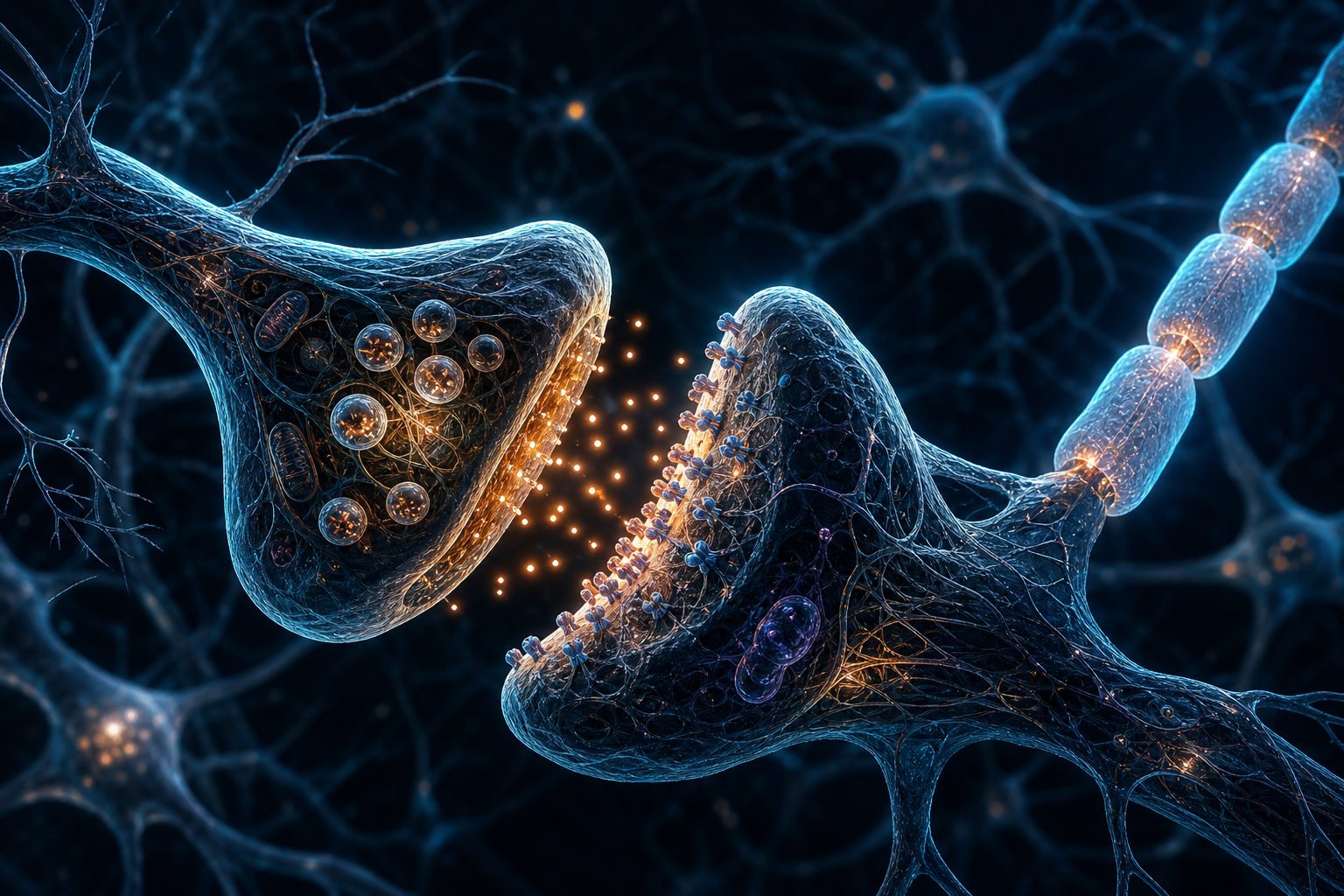
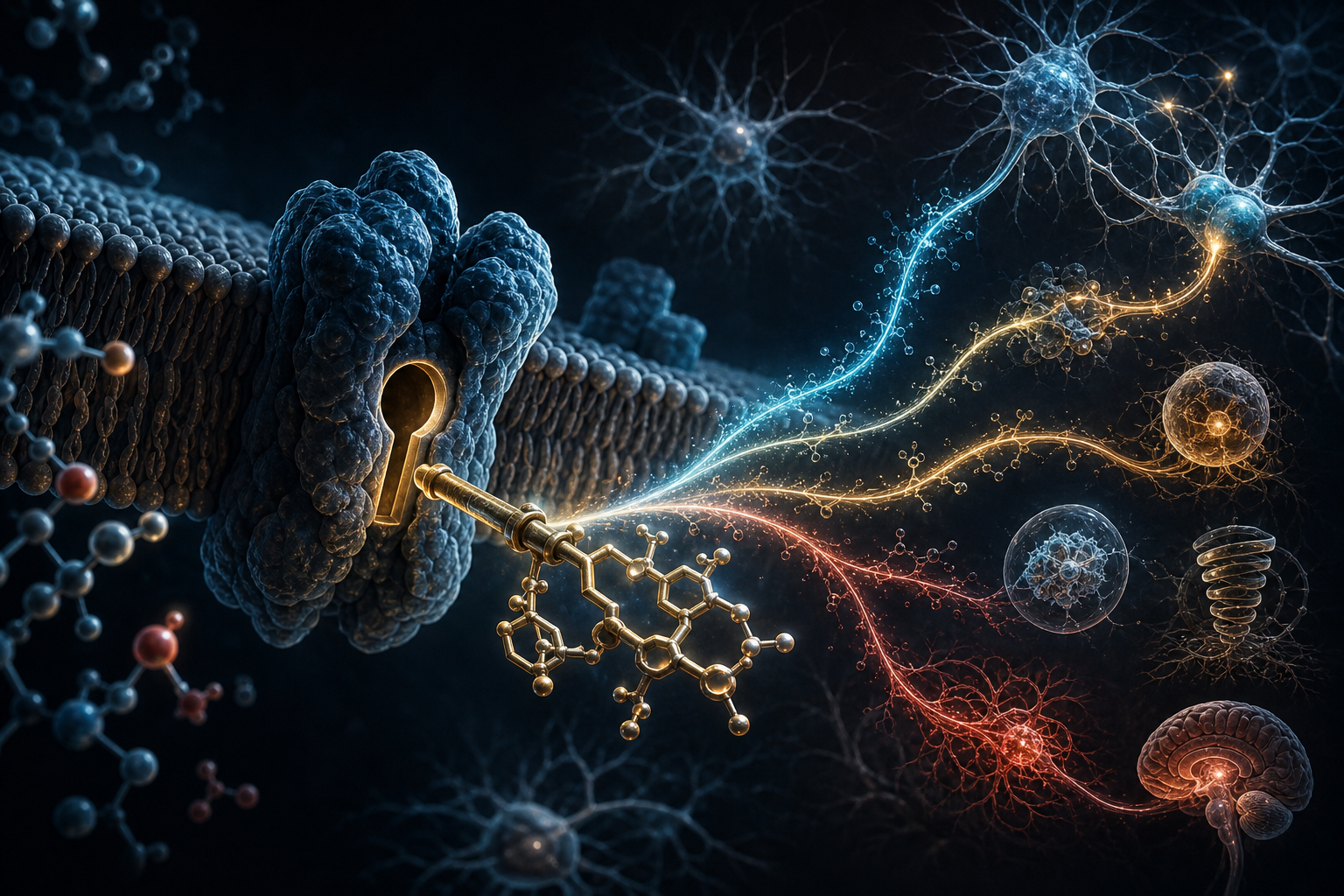
Neurons usually communicate at a synapse, the microscopic junction between one cell and another. When an action potential reaches the terminal, it causes small packages called vesicles to release a chemical messenger—a neurotransmitter—into the synaptic cleft, the tiny space between the cells. The transmitter crosses the gap and binds to a receptor on the receiving cell. A receptor is a protein shaped to recognize particular chemical signals and turn their arrival into a cellular response, much like a lock responding to certain keys, except that one “key” can produce different effects when it enters different receptor “locks.” Ionotropic receptors directly open an ion channel and act quickly. Metabotropic receptors activate internal signaling chains and usually act more slowly, but their effects can spread farther and last longer. The message ends when the transmitter is taken back up by a transporter, destroyed by an enzyme, absorbed by nearby cells, or allowed to diffuse away.
Neurons cannot work alone. Glia are the other major family of nervous-system cells, and they maintain the conditions that make signaling possible. Astrocytes regulate ions, recycle neurotransmitters, deliver metabolic support, influence synapses, and help match local blood flow to neural activity. Oligodendrocytes make myelin in the CNS; Schwann cells make it in the PNS. Microglia are immune-like cells that monitor tissue, respond to injury, remove debris, and help prune weak or unnecessary synapses. Excitatory signals increase the probability that a target neuron fires; inhibitory signals decrease it. Healthy computation requires their balance. Excess excitation can make a network noisy or unstable, while excess inhibition can prevent useful signals from propagating at all.
Chapter 5 — Neurotransmitters, Neuromodulators, and Receptors
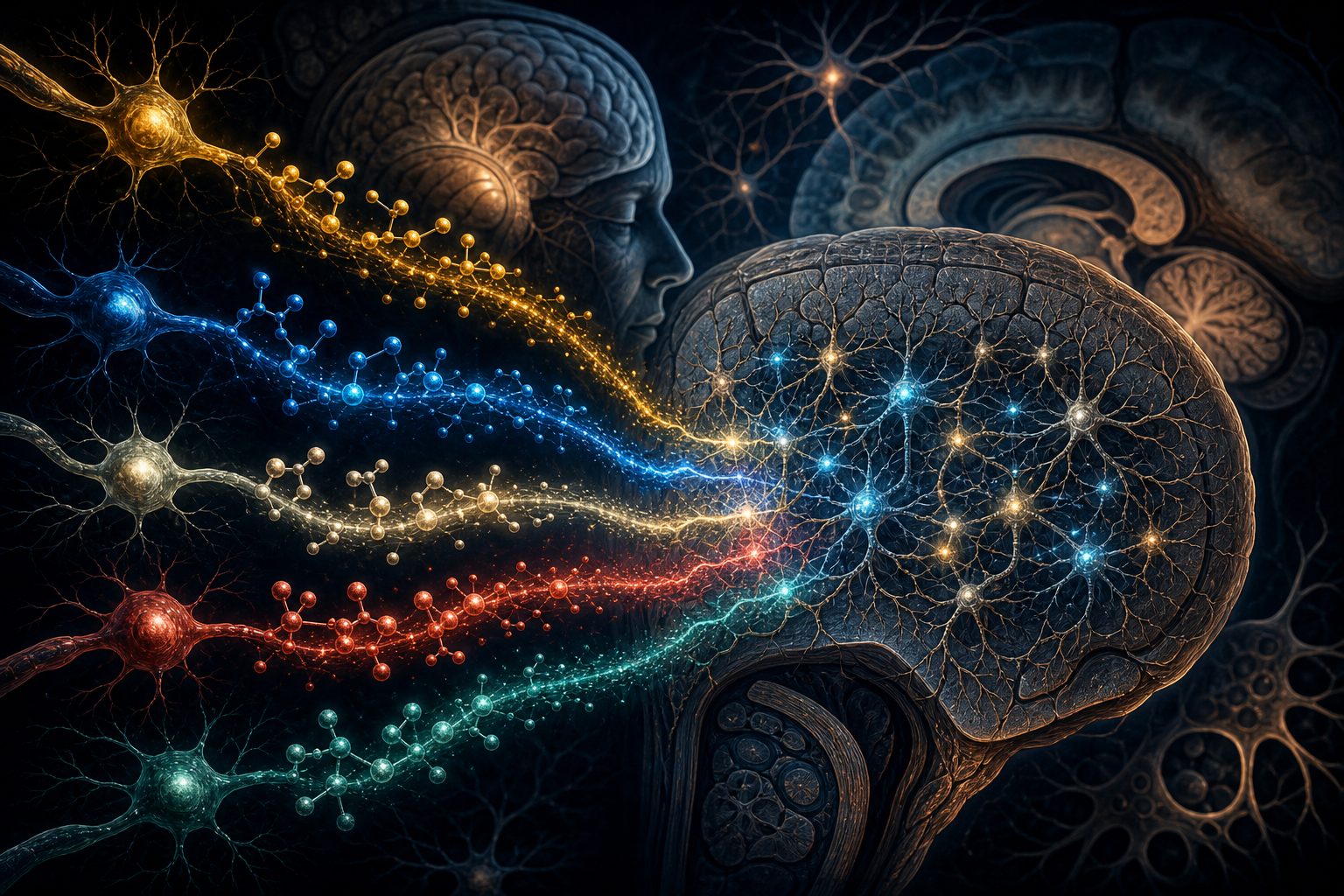
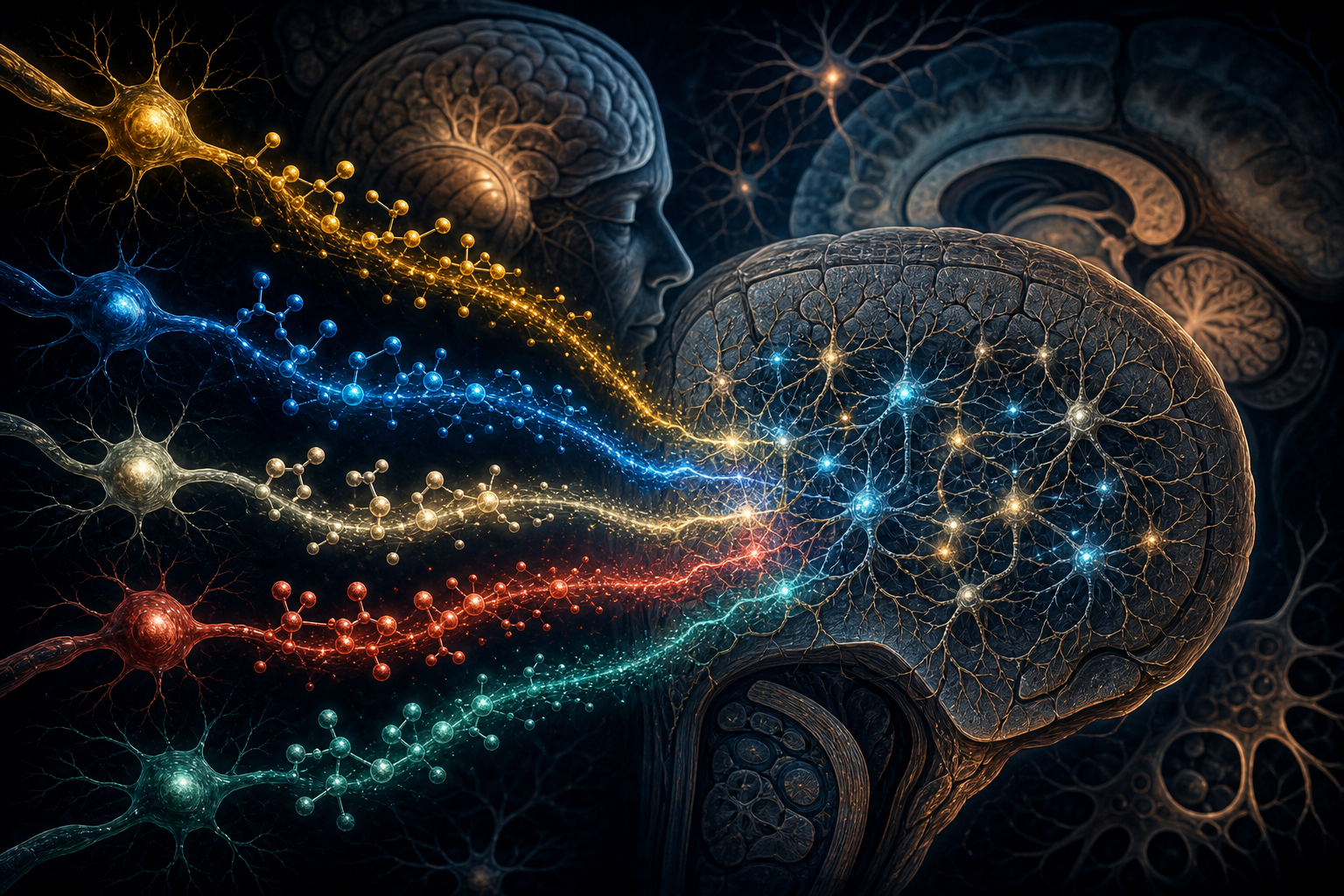
A neurotransmitter is a chemical released by one neuron to change the activity of another cell across a synapse. A neuromodulator changes how entire groups of neurons respond, often over a wider area or longer time. The distinction is not perfectly clean because the same molecule can act in both ways. Most importantly, a neurotransmitter is not a bottled emotion. Dopamine is not simply “motivation” serotonin is not simply “contentness,” and GABA is not simply “relaxation.” The effect depends on which receptor receives the molecule, where that receptor is located, how much is released, how long it remains, and what the circuit was already doing. The chemical is the message; the receptor and circuit determine what the message means.
Acetylcholine helps the brain select sensory information, sustain attention, encode new memories, and control muscles. When you are studying a page and the words are successfully entering memory instead of passing through your eyes, cholinergic signaling is a vital part of the machinery helping the brain treat that information as worth encoding.
Dopamine helps update predictions about reward, assign importance, energize effort, learn which actions lead to outcomes, and control movement. When a difficult goal feels worth pursuing, dopamine is involved in representing that expected value and allocating effort, not merely generating pleasure after the goal is reached.
Norepinephrine helps regulate alertness, vigilance, stress, and signal-to-noise. Too little can leave the system sleepy and unfocused; an intermediate level can sharpen attention and help you feel "locked in"; too much can produce anxiety, tunnel vision, and poor working memory. These inverted-U effects are why “increase neurotransmitter X” is usually an incomplete strategy.
Dopamine and norepinephrine both are part of a class of neurotransmitters called catecholamines, and one of the things they do is instruct cells to create and expend energy (ATP), via upregulating energy demand, regardless of its state. This is useful if you are being chased down by an aggressive dog and you are sleep-deprived, or if you NEED to lock in to get an A on an exam or else something bad will happen to you or something really good will happen to you.
Serotonin acts through many receptor families and participates in mood, patience, behavioral inhibition, appetite, sleep, aversive learning, and cognitive flexibility. Its diversity is exactly why a drug affecting one serotonin receptor can behave very differently from a drug that raises serotonin broadly.
Glutamate is the principal excitatory neurotransmitter. Think of it as the neurotransmitter that tells cells to turn on. It helps neurons transmit information and is essential to learning and memory, particularly through AMPA and NMDA receptors; uncontrolled glutamate activity can become excitotoxic, meaning that excessive excitation damages or kills cells.
GABA is the principal inhibitory neurotransmitter. Think of it as the neurotransmitter that tells cells to turn off. It restrains firing, stabilizes networks, reduces some forms of anxiety, and supports sleep. Think of glutamate as allowing neural traffic to move and GABA as the braking and traffic-control system. A useful brain requires both acceleration and control.
Histamine made inside the brain promotes wakefulness and attention; this is why antihistamines that enter the brain can make you sleepy.
Adenosine reflects cellular activity and contributes to sleep pressure. As you remain awake and expend energy, adenosine signaling rises and makes continued wakefulness harder. Adenosine is an end-product of ATP metabolism that mitochondria generates. Caffeine does not remove the accumulated need for sleep; it temporarily blocks adenosine receptors, hiding part of the signal.
The endocannabinoids anandamide and 2-AG are made on demand and often travel backward across a synapse to regulate how much transmitter the sending neuron releases. Endocannabinoids tell the previous neuron (or neurons) that generated its activity to silence. Through CB1 and CB2 receptors, they influence stress, appetite, pain, immune activity, memory, and emotional state.
The endogenous opioid system is the body’s internally produced pain, reward, attachment, and stress-regulation system. Its peptide families include endorphins, enkephalins, dynorphins, and endomorphins. They act mainly through mu (MOR), delta (DOR), and kappa (KOR) opioid receptors.
Mu-receptor activation is strongly associated with analgesia, reward, comfort, orgasm, and at sufficiently strong activation, respiratory suppression. Delta receptors participate in analgesia and affective regulation. This feels
Kappa receptors are heavily involved in stress, aversion, and dysphoria, the opposite of mu-receptor. If mu-opioids make you feel like you are in heaven and things are ok, kappa-opioid receptors make you feel like you are in hell and things are not ok.
The related nociceptin/orphanin FQ system acts through the NOP receptor and modulates pain, stress, and reward in more complex ways. External opioids exploit this pre-existing system; they do not create an entirely foreign mechanism.
Finally, neuropeptides are small protein-like signals that often regulate broad behavioral states. Orexin stabilizes wakefulness and motivated action; loss of orexin neurons can cause narcolepsy. Oxytocin changes social salience, bonding, and trust depending on the person and context—it is not a universal “love chemical.” Vasopressin controls water balance and also contributes to arousal, memory, and social behavior. The general rule is simple: never ask only whether a compound “raises dopamine” or “affects serotonin.” Ask which receptor, in which circuit, for how long, under what starting state, and at what cost.
Chapter 6 — Brain Metabolism and Cellular Energy
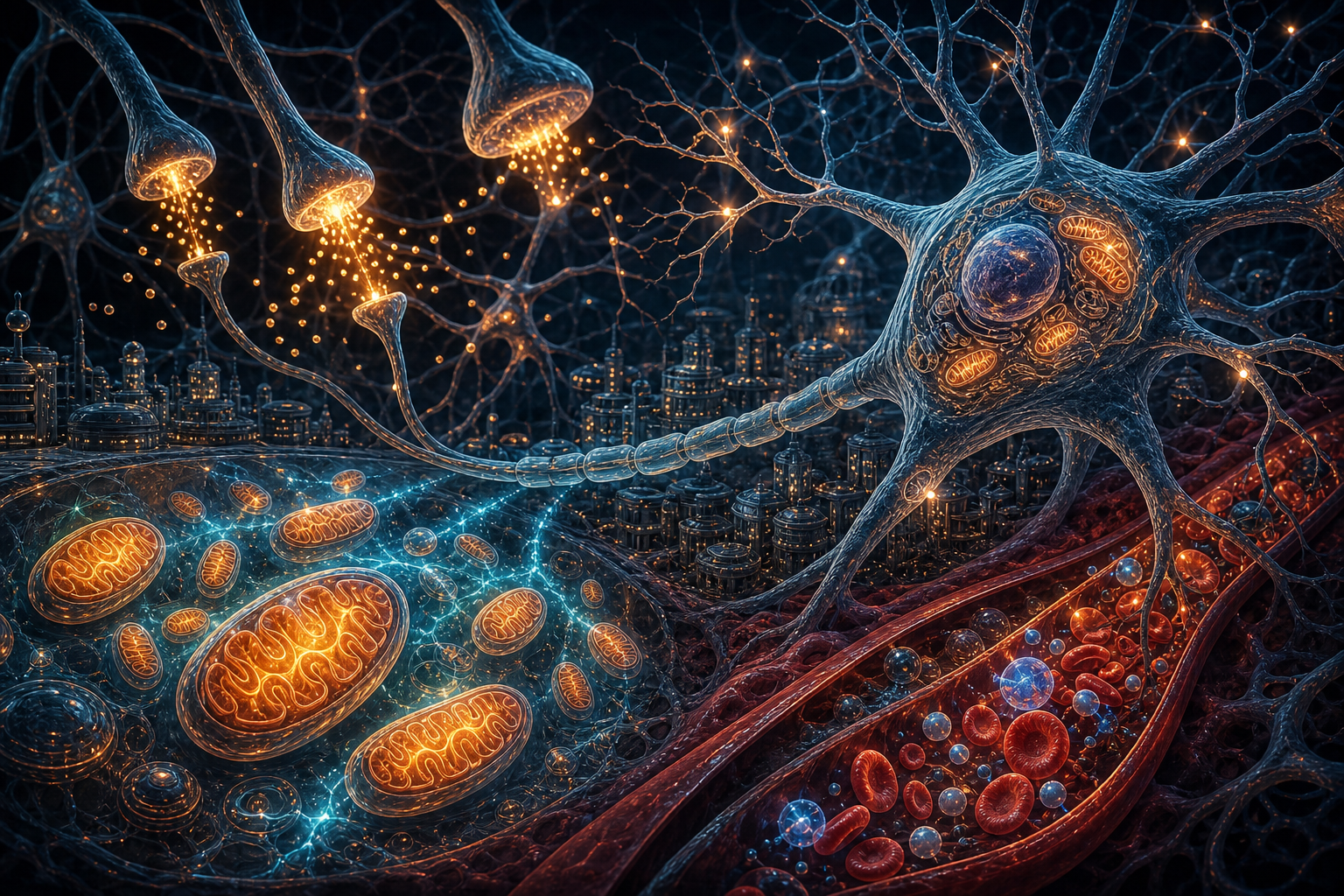
Thinking costs energy. The brain is only a small percentage of body mass, yet it consumes a disproportionately large share of resting oxygen and glucose because neural computation is expensive. ATP (adenosine triphosphate) is the cell’s immediately usable energy currency. Splitting one of ATP’s phosphate bonds releases energy that cells can use to pump ions, transmit signals, recycle neurotransmitters, repair structures, and maintain synapses. If a neuron cannot continually restore the sodium and potassium gradients used during action potentials, it eventually loses the ability to signal. Mental work may feel abstract, but every thought is being paid for with physical energy.
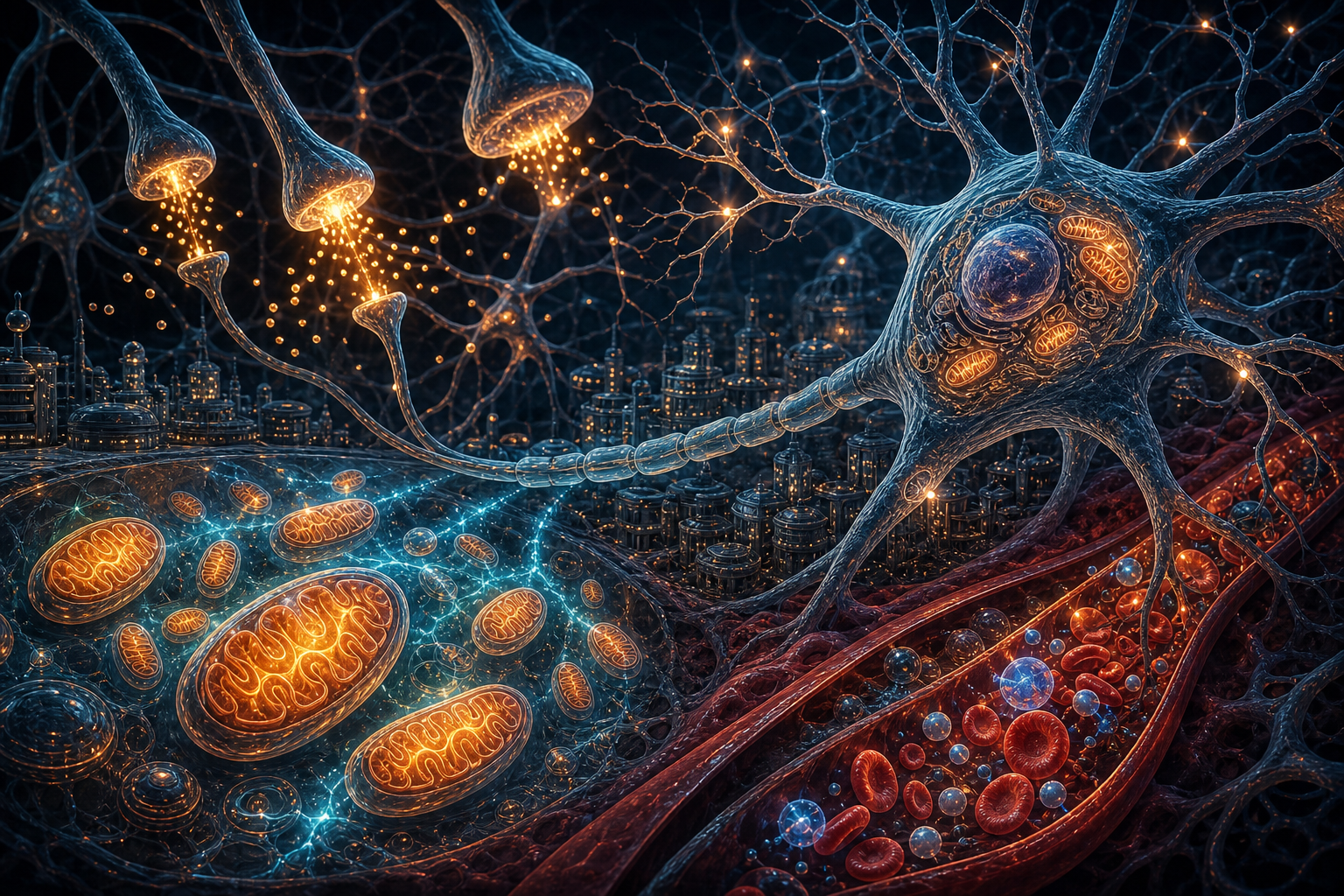
Glucose crosses from the blood into brain tissue and is first processed through glycolysis, a series of reactions that extracts a small amount of energy and creates molecules that can enter mitochondria. Mitochondria are structures inside cells that use oxygen to produce most ATP through oxidative phosphorylation. They also regulate calcium, oxidative stress, and decisions about cell survival. Astrocytes can convert glucose into lactate and provide it to active neurons as fuel. During fasting or carbohydrate restriction, the liver produces ketones, which can cross into the brain and supply an alternative energy source. The brain does not directly burn circulating long-chain fatty acids as freely as many other tissues, so stable delivery of glucose or ketones, oxygen, and blood flow matters.
The inner membrane of a mitochondrion works roughly like a dam. The electron-transport chain uses energy from food to pump protons to one side of the membrane, creating a gradient—the biological equivalent of water stored above a turbine. The protons then flow back through ATP synthase, a molecular rotary machine that uses the flow to manufacture ATP. Mitochondria continually divide, fuse, move toward areas of demand, and remove damaged components. Mitophagy is the controlled destruction and recycling of damaged mitochondria. If mitochondrial quality or oxygen delivery falls, the brain may still be alive but have less reserve for sustained attention, fast processing, memory formation, and recovery. This is the equivalent of the optionality afforded by having $100,000 in your bank account compared to having $600 in your bank account.
Blood flow is part of the energy system. Cerebral perfusion means blood reaching brain tissue. Neurovascular coupling means active neurons signaling nearby blood vessels to deliver more oxygen and glucose. Carbon dioxide also affects vessel diameter, which is one reason breathing patterns can change lightheadedness and mental state. Insulin resistance, hypoglycemia, anemia, cardiovascular disease, atherosclerosis, respiratory problems, chronic inflammation, or damaged vessels can all reduce usable energy even when neurons themselves are structurally intact. A person may experience the shared output as fatigue or “brain fog,” but the causal bottleneck may be glucose regulation, mitochondria, oxygen carrying capacity, or perfusion.
This is why metabolism is not an optional background chapter before the “real” nootropics. Receptor-active compounds change what the brain attempts to do, but energy determines how much computation it can actually afford. Stimulation can increase demand without increasing capacity. Restoring the energetic substrate can improve cognition without forcing a neurotransmitter system at all.
Chapter 7 — Cellular Signaling and Neuroplasticity

Cellular signaling is how cells detect information and change what they are doing in response. When a neurotransmitter, hormone, growth factor, or drug binds to a receptor, the receptor converts that external event into a change inside the cell. An ionotropic receptor may open a channel immediately. A G-protein-coupled receptor may activate second messengers such as cyclic AMP or calcium. They then activate enzymes called kinases, which attach phosphate groups to proteins, and phosphatases, which remove them. These modifications can change a channel, enzyme, receptor, or structural protein within seconds. If the signal is strong or repeated, it can reach the nucleus and alter gene expression: which sections of DNA are transcribed into RNA and translated into new proteins. A signal lasting seconds can therefore change the cell for hours, days, or longer.
Neuroplasticity, or simply plasticity, is the brain changing itself to adapt to what it is repeatedly exposed to and required to do. Imagine practicing a free kick in football (soccer). You choose an angle, run toward the ball, strike it with your foot, and observe the result. If the ball bends around the wall and enters the goal, the sensory result reinforces the neural activity that produced the successful kick; if it misses, the error supplies information about what should change. Across repeated attempts, synapses involved in the useful movement and prediction become more effective, irrelevant connections may weaken, the motor sequence becomes better coordinated, and some repeatedly used axons may become better myelinated. The next kick is not performed by exactly the same brain that performed the first one. The previous attempt physically changed the system that will generate the next attempt.
At synapses, long-term potentiation (LTP) is a persistent increase in signaling strength after certain patterns of activity, while long-term depression (LTD) is a persistent decrease. Dendrites can grow new spines, existing spines can enlarge or shrink, axons can remodel, weak connections can be pruned, and myelin can adapt around repeatedly used routes. Neurotrophic factors help regulate these changes. BDNF (brain-derived neurotrophic factor) supports neuronal survival, synaptic change, and learning. NGF (nerve growth factor) is particularly important for certain sensory and cholinergic neurons. GDNF supports several neuronal populations, including dopamine-producing neurons. IGF-1 connects growth, exercise, metabolism, and neural maintenance. VEGF promotes blood-vessel growth to these neurons and also participates in repair and plasticity.
Plasticity is morally neutral. It makes all practiced actions easier, not necessarily better. Repeating algebra, a piano movement, or a free kick can build useful ability; repeating avoidance, compulsive scrolling, anxious threat-monitoring, or drug use can make those patterns more automatic too. The first time a behavior is performed may feel like forcing a route through a swamp with no path. With repetition, the route is cleared, reinforced, and sometimes myelinated until entering it requires little conscious decision. This is why habits become easier to execute and harder to interrupt: the system has adapted to produce exactly what it has repeatedly produced.
Neurogenesis means the production of new neurons. Evidence supports adult neurogenesis in parts of the hippocampal system, but its amount and importance in humans remain debated, and it should not be used as a magical explanation for every cognitive effect. Metaplasticity means that previous activity changes how easily future plasticity occurs—the brain changes its own learning rules. The crucial conclusion is that a “plasticity enhancer” does not specify what will be learned. It makes change more possible. Training, environment, attention, feedback, sleep, and reinforcement determine whether that opportunity becomes skill, recovery, anxiety, addiction, or noise.
Chapter 8 — Pharmacology Essentials
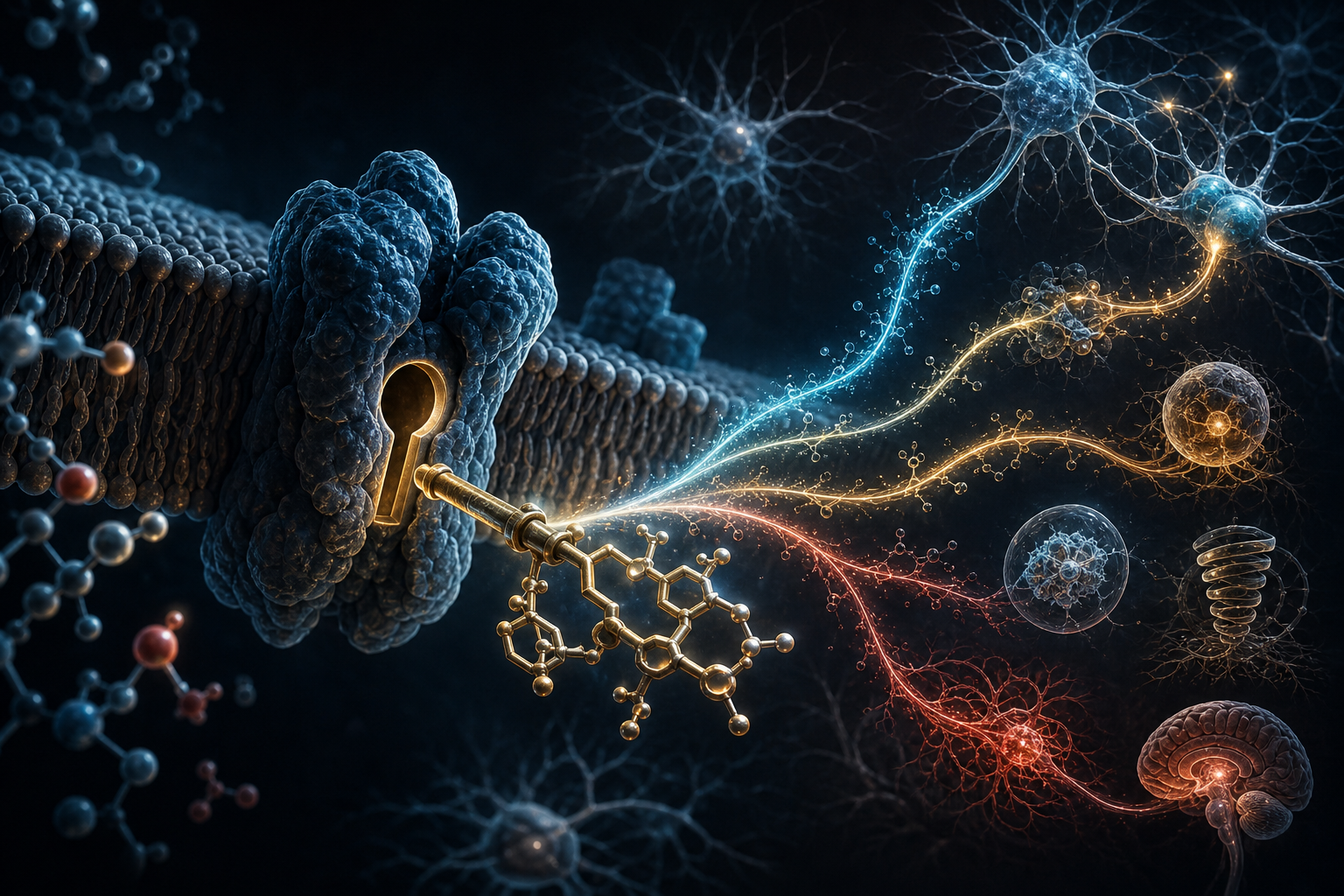
Pharmacology is the study of how drugs interact with living systems. It begins with two questions. Pharmacodynamics asks what a compound does to the body. Pharmacokinetics asks what the body does to the compound. The distinction is like studying a key in two directions: pharmacodynamics asks which lock it changes and what happens after the lock turns; pharmacokinetics asks how the key enters the building, which rooms it can reach, how long it remains, and how it is removed. Every useful drug explanation eventually needs both.
A drug acts on a target, such as a receptor, enzyme, ion channel, transporter, structural protein, or gene-regulatory system. An agonist activates a receptor. A partial agonist activates it but cannot produce the same maximum response as a full agonist. An antagonist occupies the receptor and blocks activation. An inverse agonist reduces activity at a receptor that is active even without a bound messenger. The primary site where the natural messenger binds is the orthosteric site. An allosteric modulator binds somewhere else and changes how the receptor responds: a positive allosteric modulator amplifies the response, while a negative one reduces it. This can be more state-dependent than directly forcing the receptor, because the modulator often matters most when the natural signal is already present.
Affinity describes how strongly a compound tends to bind to a target. Potency describes how much compound is required to produce a defined effect. Efficacy describes the largest effect it can produce. These are not interchangeable. A drug can bind tightly but produce only a small effect; another can require a larger dose but produce a greater maximum response. Selectivity means preferring one target over others, but selectivity is usually dose-dependent: as concentration rises, secondary targets begin to be occupied. Polypharmacology means affecting several targets. That can create a useful combination of effects, or it can create side effects that were absent at the primary target.
The dose-response curve shows how effect changes as dose or concentration changes. Below the threshold, little happens. Across a useful range, effect rises. Eventually it plateaus, reverses, or becomes harmful. Many cognitive systems follow an inverted U: too little stimulation performs poorly, an intermediate amount performs best, and too much performs poorly again. Imagine adjusting shower temperature. “Hotter” is useful only while the water is too cold; after the comfortable range, the same direction of change becomes the problem. The therapeutic window is the exposure range between an effective dose and an unacceptably harmful dose. Genetics, body size, liver and kidney function, sleep, disease, food, tolerance, and other drugs can shift that window.
Pharmacokinetics is usually summarized as ADME: absorption, distribution, metabolism, and excretion. Absorption is entry into the body; oral, sublingual, intranasal, inhaled, transdermal, and injected routes enter at different speeds and avoid or encounter different barriers. Bioavailability is the fraction of a dose that reaches systemic circulation. Distribution is where the compound travels; protein binding, blood flow, tissue chemistry, molecular size, fat solubility, electrical charge, transport proteins, and efflux pumps influence whether it reaches the brain. The blood-brain barrier is a tightly controlled layer of cells around brain blood vessels that blocks many substances while selectively transporting others. Metabolism—often in the liver through CYP enzymes—converts the compound into inactive, active, or sometimes toxic metabolites. Excretion removes it, primarily through the kidneys, liver, bile, and gut.
8.1 Solubility and Formulation
Solubility means the maximum amount of a substance that can dissolve in a particular liquid under specified conditions. It is measured as a concentration, such as milligrams per milliliter, and the number is incomplete unless the solvent, temperature, and pH are also stated. Dissolving is not the same as absorbing: a powder may dissolve in the intestine but still cross membranes poorly, while a poorly water-soluble compound may be absorbed when bile, dietary fat, or a specialized formulation keeps it dispersed long enough to reach the intestinal wall.
- Water-soluble, or hydrophilic, compounds interact readily with water. They usually mix more easily with gastrointestinal fluids and blood, but they may cross lipid membranes or the blood-brain barrier poorly unless a transporter assists them. Excess is often cleared through urine, although “water-soluble” does not mean harmless.
- Fat-soluble, or lipophilic, compounds interact more readily with oils and cell membranes than with water. Taking some of them with a fat-containing meal can improve absorption because bile forms microscopic transport structures called micelles. Lipophilicity may help membrane penetration, but extreme lipophilicity can reduce dissolution, increase protein or fat-tissue binding, prolong exposure, or promote accumulation.
- Amphiphilic compounds contain both water-friendly and fat-friendly regions. Phospholipids are the intuitive example: one end interacts with water while the other interacts with fat. This mixed character can help compounds associate with membranes, micelles, emulsions, or liposomes.
- pH-dependent compounds change solubility according to acidity and electrical charge. Weak acids and bases may dissolve differently in the stomach, intestine, blood, or a laboratory buffer. A substance can therefore appear “water-soluble” at one pH and precipitate at another.
- Vehicle- or formulation-dependent compounds may require ethanol, polyethylene glycol, oils, surfactants, cyclodextrins, emulsions, liposomes, nanoparticles, or a salt form to remain dissolved. A research paper using one vehicle does not prove that dry powder, a capsule, or a homemade liquid produces the same exposure.
Intrinsic solubility describes the uncharged form of a compound; apparent solubility includes the effects of ionization, salts, complexes, and the measurement conditions. Dissolution rate describes how quickly material enters solution, which can matter even when its final maximum solubility is adequate. Particle size, crystal form, salt form, temperature, food, bile, pH, and excipients can all change the result. This is why a useful compound profile should report solubility quantitatively when possible—rather than merely saying “soluble”—and specify the medium, pH, temperature, formulation, and whether the value was measured or only predicted.
Half-life is the time required for the amount of a compound in the body to fall by half. It helps estimate accumulation and washout, but it does not always equal the duration of the felt effect: active metabolites, persistent receptor binding, gene-expression changes, and neural adaptation may last longer. Repeated dosing can build toward steady state, where the amount entering during each interval roughly equals the amount leaving. Chronic exposure may produce tolerance, meaning the same dose has less effect because receptors, signaling pathways, metabolism, or behavior adapted. Dependence means the system has adapted around the compound strongly enough that removing it produces withdrawal or reveals a suppressed baseline. Sensitization is the opposite pattern: repeated exposure produces a stronger response.
Finally, a stack is an interaction network, not a list. Two drugs may have additive effects, synergistic effects greater than their simple sum, or antagonistic effects that oppose one another. One compound may inhibit the enzyme that removes another, causing the second to accumulate even though its dose never changed. Shared serotonergic, dopaminergic, cholinergic, sedative, cardiovascular, or seizure effects can become dangerous before any individual dose appears extreme. Food matters too: grapefruit can inhibit some metabolic enzymes; alcohol magnifies many sedatives; caffeine can combine with stimulants; anticoagulant supplements can add to prescription blood thinners. The minimum useful questions are therefore: what is the target, what exposure reaches it, what else is affected, how long does it last, what adapts, and what happens when it is combined?
Chapter 9 — Individual Variability and Pharmacogenomics
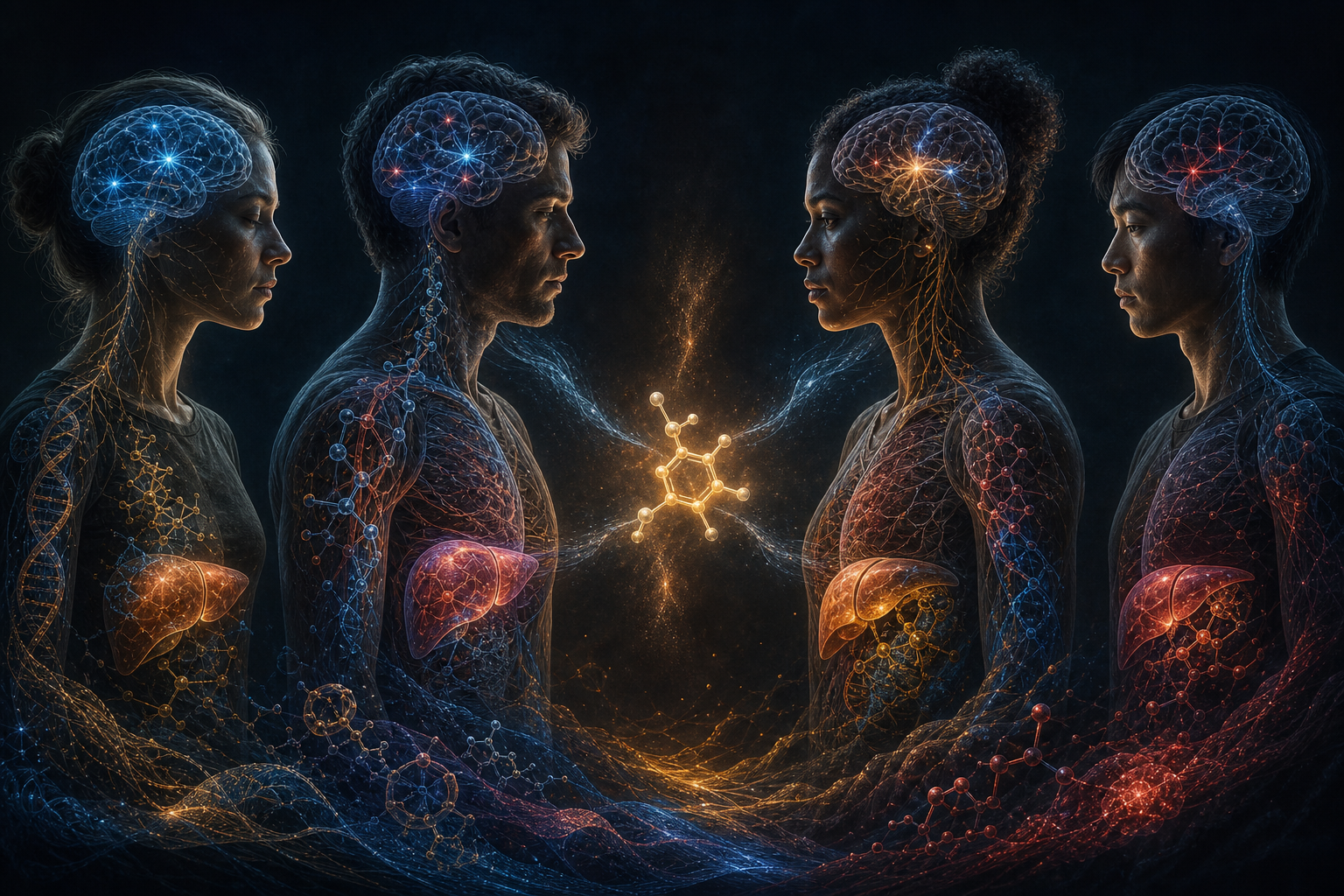
No compound acts on an abstract, standardized human. It enters one particular body at one particular time, and that body changes both the concentration that reaches the brain and what the brain does when the compound arrives. Two people can take the same number of milligrams and receive meaningfully different biological exposures. One may absorb more of it, metabolize it slowly, possess a more sensitive target, or already be near the top of the inverted-U curve described in Chapter 8. The other may clear it quickly, respond weakly at the target, or begin from a deficient state that leaves more room for improvement. Individual variability is therefore not annoying noise surrounding the “real” drug effect. It is part of the effect.
9.1 Genetic Variation
A gene is a section of DNA containing instructions used to build or regulate a biological product, usually a protein. Humans share nearly all of their DNA, but the remaining variation can alter enzymes, receptors, transporters, ion channels, and other parts of drug response. A genetic variant is a difference in the DNA sequence. Most variants do not create a dramatic visible trait; they make a protein slightly more active, less active, more abundant, less abundant, or differently regulated. Because pharmacology depends on proteins at almost every step, small differences can change how quickly a compound is removed or how strongly a circuit responds to it.
Metabolic enzymes provide the easiest example. Members of the liver’s cytochrome P450 system—including CYP1A2, CYP2D6, CYP2C19, and CYP3A4—help transform many drugs into metabolites. A variant that reduces enzyme activity can make the same dose remain in circulation longer. A variant that increases activity can remove it faster, although the direction can reverse for a prodrug, which must be metabolized into its active form. Genes can also affect drug targets. Differences in a receptor may change its sensitivity; differences in a transporter may change how quickly a neurotransmitter is cleared; differences in blood-brain-barrier transport may change how much drug reaches nervous tissue. A gene rarely determines the entire outcome by itself, but it can move the starting conditions.
9.2 Pharmacogenomics
Pharmacogenomics is the study of how genetic variation influences drug response. It attempts to connect a genotype—the variants a person carries—to practical differences in efficacy, side effects, metabolism, or dosing. People are sometimes grouped as poor, intermediate, normal, rapid, or ultrarapid metabolizers for a particular enzyme. These labels are always enzyme-specific. Someone can clear one drug slowly through CYP2D6 and clear another normally through CYP1A2. “Fast metabolizer” is not a permanent description of the whole person.
Genetics is also not destiny. Smoking can induce CYP1A2 activity; grapefruit can inhibit parts of CYP3A metabolism; illness and inflammation can alter enzyme expression; other drugs can inhibit or compete for the same pathway. The phenotype—the metabolism actually occurring today—may therefore differ from what genotype alone predicts. Pharmacogenomic testing is most useful when a specific gene–drug relationship has strong clinical evidence and an interpretation can change a real decision. It is less useful when a report converts weak associations into a colorful list of supposed ideal supplements. A DNA result can narrow uncertainty; it cannot replace symptoms, laboratory data, medical history, interactions, or careful observation.
9.3 Age and Development
The nervous system changes across the lifespan. During childhood, adolescence, and early adulthood, synapses are being formed and pruned, myelination is continuing, hormonal systems are changing, and the prefrontal networks involved in planning and inhibition are still developing. An intervention that changes sleep, appetite, plasticity, or monoamine signaling is therefore acting on a system that is still constructing itself. This does not mean that young people can never be treated pharmacologically; it means the evidence and risk calculation cannot simply be copied from healthy adults.
In older age, liver blood flow, kidney filtration, total body water, receptor sensitivity, sleep architecture, vascular function, and the number of medications being used may all change. The same dose may reach a higher concentration or persist longer, while the consequences of dizziness, insomnia, blood-pressure changes, or drug interactions become more serious. Aging can also expose a genuine bottleneck—such as impaired cholinergic function, vascular disease, or deficiency—that is not present in a younger person. Chronological age gives a rough clue, but biological age, organ function, disease burden, and medication load explain more of the pharmacological reality.
9.4 Sex and Hormonal State
Sex-linked biology can affect body composition, enzyme activity, immune signaling, cardiovascular function, and hormone concentrations. Hormonal state can also change within the same person. Estrogen, progesterone, testosterone, thyroid hormones, cortisol, insulin, and other signals influence neurotransmission, temperature, sleep, motivation, stress reactivity, and sometimes drug metabolism. Across the menstrual cycle, changing estrogen and progesterone can alter mood, sleep, fluid balance, and subjective response for some people, although the size and direction of the effect are not identical across individuals.
9.5 Body Composition
A dose expressed only in milligrams ignores the size and composition of the body receiving it. Volume of distribution describes the apparent space through which a drug has spread. Water-soluble compounds tend to distribute through water-rich compartments; fat-soluble compounds may enter fatty tissue and, depending on their chemistry and clearance, form a reservoir that prolongs exposure. Storage is not automatically beneficial: it can reduce the immediately available concentration, extend the terminal half-life, or permit repeated dosing to accumulate.
Lean mass, fat mass, plasma volume, and total body water can therefore change the concentration produced by the same absolute dose. This is one reason a dose appropriate for a large adult may not translate directly to a much smaller person.
Body weight does not solve every dosing problem. Some compounds scale approximately with kilograms, while others are limited by receptor saturation, liver metabolism, kidney clearance, or a fixed therapeutic range. Fat can serve as a reservoir for some molecules, extending their release without increasing the desired brain effect. Dehydration can reduce plasma volume and amplify cardiovascular effects. Body composition is one variable in exposure, not a universal formula for converting every compound into milligrams per kilogram.
9.6 Organ Function
The liver, kidneys, heart, lungs, gut, and blood vessels determine whether a compound reaches its target and how it leaves. Reduced liver function can slow metabolism. Reduced kidney function can allow a drug or its metabolites to accumulate. Cardiovascular dysfunction can alter blood pressure and tissue delivery; respiratory dysfunction can reduce oxygenation; gastrointestinal disease can make absorption erratic. The brain may be the intended target, but the entire organism handles the dose.
This becomes especially important with repeated administration. A dose that appears tolerable once may accumulate when the interval between doses is shorter than the time required for clearance. Active metabolites may build even when the parent compound does not. Organ dysfunction can also narrow the therapeutic window, making a previously minor side effect consequential. More is not required for a stronger response when the body has become less able to remove what is already present.
9.7 State-Dependent Effects
A drug effect depends on the state of the system before the dose. Caffeine after adequate sleep may produce a modest increase in alertness; the same caffeine after severe sleep loss may feel transformative because it is opposing unusually high sleep pressure, yet judgment and memory can remain impaired beneath the feeling of wakefulness. A stimulant given during intense stress may push catecholamine signaling beyond its optimal range and worsen rigidity or anxiety. An iron-containing supplement can improve cognition when iron deficiency is the limiting factor and offer no benefit—and possible harm—when iron status is already sufficient.
Food, hydration, circadian time, recent exercise, illness, inflammation, mood, expectations, prior drug exposure, and the task being performed can all change the response. Tolerance means repeated exposure has reduced an effect; withdrawal reversal occurs when a dose seems to improve performance mainly because it removes the deficit created by dependence. This is common enough with caffeine that “better after coffee” does not prove performance rose above the person’s original, non-dependent baseline. The correct unit of analysis is therefore not compound alone. It is compound × dose × person × biological state × task × time.
Chapter 10 — Biological Origins of Cognitive and Emotional States
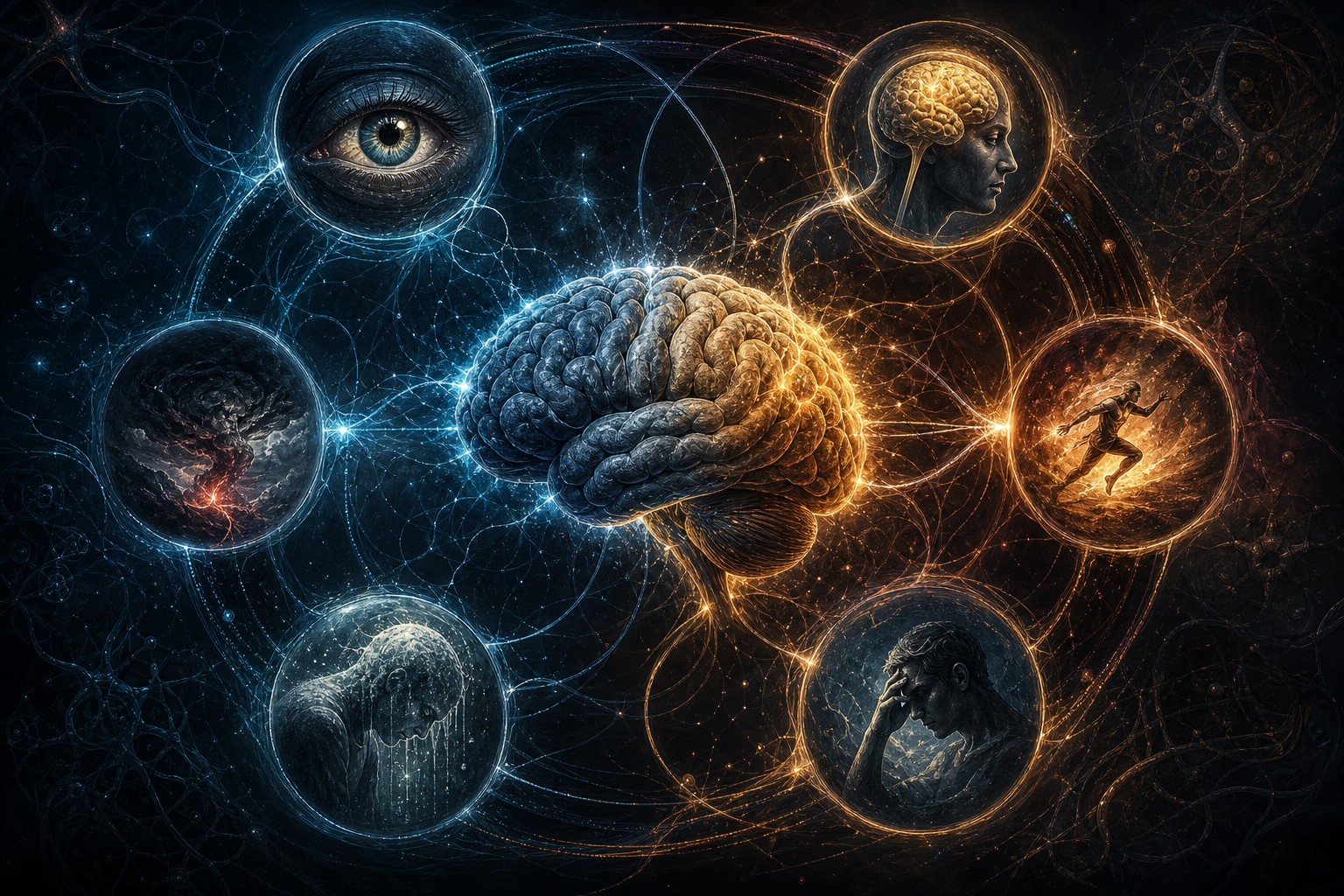
Attention, memory, motivation, anxiety, and fatigue feel like single internal objects because consciousness presents each one as a unified state. Biology does not construct them from one chemical or one brain region. Each state is an emergent property: an experience produced when many lower-level processes interact, in the same way that traffic is produced by thousands of cars without being located inside any one car. Neural circuits, neurotransmitters, hormones, immune signals, metabolism, body sensations, learned predictions, and the surrounding environment all contribute. This is why claims such as “dopamine is motivation” or “serotonin is happiness” fail. A chemical can be important without being the state itself.
10.1 Attention
Attention is the selective allocation of limited processing capacity. The brain receives more information than it can analyze deeply, so it continuously decides what receives priority. Selective attention chooses one stream over competitors, such as following a teacher’s voice while other students whisper. Sustained attention keeps the selection stable across time, such as monitoring a highway during a long drive. Attentional control lets goals override a distraction, such as returning to the paragraph after a notification appears.
Several networks cooperate. Alerting systems involving norepinephrine help establish readiness; cholinergic signaling helps amplify relevant sensory information; frontoparietal control networks hold the goal; salience networks detect events that may deserve interruption; dopamine helps regulate working memory, effort, and the stability of goal-directed behavior. Too little arousal produces drifting and missed information, but too much produces scanning, anxiety, and tunnel vision. Attention is therefore not maximized by making the brain as stimulated as possible. It is optimized when arousal, relevance, and control fit the task.
10.2 Memory
Memory is the ability of past information to alter present processing or future behavior. Working memory temporarily holds and manipulates a small amount of information, as when calculating 27 x 18 in your head. Episodic memory represents personal events—the first day at a new school. Semantic memory stores general knowledge—Paris is the capital of France. Procedural memory supports skills such as riding a bicycle, often without requiring a verbal explanation of each movement.
Different systems cooperate rather than storing one video file. The hippocampus helps bind the people, places, timing, and context of an event; the cortex stores distributed features and knowledge; the basal ganglia and cerebellum contribute habits, skills, timing, and error correction; the prefrontal cortex organizes what is held in mind and how it is retrieved. Remembering is reconstructive: the brain rebuilds an event from stored pieces, current cues, and present expectations. That flexibility makes memory useful, but it also permits distortion.
10.3 Learning
Learning is the process through which experience produces a relatively durable change in knowledge, prediction, or behavior. Encoding is the initial conversion of experience into a neural representation. Consolidation stabilizes and reorganizes that representation over time, especially during sleep. Retrieval reactivates stored information. When a memory is retrieved, it may temporarily become changeable before being stored again; this is called reconsolidation.
Return to the football (soccer) free kick. The brain predicts what a movement will do, compares the predicted result with where the ball actually travels, and uses the prediction error—the gap between expectation and outcome—to update the next attempt. Reward, attention, emotion, novelty, and feedback signal which changes matter. Repetition is useful only when the repetitions contain information. Practicing the same error without detecting it can strengthen the error; immediate, accurate feedback makes plasticity more intelligent. Learning involves primarily acetylcholine and BDNF, with dopamine also playing a role when the form of learning is reinforcement learning (any form of learning where you get feedback on your performance and adjust accordingly)
10.4 Motivation
Motivation is the process that selects goals and allocates effort toward them. Dopamine is central, but “dopamine equals pleasure” is the wrong model. Dopaminergic circuits help represent reward prediction, opportunity, uncertainty, vigor, and whether an action appears worth its energetic cost. A reward-prediction error occurs when an outcome is better or worse than expected. Better-than-expected outcomes can strengthen the actions and cues that preceded them; worse-than-expected outcomes can weaken or redirect behavior.
Motivation therefore depends on at least four variables: the expected value of the outcome, the probability of obtaining it, the cost of the required effort, and the person’s present capacity. A student may value a high grade but still fail to begin if the task feels ambiguous, the reward is distant, sleep has reduced available effort, or repeated failure predicts that work will not pay. Breaking a project into a visible first action changes the calculation. It lowers the immediate cost and creates faster feedback without requiring a mythical reservoir of “willpower.”
10.5 Mental Energy and Fatigue
Mental fatigue is a state in which continued cognitive effort feels more costly and performance becomes harder to sustain. It is not identical to the brain literally running out of fuel. Severe metabolic problems can absolutely reduce ATP or oxygen delivery, but ordinary fatigue also reflects adenosine accumulation, sleep pressure, neuromodulatory changes, task monotony, stress, expected reward, and the opportunity cost of continuing one task instead of doing something else. The feeling is a control signal: the system is becoming less willing or less able to maintain the current allocation.
Different causes can feel similar. Sleep pressure can create heavy eyes and microsleeps. Cognitive overload can occur when working-memory demands exceed capacity. Prolonged self-control can make an unrewarding task feel increasingly expensive. Illness can generate cytokine-driven sickness behavior, conserving activity while the immune system is engaged. Stimulation may suppress the feeling of fatigue without repairing its cause, just as covering a fuel warning light does not put gasoline in the tank.
10.6 Anxiety
Anxiety is a state organized around uncertain potential threat. Fear usually responds to a relatively immediate danger; anxiety prepares for what might happen. Threat-detection systems, including the amygdala and related circuits, assign importance to cues. The autonomic nervous system increases heart rate, breathing, muscle tension, and vigilance. The insula helps represent internal sensations, while prefrontal systems interpret the situation and regulate behavior. Norepinephrine, serotonin, GABA, glutamate, cortisol, and learning history all participate.
This machinery is useful when the threat is real. Before an exam, moderate arousal can increase preparation and focus. When the system becomes excessive, the same mechanisms consume working memory with threat-monitoring, bias ambiguous information toward danger, and make avoidance feel immediately rewarding. Avoidance then prevents corrective learning: the person never receives evidence that the feared situation was survivable. Anxiety can therefore maintain itself through plasticity even after the original danger has disappeared.
10.7 Depression
Depression is not simply sadness and is not explained by a single “chemical imbalance.” It is a heterogeneous syndrome that can include low mood, reduced pleasure, altered sleep and appetite, slowed or agitated movement, impaired concentration, guilt, hopelessness, and suicidal thinking. Different people can reach a similar symptom pattern through different mixtures of genetic vulnerability, chronic stress, inflammation, hormonal or medical illness, social conditions, disrupted reward learning, monoamine signaling, and altered plasticity.
One important component is anhedonia, a reduced ability to anticipate or experience reward. Another is a change in learning: negative outcomes may be weighted heavily while positive information updates behavior weakly. Chronic stress can alter sleep, cortisol regulation, hippocampal function, immune signaling, and prefrontal control. Serotonin, norepinephrine, dopamine, glutamate, GABA, and neurotrophic signaling can all matter, but none provides a complete one-molecule explanation. Because the syndrome has multiple biological routes, the correct intervention may involve psychotherapy, sleep, social conditions, exercise, treatment of a medical cause, medication, or several together.
10.8 Stress
Stress is the organism’s response when demands threaten to exceed predicted available resources or control. In an acute challenge, the sympathetic nervous system releases catecholamines rapidly, while the hypothalamic–pituitary–adrenal axis produces cortisol more slowly. Heart rate rises, fuel becomes available, attention narrows, and non-urgent functions are temporarily deprioritized. This can be adaptive during a competition, emergency, or difficult examination.
The cost appears when activation is too intense, too frequent, or never followed by recovery. Allostasis means maintaining stability by changing the body’s operating state. Allostatic load is the accumulated wear from repeatedly paying for that adaptation: disrupted sleep, elevated blood pressure, impaired glucose regulation, inflammatory change, reduced cognitive flexibility, and altered mood. The useful question is not whether cortisol is “good” or “bad.” It is whether the response matches the demand and shuts down when the demand ends.
10.9 Wakefulness and Sleepiness
Wakefulness is actively maintained by interacting systems rather than produced by one master switch. Orexin neurons help stabilize the waking state and coordinate other arousal systems. Histamine, norepinephrine, acetylcholine, dopamine, and serotonin contribute different features of alertness and behavioral readiness, all guided by orexin. At the same time, adenosine accumulates as wakefulness continues and contributes to sleep pressure. Caffeine promotes wakefulness mainly by blocking adenosine receptors, thus masking the feeling of sleepiness; it does not remove the underlying need for sleep.
The circadian system supplies a second influence. The brain’s suprachiasmatic nucleus uses light timing to coordinate a roughly twenty-four-hour rhythm in alertness, hormones, temperature, and sleep propensity. Sleepiness at any moment reflects the interaction between accumulated sleep pressure and circadian timing. This explains why someone can receive a “second wind” late at night even though the biological debt remains, and why sleeping eight hours at a badly misaligned circadian time may not feel identical to sleeping eight hours at the body’s expected time.
10.10 Impulsivity and Self-Control
Impulsivity is choosing or acting with insufficient consideration of future consequences. It can arise because an immediate reward is unusually salient, a delayed reward is represented weakly, inhibition is impaired, arousal is excessive, an energetic deficit making it exceptionally difficult for higher-level brain regions to inhibit the impulse, or the person has not paused long enough to simulate the outcome. Prefrontal networks help maintain rules and goals; the basal ganglia help gate actions; reward systems assign value; the anterior cingulate monitors conflict and errors. Self-control emerges from their coordination, not from one moral muscle.
State matters again. Sleep deprivation weakens prefrontal control and increases reward-seeking. Stress can shift behavior from flexible planning toward familiar habits. Alcohol and sedatives can impair inhibition before they impair the desire to act. Environments filled with immediate cues repeatedly force the control system to compete. Changing the environment—removing the cue, adding delay, or making the desired action easier—can therefore outperform demanding constant internal resistance. Biology does not remove responsibility, but it explains why responsibility is easier to exercise in some states and environments than in others.
Chapter 11 — How Cognition Fails Biologically
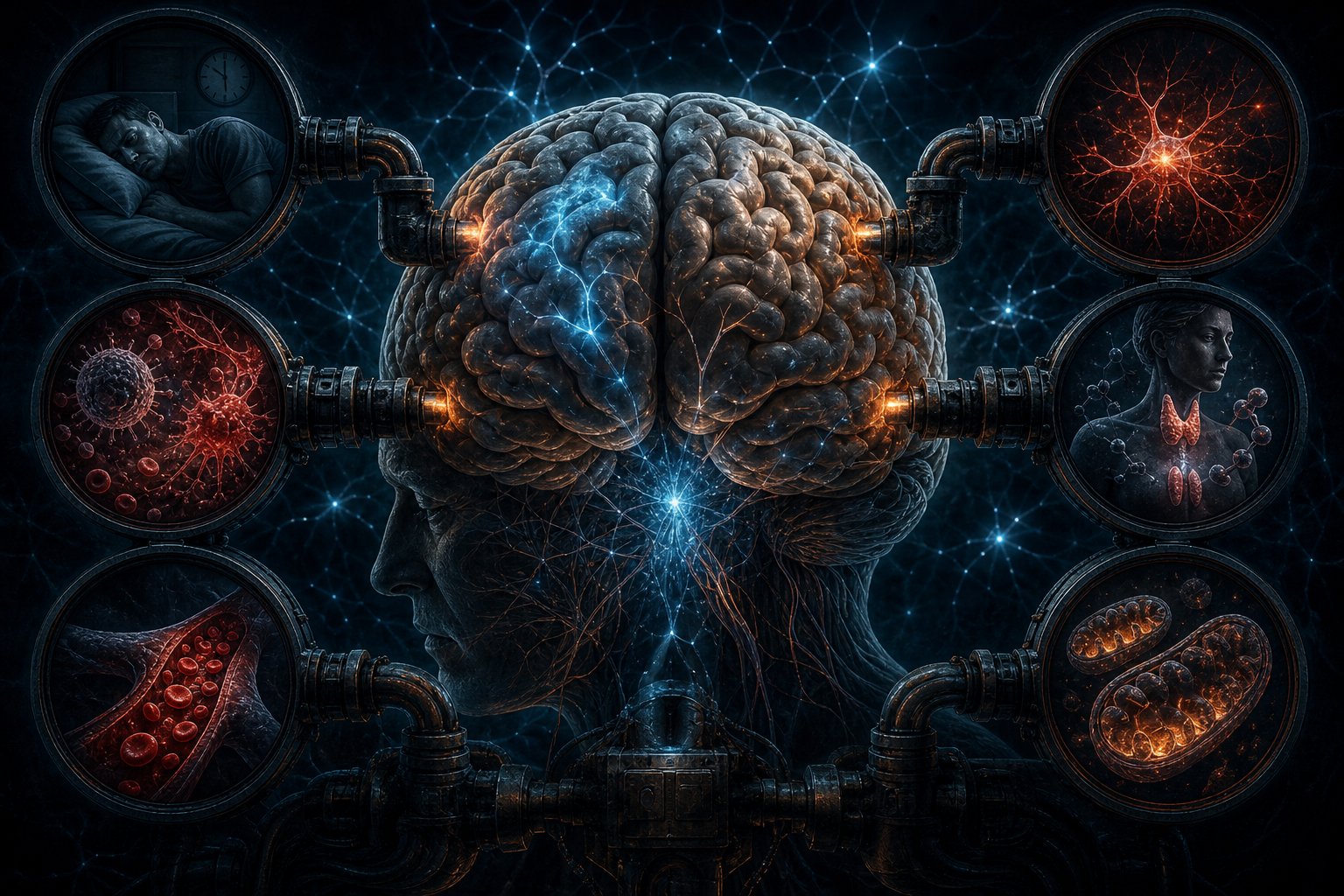

A cognitive symptom does not identify its own cause. “Brain fog,” poor memory, low motivation, slow processing, distractibility, and emotional instability are shared outputs that can be produced by different failures upstream. Poor sleep quality is one of the largest: not only staying awake all night, but sleeping too little for months, waking repeatedly, having sleep apnea, sleeping at inconsistent times, or failing to obtain enough deep and REM sleep. Sleep loss weakens attention and working memory immediately, interferes with memory consolidation, worsens emotional control, changes appetite and insulin sensitivity, and increases the effort required to perform the same task. Someone can feel partially adapted to chronic sleep restriction while remaining objectively impaired, which makes subjective energy an unreliable measure of recovery.
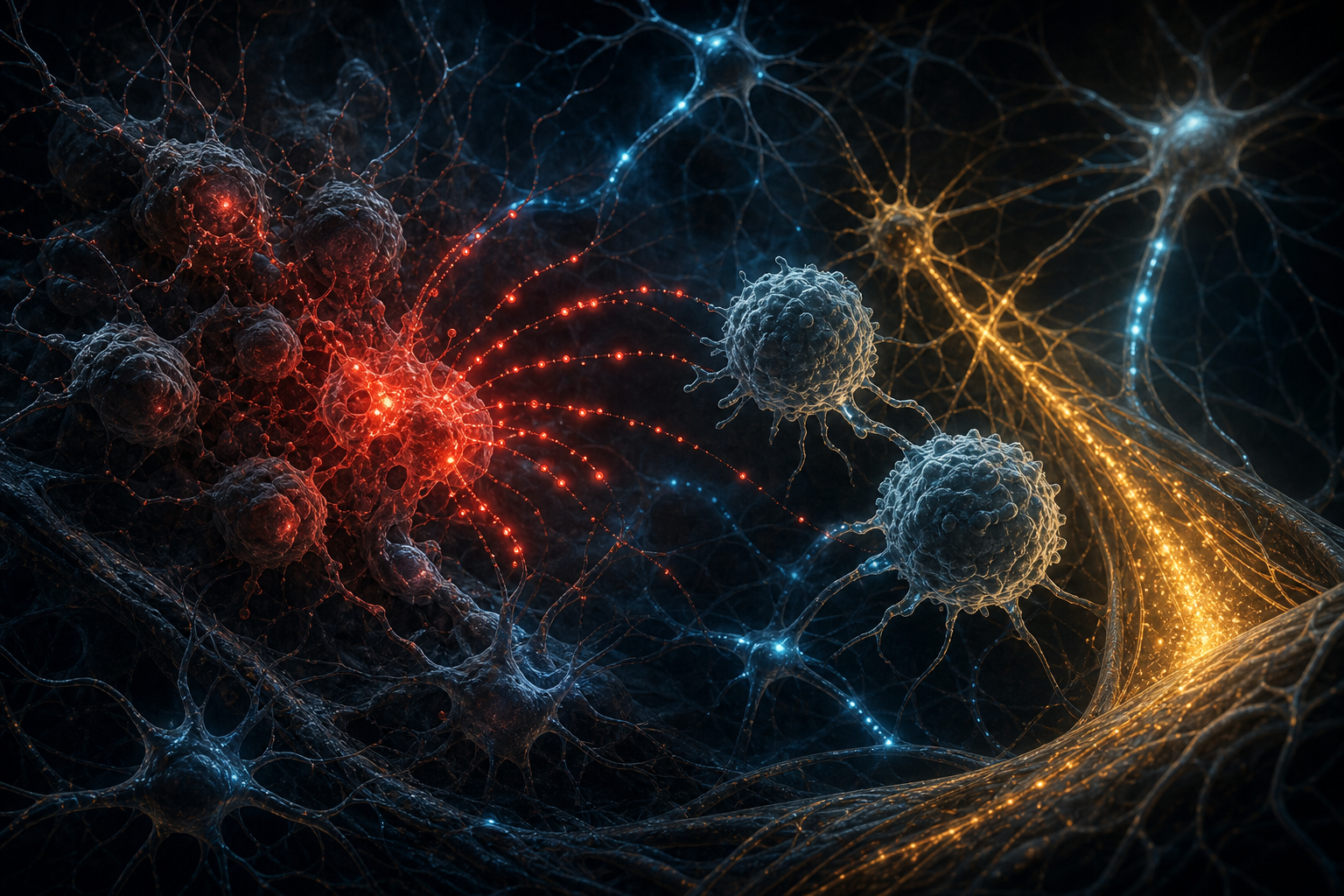
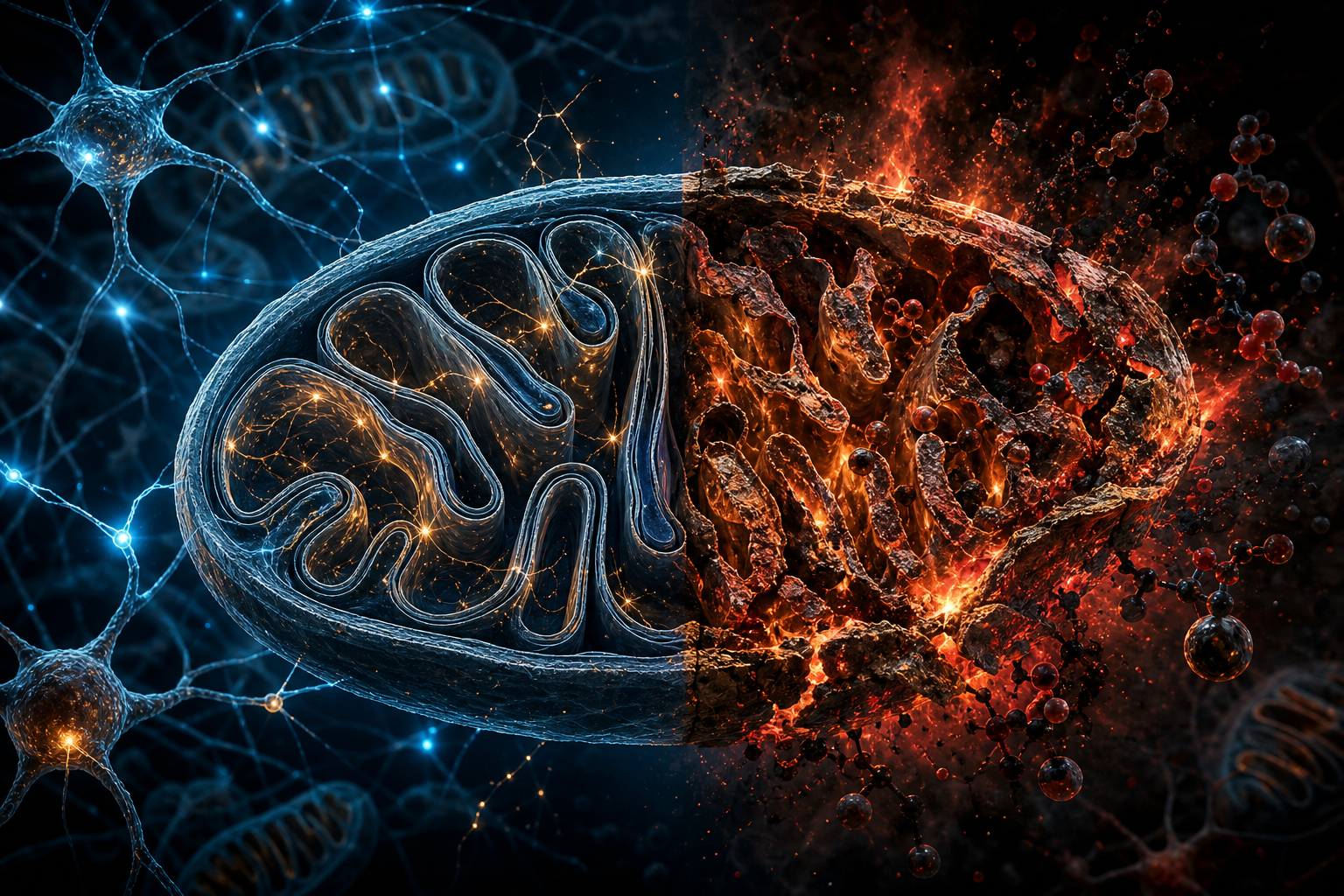
Metabolic dysfunction means the systems supplying and using energy are not working properly. Insulin resistance can disrupt glucose regulation; hypoglycemia can abruptly reduce available fuel; anemia can reduce oxygen delivery; mitochondrial dysfunction can lower ATP production; and poor cerebral blood flow can prevent oxygen and glucose from reaching active tissue at the required rate. Neuroinflammation is immune activity inside the nervous system, involving cells such as microglia and signaling molecules called cytokines. Inflammation is the cell signaling for help and scaling down its energy expenditure to maintain itself until it becomes healthy again. It can produce fatigue, reduced motivation, pain sensitivity, and slowed cognition as part of the same biology that creates sickness behavior during infection.
Oxidative stress occurs when reactive oxygen species exceed antioxidant defenses and repair capacity, allowing damage to accumulate in membranes, proteins, mitochondria, and DNA. Some reactive oxygen signaling is normal and useful; the problem is an unmanaged excess, not the mere existence of oxidation.
Neurotransmitter dysregulation does not simply mean that one chemical is “low.” A transmitter can be synthesized too slowly, released too strongly, cleared too quickly, broken down too slowly, received by altered receptors, or active in the wrong circuit at the wrong time. Dopamine and norepinephrine—the major catecholamines relevant here—can produce low motivation and poor vigilance when signaling is insufficient, but anxiety, impulsivity, insomnia, or cognitive rigidity when signaling is excessive. Acetylcholine dysfunction can impair attention and the encoding of new memories. Glutamate and GABA imbalance can disturb learning and network stability. Histamine, adenosine, orexin, serotonin, and endogenous opioid signaling can alter wakefulness, sleep pressure, mood, pain, and reward. BDNF is not a neurotransmitter; it is a neurotrophic factor that helps neurons survive and change. Reduced BDNF-related signaling can constrain learning, adaptation, and repair without producing one simple “BDNF deficiency” symptom.
Hormones change the operating state of the nervous system. Thyroid hormones help regulate metabolic-energetic pace; too little can produce fatigue and slow thinking, while too much can produce agitation and poor concentration. Cortisol mobilizes resources during stress, but chronically disrupted stress signaling can impair sleep, memory, mood, and immune regulation. Growth hormone participates in tissue repair and is strongly connected to deep sleep. Hormonal effects are usually system-wide, which is why changing a hormone in pursuit of one cognitive effect can create costs elsewhere.
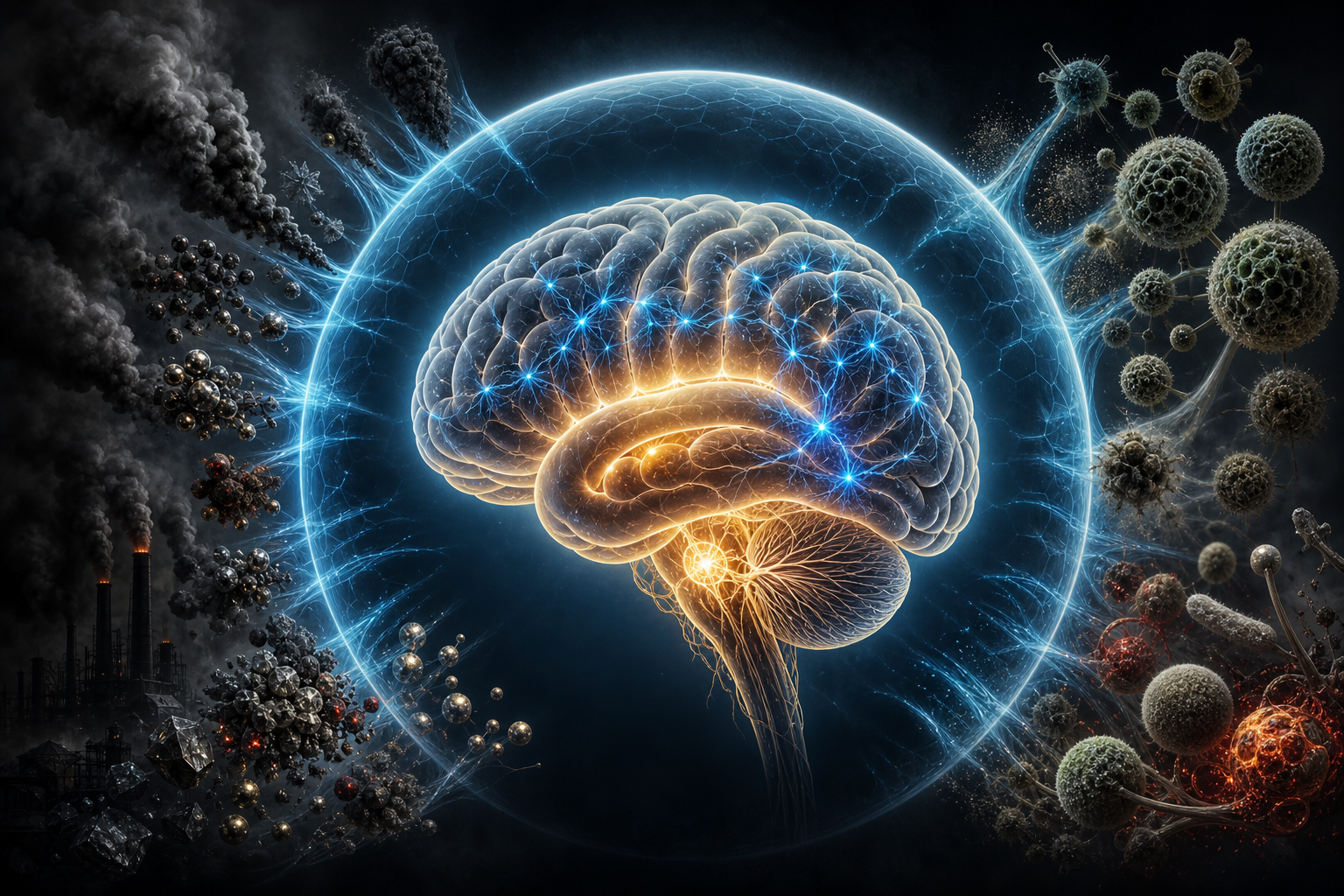
The physical delivery system can fail too. Vascular dysfunction means blood vessels cannot deliver or regulate blood (and thus supplies) effectively. Hypertension damages small vessels; endothelial dysfunction reduces the vessel lining’s ability to dilate and regulate flow; stroke blocks or ruptures a vessel; and cardiovascular or respiratory disease can reduce oxygen delivery. Structural and functional neurological diseases—traumatic brain injury, epilepsy, tumors, neurodegeneration, demyelinating disease, infection, and others—can damage neurons, myelin, or network organization directly. Environmental exposures such as air pollution, heavy metals, pesticides, some molds in susceptible contexts, allergens, endocrine disruptors, and drugs can act through inflammation, oxidative damage, hormonal disruption, vascular injury, or impaired sleep.
The shared-output problem is why the correct response to cognitive decline is not to select a stimulant from the symptom alone. If low energy is caused by sleep apnea, the stimulant can hide sleepiness while the oxygen disruption continues. If poor attention is caused by iron deficiency, more dopamine is not the first missing variable. If motivation collapsed after chronic stress and sleep fragmentation, a compound that temporarily forces wakefulness may increase output while deepening the causal deficit. Begin with the output, trace it upstream, and identify the limiting node. The symptom tells you that the system is failing; it does not tell you which lever to pull.
Last edited: