The problem with Chess clarified

hypernormie

hypernormie

Only the truth is beautiful.
Joined
Nov 19, 2022
Posts
5,622
Reputation
7,449
You can sit for 10 minutes and nothing happens. The whole game just sitting there shuffling pieces back and forth waiting for the other guy to do something stupid

It rewards far too much passivity at the lower levels, the design of the game allows for the board state to remain far too stable which means people can win by simply refusing to do anything faster and running out the clock (I understand the clock is part of the game)

But that's very gay to me

I guess you can overcome this by studying a bunch of chess but I think it's quite gay that the game allows for that type of play in the first place

I prefer games where every move necessarily forces you towards the conclusion and the winner is determined by who can find the most efficient path to victory given the total moves available

Games where by design it is either impossible or incredibly difficult to draw/ keep the board state stable. Games where there's no such thing as "shuffling"

Games I have found so far that accomplsih this are:

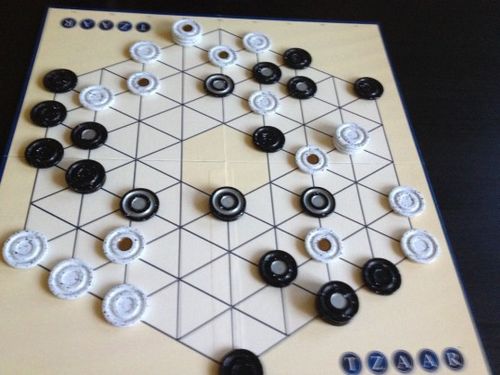
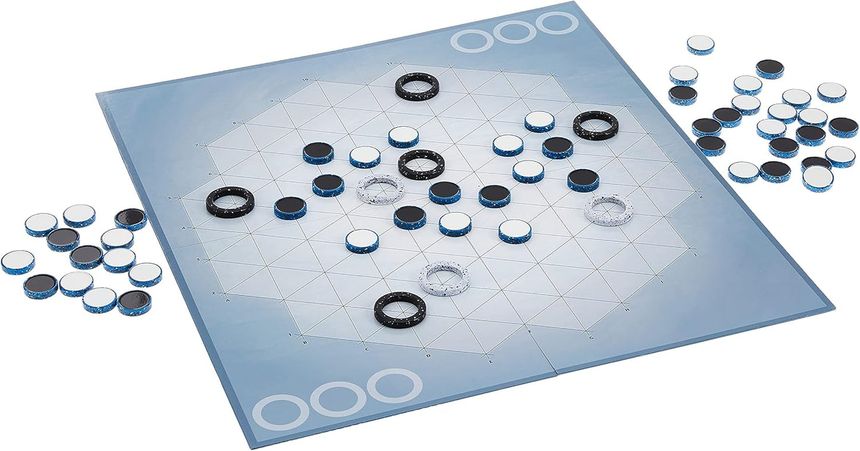
1. Gipf Project games like TZAAR and YINSH
1000024819

1000024820


These games are really good at overcoming this flaw by forcing every move to constrain you in multiple ways and having multiple win conditions such that neglecting to push for a victory in one way necessarily leaves you vulnerable to losing in another. The board state is also necessarily constantly dynamically changing which means stagnating moves are impossible, you can't make a move that does nothing because every move changes the structure of the play area


2. Quoridor


Very simple game that suffers from some of the opening move memorization flaws of Chess but completely removes the shuffling problem because it's a game of efficient path optimization. You simply cannot refuse to engage towards a conclusion because it's a battle of who can reach the conclusion in as little steps as possible. Wasting a move by "shuffling" necessarily puts you at a disadvantage.

3. Lines of Action


Very calculation heavy like chess but because every move has the potential to alter the state of other pieces on the board, it is much more difficult to "not do anything" by making a move, unlike in chess where you can make a move that doesn't impact the state of the board or other pieces in any significant way. In Lines of Action, making a move often alters the potential of other pieces on the board. This makes games much more dynamic and engaging from beginning to end.

4. Go
1000024822


Solves basically everything chess suffers from. Currently a bit too fucked up to really get into this as it requires a lot of holistic calculation which I can't do rn but from dabbling I can already see how it improves on the stagnation problems in chess. If you refuse to do anything, I will simply move to capture more territory despite your inaction. This means you will have to engage in some form with the moves I make.

5. Onitama


Another game with two win conditions that solves the stalling problem of Chess. Either capture the king or reach their Temple, and the moves available to do so are constantly rotating between players. This forces each player to improvise and plan ahead each turn. If you simply refuse to engage, you will lose in one way or another. The game design forces you to engage every turn or put yourself at a disadvantage.

There's a few more games I've found like Terrace or Shobu but I haven't played all of them yet and some don't have any versions online. The basic point is that all of these games have solved a core issue of chess which is that the state of the board can be too static which allows for drawish scenarios of no players having a clear advantage.

Many of these games are also far more robust to error than chess is. One simple mistake or lapse of judgement doesn't immediately irrevocably collapse your position and negate all of your previous decisions. They are far more a measure of cumulative advantage, something I think a more direct measures intelligence. This also occurs in chess but only after you have become so accustomed to the game that you never make any silly mistakes.

Now I know I've spoken aggressively against Chess and called it gay but I don't mean to offend any Chess players. I think many people get into Chess because it is simply the most accessible and popular abstract strategy board game out there and many simply push through these flaws until they reach a point where they either disappear or stop being so annoying.

Chess can be fun but I think this is a lot more dependent on who you are playing against and your level of previous experience

If you have managed to get good at chess and enjoy it all the power to you. I keep trying to play and it's just a roll of the dice whether or not it will be a boring game against someone who insists on being extremely passive. In these other games it's much more difficult to play passively, something has to happen each turn and I think that's a much more entertaining way to design a game.

But anyway, I'm genuinely interested, what are your thoughts?

@Nectar @Pony @unstable @Prøphet @N.N
@nvr3noug6 @Kainep @KKamikaze @Slayer @Amphisbaena @OverSince08 @Alexg_lover
 
Last edited:
  • +1
  • JFL
  • Hmm...
Reactions: ashdod_mogger, uterus77, GynoGladiator and 14 others
I think passivity being rewarded in chess isn't necessarily a bad thing, there are ways to counter a passive play style. Being aggressive is also rewarded if yk what you're doing. In my opinion, chess represents the most true to life form of strategic game because you can win either way and counter either way. If you get bored or cannot beat a passive style, then you are just the inferior player.
 
  • +1
Reactions: unstable
As a Chess player, Bump.
1000006809
 
  • Love it
Reactions: hypernormie
Chess is too light for me

IMG 6606
 
  • JFL
Reactions: ashdod_mogger, Mainlander, o_Owtf and 5 others
Chess is about outsmarting your opponent
 
  • +1
Reactions: Prøphet
I played chess once

Worst experience ever it’s so boring

Id rather jerk off :PepeBored:
 
  • Ugh..
  • JFL
Reactions: Ramirezmaxxer and hypernormie
I think passivity being rewarded in chess isn't necessarily a bad thing, there are ways to counter a passive play style. Being aggressive is also rewarded if yk what you're doing. In my opinion, chess represents the most true to life form of strategic game because you can win either way and counter either way. If you get bored or cannot beat a passive style, then you are just the inferior player.
Yeah I don't agree at all. If there was no clock on a chess game, many games would simply never end. To me that is a design flaw. A game should force a conclusion. Theoretically the most optimal state of a chess game where both players play perfectly always ends in a draw and that begs the question why even play? The game would be measuring who is the first one to make an error rather than who is the first one to discover the solution.

The game doesn't necessarily force a victor and so what it is measuring is error avoidance rather than creative problem solving. You can try and creatively problem solve, that is what most people do in chess and where the fun is usually found but this isn't a necessary property of the game. The game doesn't force you to solve the problem of checkmating the opponent, it simply gives you the option to do so.

I guess theoretically chess is pure in the sense that if two perfect players played neither would ever lose to each other.
 
  • +1
Reactions: Foodiepill
  • +1
Reactions: Chance1
Chess is about outsmarting your opponent
To some extent it is, a lot of the time it's about not being the first person to make a mistake
 
  • +1
Reactions: Bars
If you get bored or cannot beat a passive style, then you are just the inferior player.
I also agree though I guess part of what I'm saying is I find this can be kind of boring for a game
 
  • +1
Reactions: Foodiepill
Damn no one has any opinions :cry:

Not even to just call me a low IQ faggot with bad takes :cry:

Really any engagement will suffice I spent like 10 minutes writing ts :cry:
 
Damn no one has any opinions :cry:

Not even to just call me a low IQ faggot with bad takes :cry:

Really any engagement will suffice I spent like 10 minutes writing ts :cry:
people on here aren't smart enough to read the whole thing, let alone reply.
 
  • So Sad
Reactions: hypernormie
people on here aren't smart enough to read the whole thing, let alone reply.
Well I appreciate your reply it gave me some food for thought
 
  • Love it
Reactions: Foodiepill
What elo are you
 
  • +1
Reactions: hypernormie
What elo are you
528 rn highest 598 but I could probably be higher if I played more because I average like 75-80% accuracy a game
 
  • +1
Reactions: Prøphet
You can sit for 10 minutes and nothing happens. The whole game just sitting there shuffling pieces back and forth waiting for the other guy to do something stupid

It rewards far too much passivity at the lower levels, the design of the game allows for the board state to remain far too stable which means people can win by simply refusing to do anything faster and running out the clock (I understand the clock is part of the game)

But that's very gay to me

I guess you can overcome this by studying a bunch of chess but I think it's quite gay that the game allows for that type of play in the first place

I prefer games where every move necessarily forces you towards the conclusion and the winner is determined by who can find the most efficient path to victory given the total moves available

Games where by design it is either impossible or incredibly difficult to draw/ keep the board state stable. Games where there's no such thing as "shuffling"

Games I have found so far that accomplsih this are:

1. Gipf Project games like TZAAR and YINSH
View attachment 4786109
View attachment 4786108


These games are really good at overcoming this flaw by forcing every move to constrain you in multiple ways and having multiple win conditions such that neglecting to push for a victory in one way necessarily leaves you vulnerable to losing in another. The board state is also necessarily constantly dynamically changing which means stagnating moves are impossible, you can't make a move that does nothing because every move changes the structure of the play area


2. Quoridor


Very simple game that suffers from some of the opening move memorization flaws of Chess but completely removes the shuffling problem because it's a game of efficient path optimization. You simply cannot refuse to engage towards a conclusion because it's a battle of who can reach the conclusion in as little steps as possible. Wasting a move by "shuffling" necessarily puts you at a disadvantage.

3. Lines of Action


Very calculation heavy like chess but because every move has the potential to alter the state of other pieces on the board, it is much more difficult to "not do anything" by making a move, unlike in chess where you can make a move that doesn't impact the state of the board or other pieces in any significant way. In Lines of Action, making a move often alters the potential of other pieces on the board. This makes games much more dynamic and engaging from beginning to end.

4. Go
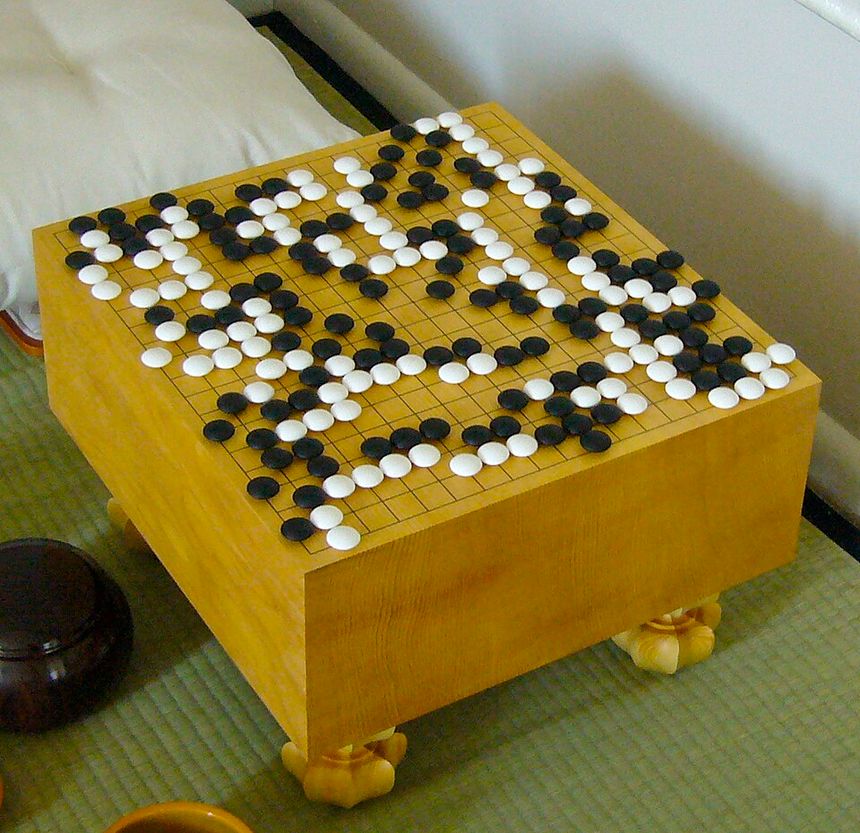
View attachment 4786118


Solves basically everything chess suffers from. Currently a bit too fucked up to really get into this as it requires a lot of holistic calculation which I can't do rn but from dabbling I can already see how it improves on the stagnation problems in chess. If you refuse to do anything, I will simply move to capture more territory despite your inaction. This means you will have to engage in some form with the moves I make.

5. Onitama


Another game with two win conditions that solves the stalling problem of Chess. Either capture the king or reach their Temple, and the moves available to do so are constantly rotating between players. This forces each player to improvise and plan ahead each turn. If you simply refuse to engage, you will lose in one way or another. The game design forces you to engage every turn or put yourself at a disadvantage.

There's a few more games I've found like Terrace or Shobu but I haven't played all of them yet and some don't have any versions online. The basic point is that all of these games have solved a core issue of chess which is that the state of the board can be too static which allows for drawish scenarios of no players having a clear advantage.

Many of these games are also far more robust to error than chess is. One simple mistake or lapse of judgement doesn't immediately irrevocably collapse your position and negate all of your previous decisions. They are far more a measure of cumulative advantage, something I think a more direct measures intelligence. This also occurs in chess but only after you have become so accustomed to the game that you never make any silly mistakes.

Now I know I've spoken aggressively against Chess and called it gay but I don't mean to offend any Chess players. I think many people get into Chess because it is simply the most accessible and popular abstract strategy board game out there and many simply push through these flaws until they reach a point where they either disappear or stop being so annoying.

Chess can be fun but I think this is a lot more dependent on who you are playing against and your level of previous experience

If you have managed to get good at chess and enjoy it all the power to you. I keep trying to play and it's just a roll of the dice whether or not it will be a boring game against someone who insists on being extremely passive. In these other games it's much more difficult to play passively, something has to happen each turn and I think that's a much more entertaining way to design a game.

But anyway, I'm genuinely interested, what are your thoughts?

@Nectar @Pony @unstable @Prøphet @N.N
@nvr3noug6 @Kainep @KKamikaze @Slayer @Amphisbaena @OverSince08 @Alexg_lover

I gotta try go one day, Emanuel Lasker once said

"The rules of Go are so elegant, organic, and rigorously logical that if intelligent life forms exist elsewhere in the universe, they almost certainly play Go."

 
Last edited:
  • +1
Reactions: hypernormie
I gotta try go one day, Emanuel Lasker once said

"The rules of Go are so elegant, organic, and rigorously logical that if intelligent life forms exist elsewhere in the universe, they almost certainly play Go."

Lol he's dragging it a bit but I guess with pure abstracts there is a high possibility because they are so minimalistic
 
  • +1
Reactions: Divineincel
Like I just lost a game against some dude who made a bunch of blunders but got the advantage on time. That feels so gay to me. Clearly the worse player but wins because he just made a lot of dumb moves quicker. I guess I can just play only long games but the fact that you can make mistakes all game and win on time is lame. I don't want to have to commit to a 30 minutes game every time I play but if you play anything shorter shit like that happens
 
  • +1
Reactions: Prøphet and Divineincel
Not to mention Indians love to talk shit on chess.com for some reason. They are always calling me a stupid American, yet I'm playing super casually with a mental handicap and they are the same rating as me talking shit for winning on time

Then I check their profile and it's just loss after loss after loss 50% accuracy games

This very rarely happens with anyone but an Indian and I'm not out here losing to Indians all the time but when I do, especially if it's on time and I was winning the whole game positionally, I can expect to get some snarky message

Unfortunately the game design allows for that to happen. You can get these cheap wins even if you are on the whole a worse player

Genuinely laughable
 
  • JFL
  • +1
Reactions: Prøphet and Divineincel
It’s either a win or lose situation
I remember beating almost every game now I have gone down to a higher ratio of losses
 
  • +1
Reactions: ashdod_mogger and Divineincel
It’s either a win or lose situation
I remember beating almost every game now I have gone down to a higher ratio of losses
All games are win or lose but actually the point of this post is that Chess isn't as much of a win or lose game. It doesn't force an outcome nearly as much as the other games I've mentioned which can cause mid game stagnation where neither player is really doing anything because the first person to make an attack is at a disadvantage

At least this is what I've noticed in low elo, maybe it changes at higher elo, in fact I'm sure it probably does, but these other games I've mentioned don't require a ton of prerequisite experience to overcome this problem, the problem is mitigated by the deisgn of the game
 
  • +1
Reactions: Mainlander, Divineincel and Nectar
All games are win or lose but actually the point of this post is that Chess isn't as much of a win or lose game. It doesn't force an outcome nearly as much as the other games I've mentioned which can cause mid game stagnation where neither player is really doing anything because the first person to make an attack is at a disadvantage

At least this is what I've noticed in low elo, maybe it changes at higher elo, in fact I'm sure it probably does, but these other games I've mentioned don't require a ton of prerequisite experience to overcome this problem, the problem is mitigated by the deisgn of the game
Do you still have the og app on your device?
 
  • +1
Reactions: hypernormie
I don't play chess now but there are two chess grandmasters from my town and everyone in my town back home is obsessed with it and challenging anyone to a game of a chess is asking for humiliation so I generally avoid.
 
  • JFL
  • +1
Reactions: hypernormie and Divineincel
Do you still have the og app on your device?
Yeah I was thinking of deleting it today but I think I will continue to dabble despite my frustrations
 
  • +1
Reactions: Nectar
I don't play chess now but there are two chess grandmasters from my town and everyone in my town back home is obsessed with it and challenging anyone to a game of a chess is asking for humiliation so I generally avoid.
That is interestingly a relevant problem for a game like Chess. The sheer amount of history the game has means that many people have solved many problems and crystallized intelligence becomes more influential over time. This makes it so playing against someone with alot of previous experience can be very difficult

Compare this to some of the games I listed which are much more purely "abstract." This reduces reliance on crystalized intelligence. None are perfect but I think they do a better job of interfering with the pattern recognition ability that chess rewards. Ideally each board state is a completely novel problem to solve and taxes fluid intelligence more than crystallized.
 
  • +1
Reactions: Jason Voorhees
Like I just lost a game against some dude who made a bunch of blunders but got the advantage on time. That feels so gay to me. Clearly the worse player but wins because he just made a lot of dumb moves quicker. I guess I can just play only long games but the fact that you can make mistakes all game and win on time is lame. I don't want to have to commit to a 30 minutes game every time I play but if you play anything shorter shit like that happens
How are you losing on time if they’re blundering

Don’t play anything below 10 minutes

And I’m almost the same Elo as you I’m 650 what helps me is doing puzzles on lichess, they teach you tactics and the more you do the more it becomes an instinct like pattern recognition, you can do cool shit like forks skewers pins double checks sacrifices etc it truly does get more fun the more you learn about it and you can start to see what your opponent will do before they do it also if you study some beginner openings it teaches you a lot
 
How are you losing on time if they’re blundering
I'm not playing the fastest myself but it's like it's easier to make bad moves quickly

This is something which is my fault but still it's just annoying because you can just stall a game so easily by not doing anything

Don’t play anything below 10 minutes

And I’m almost the same Elo as you I’m 650 what helps me is doing puzzles on lichess, they teach you tactics and the more you do the more it becomes an instinct like pattern recognition, you can do cool shit like forks skewers pins double checks sacrifices etc it truly does get more fun the more you learn about it and you can start to see what your opponent will do before they do it also if you study some beginner openings it teaches you a lot
Yeah I know it can be more fun the more you learn. I acknowledge that in the post. I think a lot of chess players sort of push themselves through the beginning phases which are far less mentally engaging than the intermediate on onwards

I can see how I can easily get better but for some reason I don't feel much motivation to do so with this game. There's something about the nature of the task that does not feel very engaging to me. I tried to my best to elaborate what it is but maybe I'm not even entirely sure what it is. There's certain aspects of chess that just rub me the wrong way regardless of whether I win or lose.

I think maybe when I'm not dealing with health issues I may have more patience with the stagnating aspects of the game.
 
  • +1
Reactions: Prøphet
You can sit for 10 minutes and nothing happens. The whole game just sitting there shuffling pieces back and forth waiting for the other guy to do something stupid

It rewards far too much passivity at the lower levels, the design of the game allows for the board state to remain far too stable which means people can win by simply refusing to do anything faster and running out the clock (I understand the clock is part of the game)

But that's very gay to me

I guess you can overcome this by studying a bunch of chess but I think it's quite gay that the game allows for that type of play in the first place

I prefer games where every move necessarily forces you towards the conclusion and the winner is determined by who can find the most efficient path to victory given the total moves available

Games where by design it is either impossible or incredibly difficult to draw/ keep the board state stable. Games where there's no such thing as "shuffling"

Games I have found so far that accomplsih this are:

1. Gipf Project games like TZAAR and YINSH
View attachment 4786109
View attachment 4786108


These games are really good at overcoming this flaw by forcing every move to constrain you in multiple ways and having multiple win conditions such that neglecting to push for a victory in one way necessarily leaves you vulnerable to losing in another. The board state is also necessarily constantly dynamically changing which means stagnating moves are impossible, you can't make a move that does nothing because every move changes the structure of the play area


2. Quoridor


Very simple game that suffers from some of the opening move memorization flaws of Chess but completely removes the shuffling problem because it's a game of efficient path optimization. You simply cannot refuse to engage towards a conclusion because it's a battle of who can reach the conclusion in as little steps as possible. Wasting a move by "shuffling" necessarily puts you at a disadvantage.

3. Lines of Action


Very calculation heavy like chess but because every move has the potential to alter the state of other pieces on the board, it is much more difficult to "not do anything" by making a move, unlike in chess where you can make a move that doesn't impact the state of the board or other pieces in any significant way. In Lines of Action, making a move often alters the potential of other pieces on the board. This makes games much more dynamic and engaging from beginning to end.

4. Go
View attachment 4786118


Solves basically everything chess suffers from. Currently a bit too fucked up to really get into this as it requires a lot of holistic calculation which I can't do rn but from dabbling I can already see how it improves on the stagnation problems in chess. If you refuse to do anything, I will simply move to capture more territory despite your inaction. This means you will have to engage in some form with the moves I make.

5. Onitama


Another game with two win conditions that solves the stalling problem of Chess. Either capture the king or reach their Temple, and the moves available to do so are constantly rotating between players. This forces each player to improvise and plan ahead each turn. If you simply refuse to engage, you will lose in one way or another. The game design forces you to engage every turn or put yourself at a disadvantage.

There's a few more games I've found like Terrace or Shobu but I haven't played all of them yet and some don't have any versions online. The basic point is that all of these games have solved a core issue of chess which is that the state of the board can be too static which allows for drawish scenarios of no players having a clear advantage.

Many of these games are also far more robust to error than chess is. One simple mistake or lapse of judgement doesn't immediately irrevocably collapse your position and negate all of your previous decisions. They are far more a measure of cumulative advantage, something I think a more direct measures intelligence. This also occurs in chess but only after you have become so accustomed to the game that you never make any silly mistakes.

Now I know I've spoken aggressively against Chess and called it gay but I don't mean to offend any Chess players. I think many people get into Chess because it is simply the most accessible and popular abstract strategy board game out there and many simply push through these flaws until they reach a point where they either disappear or stop being so annoying.

Chess can be fun but I think this is a lot more dependent on who you are playing against and your level of previous experience

If you have managed to get good at chess and enjoy it all the power to you. I keep trying to play and it's just a roll of the dice whether or not it will be a boring game against someone who insists on being extremely passive. In these other games it's much more difficult to play passively, something has to happen each turn and I think that's a much more entertaining way to design a game.

But anyway, I'm genuinely interested, what are your thoughts?

@Nectar @Pony @unstable @Prøphet @N.N
@nvr3noug6 @Kainep @KKamikaze @Slayer @Amphisbaena @OverSince08 @Alexg_lover

I remember beating my retarded 3 IQ friend at chess back when we used to play and a few weeks ago we played one match and he shit on me

This game is unfair
 
  • JFL
Reactions: hypernormie
I remember beating my retarded 3 IQ friend at chess back when we used to play and a few weeks ago we played one match and he shit on me

This game is unfair
The friend in question:
1000024842
 
  • JFL
  • +1
Reactions: Prøphet and Aox Ofwar
You can sit for 10 minutes and nothing happens. The whole game just sitting there shuffling pieces back and forth waiting for the other guy to do something stupid

It rewards far too much passivity at the lower levels, the design of the game allows for the board state to remain far too stable which means people can win by simply refusing to do anything faster and running out the clock (I understand the clock is part of the game)

But that's very gay to me

I guess you can overcome this by studying a bunch of chess but I think it's quite gay that the game allows for that type of play in the first place

I prefer games where every move necessarily forces you towards the conclusion and the winner is determined by who can find the most efficient path to victory given the total moves available

Games where by design it is either impossible or incredibly difficult to draw/ keep the board state stable. Games where there's no such thing as "shuffling"

Games I have found so far that accomplsih this are:

1. Gipf Project games like TZAAR and YINSH
View attachment 4786109
View attachment 4786108


These games are really good at overcoming this flaw by forcing every move to constrain you in multiple ways and having multiple win conditions such that neglecting to push for a victory in one way necessarily leaves you vulnerable to losing in another. The board state is also necessarily constantly dynamically changing which means stagnating moves are impossible, you can't make a move that does nothing because every move changes the structure of the play area


2. Quoridor


Very simple game that suffers from some of the opening move memorization flaws of Chess but completely removes the shuffling problem because it's a game of efficient path optimization. You simply cannot refuse to engage towards a conclusion because it's a battle of who can reach the conclusion in as little steps as possible. Wasting a move by "shuffling" necessarily puts you at a disadvantage.

3. Lines of Action


Very calculation heavy like chess but because every move has the potential to alter the state of other pieces on the board, it is much more difficult to "not do anything" by making a move, unlike in chess where you can make a move that doesn't impact the state of the board or other pieces in any significant way. In Lines of Action, making a move often alters the potential of other pieces on the board. This makes games much more dynamic and engaging from beginning to end.

4. Go
View attachment 4786118


Solves basically everything chess suffers from. Currently a bit too fucked up to really get into this as it requires a lot of holistic calculation which I can't do rn but from dabbling I can already see how it improves on the stagnation problems in chess. If you refuse to do anything, I will simply move to capture more territory despite your inaction. This means you will have to engage in some form with the moves I make.

5. Onitama


Another game with two win conditions that solves the stalling problem of Chess. Either capture the king or reach their Temple, and the moves available to do so are constantly rotating between players. This forces each player to improvise and plan ahead each turn. If you simply refuse to engage, you will lose in one way or another. The game design forces you to engage every turn or put yourself at a disadvantage.

There's a few more games I've found like Terrace or Shobu but I haven't played all of them yet and some don't have any versions online. The basic point is that all of these games have solved a core issue of chess which is that the state of the board can be too static which allows for drawish scenarios of no players having a clear advantage.

Many of these games are also far more robust to error than chess is. One simple mistake or lapse of judgement doesn't immediately irrevocably collapse your position and negate all of your previous decisions. They are far more a measure of cumulative advantage, something I think a more direct measures intelligence. This also occurs in chess but only after you have become so accustomed to the game that you never make any silly mistakes.

Now I know I've spoken aggressively against Chess and called it gay but I don't mean to offend any Chess players. I think many people get into Chess because it is simply the most accessible and popular abstract strategy board game out there and many simply push through these flaws until they reach a point where they either disappear or stop being so annoying.

Chess can be fun but I think this is a lot more dependent on who you are playing against and your level of previous experience

If you have managed to get good at chess and enjoy it all the power to you. I keep trying to play and it's just a roll of the dice whether or not it will be a boring game against someone who insists on being extremely passive. In these other games it's much more difficult to play passively, something has to happen each turn and I think that's a much more entertaining way to design a game.

But anyway, I'm genuinely interested, what are your thoughts?

@Nectar @Pony @unstable @Prøphet @N.N
@nvr3noug6 @Kainep @KKamikaze @Slayer @Amphisbaena @OverSince08 @Alexg_lover

not an issue if you're above 3 digit elo just get better also you can play lower time settings
 
  • +1
Reactions: Prøphet
not an issue if you're above 3 digit elo just get better also you can play lower time settings
I state in the post that I'm aware being above 3 digit likely solves the problem. The point I was making is that other games don't have this experience barrier to avoid certain problems. You don't need to reach a certain elo to really start playing.

The solution is actually longer games however because stalling is less of an issue if time is not a factor

What I find annoying is spending 5-10 minutes on a game where neither player explicitly tries to win because the position is such that both players are better off trying to hold out their defenses than they are to try and attack
 
How are you losing on time if they’re blundering

Don’t play anything below 10 minutes

And I’m almost the same Elo as you I’m 650 what helps me is doing puzzles on lichess, they teach you tactics and the more you do the more it becomes an instinct like pattern recognition, you can do cool shit like forks skewers pins double checks sacrifices etc it truly does get more fun the more you learn about it and you can start to see what your opponent will do before they do it also if you study some beginner openings it teaches you a lot
I've actually decided on deleting the app this game is gay as hell
 
  • JFL
Reactions: Prøphet
not an issue if you're above 3 digit elo just get better also you can play lower time settings
Another issue is you can spend 5-10 minutes on a game and have it all erased by one bad move or oversight

That's bad game design imo

Good games design shouldn't be so fragile to momentary lapses of judgement, not that you should be allowed to play like an idiot but it shouldn't be that you can play like a genius and one move completely negates all of that

@Prøphet
 
there top players on average are a bunch of currycels or nd ltns to
 
  • JFL
Reactions: hypernormie
where does baccarat rank in here :Animedance:
I'm a little cooked so it's hard to exactly describe the areas that I'm referencing here but you could probably come up with a name for them

Chess is good because it's complex but it's bad because it's very fragile, one mistake can ruin the game

Quoridor is also like this so suffer in that araa but succeeds in another area by forcing forward momentum unlike chess where stagnation is common

A game like Yinsh on the other hand is very "robust" in that the game is designed such that one mistake cannot dictate the winner as winning is cumulative and gets progressively harder as you get closer to victory

So idk

We can call it

-Depth per move
-Error Tolerance or maybe fragility
-Momentum

Imo a good game has high depth per move, high error tolerance (this prioritizes consistent intelligent decisions over momentary lucky breaks) and high momentum

Yinsh, and Lines of Action are like this, Chess and Quoridor not so much

Go for example has high depth per move, high error tolerance but low momentum
 
  • +1
Reactions: kisslessvirgin
was a joke, its a gambling game with only 1 decision. unless you already know and are being sarcastic not really mentally functioning rn so i cant tell.
I literally know nothing about Baccarat I know it's a game people play in Casinos but I don't have much interest in Gambling so I never looked into it
 
  • +1
Reactions: kisslessvirgin
I literally know nothing about Baccarat I know it's a game people play in Casinos but I don't have much interest in Gambling so I never looked into it
its a simple game, you pick banker and player and thats it. i gamble occasionally.
 
there top players on average are a bunch of currycels or nd ltns to
I have nothing against top chess players lol I think the high prevalence of curry Grandmasters actually does a lot to help India's reputation
 
I'm a little cooked so it's hard to exactly describe the areas that I'm referencing here but you could probably come up with a name for them

Chess is good because it's complex but it's bad because it's very fragile, one mistake can ruin the game

Quoridor is also like this so suffer in that araa but succeeds in another area by forcing forward momentum unlike chess where stagnation is common

A game like Yinsh on the other hand is very "robust" in that the game is designed such that one mistake cannot dictate the winner as winning is cumulative and gets progressively harder as you get closer to victory

So idk

We can call it

-Depth per move
-Error Tolerance or maybe fragility
-Momentum

Imo a good game has high depth per move, high error tolerance (this prioritizes consistent intelligent decisions over momentary lucky breaks) and high momentum

Yinsh, and Lines of Action are like this, Chess and Quoridor not so much

Go for example has high depth per move, high error tolerance but low momentum
i get what you mean, there needs to be a balance between mistake tolererance and punishment and adjust as the game carries on. and i agree for the most part, but i also enjoy the variability of each game, its entertaining/enjoyable knowing chess can be lost at any point and the other games you mention have their own unique characteristic of progression
 
low kwalty rambling but i think you get my point
 
Interesting that you mention passivity being rewarded on specifically lower levels of Chess. Isn't it the opposite? Typically you see super GMs play these theoretical positions leading into long drawn out endgames where they don't make any risky moves, they just fuck about until they agree to a draw. I think there's been various players complaining of this and that there's a need at the higher levels to destabilize the game somehow, and that only at lower levels like 2000 elo is the game truly enjoyable.

Othello is pretty cool too, never heard of lines of action before but it seems like it might be a bit similar.
 
  • +1
Reactions: hypernormie
i get what you mean, there needs to be a balance between mistake tolererance and punishment and adjust as the game carries on. and i agree for the most part, but i also enjoy the variability of each game, its entertaining/enjoyable knowing chess can be lost at any point and the other games you mention have their own unique characteristic of progression
I think if I was healthier I would find it more bearable but tbh regardless of how much cogntitive energy I can expend towards a board game it seems to be that it will always be kind of lame to have a game be able to be decided so abruptly by factors which aren't directly related to problem solving

So in a way my dislike of chess is coping but I think most people aren't not coping so much as they are in a position to more easily ignore the flaw
 
  • +1
Reactions: kisslessvirgin
Interesting that you mention passivity being rewarded on specifically lower levels of Chess. Isn't it the opposite? Typically you see super GMs play these theoretical positions leading into long drawn out endgames where they don't make any risky moves, they just fuck about until they agree to a draw. I think there's been various players complaining of this and that there's a need at the higher levels to destabilize the game somehow, and that only at lower levels like 2000 elo is the game truly enjoyable.

Othello is pretty cool too, never heard of lines of action before but it seems like it might be a bit similar.
Passivity in lower time controls so 5 and below

But maybe passivity isn't even the best way to describe it

What I mean is basically you can win a game by simply being the person who was quicker at making passive moves because the game doesn't exactly force an outcome by design. You can easily stall out the clock or push the game towards a draw

This is what I mean in my other comment here mentioning momentum
I'm a little cooked so it's hard to exactly describe the areas that I'm referencing here but you could probably come up with a name for them

Chess is good because it's complex but it's bad because it's very fragile, one mistake can ruin the game

Quoridor is also like this so suffer in that araa but succeeds in another area by forcing forward momentum unlike chess where stagnation is common

A game like Yinsh on the other hand is very "robust" in that the game is designed such that one mistake cannot dictate the winner as winning is cumulative and gets progressively harder as you get closer to victory

So idk

We can call it

-Depth per move
-Error Tolerance or maybe fragility
-Momentum

Imo a good game has high depth per move, high error tolerance (this prioritizes consistent intelligent decisions over momentary lucky breaks) and high momentum

Yinsh, and Lines of Action are like this, Chess and Quoridor not so much

Go for example has high depth per move, high error tolerance but low momentum

In a game like Quoridor every move necessarily brings you closer to the final conclusion, there is no stalling moves or waiting moves

A game like Tzaar is also this way, every move must simplify the board towards the conclusion which means there's no using your turn to wait and see what happens

In these games long drawn out end games to an inevitable draw are just not possible. The game is engaging from beginning to end because the problem of winning must be solved every turn instead of occasionally when the opportunity strikes. It's a battle of who can find the most efficient route to victory rather than who can avoid making the first mistake.
 
  • +1
Reactions: o_Owtf
Passivity in lower time controls so 5 and below

But maybe passivity isn't even the best way to describe it

What I mean is basically you can win a game by simply being the person who was quicker at making passive moves because the game doesn't exactly force an outcome by design. You can easily stall out the clock or push the game towards a draw

This is what I mean in my other comment here mentioning momentum


In a game like Quoridor every move necessarily brings you closer to the final conclusion, there is no stalling moves or waiting moves

A game like Tzaar is also this way, every move must simplify the board towards the conclusion which means there's no using your turn to wait and see what happens

In these games long drawn out end games to an inevitable draw are just not possible. The game is engaging from beginning to end because the problem of winning must be solved every turn instead of occasionally when the opportunity strikes. It's a battle of who can find the most efficient route to victory rather than who can avoid making the first mistake.
I think fragility is a good term, in that sense you're quite correct about blitz games encouraging safe play at lower levels. You can just keep shuffling your pieces, saving time, until your more enterprising opponent almost inevitably misses something and makes a big blunder. But I think it's also one of the aspects that makes chess captivating, you can suddenly have (sometimes really unexpected) combinations appear that lead to really cool tactical wins.
 
  • +1
Reactions: hypernormie

Similar threads

hypernormie
Replies
59
Views
346
iblamefranklin
iblamefranklin
uglybrownskinman
Replies
14
Views
94
Outlander
Outlander
Bryce
Replies
55
Views
446
disillusioned
disillusioned
optimisticzoomer
Replies
18
Views
184
lowtiersubhuman
lowtiersubhuman
imontheloose
Replies
48
Views
312
kisslessvirgin
K

Users who are viewing this thread

Back
Top