Seth Walsh

Iconoclast
Contributor
- Joined
- Jan 12, 2020
- Posts
- 11,075
- Reputation
- 22,654
The Quiet Room Pill: high social class is owning the right to recover
Social class is not just money, accent, school, looks, job title, or parents.
It is whether the world lets your nervous system switch off.
Most people talk about class as if it is a visible costume.
Watch.
Accent.
Shoes.
University.
Holiday photos.
Who your dad knows.
How clean your LinkedIn looks.
All real.
But there is a deeper class marker almost nobody talks about:
silence.
Not metaphorical silence.
Literal silence.
The ability to sleep without traffic.
The ability to study without screaming through the wall.
The ability to work without a TV blasting in the next room.
The ability to have one private bedroom.
The ability to recover after stress instead of being thrown into more stress.
High class people do not merely have nicer objects.
They have lower background noise.
Low class is not just having less money.
Low class is having your brain taxed by the environment before the day even starts.
1. The hidden class asset: acoustic control
There are two men.
Both are 22.
Both are smart.
Both want money.
Both are looksmaxxing.
Both tell themselves they will work hard.
Man A lives in a quiet house.
He has his own room.
He can sleep at 11.
He can read at 7.
His parents do not fight outside his door.
No one needs his room.
The walls are thick.
The street is calm.
His desk is always there.
Man B lives in a noisy flat.
Shared walls.
Shared bedroom.
TV on all night.
Road outside.
Upstairs footsteps.
Sibling chaos.
Family arguments.
No stable desk.
No real privacy.
Sleep gets cut into fragments.
On paper, both have the same day.
In reality, Man A begins with a full battery.
Man B begins in battery saver mode.
That is class.
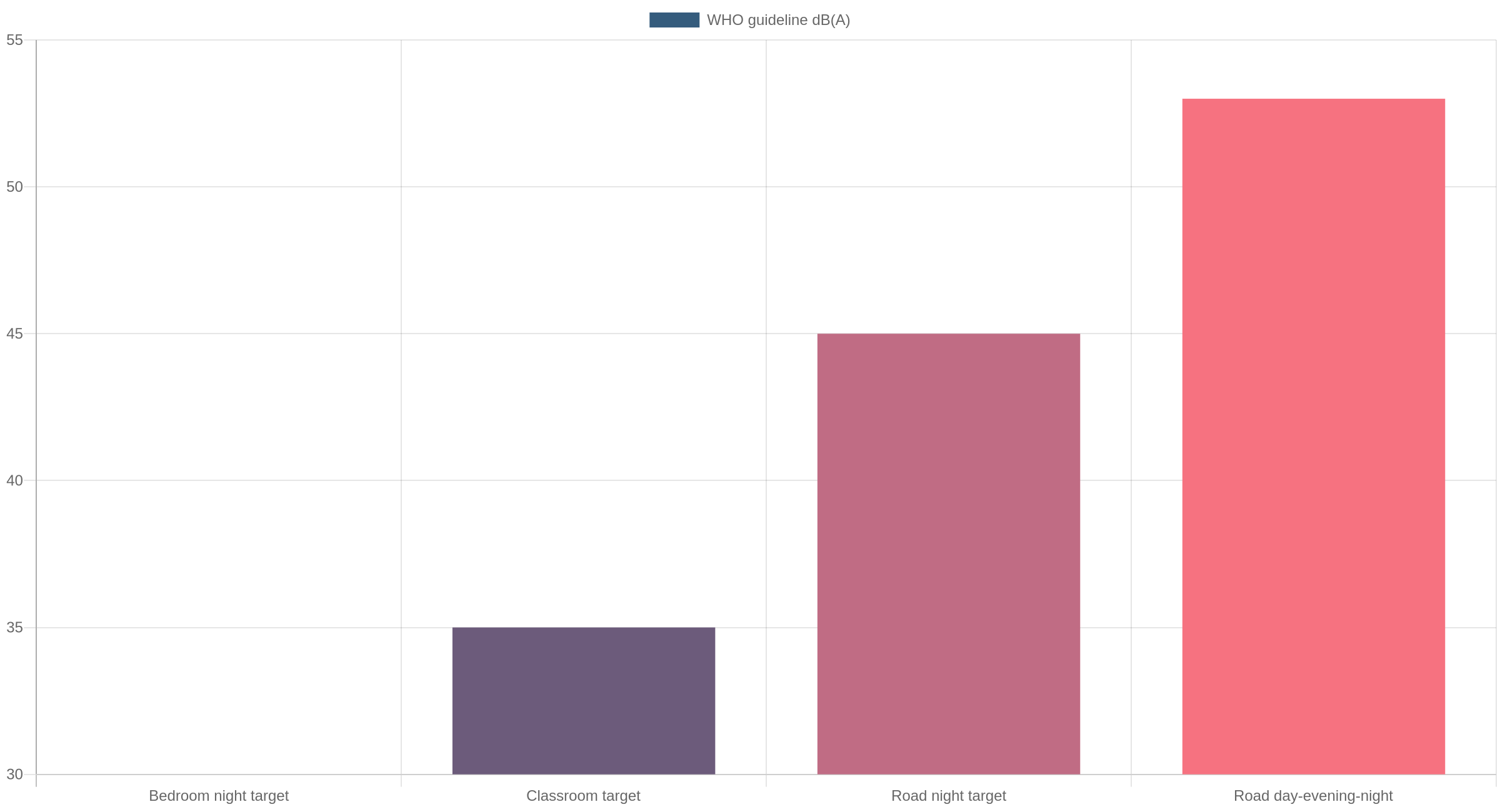
WHO does not treat quiet as vibes.
It gives numbers.
- less than 30 dB(A) in bedrooms at night for good quality sleep
- less than 35 dB(A) in classrooms for good teaching and learning
- below 45 dB Lnight for road traffic at night to avoid adverse sleep effects
So when I say class is acoustic control, I am not being poetic.
I mean: some people are born inside a cognitive-performance environment, and other people are born inside a stress machine.
2. The poor do not only lack capital. They lack recovery surface area.
The standard moneymaking advice is:
"Just work harder."
But hard work assumes recovery.
No sleep = lower testosterone, worse impulse control, worse memory, worse hunger signals, worse mood, worse risk assessment.
Bad recovery makes every self-improvement path more expensive:
- gym consistency gets harder
- studying gets harder
- sales calls get harder
- emotional regulation gets harder
- dating frame gets harder
- long-term planning gets harder
- avoiding cheap dopamine gets harder
The upper-middle-class kid is not magically more disciplined.
He is often less environmentally attacked.
His discipline is cheaper.
He is not constantly paying a noise tax.
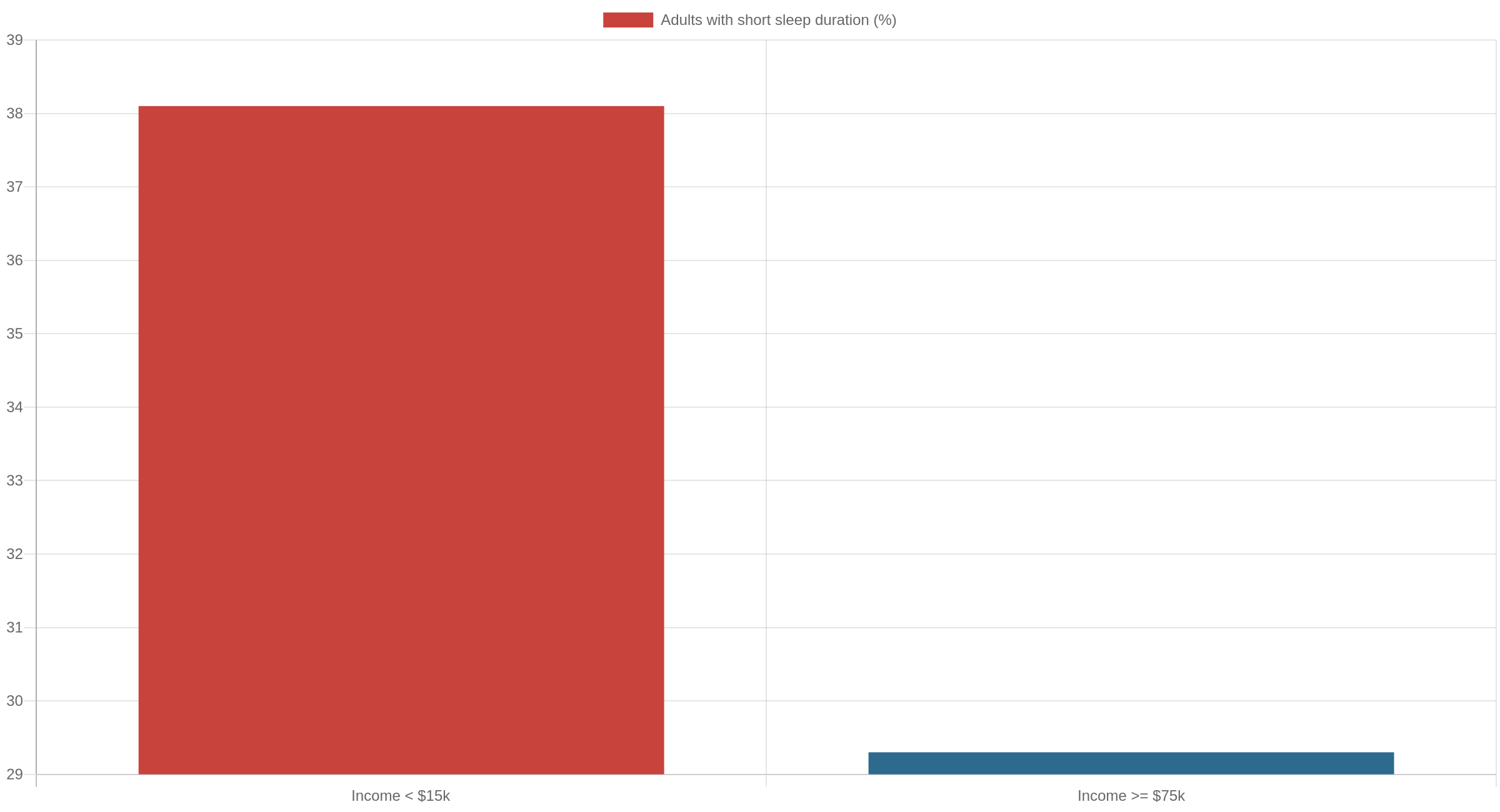
CDC data from 2020 showed short sleep duration rising as income fell:
- 38.1% of adults with household income under $15k reported short sleep
- 29.3% of adults with household income $75k+ reported short sleep
This is not a small thing.
That gap is a compounding gap.
Sleep is the platform every other form of self-improvement runs on.
If the platform is unstable, the apps crash.
3. Class is private space per nervous system
The real class formula is not:
income / person
It is closer to:
private recovery space / number of nervous systems competing for it
This is why a small flat can feel lower class even when it is clean.
It is not only square footage.
It is collision frequency.
How often do you collide with another person's schedule, emotions, noise, cooking, sleep, phone calls, drinking, music, arguments, guests, crisis?
The lower the class position, the more your time and attention are exposed to other people's chaos.
That is the brutal part.
Low class people do not merely have fewer rooms.
They have fewer protected states.
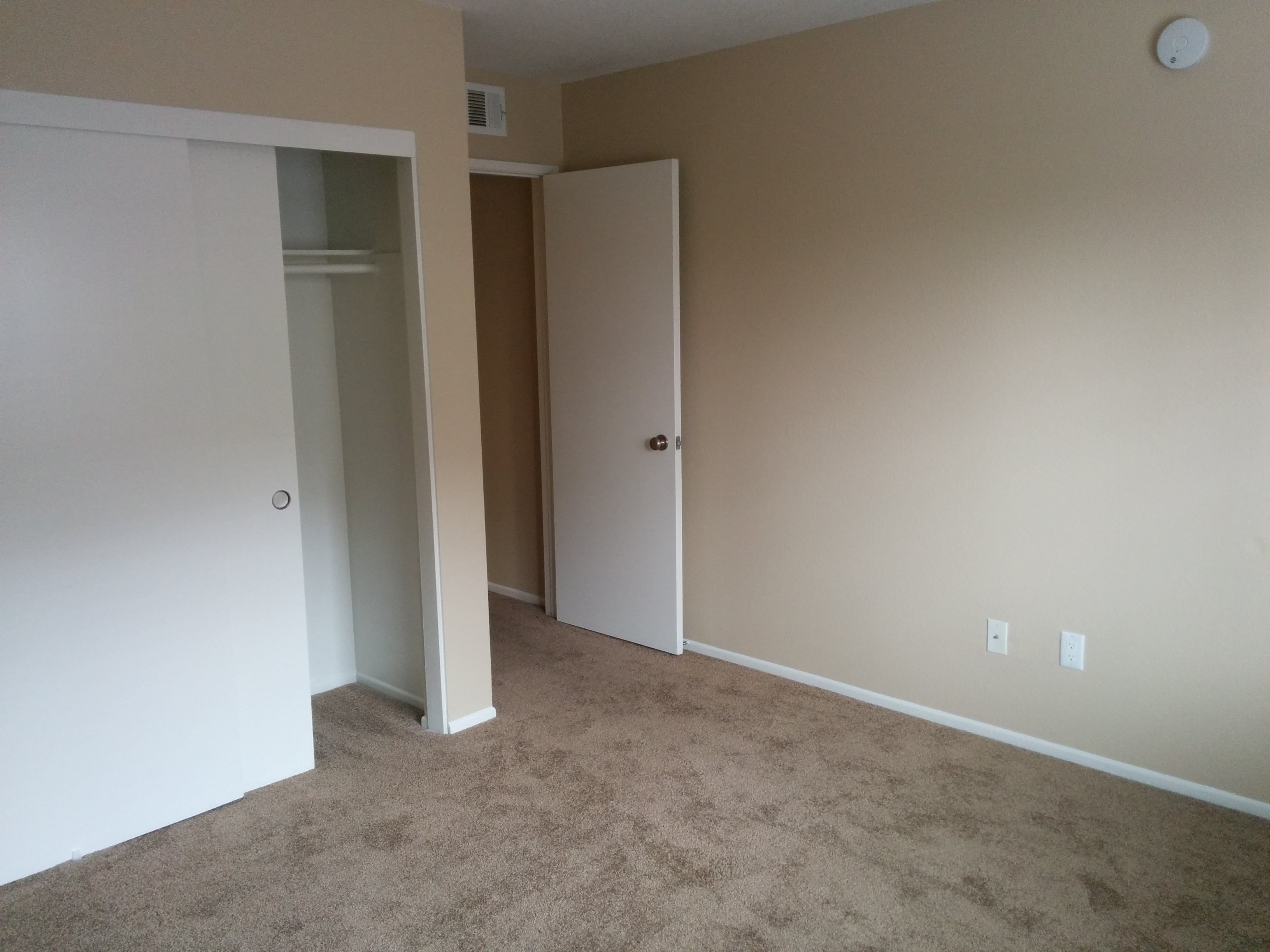
An empty room is not empty.
It is optionality.
It is a stable desk.
It is a private call.
It is uninterrupted sleep.
It is a place to read.
It is the ability to have a bad day without infecting the whole household.
It is a buffer between your ambition and everyone else's noise.
This is why "just move out" is class-blind advice.
Moving out to a worse noise environment is not independence.
It can be a downgrade in cognitive infrastructure.
4. The three noise channels of low class
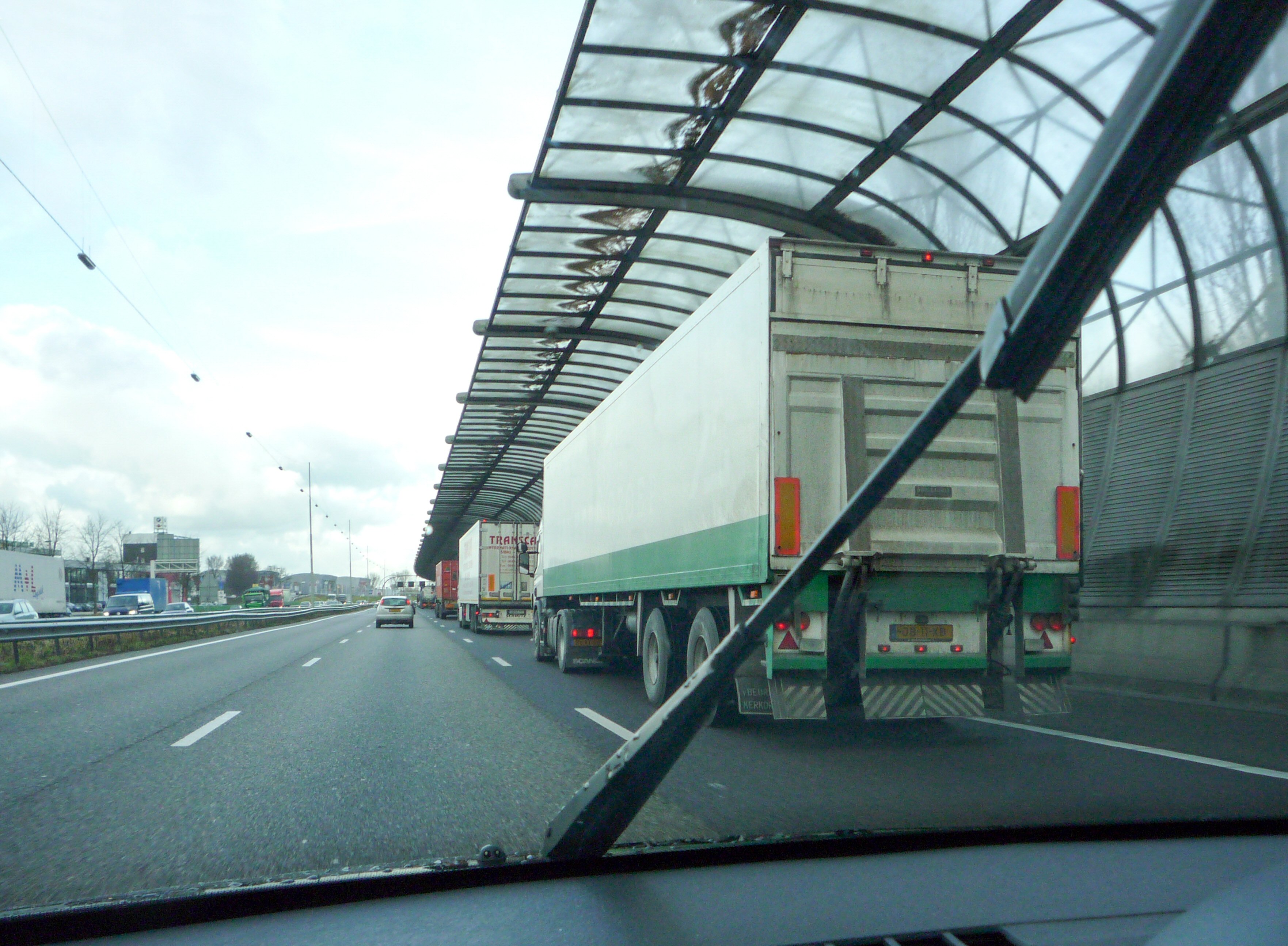
1. External noise
Traffic, trains, sirens, bars, cheap windows, bad insulation, airports, highways.
2. Internal household noise
Crowding, shared bedrooms, family conflict, TV, thin walls, different sleep schedules, no study room.
3. Occupational noise
Warehouse, construction, factory, kitchen, driving, cleaning, night shift, service work, call centres, constant monitoring, alarms, machines, customers.
This is the part people miss.
The lower-class man often has noise at home AND noise at work.
He does not get a clean transition from effort to recovery.
He gets:
noise -> work -> noise -> sleep debt -> bad decisions -> more noise
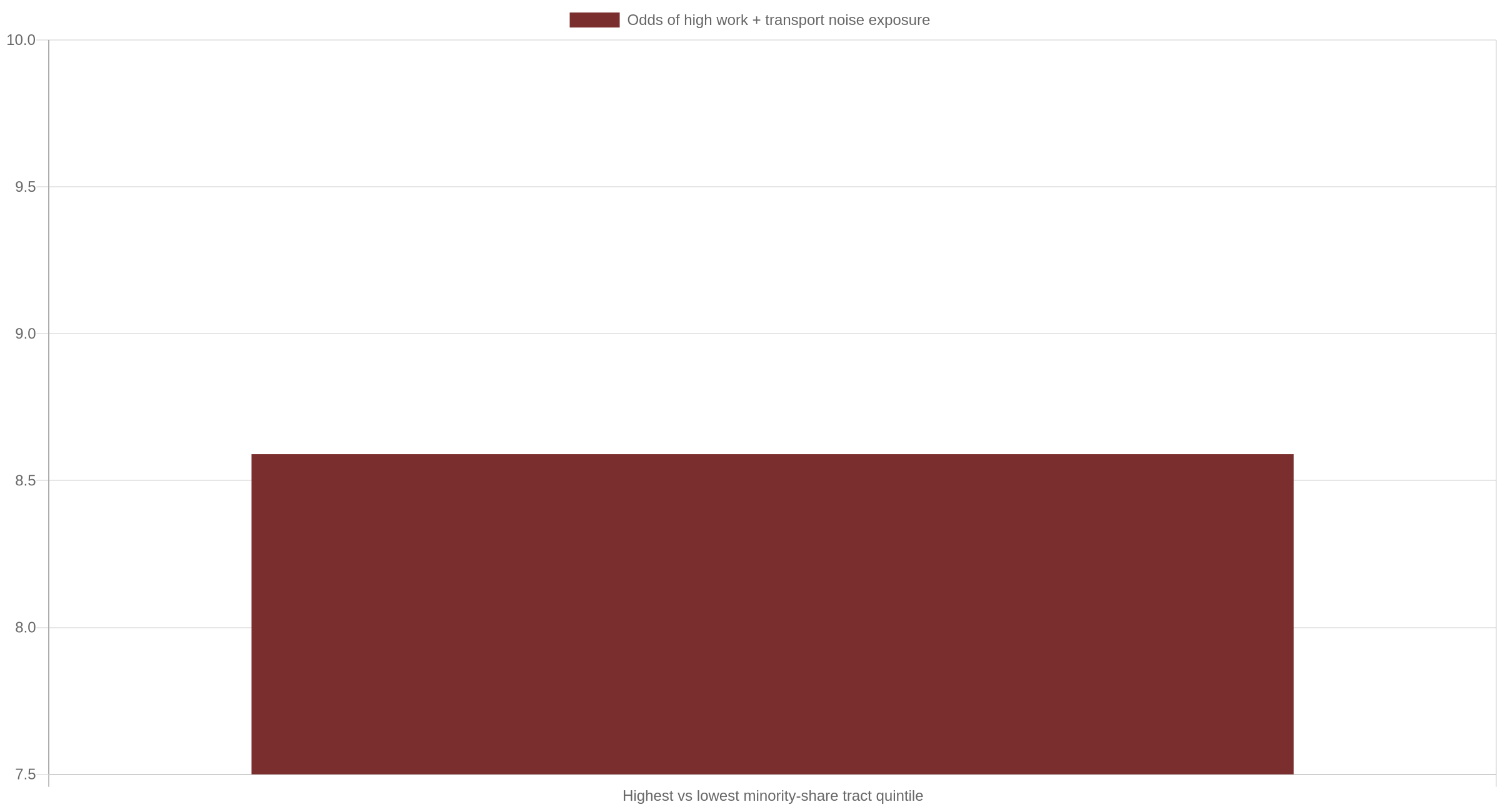
A 2026 paper in the Journal of Exposure Science & Environmental Epidemiology looked at cumulative exposure to workplace and transportation noise in the US.
One result was brutal:
census tracts with the highest proportion of racial and ethnic minority residents had 8.59x higher odds of being high in BOTH workplace and transportation noise exposure versus the lowest-proportion tracts, within metro/nonmetro comparisons.
Even if you do not care about the racial angle, understand the class angle:
noise is not randomly distributed.
It clusters around the people with the least power to buy their way out.
5. Housing problems are not just "housing problems". They are cognition problems.
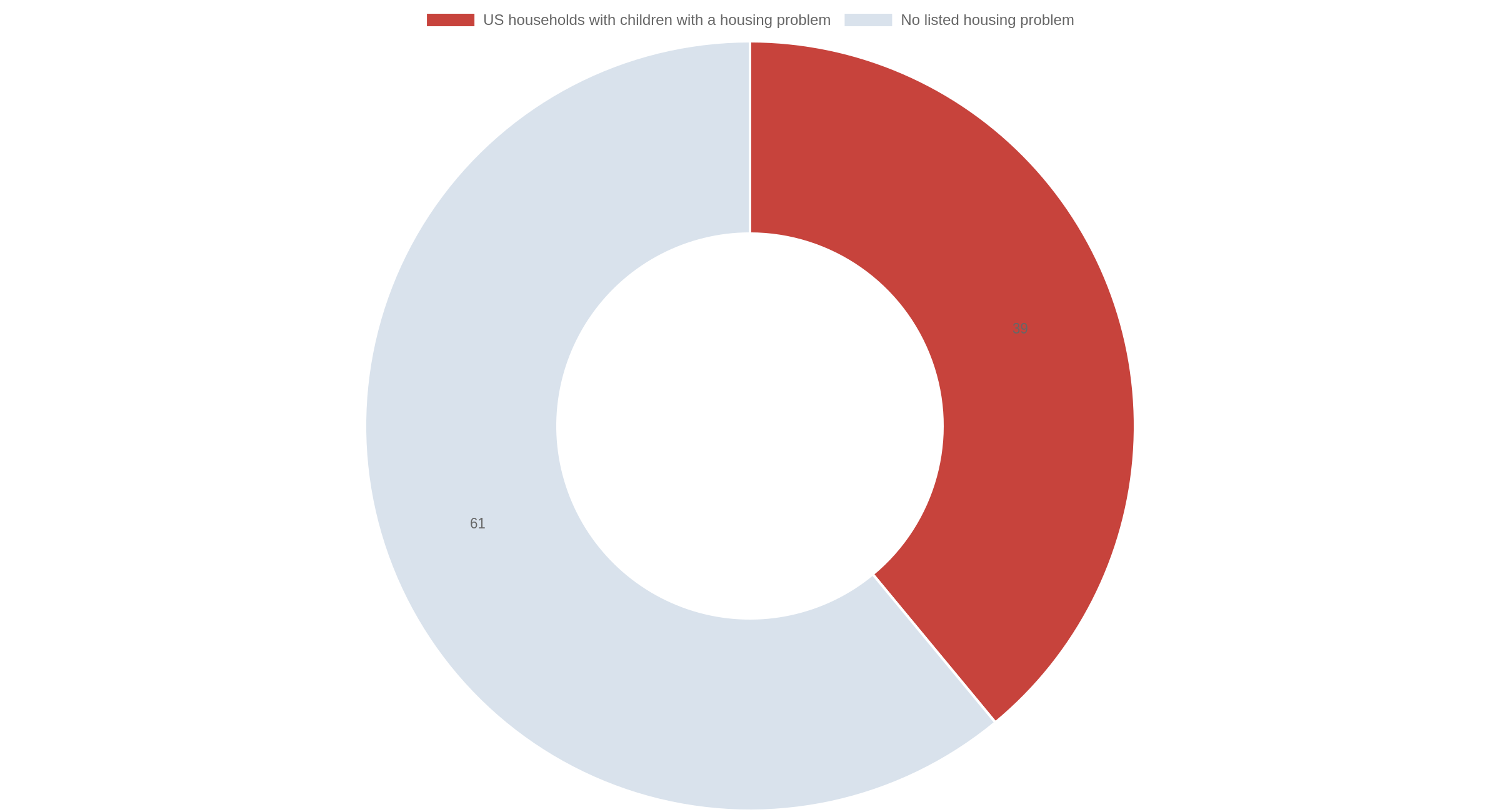
ChildStats reports that in 2021:
39% of US households with children had at least one of three housing problems:
- physically inadequate housing
- crowded housing
- housing cost burden over 30% of income
People read that and think:
"Damn, housing is expensive."
Wrong level of analysis.
Housing problems are not only financial.
They are behavioural.
They decide whether a child can sleep.
Whether a teenager can study.
Whether a parent can calm down.
Whether a young man can build a business.
Whether a couple can stay sane.
Whether one person's crisis becomes everyone's crisis.
This is why class compounds.
The rich buy distance from other people's nervous systems.
The poor are forced into nervous-system communism.
Everyone's stress leaks into everyone else.
6. The "quiet luxury" meme is accidentally correct
People think quiet luxury means:
- no logos
- beige cashmere
- old money brands
- subtle watches
That is the superficial version.
Real quiet luxury is:
- a room nobody enters
- a street that sleeps
- a door that closes properly
- a house where no one screams
- neighbours you never hear
- parents who do not create emergencies
- enough money to say no to loud work
- enough space to have one thought from beginning to end
The highest class flex is not a Rolex.
It is waking up without being attacked by your environment.
7. Looksmaxxing cannot solve a noisy nervous system
This is where the forum will cope.
"Just looksmax."
Looks matter.
But a good face does not give you deep sleep.
A sharp jaw does not make your walls thicker.
A hair transplant does not stop your parents fighting.
A PSL upgrade does not make your shift schedule predictable.
Looksmaxxing can increase your social market value.
But class decides whether your body can actually recover enough to use that value intelligently.
There are good-looking low-class people who still move through life with the rhythm of a hunted animal:
fast speech,
hypervigilance,
poor sleep,
reactive decisions,
cheap dopamine,
bad partners,
bad money timing,
constant environmental friction.
Then people call it "personality."
No.
Often it is acoustic poverty plus sleep debt plus zero private space.
8. The practical pill
If you are trying to classmax, stop only thinking in terms of status symbols.
Think like an engineer.
Ask:
What inputs are poisoning my recovery loop?
Your first class upgrade may not be a watch, car, coat, restaurant, or haircut.
It may be:
- moving to a quieter room
- paying extra for top-floor or end-unit housing
- getting blackout curtains
- sealing door gaps
- using earplugs + white noise
- refusing chaotic housemates
- not living beside nightlife
- building a dedicated desk
- scheduling deep work before household noise starts
- reducing exposure to loud low-status jobs
- choosing boring stability over exciting chaos
This is not glamorous.
That is why it works.
Most people buy visible class first.
High-IQ people buy invisible class first.
Silence.
Sleep.
Space.
Predictability.
Recovery.
Final pill
The lower class man is not just poorer.
He is often running his entire life on a damaged recovery loop.
The upper class man is not just richer.
He is often protected by invisible environmental design:
quiet house,
private room,
safe street,
stable schedule,
low-conflict parents,
low-noise work,
space to think.
This is why "same IQ, same looks, same income" still does not mean same outcome.
One man gets to become himself in silence.
The other has to build himself while being interrupted.
That is a social class pill almost nobody wants to admit.
Sources / image credits
- CDC: Prevalence and Geographic Patterns of Self-Reported Short Sleep Duration Among US Adults, 2020
- WHO/NCBI Bookshelf: Environmental noise guideline recommendations
- WHO Europe: Noise fact sheet
- ChildStats: Housing problems among households with children
- NLIHC: The Gap: shortage of affordable homes for extremely low-income renters
- Nature / Journal of Exposure Science & Environmental Epidemiology: Racial and ethnic inequities to noise pollution from transportation- and work-related sources in the United States
- Wikimedia Commons images: Library's Main reading room by A.Uzieblo (CC BY-SA 4.0), Road noise barrier on the A16 by DeFacto (CC BY-SA 4.0), Empty room in apartment by aismallard (CC BY-SA 3.0)
Social class is not just money, accent, school, looks, job title, or parents.
It is whether the world lets your nervous system switch off.
Most people talk about class as if it is a visible costume.
Watch.
Accent.
Shoes.
University.
Holiday photos.
Who your dad knows.
How clean your LinkedIn looks.
All real.
But there is a deeper class marker almost nobody talks about:
silence.
Not metaphorical silence.
Literal silence.
The ability to sleep without traffic.
The ability to study without screaming through the wall.
The ability to work without a TV blasting in the next room.
The ability to have one private bedroom.
The ability to recover after stress instead of being thrown into more stress.
High class people do not merely have nicer objects.
They have lower background noise.
Low class is not just having less money.
Low class is having your brain taxed by the environment before the day even starts.
1. The hidden class asset: acoustic control
There are two men.
Both are 22.
Both are smart.
Both want money.
Both are looksmaxxing.
Both tell themselves they will work hard.
Man A lives in a quiet house.
He has his own room.
He can sleep at 11.
He can read at 7.
His parents do not fight outside his door.
No one needs his room.
The walls are thick.
The street is calm.
His desk is always there.
Man B lives in a noisy flat.
Shared walls.
Shared bedroom.
TV on all night.
Road outside.
Upstairs footsteps.
Sibling chaos.
Family arguments.
No stable desk.
No real privacy.
Sleep gets cut into fragments.
On paper, both have the same day.
In reality, Man A begins with a full battery.
Man B begins in battery saver mode.
That is class.
WHO does not treat quiet as vibes.
It gives numbers.
- less than 30 dB(A) in bedrooms at night for good quality sleep
- less than 35 dB(A) in classrooms for good teaching and learning
- below 45 dB Lnight for road traffic at night to avoid adverse sleep effects
So when I say class is acoustic control, I am not being poetic.
I mean: some people are born inside a cognitive-performance environment, and other people are born inside a stress machine.
2. The poor do not only lack capital. They lack recovery surface area.
The standard moneymaking advice is:
"Just work harder."
But hard work assumes recovery.
No sleep = lower testosterone, worse impulse control, worse memory, worse hunger signals, worse mood, worse risk assessment.
Bad recovery makes every self-improvement path more expensive:
- gym consistency gets harder
- studying gets harder
- sales calls get harder
- emotional regulation gets harder
- dating frame gets harder
- long-term planning gets harder
- avoiding cheap dopamine gets harder
The upper-middle-class kid is not magically more disciplined.
He is often less environmentally attacked.
His discipline is cheaper.
He is not constantly paying a noise tax.
CDC data from 2020 showed short sleep duration rising as income fell:
- 38.1% of adults with household income under $15k reported short sleep
- 29.3% of adults with household income $75k+ reported short sleep
This is not a small thing.
That gap is a compounding gap.
Sleep is the platform every other form of self-improvement runs on.
If the platform is unstable, the apps crash.
3. Class is private space per nervous system
The real class formula is not:
income / person
It is closer to:
private recovery space / number of nervous systems competing for it
This is why a small flat can feel lower class even when it is clean.
It is not only square footage.
It is collision frequency.
How often do you collide with another person's schedule, emotions, noise, cooking, sleep, phone calls, drinking, music, arguments, guests, crisis?
The lower the class position, the more your time and attention are exposed to other people's chaos.
That is the brutal part.
Low class people do not merely have fewer rooms.
They have fewer protected states.
An empty room is not empty.
It is optionality.
It is a stable desk.
It is a private call.
It is uninterrupted sleep.
It is a place to read.
It is the ability to have a bad day without infecting the whole household.
It is a buffer between your ambition and everyone else's noise.
This is why "just move out" is class-blind advice.
Moving out to a worse noise environment is not independence.
It can be a downgrade in cognitive infrastructure.
4. The three noise channels of low class
1. External noise
Traffic, trains, sirens, bars, cheap windows, bad insulation, airports, highways.
2. Internal household noise
Crowding, shared bedrooms, family conflict, TV, thin walls, different sleep schedules, no study room.
3. Occupational noise
Warehouse, construction, factory, kitchen, driving, cleaning, night shift, service work, call centres, constant monitoring, alarms, machines, customers.
This is the part people miss.
The lower-class man often has noise at home AND noise at work.
He does not get a clean transition from effort to recovery.
He gets:
noise -> work -> noise -> sleep debt -> bad decisions -> more noise
A 2026 paper in the Journal of Exposure Science & Environmental Epidemiology looked at cumulative exposure to workplace and transportation noise in the US.
One result was brutal:
census tracts with the highest proportion of racial and ethnic minority residents had 8.59x higher odds of being high in BOTH workplace and transportation noise exposure versus the lowest-proportion tracts, within metro/nonmetro comparisons.
Even if you do not care about the racial angle, understand the class angle:
noise is not randomly distributed.
It clusters around the people with the least power to buy their way out.
5. Housing problems are not just "housing problems". They are cognition problems.
ChildStats reports that in 2021:
39% of US households with children had at least one of three housing problems:
- physically inadequate housing
- crowded housing
- housing cost burden over 30% of income
People read that and think:
"Damn, housing is expensive."
Wrong level of analysis.
Housing problems are not only financial.
They are behavioural.
They decide whether a child can sleep.
Whether a teenager can study.
Whether a parent can calm down.
Whether a young man can build a business.
Whether a couple can stay sane.
Whether one person's crisis becomes everyone's crisis.
This is why class compounds.
The rich buy distance from other people's nervous systems.
The poor are forced into nervous-system communism.
Everyone's stress leaks into everyone else.
6. The "quiet luxury" meme is accidentally correct
People think quiet luxury means:
- no logos
- beige cashmere
- old money brands
- subtle watches
That is the superficial version.
Real quiet luxury is:
- a room nobody enters
- a street that sleeps
- a door that closes properly
- a house where no one screams
- neighbours you never hear
- parents who do not create emergencies
- enough money to say no to loud work
- enough space to have one thought from beginning to end
The highest class flex is not a Rolex.
It is waking up without being attacked by your environment.
7. Looksmaxxing cannot solve a noisy nervous system
This is where the forum will cope.
"Just looksmax."
Looks matter.
But a good face does not give you deep sleep.
A sharp jaw does not make your walls thicker.
A hair transplant does not stop your parents fighting.
A PSL upgrade does not make your shift schedule predictable.
Looksmaxxing can increase your social market value.
But class decides whether your body can actually recover enough to use that value intelligently.
There are good-looking low-class people who still move through life with the rhythm of a hunted animal:
fast speech,
hypervigilance,
poor sleep,
reactive decisions,
cheap dopamine,
bad partners,
bad money timing,
constant environmental friction.
Then people call it "personality."
No.
Often it is acoustic poverty plus sleep debt plus zero private space.
8. The practical pill
If you are trying to classmax, stop only thinking in terms of status symbols.
Think like an engineer.
Ask:
What inputs are poisoning my recovery loop?
Your first class upgrade may not be a watch, car, coat, restaurant, or haircut.
It may be:
- moving to a quieter room
- paying extra for top-floor or end-unit housing
- getting blackout curtains
- sealing door gaps
- using earplugs + white noise
- refusing chaotic housemates
- not living beside nightlife
- building a dedicated desk
- scheduling deep work before household noise starts
- reducing exposure to loud low-status jobs
- choosing boring stability over exciting chaos
This is not glamorous.
That is why it works.
Most people buy visible class first.
High-IQ people buy invisible class first.
Silence.
Sleep.
Space.
Predictability.
Recovery.
Final pill
The lower class man is not just poorer.
He is often running his entire life on a damaged recovery loop.
The upper class man is not just richer.
He is often protected by invisible environmental design:
quiet house,
private room,
safe street,
stable schedule,
low-conflict parents,
low-noise work,
space to think.
This is why "same IQ, same looks, same income" still does not mean same outcome.
One man gets to become himself in silence.
The other has to build himself while being interrupted.
That is a social class pill almost nobody wants to admit.
Sources / image credits
- CDC: Prevalence and Geographic Patterns of Self-Reported Short Sleep Duration Among US Adults, 2020
- WHO/NCBI Bookshelf: Environmental noise guideline recommendations
- WHO Europe: Noise fact sheet
- ChildStats: Housing problems among households with children
- NLIHC: The Gap: shortage of affordable homes for extremely low-income renters
- Nature / Journal of Exposure Science & Environmental Epidemiology: Racial and ethnic inequities to noise pollution from transportation- and work-related sources in the United States
- Wikimedia Commons images: Library's Main reading room by A.Uzieblo (CC BY-SA 4.0), Road noise barrier on the A16 by DeFacto (CC BY-SA 4.0), Empty room in apartment by aismallard (CC BY-SA 3.0)