The Surgical Cookbook - A Complete Walkthrough to Fixing Short Face Syndrome

Punjabi Waffen

Punjabi Waffen

200mg DNP — Shredding fat
Joined
Feb 23, 2025
Posts
9,206
Reputation
12,780


The Surgical Cookbook
A Complete Walkthrough to Fixing Short Face Syndrome


━━━━━━━━━━━━━━━━━━━━━━━━━━━━━━

What This Guide Covers
This is a step by step walkthrough for anyone like me dealing with short face syndrome.


A condition where the lower third of your face looks vertically compressed giving a
squished appearance. We will cover everything from braces and palate expanders to

the big surgeries.

bimax (both jaws)

BSSO (lower jaw surgery)
Le Fort I (upper jaw surgery)
genioplasty (chin surgery).


pain management
side effects
what to ask your surgeon and orthodontist recovery tips from real patients
diet plans
insurance
costs (rough)
long term maintenance


and everything you need to know before going under the knife.

━━━━━━━━━━━━━━━━━━━━━━━━━━━━━━

What Is
Short Face Syndrome


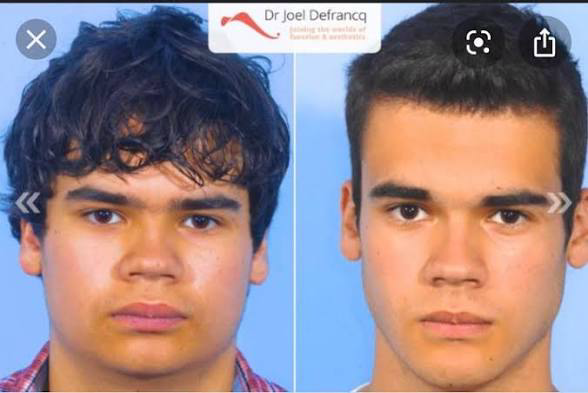
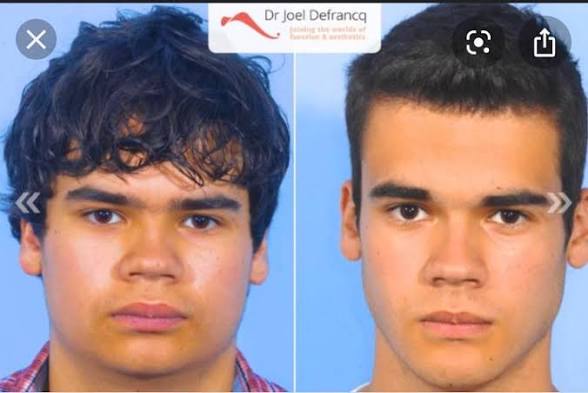
Short face syndrome is basically when your face did not grow tall enough vertically.

Your jawbones (both upper and lower) are too short from top to bottom, making your face look
round
flat
compressed

Why It Happens


Genetics
Some people are just born with shorter jawbones. If your parents or siblings have round, compressed faces, you likely inherited the same growth pattern.

Mouth breathing
Breathing through your mouth instead of your nose during childhood can stunt vertical growth. When you mouth breathe, your tongue drops down instead of resting against the roof of your mouth.
Without that upward pressure, the maxilla does not grow tall enough.
and If your tongue sits low in your mouth instead of up against the roof, it does not stimulate the palate to grow wide and tall.

This is called low tongue posture or

tongue thrust.

Thumb sucking or pacifier overuse
Prolonged thumb sucking can alter the growth trajectory of the jaws, sometimes leading to a compressed vertical pattern.
14031


How Doctors Spot It
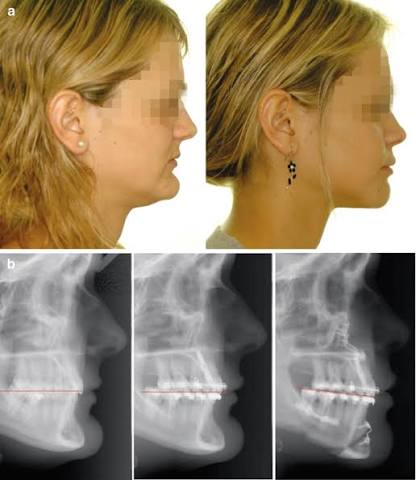
Doctors use cephalometric analysis (fancy Xrays of your skull) to measure angles and distances.

what they check for is

reduced lower anterior facial height
The distance from your nose to your chin is too short.
Normal is around 65 to 75mm for men
and 55 to 65mm for women.

deep bite
Your top front teeth overlap your bottom front teeth way too much.
In severe cases the bottom teeth are completely hidden

flat mandibular plane
The angle of your lower jaw is too flat.
Normal is around 32 degrees. Short face patients often have angles below 25 degrees

Retrognathic mandible
Your lower jaw sits too far back
This makes the chin look weak and the profile look concave

Reduced gonial angle
The angle at the back corner of your jaw is too small and sharp
giving a boxy appearance

Decreased interlabial gap
When your lips are relaxed, there is little to no space between them
Your lips look tight and strained.
14032


━━━━━━━━━━━━━━━━━━━━━━━━━━━━━━


Airway and Functional Impact
The Risks

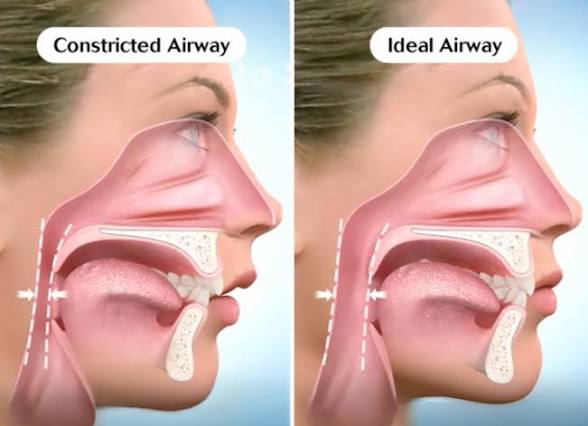
Sleep apnea
Your airway collapses during sleep, causing snoring, gasping, and poor sleep quality. The tongue has nowhere to sit properly because the mandible is too far back and too short vertically. At night the tongue falls back and blocks the airway.

UARS
(Upper Airway Resistance Syndrome)
A milder form where your airway is partially blocked,
leading to
fragmented sleep
fatigue
brain fog

UARS patients often wake up tired despite sleeping 8 hours.


Nasal breathing issues
Narrow palates mean narrow nasal passages, so you default to mouth breathing, which makes everything worse.
Mouth breathing
dries out the airway
increases inflammation
and creates a vicious cycle


Tongue tie
(ankyloglossia)
Some short face patients also have a restricted tongue that cannot reach the roof of the mouth. This contributes to low tongue posture and worsens the whole problem

Malocclusion
(bad bite)
The deep bite and compressed vertical dimension create excessive wear on the front teeth.

TMJ dysfunction
The jaw joint is under constant stress because the bite is misaligned.
Clicking
popping
pain


14035


Fixing the jaws opens up the airway.
Short face surgery is often both cosmetic and functional.

Many patients report dramatic improvements in
sleep quality
energy levels
mental clarity after surgery.


━━━━━━━━━━━━━━━━━━━━━━━━━━━━━━


The Orthodontic Phase

Braces and Aligners

Before any surgery, you need orthodontic prep.
This phase usually takes 12 to 24 months. Some patients need closer to 30 months if the case is complex.
The goal is to get your teeth into the right position so the surgeon can move the bones properly.

Braces vs Aligners

Braces

(metal or ceramic)

Better for complex movements
more control for the orthodontist

Braces allow the orthodontist to place teeth in very specific positions that aligners cannot achieve. For short face cases, braces are almost always the better choice.

Aligners

(like Invisalign)

Possible in some cases, but less predictable for the big movements needed before jaw surgery.

Some surgeons refuse to work with aligner only cases because the precision is not there.

If you want aligners, discuss this early with both your orthodontist and surgeon.
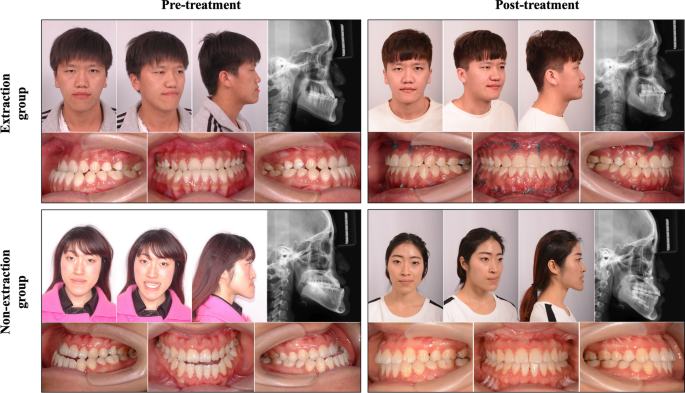

14036


Extraction
vs
Non Extraction


This is a huge debate For short face patients, the answer is usually non extraction.
we need to maintain or increase vertical dimension, not shrink it further. Pulling teeth in a short face patient can make the face look even more compressed.

However,

there are exceptions.

If you have severe crowding and no space to align the teeth, extractions might be unavoidable. In those cases the orthodontist must be extremely careful not to over retract the front teeth, which would worsen the facial proportions.

Decompensation

Your orthodontist's job is to decompensate your teeth.

Meaning they move your teeth to where they naturally belong on the jawbones, even if it looks worse temporarily. This is so the surgeon has a clean slate to work with. For example, if your lower teeth are tilted forward to compensate for a recessed jaw, the orthodontist will tilt them back upright. This makes your underbite or overjet look worse before surgery.

Do not panic.
This is normal and necessary.

Curve of Spee

Short face patients often have a deep
curve of Spee
(the natural curve of your lower teeth from front to back)

Your orthodontist needs to level this curve before surgery.
This is done using reverse curve archwires or auxiliary intrusion arches. Leveling the curve opens the bite and prepares the teeth for the surgical movements.

Temporary Anchorage Devices
TADs are tiny screws placed into the jawbone to act as anchors. They allow the orthodontist to move teeth in ways that would be impossible with braces alone.

For short face patients
TADs can help

intrude overerupted molars
retract the lower arch
or upright tilted teeth

They reduce treatment time and improve surgical outcomes.

What to Ask Your Orthodontist


"Do you have experience with surgical cases specifically. "

Not all orthodontists are comfortable with pre surgical ortho. Ask how many surgical cases they have done.

"Will i be using TADs or miniplates."


Make sure they understand that short face patients usually need non extraction or minimal extraction.

"How long do you expect the pre surgical phase to take."


Get a realistic timeline

"Will you be communicating directly with my surgeon."


The orthodontist and surgeon must work as a team. If they do not communicate well, find a different team. (yes some do this)

"What happens if my teeth look worse before surgery."

A good orthodontist
will explain decompensation and reassure you, just to make sure.

"Do you use 3D planning or digital simulation"

"What retainers will I need after braces."


Ask about fixed retainers vs removable retainers

━━━━━━━━━━━━━━━━━━━━━━━━━━━━━━


Palatal Expansion.
Widening the Roof of Your Mouth


A narrow palate is common in short face patients. Widening it creates more room for teeth, improves nasal breathing, and sets up the jaws for surgery.

If your palate is too narrow, the surgeon cannot properly position the maxilla during Le Fort I surgery.

The Options

RAPE (Rapid Palatal Expander)
A device attached to your upper molars that you crank daily with a small key.

Works best in kids and teens whose mid palatal suture (the seam in the roof of your mouth) has not fused yet.

In adults, it mostly pushes teeth outward (dental expansion) rather than actually splitting the bone (skeletal expansion).

Relapse rate is higher in adults because the bone did not actually split. RPE is usually not enough for adult short face patients unless the case is mild.

MARPE (Miniscrew Assisted Rapid Palatal Expander)

Same idea as RPE, but uses miniscrews (tiny implants) drilled into the palate for anchorage.
Can achieve true skeletal expansion in adults by forcing the suture open. More effective than RPE in adults.

Success rates in adults are around 60 to 80%. The amount of expansion is usually 5 to 8mm.

MARPE is a great middle ground for adults who want to avoid surgery but need real skeletal change.

SARPE (Surgically Assisted Rapid Palatal Expansion)
A surgeon makes cuts in the maxilla to weaken the bone, then the expander does the rest.
Guarantees true skeletal expansion. Higher relapse risk than MARPE but more expansion possible. Often done before Le Fort I if major widening is needed.

SARPE is usually done under general anesthesia and requires a few weeks of activation followed by a retention period.

DOME (Distraction Osteogenesis Maxillary Expansion)
Uses a device that slowly pulls the two halves of the maxilla apart over weeks. Best for severe cases or when massive expansion is needed. More invasive but very stable. DOME is usually reserved for extreme transverse deficiencies or when SARPE is not enough.


Airway Impact
Widening the palate also widens the floor of the nose
. Studies show palatal expansion can increase nasal airflow by 20 to 40%, which is a big deal for mouth breathers.

Many patients report they can finally breathe through their nose after expansion. This alone can improve sleep quality and reduce snoring.


━━━━━━━━━━━━━━━━━━━━━━━━━━━━━━

The Surgical Phase

For most short face patients, bimaxillary surgery (both upper and lower jaw) is needed. Not just one jaw. If you only move one jaw, the other jaw is still in the wrong position, and your bite won't line up.

Le Fort I Osteotomy (Upper Jaw)
The surgeon cuts the upper jaw free from the skull. For short face patients, the key move is usually a downgraft. Lowering the maxilla vertically to increase facial height. The amount of downgraft is usually 3 to 8mm depending on the severity. Sometimes combined with segmental Le Fort I (cutting the maxilla into pieces) to widen it or fix asymmetry. Fixed with titanium plates and screws.

Downgrafting the maxilla also impacts the nose
. It can make the nose look shorter and rotate the nasal tip upward. Some patients need a simultaneous rhinoplasty to counteract this. Others are happy with the change.

BSSO (Bilateral Sagittal Split Osteotomy) Lower Jaw
The surgeon splits the lower jaw on both sides. this is usually an advancement (moving the lower jaw forward) combined with rotation to increase vertical height. The lower jaw is often rotated counter clockwise to open the bite and lengthen the face.
Fixed with plates and screws.

BSSO is the most common lower jaw surgery. It is versatile and allows the surgeon to move the jaw in multiple directions. However, it carries the highest risk of nerve injury because the inferior alveolar nerve runs through the area where the cut is made.

Genioplasty (Chin Surgery)
Often needed because the chin looks small or recessed after the jaws are moved.

A sliding genioplasty cuts the chin bone and moves it forward and/or downward. Can add vertical length to the chin, which is critical for short face patients. Sometimes an implant is used instead, but sliding genioplasty is more stable and customizable.

Why Bimax Is Usually Needed

Moving only the upper jaw leaves the lower jaw behind. Your chin still looks weak. Moving only the lower jaw leaves the upper jaw too high.
Both jaws need to be repositioned together for a balanced, functional result
.

In rare cases, a single jaw surgery might be enough. For example, if the upper jaw is in a good position but the lower jaw is severely recessed, a BSSO alone might work. But bimax is almost always the answer.

Virtual Surgical Planning

Modern surgeons use 3D virtual planning software to simulate the surgery before cutting. They take a CBCT scan (3D Xray) of your face and create a digital model. The surgeon and orthodontist plan the movements together. Then custom surgical guides and splints are 3D printed. This improves accuracy and reduces operating time.

What to Ask Your Surgeon
"Are you board certified in oral and maxillofacial surgery."


This is non negotiable.


"How many bimaxillary cases have you performed."

Experience matters. You want someone who does this regularly, not once everytime he needs money.

"Do you use 3D virtual planning and custom splints."

This is the gold standard in 2026.

"What is your nerve injury rate."

Expect 5 to 10% permanent numbness for BSSO.

"What is your revision rate."


Low revision rates show us good planning and execution.

"Will you be performing the surgery yourself or will residents be involved."


Teaching hospitals often have residents assisting.

Know what you are comfortable with, i dont want random bums assisting my surgery

"What is your protocol for pain management."

"What happens if I have a bad split during BSSO."


A good surgeon will explain how they handle complications.


"Do you recommend simultaneous rhinoplasty / genioplasty."

Some surgeons stack these

"What is your hospital affiliation."

Make sure they have privileges at a reputable hospital with a good ICU.

"Can I see before and after photos of short face cases specifically."


"What is the total cost including hospital fees, anesthesia, and hardware. "


Get full breakdown

━━━━━━━━━━━━━━━━━━━━━━━━━━━━━━


Side Effects and
Pain Management


Jaw surgery is major surgery. You will experience side effects. Knowing what to expect helps you prepare mentally and physically.

Common Side Effects

Swelling
This is the most obvious side effect. Swelling peaks around day 3 to 5 and gradually subsides over 4 to 6 weeks. Some residual swelling lingers for 3 to 6 months. The final result is not visible until 12 months.

Bruising
Bruising around the jaw, neck, and even chest is common. It usually fades within 2 weeks.

Numbness
Numbness in the lower lip, chin, cheeks, and upper lip is expected.
This is due to nerve stretching during surgery. Most patients regain sensation within 3 to 6 months.

Permanent numbness occurs in 5 to 10% of BSSO cases and 1 to 2% of Le Fort I cases.

Bleeding
Some bleeding from the nose and mouth is normal for the first 24 to 48 hours.
If bleeding is heavy or does not stop, contact your surgeon.

Jaw stiffness
Your jaw will feel tight and difficult to open. This improves with time and exercises.

Nasal congestion
After Le Fort I, your nose will be stuffed up for 1 to 2 weeks. You cannot blow your nose during this time.

Difficulty speaking
Your speech will be slurred and difficult for the first few weeks.

This improves as swelling goes down and you get used to your new jaw position.

Upset stomach and vomiting
Swallowing blood during surgery can cause nausea. Soda like ginger ale or Sprite can help settle the stomach.

Constipation
Narcotic pain meds cause constipation. Take a stool softener or laxative if needed.

Weight loss
Most patients lose 10 to 20 pounds during the liquid diet phase. This is normal but make sure you are getting enough calories and protein.

Voice changes
Moving the jaws changes the resonance chamber of your oral cavity. Some patients report their voice sounds different after surgery. Usually temporary but can be permanent in rare cases.

Taste changes
Nerve damage can alter taste. Some patients report metallic tastes or reduced taste sensation. Usually temporary, resolving within weeks to months.

Dry mouth
After surgery and during braces, many patients struggle with dry mouth.

Saliva substitutes, Biotene products, and staying hydrated help
.


Pain Management Strategy
Pain is usually strongest for the first 2 to 3 days. After that it becomes manageable.

Ice packs Use ice packs on your jaw for the first 48 hours. 20 minutes on, 20 minutes off. This reduces swelling and numbs the area

jaw bra (a wrap that holds ice packs against your face) is highly recommended by patients who have been through this.

Non narcotic pain relief first Start with over the counter meds like ibuprofen (Advil) and acetaminophen (Tylenol). Many patients take them together every 4 to 6 hours for the first week. This is called the alternating protocol. Ibuprofen is 400 to 600mg every 6 hours. Acetaminophen is 500 to 1000mg every 6 hours. Stagger them so you are taking something every 3 hours. This keeps a steady level of pain relief without overloading your liver or stomach.

Narcotics only if needed If OTC meds are not enough, your surgeon will prescribe something stronger like oxycodone or hydrocodone. Typical dosing is 5 to 10mg every 4 to 6 hours as needed. Take them with food to avoid nausea.

Do not crush extended release tablets

Taper off as soon as you can manage on OTC meds alone. Narcotic dependence is rare but possible if you stay on them too long.

Steroids Surgeons often prescribe steroids like dexamethasone for the first 3 to 5 days to reduce swelling and bruising. Dexamethasone is typically 4 to 8mg twice daily. Some surgeons use a Medrol Dosepak (methylprednisolone) which tapers over 6 days. Steroids reduce inflammation dramatically.
Diabetics need to monitor glucose closely.

id prescribe 500mg tren, 500 mast and 250 test

Antibiotics You may be prescribed antibiotics to prevent infection. Common choices are amoxicillin, clindamycin, or cephalexin. Take the shit even if you feel fine.

Stopping early can lead to resistant infections. If you get diarrhea, contact your surgeon. This could be C. diff (Clostridioides difficile), a serious antibiotic associated infection.

Mouth rinse Rinse with chlorhexidine (Peridex) twice daily and warm salt water after every meal. Do not eat or drink for 30 minutes after using Peridex. Chlorhexidine can stain teeth brown if used long term, but 2 weeks is fine.

Sleep elevated Sleep on your back with 2 to 3 pillows for the first 2 weeks. This reduces swelling and prevents blood from pooling in your face

Walk around. Take 5 to 10 minute walks every hour or two. Walking reduces swelling, prevents blood clots, and improves mood. This is the most repeated tip from patients who have been through this.

Lymphatic massage Gentle massage of the face and neck can help drain fluid and reduce swelling. Wait until day 5 to 7 before starting. Watch YouTube tutorials or ask your surgeon for guidance.

Warm showers after day 3 Warmth helps relax tight muscles and improves circulation.
Avoid hot showers in the first 48 hours because heat increases bleeding.

Muscle relaxants Baclofen or cyclobenzaprine may be prescribed for jaw muscle spasms. These help when your jaw muscles are clenching or cramping. Take only as needed because they cause drowsiness.

Tips for Pain and Recovery
Stock up on everything before surgery.
You will not want to go shopping after.

Buy a good blender.

You will use it multiple times daily for weeks
.
Get a baby syringe feeder or squeeze bottles. Drinking from cups is messy and frustrating when your face is numb.

Keep your phone charged and within reach. You will want to text friends, watch shows, and distract yourself.

Have someone stay with you for the first 3 to 5 days.
You will need help with meals, meds, and basic tasks.

Do not look in the mirror too much in the first 2 weeks you aspie fuck.
You will look like a balloon. It gets better.

water but focus on protein. Healing requires protein. Aim for 80 to 120 grams daily. Use protein powder in smoothies.
Do not skip your meds. Set alarms. Pain is easier to prevent than to treat once it spikes.

━━━━━━━━━━━━━━━━━━━━━━━━━━━━━━

Diet and Nutrition
What You Will Eat


Your diet progresses in stages.

Chewing too early can break your jaw and require revision surgery.

Stage 1: Clear Liquid Diet (Days 1 to 3)
Right after surgery you will be on clear liquids only.

Water, clear juices, Jello, Italian ice, popsicles (off the stick), clear broth, ginger ale, lemonade, clear decaf tea.

No dairy yet. Dairy can increase mucus and nausea.
No straws. The suction can dislodge blood clots and cause bleeding
.

Stage 2: Full Liquid / Blenderized Diet (Days 3 to 30)
Once cleared by your surgeon, you move to full liquids. Everything must be smooth enough to pass through a syringe or wide straw.


Smoothie Formula
1.5 cups greens (spinach, kale)
1 cup fresh or frozen fruit (bananas, peaches, blueberries, avocado)
1 cup whole milk or Greek yogurt
2 scoops protein powder
1 tbsp nut butter
Honey to taste
Blend until completely smooth. Add water or milk to thin.

Protein Shake Formula
1 cup whole milk
1 scoop whey protein
1 banana
2 tbsp peanut butter
1 tbsp honey
Ice cubes
Blend until smooth.
This gives about 40 to 50 grams of protein.

Creamy Soups
Potato soup, butternut squash soup, tomato bisque, cauliflower soup, broccoli cheddar soup. Blend until smooth.
Add whole milk or cream for calories.

Other Full Liquid Ideas
Oatmeal blended with milk and protein powder
Cottage cheese blended smooth
Scrambled eggs blended with milk
Mac and cheese blended with extra milk
Mashed potatoes thinned with gravy
Applesauce
Pudding and custard
Ice cream and milkshakes (no chunks)
Bone broth for protein and minerals


or any other recipe diet

Stage 3: No Chew / Soft Food Diet (Weeks 5 to 8)
Foods you can smash with your tongue against the roof of your mouth. No actual chewing.

Fluffy scrambled eggs
Mashed potatoes
Soft flaky fish (salmon)
Very soft pasta (overcooked)
Casseroles (cut tiny)
Beans and rice (mashed)
Soft pancakes soaked in syrup
Ripe avocado
Very soft ground meat (meatloaf, sloppy joe)

yes its a thing lmao i heard it on reddit

Stage 4: Soft Food Diet (Months 3 to 4)
Foods that require minimal chewing. Avoid anything crunchy or hard.


Soft chicken
Cooked vegetables
Soft fruits (banana, melon)
Rice
Bread (soft, no crust)
Cheese

Stage 5: Normal Diet (Month 4+)
Gradually return to normal. Avoid hard foods like nuts, chips, and raw carrots for 6 months.

Nutrition Goals

Aim for 500 calories more than your tdee daily during recovery. Your body needs fuel to heal.
Do not eat low fat or fat free foods. You arent on a anorexic diet you mf need calories. Use whole milk, butter, cream, and nut butters.
Take a multivitamin. Vitamin C, zinc, and vitamin D support bone healing.
Stay hydrated. 2 to 3 liters of fluid daily.


━━━━━━━━━━━━━━━━━━━━━━━━━━━━━━

Complications

Nerve Injury
Inferior alveolar nerve (runs through the lower jaw). Numbness in lower lip and chin is common after BSSO, usually temporary but can be permanent in 5 to 10% of cases. The nerve is stretched during the split. Most patients regain partial or full sensation within 6 to 12 months.

Infraorbital nerve. Numbness in cheek and upper lip after Le Fort I, usually temporary. Permanent numbness is rare (under 2%).

Lingual nerve
Numbness on one side of the tongue is rare but possible. Usually temporary.

Bad Splits
During BSSO, the jawbone can split unpredictably.
Surgeons plan for this, but it can extend surgery time and require extra fixation. A bad split is when the bone fractures in an unplanned direction. This is more common in patients with dense bone or unusual anatomy.

TMJ Issues

TMJ
(temporomandibular joint, your jaw hinge)

can become painful or click after surgery. Pre existing TMJ problems can worsen. Some patients develop new issues.

TMJ problems are more common in patients who had clicking or pain before surgery.

Overcorrection / Undercorrection
The jaws can be moved too much or too little
.

Undercorrection is more common in short face cases because surgeons are cautious about over lengthening.

Revision surgery is possible but complex and expensive. Revision rates are around 5 to 10%.

Infection
Infection at the surgical site is rare (under 5%)
but possible. fever, increasing pain, foul taste or odor, and pus drainage. Treated with antibiotics and sometimes drainage.

Bleeding
Excessive bleeding during or after surgery is rare.
Your surgeon will have blood ready if needed. Postoperative bleeding usually stops with pressure and ice.

Malocclusion

The bite may not settle perfectly after surgery. Minor issues are fixed during post surgical orthodontics. Major issues may require revision.

Hardware Failure
Plates or screws can break or loosen
. This is rare with modern titanium hardware. If it happens, the hardware is replaced.


How It Is Going to Be What You Are Going to Do

This is a realistic day by day and week by week breakdown of what your life will look like.

Before Surgery (Months 12 to 24)

Get braces on. Your teeth will look worse before they look better. This is decompensation.

Attend orthodontic appointments every 4 to 8 weeks.

Get your palate expanded if needed (RPE, MARPE, or SARPE).

Meet with your surgeon for consultations, 3D planning, and consent forms.
Get pre operative blood work, dental cleaning, and any necessary extractions.
Stop smoking and vaping at least 1 month before surgery. Nicotine impairs healing.

Stop taking blood thinners, aspirin, and herbal supplements 2 weeks before surgery.

Ask your surgeon for a full list.

Stock your kitchen with liquid diet supplies. Buy protein powder, bone broth, smoothies ingredients, and a good blender

Arrange for a caregiver. You need someone with you for at least the first 3 to 5 days.

Set up your recovery station. Pillows, ice packs, phone charger, entertainment, and meds within arm's reach.

Take before photos. Front, profile, and 3/4 angles. You will want these for comparison.

Day of Surgery

Arrive at the hospital fasting (no food or drink for 8 hours).
Anesthesia team puts you under general anesthesia. You will be asleep for 2 to 4 hours.
Surgeon performs the planned osteotomies, moves the jaws, and fixes them with plates and screws.
You wake up in recovery. Your face is swollen, your mouth is packed with gauze, and you feel groggy.
You stay in the hospital for 1 to 3 days depending on your case and insurance.


Day 1 to 3 (The Hardest Days)
You are on clear liquids only. Water, broth, JellO.
Swelling is increasing. You look like a phaggot.
Pain is managed with IV meds in the hospital, then oral meds at home.
You sleep a lot. Naps are your friend.
You cannot talk well. Texting is easier.
You drool because your lips are numb.
You may feel nauseous from swallowing blood and anesthesia.

Day 4 to 7
Swelling peaks around day 3 to 5, then starts to go down.
You transition to full liquid diet. Smoothies, milkshakes, blended soups.
You start walking around the house. Short walks help swelling and mood.
You begin rinsing your mouth with salt water and chlorhexidine.
You may feel depressed or anxious.

This is normal.

Week 2

Swelling is noticeably better. You can see hints of your new face.
You start wearing elastics to guide your bite.
You may be cleared for soft foods if healing is good.
You return to the surgeon for your first post op check.

Week 3 to 4
You look more human. Most people return to work or school now.
You are on no chew or soft foods.
You start jaw exercises to regain range of motion.
Numbness is still present but you are getting used to it.

Month 2 to 3
Swelling is mostly gone. You can see your new profile.
You are in post surgical orthodontics. The orthodontist fine tunes your bite.
You are eating more normal foods but still avoiding hard and crunchy things.
You may feel self conscious about your new appearance. It takes time to adjust.

Month 6
You look great. Most swelling is gone.
Your bite is settling well.
You are eating almost normally.
You may have hardware removal scheduled if desired.

Month 12
Final results. The bone is fully healed.
Braces come off. Retainers go on.
You take after photos and compare to before.
You finally feel like the journey is over.

━━━━━━━━━━━━━━━━━━━━━━━━━━━━━━

Insurance and Cost

Insurance Coverage
Jaw surgery is expensive. In the US, bimaxillary surgery costs 30,000 to 80,000 dollads depending on location, surgeon, and hospital.

Insurance may cover part or all of it if the surgery is deemed medically necessary.

Medical necessity
means the surgery is not just cosmetic. You need documentation of functional problems.

Sleep apnea diagnosis with a sleep study

TMJ dysfunction with imaging.
Malocclusion severity with cephalometric analysis.
Difficulty chewing or speaking.
Your surgeon and orthodontist write letters of medical necessity.

Insurance companies love documentation.

Pre authorization
is required by most insurers. Your surgeon submits the treatment plan, imaging, and letters. The insurer reviews and approves or denies. If denied, appeal. Many initial denials are overturned on appeal. Get your surgeon's office to help with the appeal. They know the language insurers want to hear.

What insurance usually covers
The bimaxillary surgery itself

hospital fees
anesthesia

hardware

Post surgical orthodontics may be covered under your dental plan, not medical. Check both.


What insurance usually does not cover. Cosmetic genioplasty

rhinoplasty
malar implants
lip lift
fat grafting

buccal fat removal

(if you are doing it alongside)
These are considered aesthetic and require out of pocket payment.

Out of Pocket Costs

Even with insurance, expect to pay deductibles, copays, and coinsurance.

Typical out of pocket ranges from 5,000 to 15,000 dollars for the surgical portion.


Orthodontics is separate and usually 4,000 to 8,000 dollars. Add 3,000 to 10,000 dollars for cosmetic adjuncts if you want them.

Financing Options
Many surgeons offer payment plans. CareCredit and similar medical financing companies provide loans for healthcare
. Some patients use personal loans or credit cards. Plan your finances before starting. Do not go into debt you cannot handle.

you wont become a model and get rich unless...

International Surgery
Some patients travel to countries like South Korea, Turkey, or Mexico for lower costs
. This can save 50 to 70% but comes with risks.
Follow up care is harder.
Complication management is complicated.


━━━━━━━━━━━━━━━━━

Returning to Normal Life

Exercise
No exercise for 4 to 6 weeks
. Your heart rate and blood pressure need to stay low to prevent bleeding. Walking is fine immediately.
Light cardio like stationary bike can start at week 4.
Weight lifting should wait until week 8 to 12.


Avoid anything that strains your jaw or spikes your blood pressure. Contact sports(kung fu, (kick)boxing) are off limits for 6 months minimum

Work and School
Most people take 2 to 4 weeks off.
If your job is physical, you may need 6 to 8 weeks.
Desk jobs can sometimes resume at week 2 if you are comfortable on video calls.
Plan for 3 weeks to be safe.

Social Life
You will not want to be seen in public for 2 to 3 weeks.

The swelling is obvious

By week 4 you can go out but people may still notice something is different
.

By month 3 you look normal to strangers.

Close friends and family will notice the change immediately and permanently
.

Flying
Wait at least 2 weeks before flying
.
Cabin pressure changes can worsen swelling.

Some surgeons recommend 4 weeks. Check with yours
. Bring your surgical summary and surgeon contact info when you travel.

Facial Hair

For men, swelling can distort beard growth patterns temporarily. Shaving is difficult when your face is numb.

Plan your facial hair for before photos.

Some men grow a beard before surgery to hide the swelling during recovery. Others shave completely to make swelling easier to track.

Weight Gain After Recovery

Many patients gain back the weight they lost and then some because they are so excited to eat again. Manage your expectations. Reintroduce normal foods gradually. Do not binge on junk food just because you can chew again.

━━━━━━━━━━━━━━━━━━━━━━━━━━━━━━


Long Term Maintenance

Retainers Forever
After braces come off, you wear a retainer for life.

Your teeth have a memory and want to shift back.
A fixed retainer on the lower front teeth is recommended permanently. A removable retainer at night for the upper arch. Neglect this and you risk dental relapse. All that time and money wasted.

Night Guards
If you grind your teeth, get a night guard
. Grinding puts stress on your new jaw position and can cause TMJ issues. Your orthodontist can make a custom guard after braces.

Dental Cleanings
Get cleanings every 3 months during braces. After braces, every 6 months minimum
. Keep your teeth perfect. You invested too much to let them decay, yes this is motivion i want you succeeding you nigga

Bone Healing Supplements
Some patients continue supplements long term for bone health. Calcium, vitamin D, magnesium, and vitamin K2 support bone density. (inb4 water) Collagen peptides may help soft tissue healing. These are optional but many patients swear by em.

The Final Result Timeline
Month 12 is when bone healing is done
. But soft tissue settling continues for 18 to 24 months. Your face keeps changing subtly. The final aesthetic result is not truly final until 2 years. Be patient.

━━━━━━━━━━━━━━━━━━━━━━━━━━━━━━


Revision Surgery

When Revisions Happen
Revision surgery is needed in 5 to 10% of cases
. Reasons like undercorrection, overcorrection, asymmetric results, persistent airway issues, or patient dissatisfaction with aesthetics.

How Long to Wait
Minimum 12 months before revision
. The bone must be fully healed. Soft tissue must be settled. Attempting revision too early leads to unpredictable results.

What Can Be Revised

Jaw position can be adjusted.
Genioplasty can be redone.
Implants can be added, removed, or replaced.
Rhinoplasty can be refined.
Not everything is fixable.
Some movements are limited by anatomy and healing.

Revision Costs
Insurance may cover revision if it is medically necessary
. Purely cosmetic revisions are out of pocket.

Revision surgery is often more expensive than primary surgery because it is more complex. Expect 20,000 to 50,000 dollars.

 
  • +1
Reactions: Menas, yussimania, bluebandz and 10 others
hymen
 
  • +1
Reactions: catboy09 and Punjabi Waffen
sfs always have the best surgical ascensions
 
  • +1
Reactions: catboy09 and Punjabi Waffen
Don’t you think he became softer in the after?

1782748225961


But yeah I agree mine needs to be longer but this is a bit extreme and too elongated
 
  • +1
Reactions: bluebandz, catboy09 and Punjabi Waffen
  • +1
Reactions: filthycurrycel, catboy09 and Nectar
bookmarked for later looks very high effort ❤️
 
  • Love it
Reactions: catboy09 and Punjabi Waffen
D.N.R
will read later
 
  • JFL
  • +1
Reactions: catboy09 and Punjabi Waffen
Nice

I told u i read it😻
 
  • JFL
Reactions: Punjabi Waffen
Nigger
 
  • +1
Reactions: Punjabi Waffen
read most of it, good guide

i have sfs will probs use this in a few years when i am old enough for surgery
 
  • +1
Reactions: Punjabi Waffen
i would have read but too color ful
 
  • So Sad
  • JFL
Reactions: catboy09 and Punjabi Waffen
  • JFL
  • +1
Reactions: Nodal and filthycurrycel
@inversions @yussimania @filthycurrycel @
 
  • +1
Reactions: inversions and filthycurrycel
holy fuck bro this is legit insane.
banger thread. bookmarked will read later.
 
  • Love it
Reactions: Punjabi Waffen
@Menas @Chad @lurking truecel @Hernan
 
  • +1
Reactions: Menas
niggas go from posting racebait and incest bs to this
 
  • JFL
Reactions: Punjabi Waffen and Nodal
  • JFL
Reactions: inversions


The Surgical Cookbook
A Complete Walkthrough to Fixing Short Face Syndrome


━━━━━━━━━━━━━━━━━━━━━━━━━━━━━━

What This Guide Covers
This is a step by step walkthrough for anyone like me dealing with short face syndrome.


A condition where the lower third of your face looks vertically compressed giving a
squished appearance. We will cover everything from braces and palate expanders to

the big surgeries.

bimax (both jaws)

BSSO (lower jaw surgery)
Le Fort I (upper jaw surgery)
genioplasty (chin surgery).


pain management
side effects
what to ask your surgeon and orthodontist recovery tips from real patients
diet plans
insurance
costs (rough)
long term maintenance


and everything you need to know before going under the knife.

━━━━━━━━━━━━━━━━━━━━━━━━━━━━━━

What Is
Short Face Syndrome


Short face syndrome is basically when your face did not grow tall enough vertically.

Your jawbones (both upper and lower) are too short from top to bottom, making your face look
round
flat
compressed

Why It Happens


Genetics
Some people are just born with shorter jawbones. If your parents or siblings have round, compressed faces, you likely inherited the same growth pattern.

Mouth breathing
Breathing through your mouth instead of your nose during childhood can stunt vertical growth. When you mouth breathe, your tongue drops down instead of resting against the roof of your mouth.
Without that upward pressure, the maxilla does not grow tall enough.
and If your tongue sits low in your mouth instead of up against the roof, it does not stimulate the palate to grow wide and tall.

This is called low tongue posture or

tongue thrust.

Thumb sucking or pacifier overuse
Prolonged thumb sucking can alter the growth trajectory of the jaws, sometimes leading to a compressed vertical pattern.

View attachment 5288398

How Doctors Spot It
Doctors use cephalometric analysis (fancy Xrays of your skull) to measure angles and distances.

what they check for is

reduced lower anterior facial height
The distance from your nose to your chin is too short.
Normal is around 65 to 75mm for men
and 55 to 65mm for women.

deep bite
Your top front teeth overlap your bottom front teeth way too much.
In severe cases the bottom teeth are completely hidden

flat mandibular plane
The angle of your lower jaw is too flat.
Normal is around 32 degrees. Short face patients often have angles below 25 degrees

Retrognathic mandible
Your lower jaw sits too far back
This makes the chin look weak and the profile look concave

Reduced gonial angle
The angle at the back corner of your jaw is too small and sharp
giving a boxy appearance

Decreased interlabial gap
When your lips are relaxed, there is little to no space between them
Your lips look tight and strained.

View attachment 5288416


━━━━━━━━━━━━━━━━━━━━━━━━━━━━━━


Airway and Functional Impact
The Risks

Sleep apnea
Your airway collapses during sleep, causing snoring, gasping, and poor sleep quality. The tongue has nowhere to sit properly because the mandible is too far back and too short vertically. At night the tongue falls back and blocks the airway.

UARS
(Upper Airway Resistance Syndrome)
A milder form where your airway is partially blocked,
leading to
fragmented sleep
fatigue
brain fog

UARS patients often wake up tired despite sleeping 8 hours.


Nasal breathing issues
Narrow palates mean narrow nasal passages, so you default to mouth breathing, which makes everything worse.
Mouth breathing
dries out the airway
increases inflammation
and creates a vicious cycle


Tongue tie
(ankyloglossia)
Some short face patients also have a restricted tongue that cannot reach the roof of the mouth. This contributes to low tongue posture and worsens the whole problem

Malocclusion
(bad bite)
The deep bite and compressed vertical dimension create excessive wear on the front teeth.

TMJ dysfunction
The jaw joint is under constant stress because the bite is misaligned.
Clicking
popping
pain


View attachment 5288428

Fixing the jaws opens up the airway.
Short face surgery is often both cosmetic and functional.

Many patients report dramatic improvements in
sleep quality
energy levels
mental clarity after surgery.


━━━━━━━━━━━━━━━━━━━━━━━━━━━━━━


The Orthodontic Phase

Braces and Aligners

Before any surgery, you need orthodontic prep.
This phase usually takes 12 to 24 months. Some patients need closer to 30 months if the case is complex.
The goal is to get your teeth into the right position so the surgeon can move the bones properly.

Braces vs Aligners

Braces

(metal or ceramic)

Better for complex movements
more control for the orthodontist

Braces allow the orthodontist to place teeth in very specific positions that aligners cannot achieve. For short face cases, braces are almost always the better choice.

Aligners

(like Invisalign)

Possible in some cases, but less predictable for the big movements needed before jaw surgery.

Some surgeons refuse to work with aligner only cases because the precision is not there.

If you want aligners, discuss this early with both your orthodontist and surgeon.


View attachment 5288473

Extraction
vs
Non Extraction


This is a huge debate For short face patients, the answer is usually non extraction.
we need to maintain or increase vertical dimension, not shrink it further. Pulling teeth in a short face patient can make the face look even more compressed.

However,

there are exceptions.

If you have severe crowding and no space to align the teeth, extractions might be unavoidable. In those cases the orthodontist must be extremely careful not to over retract the front teeth, which would worsen the facial proportions.

Decompensation

Your orthodontist's job is to decompensate your teeth.

Meaning they move your teeth to where they naturally belong on the jawbones, even if it looks worse temporarily. This is so the surgeon has a clean slate to work with. For example, if your lower teeth are tilted forward to compensate for a recessed jaw, the orthodontist will tilt them back upright. This makes your underbite or overjet look worse before surgery.

Do not panic.
This is normal and necessary.

Curve of Spee

Short face patients often have a deep
curve of Spee
(the natural curve of your lower teeth from front to back)

Your orthodontist needs to level this curve before surgery.
This is done using reverse curve archwires or auxiliary intrusion arches. Leveling the curve opens the bite and prepares the teeth for the surgical movements.

Temporary Anchorage Devices
TADs are tiny screws placed into the jawbone to act as anchors. They allow the orthodontist to move teeth in ways that would be impossible with braces alone.

For short face patients
TADs can help

intrude overerupted molars
retract the lower arch
or upright tilted teeth

They reduce treatment time and improve surgical outcomes.

What to Ask Your Orthodontist


"Do you have experience with surgical cases specifically. "

Not all orthodontists are comfortable with pre surgical ortho. Ask how many surgical cases they have done.

"Will i be using TADs or miniplates."


Make sure they understand that short face patients usually need non extraction or minimal extraction.

"How long do you expect the pre surgical phase to take."

Get a realistic timeline

"Will you be communicating directly with my surgeon."


The orthodontist and surgeon must work as a team. If they do not communicate well, find a different team. (yes some do this)

"What happens if my teeth look worse before surgery."

A good orthodontist
will explain decompensation and reassure you, just to make sure.

"Do you use 3D planning or digital simulation"

"What retainers will I need after braces."


Ask about fixed retainers vs removable retainers

━━━━━━━━━━━━━━━━━━━━━━━━━━━━━━


Palatal Expansion.
Widening the Roof of Your Mouth


A narrow palate is common in short face patients. Widening it creates more room for teeth, improves nasal breathing, and sets up the jaws for surgery.

If your palate is too narrow, the surgeon cannot properly position the maxilla during Le Fort I surgery.

The Options

RAPE (Rapid Palatal Expander)
A device attached to your upper molars that you crank daily with a small key.

Works best in kids and teens whose mid palatal suture (the seam in the roof of your mouth) has not fused yet.

In adults, it mostly pushes teeth outward (dental expansion) rather than actually splitting the bone (skeletal expansion).

Relapse rate is higher in adults because the bone did not actually split. RPE is usually not enough for adult short face patients unless the case is mild.

MARPE (Miniscrew Assisted Rapid Palatal Expander)

Same idea as RPE, but uses miniscrews (tiny implants) drilled into the palate for anchorage.
Can achieve true skeletal expansion in adults by forcing the suture open. More effective than RPE in adults.

Success rates in adults are around 60 to 80%. The amount of expansion is usually 5 to 8mm.

MARPE is a great middle ground for adults who want to avoid surgery but need real skeletal change.

SARPE (Surgically Assisted Rapid Palatal Expansion)
A surgeon makes cuts in the maxilla to weaken the bone, then the expander does the rest.
Guarantees true skeletal expansion. Higher relapse risk than MARPE but more expansion possible. Often done before Le Fort I if major widening is needed.

SARPE is usually done under general anesthesia and requires a few weeks of activation followed by a retention period.

DOME (Distraction Osteogenesis Maxillary Expansion)
Uses a device that slowly pulls the two halves of the maxilla apart over weeks. Best for severe cases or when massive expansion is needed. More invasive but very stable. DOME is usually reserved for extreme transverse deficiencies or when SARPE is not enough.


Airway Impact
Widening the palate also widens the floor of the nose
. Studies show palatal expansion can increase nasal airflow by 20 to 40%, which is a big deal for mouth breathers.

Many patients report they can finally breathe through their nose after expansion. This alone can improve sleep quality and reduce snoring.


━━━━━━━━━━━━━━━━━━━━━━━━━━━━━━

The Surgical Phase

For most short face patients, bimaxillary surgery (both upper and lower jaw) is needed. Not just one jaw. If you only move one jaw, the other jaw is still in the wrong position, and your bite won't line up.

Le Fort I Osteotomy (Upper Jaw)
The surgeon cuts the upper jaw free from the skull. For short face patients, the key move is usually a downgraft. Lowering the maxilla vertically to increase facial height. The amount of downgraft is usually 3 to 8mm depending on the severity. Sometimes combined with segmental Le Fort I (cutting the maxilla into pieces) to widen it or fix asymmetry. Fixed with titanium plates and screws.

Downgrafting the maxilla also impacts the nose
. It can make the nose look shorter and rotate the nasal tip upward. Some patients need a simultaneous rhinoplasty to counteract this. Others are happy with the change.

BSSO (Bilateral Sagittal Split Osteotomy) Lower Jaw
The surgeon splits the lower jaw on both sides. this is usually an advancement (moving the lower jaw forward) combined with rotation to increase vertical height. The lower jaw is often rotated counter clockwise to open the bite and lengthen the face.
Fixed with plates and screws.

BSSO is the most common lower jaw surgery. It is versatile and allows the surgeon to move the jaw in multiple directions. However, it carries the highest risk of nerve injury because the inferior alveolar nerve runs through the area where the cut is made.

Genioplasty (Chin Surgery)
Often needed because the chin looks small or recessed after the jaws are moved.

A sliding genioplasty cuts the chin bone and moves it forward and/or downward. Can add vertical length to the chin, which is critical for short face patients. Sometimes an implant is used instead, but sliding genioplasty is more stable and customizable.

Why Bimax Is Usually Needed

Moving only the upper jaw leaves the lower jaw behind. Your chin still looks weak. Moving only the lower jaw leaves the upper jaw too high.
Both jaws need to be repositioned together for a balanced, functional result
.

In rare cases, a single jaw surgery might be enough. For example, if the upper jaw is in a good position but the lower jaw is severely recessed, a BSSO alone might work. But bimax is almost always the answer.

Virtual Surgical Planning

Modern surgeons use 3D virtual planning software to simulate the surgery before cutting. They take a CBCT scan (3D Xray) of your face and create a digital model. The surgeon and orthodontist plan the movements together. Then custom surgical guides and splints are 3D printed. This improves accuracy and reduces operating time.

What to Ask Your Surgeon
"Are you board certified in oral and maxillofacial surgery."


This is non negotiable.


"How many bimaxillary cases have you performed."

Experience matters. You want someone who does this regularly, not once everytime he needs money.

"Do you use 3D virtual planning and custom splints."

This is the gold standard in 2026.

"What is your nerve injury rate."

Expect 5 to 10% permanent numbness for BSSO.

"What is your revision rate."


Low revision rates show us good planning and execution.

"Will you be performing the surgery yourself or will residents be involved."


Teaching hospitals often have residents assisting.

Know what you are comfortable with, i dont want random bums assisting my surgery

"What is your protocol for pain management."

"What happens if I have a bad split during BSSO."


A good surgeon will explain how they handle complications.


"Do you recommend simultaneous rhinoplasty / genioplasty."

Some surgeons stack these

"What is your hospital affiliation."

Make sure they have privileges at a reputable hospital with a good ICU.

"Can I see before and after photos of short face cases specifically."


"What is the total cost including hospital fees, anesthesia, and hardware. "


Get full breakdown

━━━━━━━━━━━━━━━━━━━━━━━━━━━━━━


Side Effects and
Pain Management


Jaw surgery is major surgery. You will experience side effects. Knowing what to expect helps you prepare mentally and physically.

Common Side Effects

Swelling
This is the most obvious side effect. Swelling peaks around day 3 to 5 and gradually subsides over 4 to 6 weeks. Some residual swelling lingers for 3 to 6 months. The final result is not visible until 12 months.

Bruising
Bruising around the jaw, neck, and even chest is common. It usually fades within 2 weeks.

Numbness
Numbness in the lower lip, chin, cheeks, and upper lip is expected.
This is due to nerve stretching during surgery. Most patients regain sensation within 3 to 6 months.

Permanent numbness occurs in 5 to 10% of BSSO cases and 1 to 2% of Le Fort I cases.

Bleeding
Some bleeding from the nose and mouth is normal for the first 24 to 48 hours.
If bleeding is heavy or does not stop, contact your surgeon.

Jaw stiffness
Your jaw will feel tight and difficult to open. This improves with time and exercises.

Nasal congestion
After Le Fort I, your nose will be stuffed up for 1 to 2 weeks. You cannot blow your nose during this time.

Difficulty speaking
Your speech will be slurred and difficult for the first few weeks.

This improves as swelling goes down and you get used to your new jaw position.

Upset stomach and vomiting
Swallowing blood during surgery can cause nausea. Soda like ginger ale or Sprite can help settle the stomach.

Constipation
Narcotic pain meds cause constipation. Take a stool softener or laxative if needed.

Weight loss
Most patients lose 10 to 20 pounds during the liquid diet phase. This is normal but make sure you are getting enough calories and protein.

Voice changes
Moving the jaws changes the resonance chamber of your oral cavity. Some patients report their voice sounds different after surgery. Usually temporary but can be permanent in rare cases.

Taste changes
Nerve damage can alter taste. Some patients report metallic tastes or reduced taste sensation. Usually temporary, resolving within weeks to months.

Dry mouth
After surgery and during braces, many patients struggle with dry mouth.

Saliva substitutes, Biotene products, and staying hydrated help
.


Pain Management Strategy
Pain is usually strongest for the first 2 to 3 days. After that it becomes manageable.

Ice packs Use ice packs on your jaw for the first 48 hours. 20 minutes on, 20 minutes off. This reduces swelling and numbs the area

jaw bra (a wrap that holds ice packs against your face) is highly recommended by patients who have been through this.

Non narcotic pain relief first Start with over the counter meds like ibuprofen (Advil) and acetaminophen (Tylenol). Many patients take them together every 4 to 6 hours for the first week. This is called the alternating protocol. Ibuprofen is 400 to 600mg every 6 hours. Acetaminophen is 500 to 1000mg every 6 hours. Stagger them so you are taking something every 3 hours. This keeps a steady level of pain relief without overloading your liver or stomach.

Narcotics only if needed If OTC meds are not enough, your surgeon will prescribe something stronger like oxycodone or hydrocodone. Typical dosing is 5 to 10mg every 4 to 6 hours as needed. Take them with food to avoid nausea.

Do not crush extended release tablets

Taper off as soon as you can manage on OTC meds alone. Narcotic dependence is rare but possible if you stay on them too long.

Steroids Surgeons often prescribe steroids like dexamethasone for the first 3 to 5 days to reduce swelling and bruising. Dexamethasone is typically 4 to 8mg twice daily. Some surgeons use a Medrol Dosepak (methylprednisolone) which tapers over 6 days. Steroids reduce inflammation dramatically.
Diabetics need to monitor glucose closely.

id prescribe 500mg tren, 500 mast and 250 test

Antibiotics You may be prescribed antibiotics to prevent infection. Common choices are amoxicillin, clindamycin, or cephalexin. Take the shit even if you feel fine.

Stopping early can lead to resistant infections. If you get diarrhea, contact your surgeon. This could be C. diff (Clostridioides difficile), a serious antibiotic associated infection.

Mouth rinse Rinse with chlorhexidine (Peridex) twice daily and warm salt water after every meal. Do not eat or drink for 30 minutes after using Peridex. Chlorhexidine can stain teeth brown if used long term, but 2 weeks is fine.

Sleep elevated Sleep on your back with 2 to 3 pillows for the first 2 weeks. This reduces swelling and prevents blood from pooling in your face

Walk around. Take 5 to 10 minute walks every hour or two. Walking reduces swelling, prevents blood clots, and improves mood. This is the most repeated tip from patients who have been through this.

Lymphatic massage Gentle massage of the face and neck can help drain fluid and reduce swelling. Wait until day 5 to 7 before starting. Watch YouTube tutorials or ask your surgeon for guidance.

Warm showers after day 3 Warmth helps relax tight muscles and improves circulation.
Avoid hot showers in the first 48 hours because heat increases bleeding.

Muscle relaxants Baclofen or cyclobenzaprine may be prescribed for jaw muscle spasms. These help when your jaw muscles are clenching or cramping. Take only as needed because they cause drowsiness.

Tips for Pain and Recovery
Stock up on everything before surgery.
You will not want to go shopping after.

Buy a good blender.
You will use it multiple times daily for weeks

.
Get a baby syringe feeder or squeeze bottles. Drinking from cups is messy and frustrating when your face is numb.

Keep your phone charged and within reach. You will want to text friends, watch shows, and distract yourself.

Have someone stay with you for the first 3 to 5 days.
You will need help with meals, meds, and basic tasks.

Do not look in the mirror too much in the first 2 weeks you aspie fuck.
You will look like a balloon. It gets better.

water but focus on protein. Healing requires protein. Aim for 80 to 120 grams daily. Use protein powder in smoothies.
Do not skip your meds. Set alarms. Pain is easier to prevent than to treat once it spikes.

━━━━━━━━━━━━━━━━━━━━━━━━━━━━━━

Diet and Nutrition
What You Will Eat


Your diet progresses in stages.

Chewing too early can break your jaw and require revision surgery.

Stage 1: Clear Liquid Diet (Days 1 to 3)
Right after surgery you will be on clear liquids only.

Water, clear juices, Jello, Italian ice, popsicles (off the stick), clear broth, ginger ale, lemonade, clear decaf tea.

No dairy yet. Dairy can increase mucus and nausea.
No straws. The suction can dislodge blood clots and cause bleeding
.

Stage 2: Full Liquid / Blenderized Diet (Days 3 to 30)
Once cleared by your surgeon, you move to full liquids. Everything must be smooth enough to pass through a syringe or wide straw.


Smoothie Formula
1.5 cups greens (spinach, kale)
1 cup fresh or frozen fruit (bananas, peaches, blueberries, avocado)
1 cup whole milk or Greek yogurt
2 scoops protein powder
1 tbsp nut butter
Honey to taste
Blend until completely smooth. Add water or milk to thin.

Protein Shake Formula
1 cup whole milk
1 scoop whey protein
1 banana
2 tbsp peanut butter
1 tbsp honey
Ice cubes
Blend until smooth.
This gives about 40 to 50 grams of protein.

Creamy Soups
Potato soup, butternut squash soup, tomato bisque, cauliflower soup, broccoli cheddar soup. Blend until smooth.
Add whole milk or cream for calories.

Other Full Liquid Ideas
Oatmeal blended with milk and protein powder
Cottage cheese blended smooth
Scrambled eggs blended with milk
Mac and cheese blended with extra milk
Mashed potatoes thinned with gravy
Applesauce
Pudding and custard
Ice cream and milkshakes (no chunks)
Bone broth for protein and minerals


or any other recipe diet

Stage 3: No Chew / Soft Food Diet (Weeks 5 to 8)
Foods you can smash with your tongue against the roof of your mouth. No actual chewing.

Fluffy scrambled eggs
Mashed potatoes
Soft flaky fish (salmon)
Very soft pasta (overcooked)
Casseroles (cut tiny)
Beans and rice (mashed)
Soft pancakes soaked in syrup
Ripe avocado
Very soft ground meat (meatloaf, sloppy joe)

yes its a thing lmao i heard it on reddit

Stage 4: Soft Food Diet (Months 3 to 4)
Foods that require minimal chewing. Avoid anything crunchy or hard.


Soft chicken
Cooked vegetables
Soft fruits (banana, melon)
Rice
Bread (soft, no crust)
Cheese

Stage 5: Normal Diet (Month 4+)
Gradually return to normal. Avoid hard foods like nuts, chips, and raw carrots for 6 months.

Nutrition Goals

Aim for 500 calories more than your tdee daily during recovery. Your body needs fuel to heal.
Do not eat low fat or fat free foods. You arent on a anorexic diet you mf need calories. Use whole milk, butter, cream, and nut butters.
Take a multivitamin. Vitamin C, zinc, and vitamin D support bone healing.
Stay hydrated. 2 to 3 liters of fluid daily.


━━━━━━━━━━━━━━━━━━━━━━━━━━━━━━

Complications

Nerve Injury
Inferior alveolar nerve (runs through the lower jaw). Numbness in lower lip and chin is common after BSSO, usually temporary but can be permanent in 5 to 10% of cases. The nerve is stretched during the split. Most patients regain partial or full sensation within 6 to 12 months.

Infraorbital nerve. Numbness in cheek and upper lip after Le Fort I, usually temporary. Permanent numbness is rare (under 2%).

Lingual nerve
Numbness on one side of the tongue is rare but possible. Usually temporary.

Bad Splits
During BSSO, the jawbone can split unpredictably.
Surgeons plan for this, but it can extend surgery time and require extra fixation. A bad split is when the bone fractures in an unplanned direction. This is more common in patients with dense bone or unusual anatomy.

TMJ Issues

TMJ
(temporomandibular joint, your jaw hinge)

can become painful or click after surgery. Pre existing TMJ problems can worsen. Some patients develop new issues.

TMJ problems are more common in patients who had clicking or pain before surgery.

Overcorrection / Undercorrection
The jaws can be moved too much or too little
.

Undercorrection is more common in short face cases because surgeons are cautious about over lengthening.

Revision surgery is possible but complex and expensive. Revision rates are around 5 to 10%.

Infection
Infection at the surgical site is rare (under 5%)
but possible. fever, increasing pain, foul taste or odor, and pus drainage. Treated with antibiotics and sometimes drainage.

Bleeding
Excessive bleeding during or after surgery is rare.
Your surgeon will have blood ready if needed. Postoperative bleeding usually stops with pressure and ice.

Malocclusion

The bite may not settle perfectly after surgery. Minor issues are fixed during post surgical orthodontics. Major issues may require revision.

Hardware Failure
Plates or screws can break or loosen
. This is rare with modern titanium hardware. If it happens, the hardware is replaced.


How It Is Going to Be What You Are Going to Do

This is a realistic day by day and week by week breakdown of what your life will look like.

Before Surgery (Months 12 to 24)

Get braces on. Your teeth will look worse before they look better. This is decompensation.

Attend orthodontic appointments every 4 to 8 weeks.

Get your palate expanded if needed (RPE, MARPE, or SARPE).

Meet with your surgeon for consultations, 3D planning, and consent forms.
Get pre operative blood work, dental cleaning, and any necessary extractions.
Stop smoking and vaping at least 1 month before surgery. Nicotine impairs healing.

Stop taking blood thinners, aspirin, and herbal supplements 2 weeks before surgery.

Ask your surgeon for a full list.

Stock your kitchen with liquid diet supplies. Buy protein powder, bone broth, smoothies ingredients, and a good blender

Arrange for a caregiver. You need someone with you for at least the first 3 to 5 days.

Set up your recovery station. Pillows, ice packs, phone charger, entertainment, and meds within arm's reach.

Take before photos. Front, profile, and 3/4 angles. You will want these for comparison.

Day of Surgery

Arrive at the hospital fasting (no food or drink for 8 hours).
Anesthesia team puts you under general anesthesia. You will be asleep for 2 to 4 hours.
Surgeon performs the planned osteotomies, moves the jaws, and fixes them with plates and screws.
You wake up in recovery. Your face is swollen, your mouth is packed with gauze, and you feel groggy.
You stay in the hospital for 1 to 3 days depending on your case and insurance.


Day 1 to 3 (The Hardest Days)
You are on clear liquids only. Water, broth, JellO.
Swelling is increasing. You look like a phaggot.
Pain is managed with IV meds in the hospital, then oral meds at home.
You sleep a lot. Naps are your friend.
You cannot talk well. Texting is easier.
You drool because your lips are numb.
You may feel nauseous from swallowing blood and anesthesia.

Day 4 to 7
Swelling peaks around day 3 to 5, then starts to go down.
You transition to full liquid diet. Smoothies, milkshakes, blended soups.
You start walking around the house. Short walks help swelling and mood.
You begin rinsing your mouth with salt water and chlorhexidine.
You may feel depressed or anxious.

This is normal.

Week 2

Swelling is noticeably better. You can see hints of your new face.
You start wearing elastics to guide your bite.
You may be cleared for soft foods if healing is good.
You return to the surgeon for your first post op check.

Week 3 to 4
You look more human. Most people return to work or school now.
You are on no chew or soft foods.
You start jaw exercises to regain range of motion.
Numbness is still present but you are getting used to it.

Month 2 to 3
Swelling is mostly gone. You can see your new profile.
You are in post surgical orthodontics. The orthodontist fine tunes your bite.
You are eating more normal foods but still avoiding hard and crunchy things.
You may feel self conscious about your new appearance. It takes time to adjust.

Month 6
You look great. Most swelling is gone.
Your bite is settling well.
You are eating almost normally.
You may have hardware removal scheduled if desired.

Month 12
Final results. The bone is fully healed.
Braces come off. Retainers go on.
You take after photos and compare to before.
You finally feel like the journey is over.

━━━━━━━━━━━━━━━━━━━━━━━━━━━━━━

Insurance and Cost

Insurance Coverage
Jaw surgery is expensive. In the US, bimaxillary surgery costs 30,000 to 80,000 dollads depending on location, surgeon, and hospital.

Insurance may cover part or all of it if the surgery is deemed medically necessary.


Medical necessity
means the surgery is not just cosmetic. You need documentation of functional problems.

Sleep apnea diagnosis with a sleep study

TMJ dysfunction with imaging.
Malocclusion severity with cephalometric analysis.
Difficulty chewing or speaking.
Your surgeon and orthodontist write letters of medical necessity.

Insurance companies love documentation.

Pre authorization
is required by most insurers. Your surgeon submits the treatment plan, imaging, and letters. The insurer reviews and approves or denies. If denied, appeal. Many initial denials are overturned on appeal. Get your surgeon's office to help with the appeal. They know the language insurers want to hear.

What insurance usually covers
The bimaxillary surgery itself

hospital fees
anesthesia

hardware

Post surgical orthodontics may be covered under your dental plan, not medical. Check both.


What insurance usually does not cover. Cosmetic genioplasty

rhinoplasty
malar implants
lip lift
fat grafting

buccal fat removal

(if you are doing it alongside)
These are considered aesthetic and require out of pocket payment.

Out of Pocket Costs

Even with insurance, expect to pay deductibles, copays, and coinsurance.

Typical out of pocket ranges from 5,000 to 15,000 dollars for the surgical portion.

Orthodontics is separate and usually 4,000 to 8,000 dollars. Add 3,000 to 10,000 dollars for cosmetic adjuncts if you want them.

Financing Options
Many surgeons offer payment plans. CareCredit and similar medical financing companies provide loans for healthcare
. Some patients use personal loans or credit cards. Plan your finances before starting. Do not go into debt you cannot handle.

you wont become a model and get rich unless...

International Surgery
Some patients travel to countries like South Korea, Turkey, or Mexico for lower costs
. This can save 50 to 70% but comes with risks.
Follow up care is harder.
Complication management is complicated
.


━━━━━━━━━━━━━━━━━

Returning to Normal Life

Exercise
No exercise for 4 to 6 weeks
. Your heart rate and blood pressure need to stay low to prevent bleeding. Walking is fine immediately.
Light cardio like stationary bike can start at week 4.
Weight lifting should wait until week 8 to 12.


Avoid anything that strains your jaw or spikes your blood pressure. Contact sports(kung fu, (kick)boxing) are off limits for 6 months minimum

Work and School
Most people take 2 to 4 weeks off.
If your job is physical, you may need 6 to 8 weeks.
Desk jobs can sometimes resume at week 2 if you are comfortable on video calls.
Plan for 3 weeks to be safe.

Social Life
You will not want to be seen in public for 2 to 3 weeks.

The swelling is obvious

By week 4 you can go out but people may still notice something is different
.

By month 3 you look normal to strangers.

Close friends and family will notice the change immediately and permanently
.

Flying
Wait at least 2 weeks before flying
.
Cabin pressure changes can worsen swelling.

Some surgeons recommend 4 weeks. Check with yours
. Bring your surgical summary and surgeon contact info when you travel.

Facial Hair

For men, swelling can distort beard growth patterns temporarily. Shaving is difficult when your face is numb.

Plan your facial hair for before photos.

Some men grow a beard before surgery to hide the swelling during recovery. Others shave completely to make swelling easier to track.

Weight Gain After Recovery

Many patients gain back the weight they lost and then some because they are so excited to eat again. Manage your expectations. Reintroduce normal foods gradually. Do not binge on junk food just because you can chew again.

━━━━━━━━━━━━━━━━━━━━━━━━━━━━━━


Long Term Maintenance

Retainers Forever
After braces come off, you wear a retainer for life.

Your teeth have a memory and want to shift back.
A fixed retainer on the lower front teeth is recommended permanently. A removable retainer at night for the upper arch. Neglect this and you risk dental relapse. All that time and money wasted.

Night Guards
If you grind your teeth, get a night guard
. Grinding puts stress on your new jaw position and can cause TMJ issues. Your orthodontist can make a custom guard after braces.

Dental Cleanings
Get cleanings every 3 months during braces. After braces, every 6 months minimum
. Keep your teeth perfect. You invested too much to let them decay, yes this is motivion i want you succeeding you nigga

Bone Healing Supplements
Some patients continue supplements long term for bone health. Calcium, vitamin D, magnesium, and vitamin K2 support bone density. (inb4 water) Collagen peptides may help soft tissue healing. These are optional but many patients swear by em.

The Final Result Timeline
Month 12 is when bone healing is done
. But soft tissue settling continues for 18 to 24 months. Your face keeps changing subtly. The final aesthetic result is not truly final until 2 years. Be patient.

━━━━━━━━━━━━━━━━━━━━━━━━━━━━━━


Revision Surgery

When Revisions Happen
Revision surgery is needed in 5 to 10% of cases
. Reasons like undercorrection, overcorrection, asymmetric results, persistent airway issues, or patient dissatisfaction with aesthetics.

How Long to Wait
Minimum 12 months before revision
. The bone must be fully healed. Soft tissue must be settled. Attempting revision too early leads to unpredictable results.

What Can Be Revised

Jaw position can be adjusted.
Genioplasty can be redone.
Implants can be added, removed, or replaced.
Rhinoplasty can be refined.
Not everything is fixable.
Some movements are limited by anatomy and healing.

Revision Costs
Insurance may cover revision if it is medically necessary
. Purely cosmetic revisions are out of pocket.

Revision surgery is often more expensive than primary surgery because it is more complex. Expect 20,000 to 50,000 dollars.

dnr doesn’t apply to me but i can just tell this is an insanely good thread, get this on botb bow
 
  • +1
Reactions: Punjabi Waffen

Similar threads

Sensitive Young Boy
Replies
5
Views
149
Sensitive Young Boy
Sensitive Young Boy
Punjabi Waffen
Replies
25
Views
206
Sayori
Sayori
trueRetard
Replies
17
Views
111
Interleukin6
Interleukin6
dunno
Replies
2
Views
37
mogdd
mogdd
toxoplasma
Replies
3
Views
92
toxoplasma
toxoplasma

Users who are viewing this thread

  • Punjabi Waffen
  • bluebandz
  • Saint Elliot
Back
Top