Exposing corticosteroids, (hydrocortisone, betamethasone, clobetasol, etc.), High effort (corticosteroid copers GTFIH)

HumbleMTNN

HumbleMTNN

Rep me 🥺
Joined
Nov 30, 2025
Posts
117
Reputation
61
Exposing corticosteroids, (hydrocortisone, betamethasone, clobetasol, etc.)

High effort post

It's over for corticosteroid copers :feelsrope:


some of you wont like to hear this but it has to be said. stop using corticosteroids thinking they are some advanced tool for nose shrinkage or skin thinning

after i acquired some betamethasone i stole from my grandparents medicine cabinet for nose shrinkage :lul: and did more research into them i discovered how shit and overrated they are and that is why im making this post

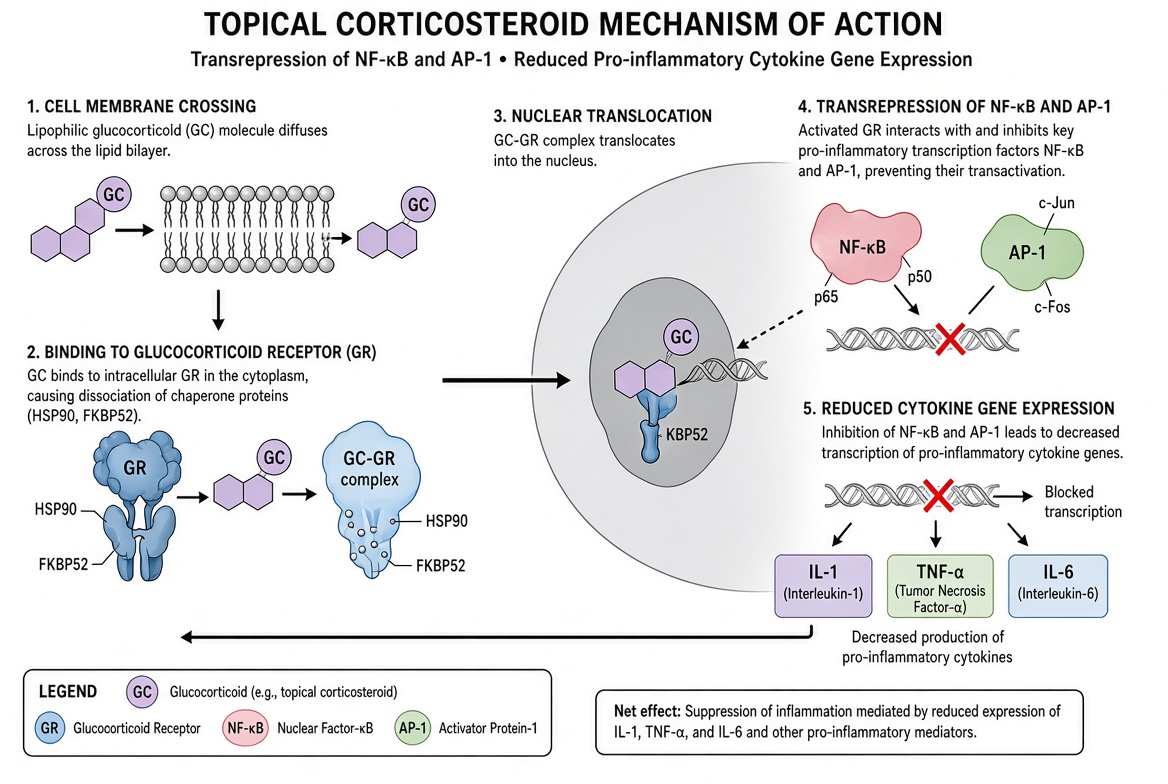
corticosteroids as a whole (hydrocortisone, betamethasone, clobetasol, mometasone, triamcinolone and the rest of the class) all share the same core mechanisms. they are lipophilic molecules that cross the cell membrane and bind the intracellular glucocorticoid receptor. the ligand-receptor complex translocates to the nucleus where it acts primarily through transrepression: it interferes with the activity of pro-inflammatory transcription factors such as NF-κB and AP-1, reducing transcription of cytokines (IL-1, IL-6, TNF-α, IL-8), chemokines, and adhesion molecules. this produces the anti-inflammatory and anti-edema effect people notice as reduced redness and soft-tissue volume. at the same time the complex can transactivate genes that upregulate anti-inflammatory proteins like annexin A1 and IκBα, further damping the local inflammation
1000014182


the vasoconstriction that contributes to the temporary “smaller” or smoother look is mediated by inhibition of endothelial nitric oxide synthase and reduced prostaglandin and leukotriene synthesis, plus direct effects on vascular smooth muscle responsiveness. these effects are only temporary while you are using the steroids. the moment tissue levels drop, nitric oxide and vasodilatory mediators rebound and the vessels dilate again.

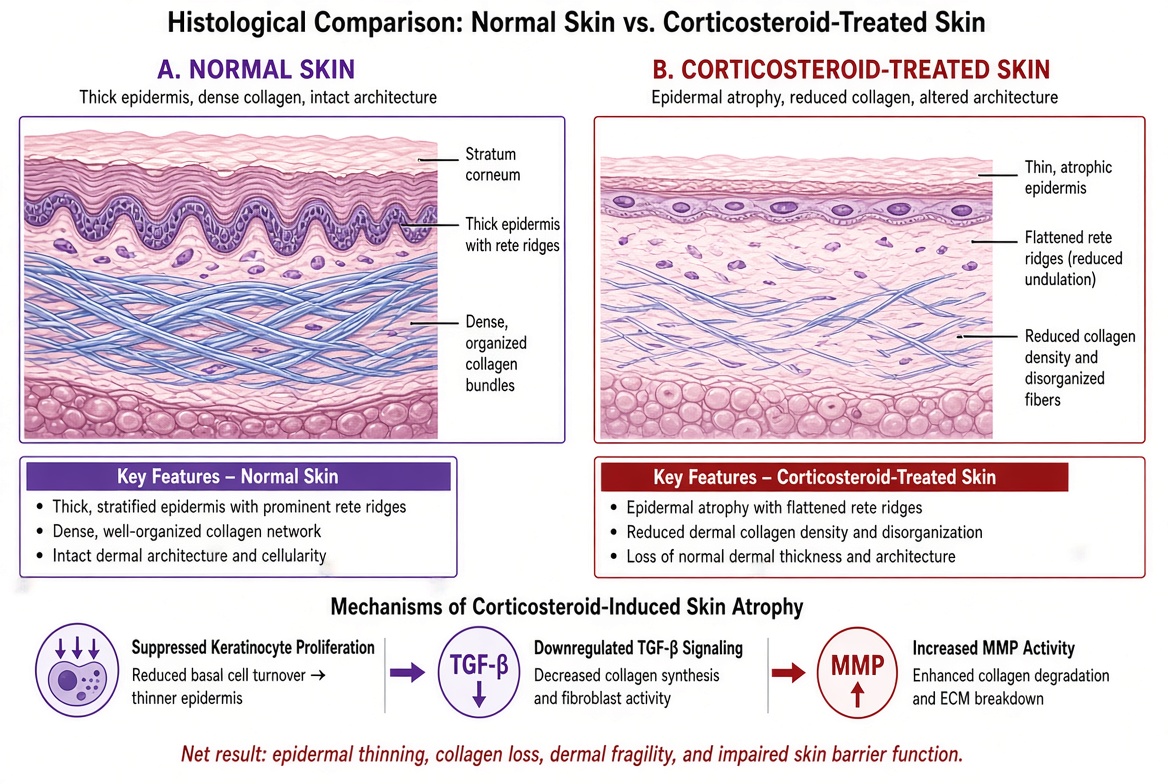
the skin thinning that looksmax users chase is also strictly pharmacologic and reversible in principle but often damaging in practice. glucocorticoids suppress keratinocyte proliferation by inhibiting cyclin D1 and other cell-cycle drivers, leading to epidermal atrophy. in the dermis they inhibit fibroblast proliferation and collagen synthesis by down-regulating TGF-β signaling and type I and III collagen gene expression while simultaneously increasing matrix metalloproteinase activity. glycosaminoglycan and hyaluronic acid production falls, reducing dermal ground substance and turgor. sebaceous and sweat gland activity is also suppressed. all of these changes require continuous receptor occupancy. these effects are only temporary while you are using the steroids. once receptor stimulation ceases, the suppressed pathways attempt to restart, but the barrier has usually been compromised (reduced ceramides, free fatty acids, and cholesterol in the stratum corneum), so the recovery is disordered.
1000014181


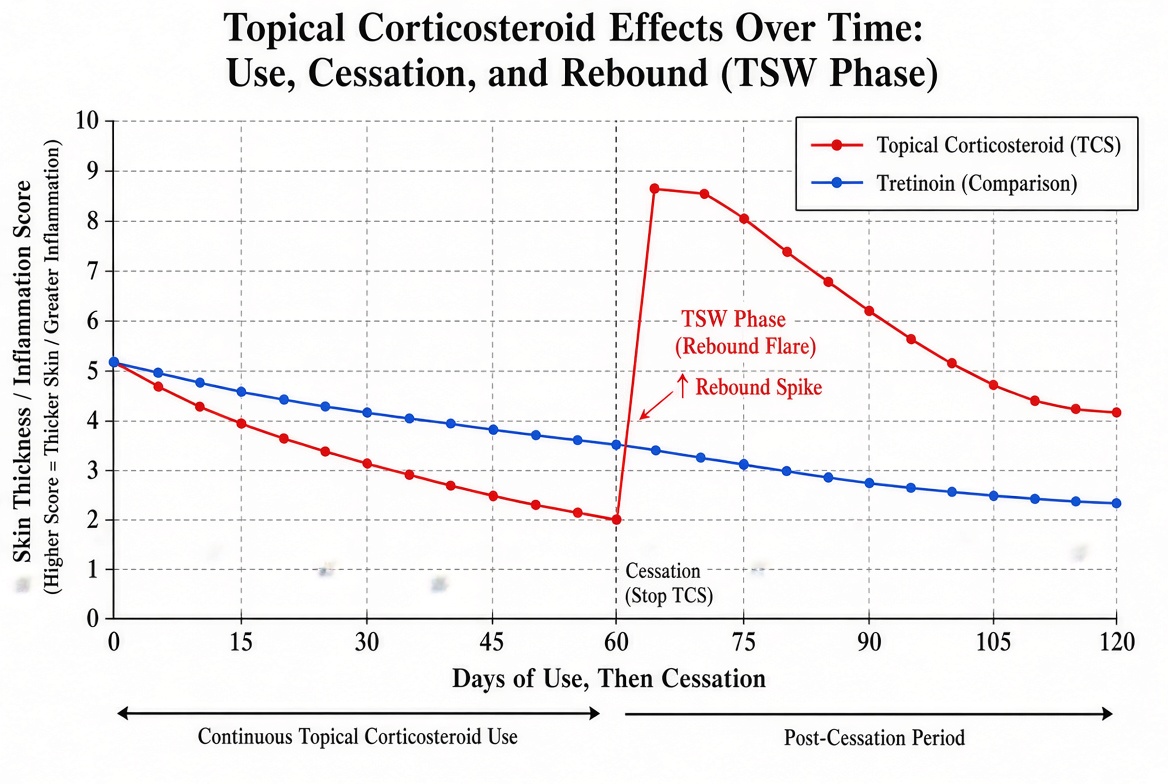
that disordered recovery is the core of topical steroid withdrawal. after prolonged suppression the local hypothalamic-pituitary-adrenal-like feedback is altered, tachyphylaxis develops, and sudden withdrawal produces a rebound surge in cytokines, substance P, and other mediators. clinically this presents as intense erythema, burning, stinging, scaling, and sometimes oozing or papulopustular eruptions that can last weeks to many months. barrier failure amplifies transepidermal water loss and allows further irritation, creating a self-perpetuating cycle. higher-potency agents simply occupy more receptors more completely and therefore produce deeper suppression and more violent rebound, but the mechanism is identical across the class.
1000014180


compare that to tretinoin and isotretinoin. tretinoin binds retinoic acid receptors (primarily RAR-γ in epidermis), directly modulating transcription of genes involved in keratinocyte differentiation, epidermal hyperplasia followed by normalization of thickness, and upregulation of collagen I and III via TGF-β and AP-1 pathways. it also increases hyaluronic acid and improves barrier lipid organization over time. the structural improvements accumulate and persist because they are anabolic and remodeling rather than purely catabolic and suppressive. isotretinoin induces sebocyte apoptosis through RAR/RXR and FOXO1 pathways, permanently reduces sebum output in a large percentage of users, decreases Propionibacterium density, and produces long-term dermal remodeling that does not rely on continuous receptor occupancy to maintain the benefit. when you stop isotretinoin the sebum suppression and collagen changes largely remain; there is no equivalent of the corticosteroid rebound.

the net result is that corticosteroids deliver small, receptor-occupancy-dependent reductions in inflammation, volume, and thickness that vanish as soon as the drug leaves the tissue and frequently leave behind a damaged barrier and withdrawal state. tretinoin and isotretinoin produce slower but mechanistically superior remodeling that does not collapse into TSW when dosing stops. the gap in durability and risk profile is obvious once the receptor biology and matrix effects are examined in detail.

So what have we learned?
That's right, corticosteroids are not to be misused for nose shrinkage 🥺
 
Last edited:
  • +1
Reactions: LANCEPRETTYBOY, Itzsimpledude, erlion and 4 others
my ai exposes corticosteroids
 
  • +1
Reactions: pray2gdy_ml1
Corticosteroid withdrawal is the scariest thing if you read some people’s experiences with if. It can destroy your whole face and your life basically. So this got me really scared and I don’t use it much. Only time I use it is occasionally eg with hydroquinone I mix it with a tiny amount and not even every day just sometimes to prevent irritation a bit. And sometimes I just it for skin issues which I suspect to be psoriasis but it could be just eczema. Lucky for me it’s not that bad, just some spots that occasionally become itchy. It is annoying because one place it can occur for me was near my asshole do I feel like scratching my ass all day. So I used triamcinolone on it for a while and it completely disappeared but I have to be careful using most types of soap and shampoo because that can trigger it again. But anyway that’s why I use it a tiny bit occasionally when necessary but not for things like on the nose because as you say I think it’s cope and imaging getting withdrawal effects that would ruin your whole face 💀 usually people use things like hydrocortisone which is a bit lighter strength but you can still get unlucky so don’t just assume you’re all good
 
  • +1
Reactions: HumbleMTNN
Corticosteroid withdrawal is the scariest thing if you read some people’s experiences with if. It can destroy your whole face and your life basically. So this got me really scared and I don’t use it much. Only time I use it is occasionally eg with hydroquinone I mix it with a tiny amount and not even every day just sometimes to prevent irritation a bit. And sometimes I just it for skin issues which I suspect to be psoriasis but it could be just eczema. Lucky for me it’s not that bad, just some spots that occasionally become itchy. It is annoying because one place it can occur for me was near my asshole do I feel like scratching my ass all day. So I used triamcinolone on it for a while and it completely disappeared but I have to be careful using most types of soap and shampoo because that can trigger it again. But anyway that’s why I use it a tiny bit occasionally when necessary but not for things like on the nose because as you say I think it’s cope and imaging getting withdrawal effects that would ruin your whole face 💀 usually people use things like hydrocortisone which is a bit lighter strength but you can still get unlucky so don’t just assume you’re all good
Lmao, be careful not to get tsw on your asshole man :LOL: (+rep me)
 
  • +1
Reactions: CheezyPoof
Lmao, be careful not to get tsw on your asshole man :LOL: (+rep me)
Obviously I was too afraid to go to the doctor for this too so I had it for the longest time and my underwear would get holes in it cause of scratching all the time. And besides I don’t like going to the doctor anyway idk I just stress about it and then never make the appointment.But luckily once I found out you can order anything online I placed my order and got it delivered np
 
  • +1
Reactions: HumbleMTNN
Exposing corticosteroids, (hydrocortisone, betamethasone, clobetasol, etc.)

High effort post

It's over for corticosteroid copers :feelsrope:


some of you wont like to hear this but it has to be said. stop using corticosteroids thinking they are some advanced tool for nose shrinkage or skin thinning

after i acquired some betamethasone i stole from my grandparents medicine cabinet for nose shrinkage :lul: and did more research into them i discovered how shit and overrated they are and that is why im making this post

corticosteroids as a whole (hydrocortisone, betamethasone, clobetasol, mometasone, triamcinolone and the rest of the class) all share the same core mechanisms. they are lipophilic molecules that cross the cell membrane and bind the intracellular glucocorticoid receptor. the ligand-receptor complex translocates to the nucleus where it acts primarily through transrepression: it interferes with the activity of pro-inflammatory transcription factors such as NF-κB and AP-1, reducing transcription of cytokines (IL-1, IL-6, TNF-α, IL-8), chemokines, and adhesion molecules. this produces the anti-inflammatory and anti-edema effect people notice as reduced redness and soft-tissue volume. at the same time the complex can transactivate genes that upregulate anti-inflammatory proteins like annexin A1 and IκBα, further damping the local inflammation

View attachment 5487967

the vasoconstriction that contributes to the temporary “smaller” or smoother look is mediated by inhibition of endothelial nitric oxide synthase and reduced prostaglandin and leukotriene synthesis, plus direct effects on vascular smooth muscle responsiveness. these effects are only temporary while you are using the steroids. the moment tissue levels drop, nitric oxide and vasodilatory mediators rebound and the vessels dilate again.

the skin thinning that looksmax users chase is also strictly pharmacologic and reversible in principle but often damaging in practice. glucocorticoids suppress keratinocyte proliferation by inhibiting cyclin D1 and other cell-cycle drivers, leading to epidermal atrophy. in the dermis they inhibit fibroblast proliferation and collagen synthesis by down-regulating TGF-β signaling and type I and III collagen gene expression while simultaneously increasing matrix metalloproteinase activity. glycosaminoglycan and hyaluronic acid production falls, reducing dermal ground substance and turgor. sebaceous and sweat gland activity is also suppressed. all of these changes require continuous receptor occupancy. these effects are only temporary while you are using the steroids. once receptor stimulation ceases, the suppressed pathways attempt to restart, but the barrier has usually been compromised (reduced ceramides, free fatty acids, and cholesterol in the stratum corneum), so the recovery is disordered.

View attachment 5487968

that disordered recovery is the core of topical steroid withdrawal. after prolonged suppression the local hypothalamic-pituitary-adrenal-like feedback is altered, tachyphylaxis develops, and sudden withdrawal produces a rebound surge in cytokines, substance P, and other mediators. clinically this presents as intense erythema, burning, stinging, scaling, and sometimes oozing or papulopustular eruptions that can last weeks to many months. barrier failure amplifies transepidermal water loss and allows further irritation, creating a self-perpetuating cycle. higher-potency agents simply occupy more receptors more completely and therefore produce deeper suppression and more violent rebound, but the mechanism is identical across the class.

View attachment 5487969

compare that to tretinoin and isotretinoin. tretinoin binds retinoic acid receptors (primarily RAR-γ in epidermis), directly modulating transcription of genes involved in keratinocyte differentiation, epidermal hyperplasia followed by normalization of thickness, and upregulation of collagen I and III via TGF-β and AP-1 pathways. it also increases hyaluronic acid and improves barrier lipid organization over time. the structural improvements accumulate and persist because they are anabolic and remodeling rather than purely catabolic and suppressive. isotretinoin induces sebocyte apoptosis through RAR/RXR and FOXO1 pathways, permanently reduces sebum output in a large percentage of users, decreases Propionibacterium density, and produces long-term dermal remodeling that does not rely on continuous receptor occupancy to maintain the benefit. when you stop isotretinoin the sebum suppression and collagen changes largely remain; there is no equivalent of the corticosteroid rebound.

the net result is that corticosteroids deliver small, receptor-occupancy-dependent reductions in inflammation, volume, and thickness that vanish as soon as the drug leaves the tissue and frequently leave behind a damaged barrier and withdrawal state. tretinoin and isotretinoin produce slower but mechanistically superior remodeling that does not collapse into TSW when dosing stops. the gap in durability and risk profile is obvious once the receptor biology and matrix effects are examined in detail.

So what have we learned? That's right, corticosteroids are not to be misused for nose shrinkage 🥺
ugh fuck you nigga I was in the middle of writing a clobetasol guide 😡😡
 
  • +1
Reactions: HumbleMTNN
Exposing corticosteroids, (hydrocortisone, betamethasone, clobetasol, etc.)

High effort post

It's over for corticosteroid copers :feelsrope:


some of you wont like to hear this but it has to be said. stop using corticosteroids thinking they are some advanced tool for nose shrinkage or skin thinning

after i acquired some betamethasone i stole from my grandparents medicine cabinet for nose shrinkage :lul: and did more research into them i discovered how shit and overrated they are and that is why im making this post

corticosteroids as a whole (hydrocortisone, betamethasone, clobetasol, mometasone, triamcinolone and the rest of the class) all share the same core mechanisms. they are lipophilic molecules that cross the cell membrane and bind the intracellular glucocorticoid receptor. the ligand-receptor complex translocates to the nucleus where it acts primarily through transrepression: it interferes with the activity of pro-inflammatory transcription factors such as NF-κB and AP-1, reducing transcription of cytokines (IL-1, IL-6, TNF-α, IL-8), chemokines, and adhesion molecules. this produces the anti-inflammatory and anti-edema effect people notice as reduced redness and soft-tissue volume. at the same time the complex can transactivate genes that upregulate anti-inflammatory proteins like annexin A1 and IκBα, further damping the local inflammation

View attachment 5487967

the vasoconstriction that contributes to the temporary “smaller” or smoother look is mediated by inhibition of endothelial nitric oxide synthase and reduced prostaglandin and leukotriene synthesis, plus direct effects on vascular smooth muscle responsiveness. these effects are only temporary while you are using the steroids. the moment tissue levels drop, nitric oxide and vasodilatory mediators rebound and the vessels dilate again.

the skin thinning that looksmax users chase is also strictly pharmacologic and reversible in principle but often damaging in practice. glucocorticoids suppress keratinocyte proliferation by inhibiting cyclin D1 and other cell-cycle drivers, leading to epidermal atrophy. in the dermis they inhibit fibroblast proliferation and collagen synthesis by down-regulating TGF-β signaling and type I and III collagen gene expression while simultaneously increasing matrix metalloproteinase activity. glycosaminoglycan and hyaluronic acid production falls, reducing dermal ground substance and turgor. sebaceous and sweat gland activity is also suppressed. all of these changes require continuous receptor occupancy. these effects are only temporary while you are using the steroids. once receptor stimulation ceases, the suppressed pathways attempt to restart, but the barrier has usually been compromised (reduced ceramides, free fatty acids, and cholesterol in the stratum corneum), so the recovery is disordered.

View attachment 5487968

that disordered recovery is the core of topical steroid withdrawal. after prolonged suppression the local hypothalamic-pituitary-adrenal-like feedback is altered, tachyphylaxis develops, and sudden withdrawal produces a rebound surge in cytokines, substance P, and other mediators. clinically this presents as intense erythema, burning, stinging, scaling, and sometimes oozing or papulopustular eruptions that can last weeks to many months. barrier failure amplifies transepidermal water loss and allows further irritation, creating a self-perpetuating cycle. higher-potency agents simply occupy more receptors more completely and therefore produce deeper suppression and more violent rebound, but the mechanism is identical across the class.

View attachment 5487969

compare that to tretinoin and isotretinoin. tretinoin binds retinoic acid receptors (primarily RAR-γ in epidermis), directly modulating transcription of genes involved in keratinocyte differentiation, epidermal hyperplasia followed by normalization of thickness, and upregulation of collagen I and III via TGF-β and AP-1 pathways. it also increases hyaluronic acid and improves barrier lipid organization over time. the structural improvements accumulate and persist because they are anabolic and remodeling rather than purely catabolic and suppressive. isotretinoin induces sebocyte apoptosis through RAR/RXR and FOXO1 pathways, permanently reduces sebum output in a large percentage of users, decreases Propionibacterium density, and produces long-term dermal remodeling that does not rely on continuous receptor occupancy to maintain the benefit. when you stop isotretinoin the sebum suppression and collagen changes largely remain; there is no equivalent of the corticosteroid rebound.

the net result is that corticosteroids deliver small, receptor-occupancy-dependent reductions in inflammation, volume, and thickness that vanish as soon as the drug leaves the tissue and frequently leave behind a damaged barrier and withdrawal state. tretinoin and isotretinoin produce slower but mechanistically superior remodeling that does not collapse into TSW when dosing stops. the gap in durability and risk profile is obvious once the receptor biology and matrix effects are examined in detail.

So what have we learned? That's right, corticosteroids are not to be misused for nose shrinkage 🥺
Bump
 
Exposing corticosteroids, (hydrocortisone, betamethasone, clobetasol, etc.)

High effort post

It's over for corticosteroid copers :feelsrope:


some of you wont like to hear this but it has to be said. stop using corticosteroids thinking they are some advanced tool for nose shrinkage or skin thinning

after i acquired some betamethasone i stole from my grandparents medicine cabinet for nose shrinkage :lul: and did more research into them i discovered how shit and overrated they are and that is why im making this post

corticosteroids as a whole (hydrocortisone, betamethasone, clobetasol, mometasone, triamcinolone and the rest of the class) all share the same core mechanisms. they are lipophilic molecules that cross the cell membrane and bind the intracellular glucocorticoid receptor. the ligand-receptor complex translocates to the nucleus where it acts primarily through transrepression: it interferes with the activity of pro-inflammatory transcription factors such as NF-κB and AP-1, reducing transcription of cytokines (IL-1, IL-6, TNF-α, IL-8), chemokines, and adhesion molecules. this produces the anti-inflammatory and anti-edema effect people notice as reduced redness and soft-tissue volume. at the same time the complex can transactivate genes that upregulate anti-inflammatory proteins like annexin A1 and IκBα, further damping the local inflammation

View attachment 5487967

the vasoconstriction that contributes to the temporary “smaller” or smoother look is mediated by inhibition of endothelial nitric oxide synthase and reduced prostaglandin and leukotriene synthesis, plus direct effects on vascular smooth muscle responsiveness. these effects are only temporary while you are using the steroids. the moment tissue levels drop, nitric oxide and vasodilatory mediators rebound and the vessels dilate again.

the skin thinning that looksmax users chase is also strictly pharmacologic and reversible in principle but often damaging in practice. glucocorticoids suppress keratinocyte proliferation by inhibiting cyclin D1 and other cell-cycle drivers, leading to epidermal atrophy. in the dermis they inhibit fibroblast proliferation and collagen synthesis by down-regulating TGF-β signaling and type I and III collagen gene expression while simultaneously increasing matrix metalloproteinase activity. glycosaminoglycan and hyaluronic acid production falls, reducing dermal ground substance and turgor. sebaceous and sweat gland activity is also suppressed. all of these changes require continuous receptor occupancy. these effects are only temporary while you are using the steroids. once receptor stimulation ceases, the suppressed pathways attempt to restart, but the barrier has usually been compromised (reduced ceramides, free fatty acids, and cholesterol in the stratum corneum), so the recovery is disordered.

View attachment 5487968

that disordered recovery is the core of topical steroid withdrawal. after prolonged suppression the local hypothalamic-pituitary-adrenal-like feedback is altered, tachyphylaxis develops, and sudden withdrawal produces a rebound surge in cytokines, substance P, and other mediators. clinically this presents as intense erythema, burning, stinging, scaling, and sometimes oozing or papulopustular eruptions that can last weeks to many months. barrier failure amplifies transepidermal water loss and allows further irritation, creating a self-perpetuating cycle. higher-potency agents simply occupy more receptors more completely and therefore produce deeper suppression and more violent rebound, but the mechanism is identical across the class.

View attachment 5487969

compare that to tretinoin and isotretinoin. tretinoin binds retinoic acid receptors (primarily RAR-γ in epidermis), directly modulating transcription of genes involved in keratinocyte differentiation, epidermal hyperplasia followed by normalization of thickness, and upregulation of collagen I and III via TGF-β and AP-1 pathways. it also increases hyaluronic acid and improves barrier lipid organization over time. the structural improvements accumulate and persist because they are anabolic and remodeling rather than purely catabolic and suppressive. isotretinoin induces sebocyte apoptosis through RAR/RXR and FOXO1 pathways, permanently reduces sebum output in a large percentage of users, decreases Propionibacterium density, and produces long-term dermal remodeling that does not rely on continuous receptor occupancy to maintain the benefit. when you stop isotretinoin the sebum suppression and collagen changes largely remain; there is no equivalent of the corticosteroid rebound.

the net result is that corticosteroids deliver small, receptor-occupancy-dependent reductions in inflammation, volume, and thickness that vanish as soon as the drug leaves the tissue and frequently leave behind a damaged barrier and withdrawal state. tretinoin and isotretinoin produce slower but mechanistically superior remodeling that does not collapse into TSW when dosing stops. the gap in durability and risk profile is obvious once the receptor biology and matrix effects are examined in detail.

So what have we learned? That's right, corticosteroids are not to be misused for nose shrinkage 🥺
Good post g
 
  • +1
Reactions: HumbleMTNN
Exposing corticosteroids, (hydrocortisone, betamethasone, clobetasol, etc.)

High effort post

It's over for corticosteroid copers :feelsrope:


some of you wont like to hear this but it has to be said. stop using corticosteroids thinking they are some advanced tool for nose shrinkage or skin thinning

after i acquired some betamethasone i stole from my grandparents medicine cabinet for nose shrinkage :lul: and did more research into them i discovered how shit and overrated they are and that is why im making this post

corticosteroids as a whole (hydrocortisone, betamethasone, clobetasol, mometasone, triamcinolone and the rest of the class) all share the same core mechanisms. they are lipophilic molecules that cross the cell membrane and bind the intracellular glucocorticoid receptor. the ligand-receptor complex translocates to the nucleus where it acts primarily through transrepression: it interferes with the activity of pro-inflammatory transcription factors such as NF-κB and AP-1, reducing transcription of cytokines (IL-1, IL-6, TNF-α, IL-8), chemokines, and adhesion molecules. this produces the anti-inflammatory and anti-edema effect people notice as reduced redness and soft-tissue volume. at the same time the complex can transactivate genes that upregulate anti-inflammatory proteins like annexin A1 and IκBα, further damping the local inflammation

View attachment 5487967

the vasoconstriction that contributes to the temporary “smaller” or smoother look is mediated by inhibition of endothelial nitric oxide synthase and reduced prostaglandin and leukotriene synthesis, plus direct effects on vascular smooth muscle responsiveness. these effects are only temporary while you are using the steroids. the moment tissue levels drop, nitric oxide and vasodilatory mediators rebound and the vessels dilate again.

the skin thinning that looksmax users chase is also strictly pharmacologic and reversible in principle but often damaging in practice. glucocorticoids suppress keratinocyte proliferation by inhibiting cyclin D1 and other cell-cycle drivers, leading to epidermal atrophy. in the dermis they inhibit fibroblast proliferation and collagen synthesis by down-regulating TGF-β signaling and type I and III collagen gene expression while simultaneously increasing matrix metalloproteinase activity. glycosaminoglycan and hyaluronic acid production falls, reducing dermal ground substance and turgor. sebaceous and sweat gland activity is also suppressed. all of these changes require continuous receptor occupancy. these effects are only temporary while you are using the steroids. once receptor stimulation ceases, the suppressed pathways attempt to restart, but the barrier has usually been compromised (reduced ceramides, free fatty acids, and cholesterol in the stratum corneum), so the recovery is disordered.

View attachment 5487968

that disordered recovery is the core of topical steroid withdrawal. after prolonged suppression the local hypothalamic-pituitary-adrenal-like feedback is altered, tachyphylaxis develops, and sudden withdrawal produces a rebound surge in cytokines, substance P, and other mediators. clinically this presents as intense erythema, burning, stinging, scaling, and sometimes oozing or papulopustular eruptions that can last weeks to many months. barrier failure amplifies transepidermal water loss and allows further irritation, creating a self-perpetuating cycle. higher-potency agents simply occupy more receptors more completely and therefore produce deeper suppression and more violent rebound, but the mechanism is identical across the class.

View attachment 5487969

compare that to tretinoin and isotretinoin. tretinoin binds retinoic acid receptors (primarily RAR-γ in epidermis), directly modulating transcription of genes involved in keratinocyte differentiation, epidermal hyperplasia followed by normalization of thickness, and upregulation of collagen I and III via TGF-β and AP-1 pathways. it also increases hyaluronic acid and improves barrier lipid organization over time. the structural improvements accumulate and persist because they are anabolic and remodeling rather than purely catabolic and suppressive. isotretinoin induces sebocyte apoptosis through RAR/RXR and FOXO1 pathways, permanently reduces sebum output in a large percentage of users, decreases Propionibacterium density, and produces long-term dermal remodeling that does not rely on continuous receptor occupancy to maintain the benefit. when you stop isotretinoin the sebum suppression and collagen changes largely remain; there is no equivalent of the corticosteroid rebound.

the net result is that corticosteroids deliver small, receptor-occupancy-dependent reductions in inflammation, volume, and thickness that vanish as soon as the drug leaves the tissue and frequently leave behind a damaged barrier and withdrawal state. tretinoin and isotretinoin produce slower but mechanistically superior remodeling that does not collapse into TSW when dosing stops. the gap in durability and risk profile is obvious once the receptor biology and matrix effects are examined in detail.

So what have we learned? That's right, corticosteroids are not to be misused for nose shrinkage 🥺
@stpzkmpfwg @killyourselfASAP @Iblameginger
 
Exposing corticosteroids, (hydrocortisone, betamethasone, clobetasol, etc.)

High effort post

It's over for corticosteroid copers :feelsrope:


some of you wont like to hear this but it has to be said. stop using corticosteroids thinking they are some advanced tool for nose shrinkage or skin thinning

after i acquired some betamethasone i stole from my grandparents medicine cabinet for nose shrinkage :lul: and did more research into them i discovered how shit and overrated they are and that is why im making this post

corticosteroids as a whole (hydrocortisone, betamethasone, clobetasol, mometasone, triamcinolone and the rest of the class) all share the same core mechanisms. they are lipophilic molecules that cross the cell membrane and bind the intracellular glucocorticoid receptor. the ligand-receptor complex translocates to the nucleus where it acts primarily through transrepression: it interferes with the activity of pro-inflammatory transcription factors such as NF-κB and AP-1, reducing transcription of cytokines (IL-1, IL-6, TNF-α, IL-8), chemokines, and adhesion molecules. this produces the anti-inflammatory and anti-edema effect people notice as reduced redness and soft-tissue volume. at the same time the complex can transactivate genes that upregulate anti-inflammatory proteins like annexin A1 and IκBα, further damping the local inflammation

View attachment 5487967

the vasoconstriction that contributes to the temporary “smaller” or smoother look is mediated by inhibition of endothelial nitric oxide synthase and reduced prostaglandin and leukotriene synthesis, plus direct effects on vascular smooth muscle responsiveness. these effects are only temporary while you are using the steroids. the moment tissue levels drop, nitric oxide and vasodilatory mediators rebound and the vessels dilate again.

the skin thinning that looksmax users chase is also strictly pharmacologic and reversible in principle but often damaging in practice. glucocorticoids suppress keratinocyte proliferation by inhibiting cyclin D1 and other cell-cycle drivers, leading to epidermal atrophy. in the dermis they inhibit fibroblast proliferation and collagen synthesis by down-regulating TGF-β signaling and type I and III collagen gene expression while simultaneously increasing matrix metalloproteinase activity. glycosaminoglycan and hyaluronic acid production falls, reducing dermal ground substance and turgor. sebaceous and sweat gland activity is also suppressed. all of these changes require continuous receptor occupancy. these effects are only temporary while you are using the steroids. once receptor stimulation ceases, the suppressed pathways attempt to restart, but the barrier has usually been compromised (reduced ceramides, free fatty acids, and cholesterol in the stratum corneum), so the recovery is disordered.

View attachment 5487968

that disordered recovery is the core of topical steroid withdrawal. after prolonged suppression the local hypothalamic-pituitary-adrenal-like feedback is altered, tachyphylaxis develops, and sudden withdrawal produces a rebound surge in cytokines, substance P, and other mediators. clinically this presents as intense erythema, burning, stinging, scaling, and sometimes oozing or papulopustular eruptions that can last weeks to many months. barrier failure amplifies transepidermal water loss and allows further irritation, creating a self-perpetuating cycle. higher-potency agents simply occupy more receptors more completely and therefore produce deeper suppression and more violent rebound, but the mechanism is identical across the class.

View attachment 5487969

compare that to tretinoin and isotretinoin. tretinoin binds retinoic acid receptors (primarily RAR-γ in epidermis), directly modulating transcription of genes involved in keratinocyte differentiation, epidermal hyperplasia followed by normalization of thickness, and upregulation of collagen I and III via TGF-β and AP-1 pathways. it also increases hyaluronic acid and improves barrier lipid organization over time. the structural improvements accumulate and persist because they are anabolic and remodeling rather than purely catabolic and suppressive. isotretinoin induces sebocyte apoptosis through RAR/RXR and FOXO1 pathways, permanently reduces sebum output in a large percentage of users, decreases Propionibacterium density, and produces long-term dermal remodeling that does not rely on continuous receptor occupancy to maintain the benefit. when you stop isotretinoin the sebum suppression and collagen changes largely remain; there is no equivalent of the corticosteroid rebound.

the net result is that corticosteroids deliver small, receptor-occupancy-dependent reductions in inflammation, volume, and thickness that vanish as soon as the drug leaves the tissue and frequently leave behind a damaged barrier and withdrawal state. tretinoin and isotretinoin produce slower but mechanistically superior remodeling that does not collapse into TSW when dosing stops. the gap in durability and risk profile is obvious once the receptor biology and matrix effects are examined in detail.

So what have we learned? That's right, corticosteroids are not to be misused for nose shrinkage 🥺
I stopped using them when i learned they lower collagen im on accutane and tret rn
 
  • +1
Reactions: HumbleMTNN
I'm sorry foidslayer5000 🥺 I love you... Rep?..
repped

my research shows that with correct dosage you never even need to enter a cessation period. Its a big undertaking to apply for the rest of ur life, but it ascends ur nose so much it should be worth it:feelshah:
 
  • +1
Reactions: HumbleMTNN
Exposing corticosteroids, (hydrocortisone, betamethasone, clobetasol, etc.)

High effort post

It's over for corticosteroid copers :feelsrope:


some of you wont like to hear this but it has to be said. stop using corticosteroids thinking they are some advanced tool for nose shrinkage or skin thinning

after i acquired some betamethasone i stole from my grandparents medicine cabinet for nose shrinkage :lul: and did more research into them i discovered how shit and overrated they are and that is why im making this post

corticosteroids as a whole (hydrocortisone, betamethasone, clobetasol, mometasone, triamcinolone and the rest of the class) all share the same core mechanisms. they are lipophilic molecules that cross the cell membrane and bind the intracellular glucocorticoid receptor. the ligand-receptor complex translocates to the nucleus where it acts primarily through transrepression: it interferes with the activity of pro-inflammatory transcription factors such as NF-κB and AP-1, reducing transcription of cytokines (IL-1, IL-6, TNF-α, IL-8), chemokines, and adhesion molecules. this produces the anti-inflammatory and anti-edema effect people notice as reduced redness and soft-tissue volume. at the same time the complex can transactivate genes that upregulate anti-inflammatory proteins like annexin A1 and IκBα, further damping the local inflammation

View attachment 5487967

the vasoconstriction that contributes to the temporary “smaller” or smoother look is mediated by inhibition of endothelial nitric oxide synthase and reduced prostaglandin and leukotriene synthesis, plus direct effects on vascular smooth muscle responsiveness. these effects are only temporary while you are using the steroids. the moment tissue levels drop, nitric oxide and vasodilatory mediators rebound and the vessels dilate again.

the skin thinning that looksmax users chase is also strictly pharmacologic and reversible in principle but often damaging in practice. glucocorticoids suppress keratinocyte proliferation by inhibiting cyclin D1 and other cell-cycle drivers, leading to epidermal atrophy. in the dermis they inhibit fibroblast proliferation and collagen synthesis by down-regulating TGF-β signaling and type I and III collagen gene expression while simultaneously increasing matrix metalloproteinase activity. glycosaminoglycan and hyaluronic acid production falls, reducing dermal ground substance and turgor. sebaceous and sweat gland activity is also suppressed. all of these changes require continuous receptor occupancy. these effects are only temporary while you are using the steroids. once receptor stimulation ceases, the suppressed pathways attempt to restart, but the barrier has usually been compromised (reduced ceramides, free fatty acids, and cholesterol in the stratum corneum), so the recovery is disordered.

View attachment 5487968

that disordered recovery is the core of topical steroid withdrawal. after prolonged suppression the local hypothalamic-pituitary-adrenal-like feedback is altered, tachyphylaxis develops, and sudden withdrawal produces a rebound surge in cytokines, substance P, and other mediators. clinically this presents as intense erythema, burning, stinging, scaling, and sometimes oozing or papulopustular eruptions that can last weeks to many months. barrier failure amplifies transepidermal water loss and allows further irritation, creating a self-perpetuating cycle. higher-potency agents simply occupy more receptors more completely and therefore produce deeper suppression and more violent rebound, but the mechanism is identical across the class.

View attachment 5487969

compare that to tretinoin and isotretinoin. tretinoin binds retinoic acid receptors (primarily RAR-γ in epidermis), directly modulating transcription of genes involved in keratinocyte differentiation, epidermal hyperplasia followed by normalization of thickness, and upregulation of collagen I and III via TGF-β and AP-1 pathways. it also increases hyaluronic acid and improves barrier lipid organization over time. the structural improvements accumulate and persist because they are anabolic and remodeling rather than purely catabolic and suppressive. isotretinoin induces sebocyte apoptosis through RAR/RXR and FOXO1 pathways, permanently reduces sebum output in a large percentage of users, decreases Propionibacterium density, and produces long-term dermal remodeling that does not rely on continuous receptor occupancy to maintain the benefit. when you stop isotretinoin the sebum suppression and collagen changes largely remain; there is no equivalent of the corticosteroid rebound.

the net result is that corticosteroids deliver small, receptor-occupancy-dependent reductions in inflammation, volume, and thickness that vanish as soon as the drug leaves the tissue and frequently leave behind a damaged barrier and withdrawal state. tretinoin and isotretinoin produce slower but mechanistically superior remodeling that does not collapse into TSW when dosing stops. the gap in durability and risk profile is obvious once the receptor biology and matrix effects are examined in detail.

So what have we learned? That's right, corticosteroids are not to be misused for nose shrinkage 🥺
Highest IQ shit i've read in a while
 
  • Love it
Reactions: HumbleMTNN
repped

my research shows that with correct dosage you never even need to enter a cessation period. Its a big undertaking to apply for the rest of ur life, but it ascends ur nose so much it should be worth it:feelshah:
But you could just get on isotret or tret and get similar effects without the commitment of needing to apply corticosteroids forever or else you'll get tsw
 
  • +1
Reactions: LANCEPRETTYBOY
But you could just get on isotret or tret and get similar effects without the commitment of needing to apply corticosteroids forever or else you'll get tsw
true... my 0.1% trets coming soon :Comfy: cant wait
 
  • +1
Reactions: HumbleMTNN
I stopped using them when i learned they lower collagen im on accutane and tret rn
Yeah, definately the better option. I got some Betamethasone from the grandpa medicine cabinet pharmacy and applied it once, did more research and I'm probably never gonna use it again (will be holding onto it though in case I should ever need it) my tret is otw right now
 
  • +1
Reactions: LANCEPRETTYBOY
Exposing corticosteroids, (hydrocortisone, betamethasone, clobetasol, etc.)

High effort post

It's over for corticosteroid copers :feelsrope:


some of you wont like to hear this but it has to be said. stop using corticosteroids thinking they are some advanced tool for nose shrinkage or skin thinning

after i acquired some betamethasone i stole from my grandparents medicine cabinet for nose shrinkage :lul: and did more research into them i discovered how shit and overrated they are and that is why im making this post

corticosteroids as a whole (hydrocortisone, betamethasone, clobetasol, mometasone, triamcinolone and the rest of the class) all share the same core mechanisms. they are lipophilic molecules that cross the cell membrane and bind the intracellular glucocorticoid receptor. the ligand-receptor complex translocates to the nucleus where it acts primarily through transrepression: it interferes with the activity of pro-inflammatory transcription factors such as NF-κB and AP-1, reducing transcription of cytokines (IL-1, IL-6, TNF-α, IL-8), chemokines, and adhesion molecules. this produces the anti-inflammatory and anti-edema effect people notice as reduced redness and soft-tissue volume. at the same time the complex can transactivate genes that upregulate anti-inflammatory proteins like annexin A1 and IκBα, further damping the local inflammation

View attachment 5487967

the vasoconstriction that contributes to the temporary “smaller” or smoother look is mediated by inhibition of endothelial nitric oxide synthase and reduced prostaglandin and leukotriene synthesis, plus direct effects on vascular smooth muscle responsiveness. these effects are only temporary while you are using the steroids. the moment tissue levels drop, nitric oxide and vasodilatory mediators rebound and the vessels dilate again.

the skin thinning that looksmax users chase is also strictly pharmacologic and reversible in principle but often damaging in practice. glucocorticoids suppress keratinocyte proliferation by inhibiting cyclin D1 and other cell-cycle drivers, leading to epidermal atrophy. in the dermis they inhibit fibroblast proliferation and collagen synthesis by down-regulating TGF-β signaling and type I and III collagen gene expression while simultaneously increasing matrix metalloproteinase activity. glycosaminoglycan and hyaluronic acid production falls, reducing dermal ground substance and turgor. sebaceous and sweat gland activity is also suppressed. all of these changes require continuous receptor occupancy. these effects are only temporary while you are using the steroids. once receptor stimulation ceases, the suppressed pathways attempt to restart, but the barrier has usually been compromised (reduced ceramides, free fatty acids, and cholesterol in the stratum corneum), so the recovery is disordered.

View attachment 5487968

that disordered recovery is the core of topical steroid withdrawal. after prolonged suppression the local hypothalamic-pituitary-adrenal-like feedback is altered, tachyphylaxis develops, and sudden withdrawal produces a rebound surge in cytokines, substance P, and other mediators. clinically this presents as intense erythema, burning, stinging, scaling, and sometimes oozing or papulopustular eruptions that can last weeks to many months. barrier failure amplifies transepidermal water loss and allows further irritation, creating a self-perpetuating cycle. higher-potency agents simply occupy more receptors more completely and therefore produce deeper suppression and more violent rebound, but the mechanism is identical across the class.

View attachment 5487969

compare that to tretinoin and isotretinoin. tretinoin binds retinoic acid receptors (primarily RAR-γ in epidermis), directly modulating transcription of genes involved in keratinocyte differentiation, epidermal hyperplasia followed by normalization of thickness, and upregulation of collagen I and III via TGF-β and AP-1 pathways. it also increases hyaluronic acid and improves barrier lipid organization over time. the structural improvements accumulate and persist because they are anabolic and remodeling rather than purely catabolic and suppressive. isotretinoin induces sebocyte apoptosis through RAR/RXR and FOXO1 pathways, permanently reduces sebum output in a large percentage of users, decreases Propionibacterium density, and produces long-term dermal remodeling that does not rely on continuous receptor occupancy to maintain the benefit. when you stop isotretinoin the sebum suppression and collagen changes largely remain; there is no equivalent of the corticosteroid rebound.

the net result is that corticosteroids deliver small, receptor-occupancy-dependent reductions in inflammation, volume, and thickness that vanish as soon as the drug leaves the tissue and frequently leave behind a damaged barrier and withdrawal state. tretinoin and isotretinoin produce slower but mechanistically superior remodeling that does not collapse into TSW when dosing stops. the gap in durability and risk profile is obvious once the receptor biology and matrix effects are examined in detail.

So what have we learned? That's right, corticosteroids are not to be misused for nose shrinkage 🥺
Bump
 
But you could just get on isotret or tret and get similar effects without the commitment of needing to apply corticosteroids forever or else you'll get tsw
tret does the same thing?
 
alr if thats the case im stopping hydrocortisone
 
tret does the same thing?
Similar, maybe not as good of effects but it does still shrink your nose slightly through reduced inflammation and it doesn't cause acne like corticosteroids do, also rep my thread pls 🙏🏻
 
  • +1
Reactions: LANCEPRETTYBOY
hydrocortisone works really well i pair it with tret but i think tret does better job when it comes to oil glands, hydrocortisone effects is temporary for me last for one day only brah
 

Similar threads

vlurrent
Replies
34
Views
323
AscendantGalivanter
A
lllcrykd
Replies
0
Views
30
lllcrykd
lllcrykd
MirinDaZygos
Replies
19
Views
415
MirinDaZygos
MirinDaZygos
AtrophicPyra
Replies
7
Views
91
AtrophicPyra
AtrophicPyra

Users who are viewing this thread

  • bones>
Back
Top
Sponsored
Stake.us
America's #1 Social Casino
Slots, Poker & More
Join Now →