How To Calculate Frontal Facial Harmony (FULL AND MOST ACCURATE GUIDE)

Adee

Adee

.gg/hardmax
Joined
Oct 8, 2025
Posts
1,892
Reputation
8,827
I decided to create a detailed thread on this topic because while many people post about facial harmony, most guides miss crucial information, specifically the ranges for each tier. You need to know these ranges to assign points accurately in the first place.

After reading this thread, you will be fully equipped to measure harmony yourself. I have broken this down into three sections:

How to properly measure ratios.
How to assign tiers to each ratio.
How to assign points per tier and calculate the overall harmony score.


1. HOW TO MEASURE RATIOS + WHICH APP TO USE AND HOW TO USE IT

To begin, we will need software capable of precise measurements. I recommend using GIMP or photoshop. Both serve the same purpose, but I find GIMP slightly more user friendly for this specific process.

First step - mapping the face.

Download and open your GIMP app.
Now, simply paste your image using CTR + V or go to FILE > OPEN and select your picture.


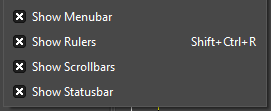
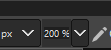
Next, you will have to enable some of the view settings below:

On the upper taskbar, click view and ensure the following options are checked:

1774256207081

1774256226439

1774256255671

Don't touch the rest of the boxes that are not shown here, just leave them as they are.

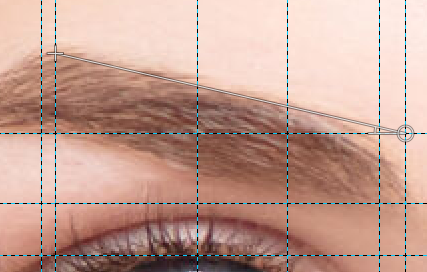
Now, you should be able to see the rulers on the top and on the sides of your workspace that appeared. Click on a ruler and drag your mouse toward the photo to place a guide.


VIDEO:


If you want to undo the guide simply press CTRL + Z to go back.

Zoom into the picture to place your guides accurately.

1774256516360

1774256762022

Example of a mapped face.

Note that everything you are doing will be pointless if the photo you're measuring is even slightly distorted. Only measure non distorted photos, if it's you or someone else that want to measure their harmony ensure you're taking the photo:

- with slight camera zoom
- using the back camera and facing directly onto the camera.
- The camera must stand at your nose height.

+ You can close your eyes and shake your head a little bit, then imagine you're looking at yourself in the mirror, finally open your eyes. This should help you fix your head at the proper position. Redo this until you know for sure your head is in the proper position.
I suggest setting a 15-30 second timer.
Photo quality also matters.

Okay, now once you mapped the face.
You can start by measuring distance between the guides you placed.

How to measure distance in GIMP?
To measure distrance in gimp you have to simply use measure tool by clicking SHIFT + M.
Photo:
1774257160228

You are going to use the pixel value and divide or multiply it depending on the ratios you are measuring

1.1 HOW TO MEASURE EACH OF THE RATIOS
I am presenting the standars most important masurements and standart harmony formula.

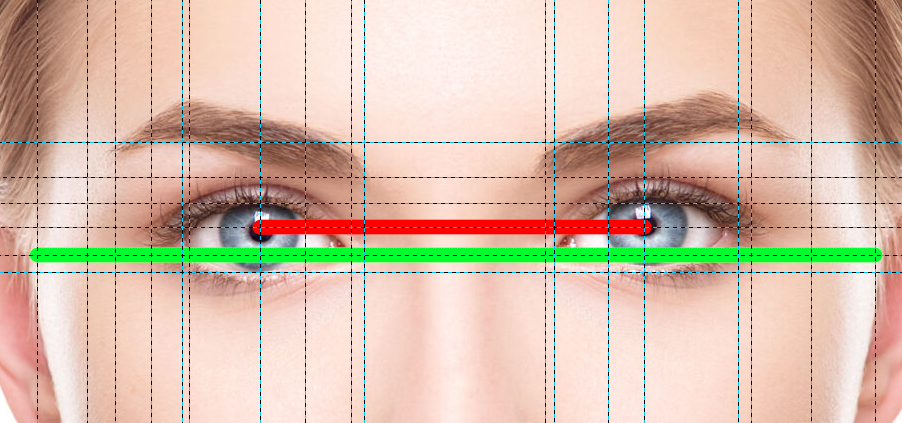
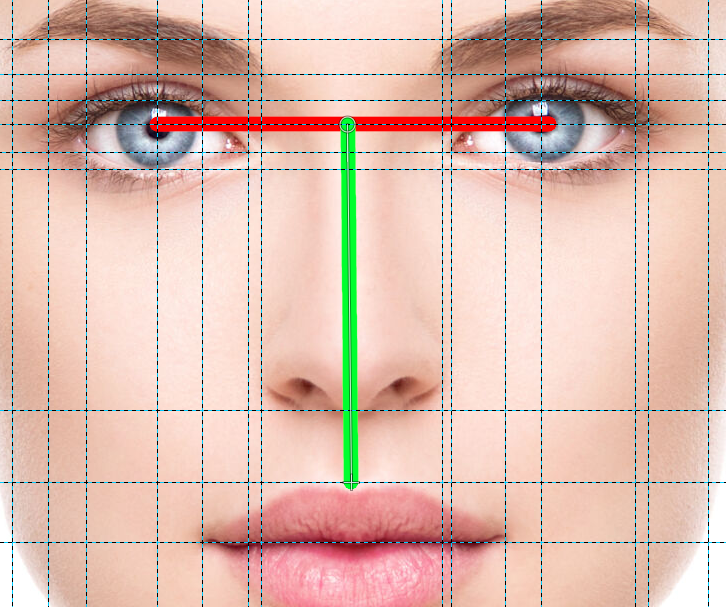
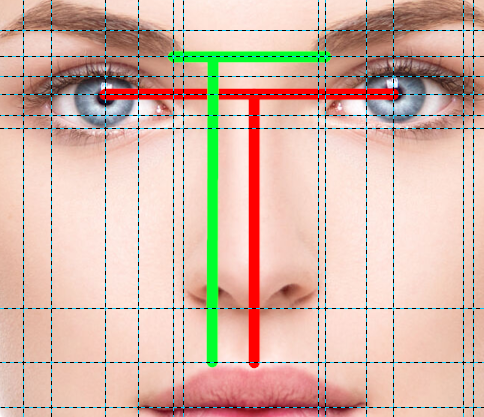
Eye Separation Ratio:
1774284252647

RED LINE divided by GREEN LINE

Facial thirds:
1774277801008


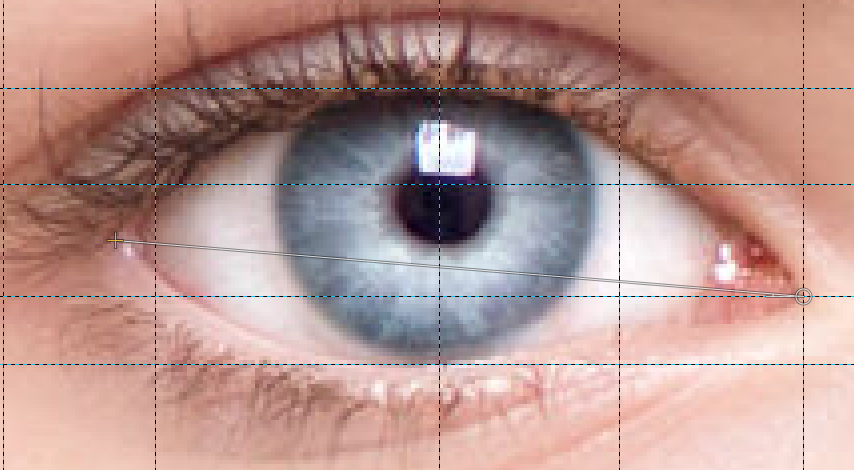
Canthal tilt
1774277890438


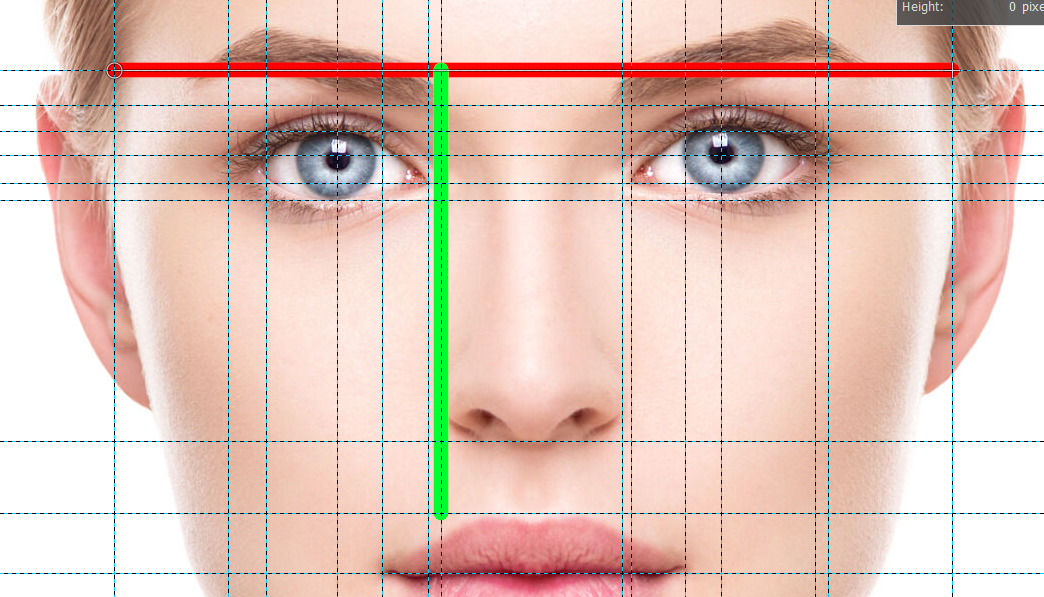
FWHR: (in this case: 1.892)
1774277991761


Jaw angle:
Always mind the soft tissue: fat, saggy skin etc.
1774278221320


Cheekbone setness:
Find the place where the cheekbones are popping the most and mark it with the line. Measure the distance from this line to the lips and divide it by the distance of a line that starts at the height of pupils and of ends on the lips as well.
1774278375427


Total Facial Height to Width
Divide the height of the face by width of the face
1774278597146


Bigonial width
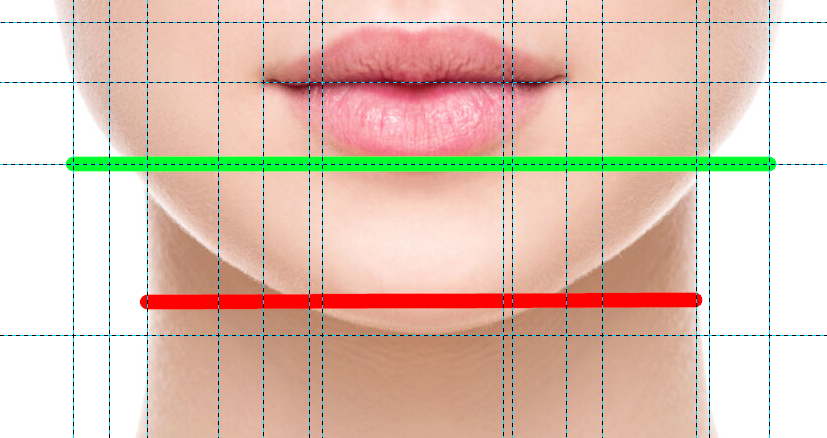
1774278767642


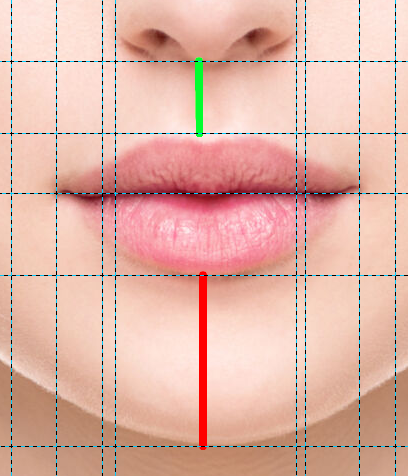
Chin to philtrum ratio
1774278835565


Neck Width
1774278880259


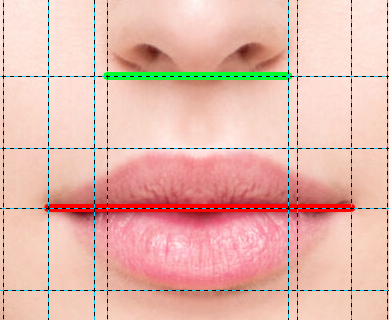
Mouth to nose width

1774278926988


Midface ratio
1774279019214


Eyebrow Setness
1774279172218


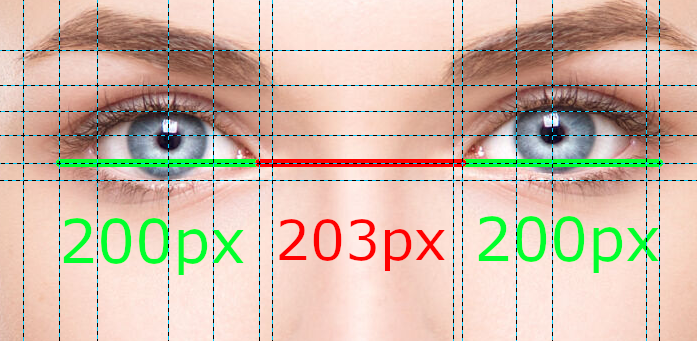
Eye Spacing
1774279318242


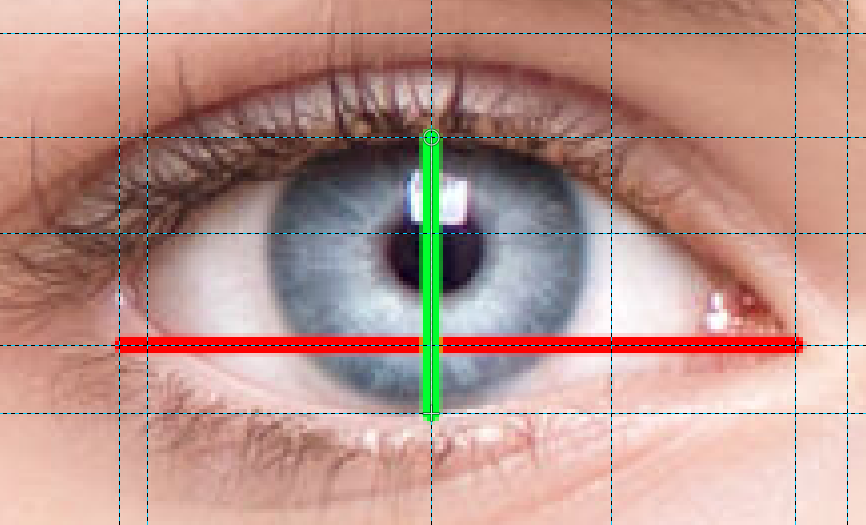
Eye aspect ratio
1774279476702


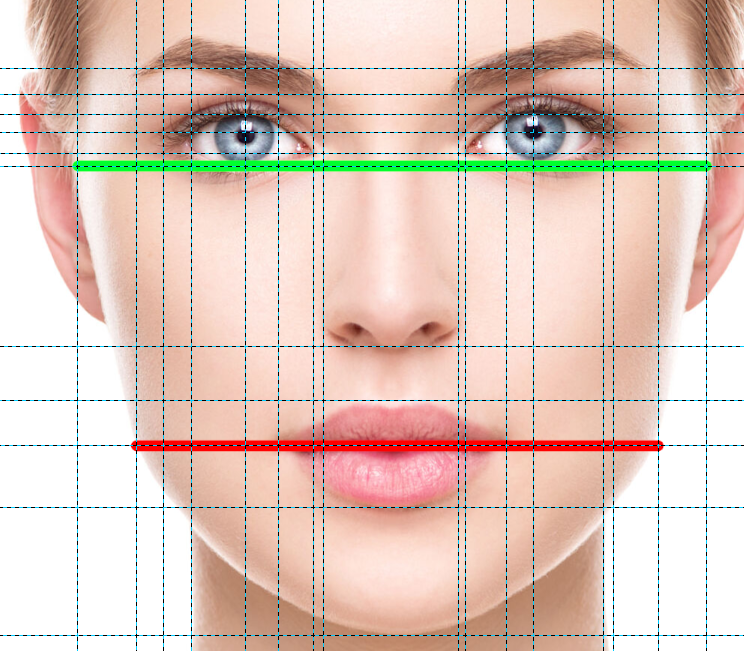
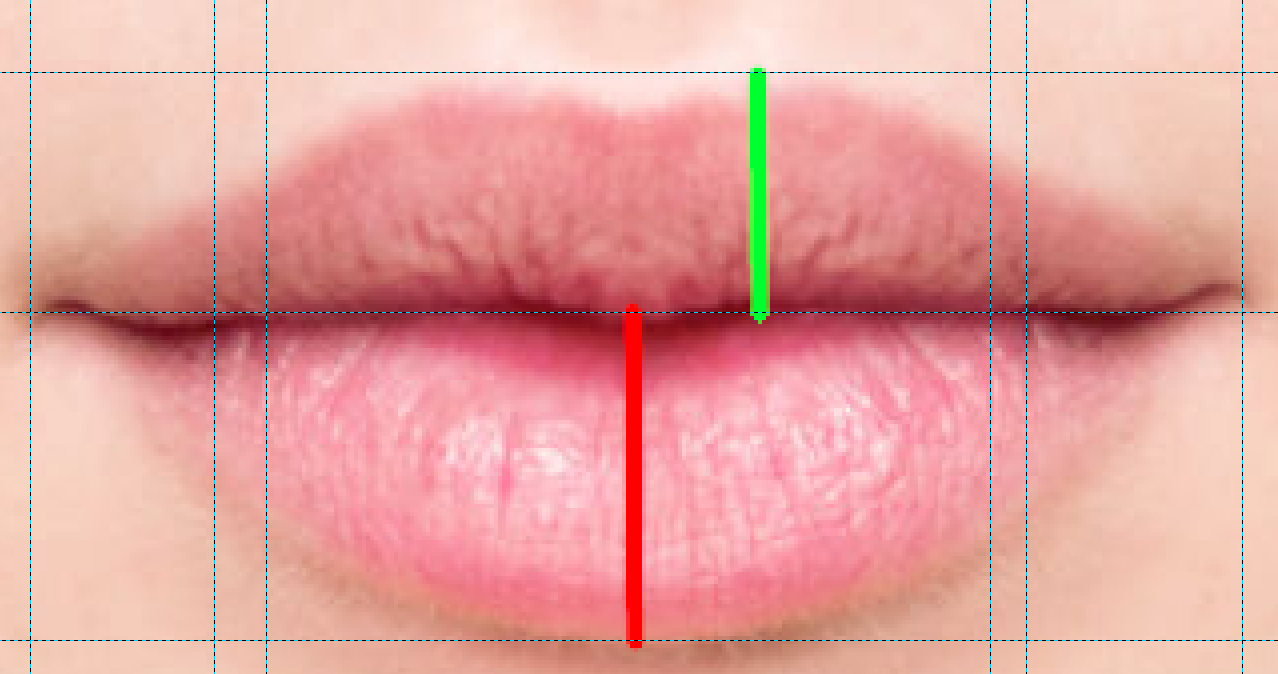
Lower to upper lip ratio
1774279580958


Eyebrow tilt:
1774279659585


This is the maximum of attachments that I can use for the thread.
Other ratios also include:

Bitemporal Width
Temples divided by bizygomatic width

Lower Third Proportion
Create a line from below of the nose (start of the philtrum) to the middle of the lips
Now, divide it by the line going also from below the nose all the way to the end of the chin.

Ipsilateral Angle
Create an angle which centre point is placed below of the nose tip and goes to the outer corners of the eyes all the way to the outer part of the brows.

Deviation of IAA and JFA
Deviation between the ipsilateral and jaw angle

2. HOW TO ASSIGN A TIER FOR EACH OF THE RATIOS
Below, I am presenting a table guiding us on which tier we assign for each range for each of the measurements we took.

EYE SEPARATION RATIO
(Tier 1) (Male) 44.3%-47.7% / (Female) 45%-47.9%
(Tier 2) 0.1-0.5 Deviation
(Tier 3) 0.6-1 Deviation
(Tier 4) 1.1-1.5 Deviation
(Tier 5) 1.6-2.3 Deviation
(Tier 6) 2.4-2.5 Deviation
(Tier 7) >2.5 Deviation


FACIAL THIRDS
(Tier 1) (Unisex) 1-3% from 33%
(Tier 2) 4% Deviation
(Tier 3) 5% Deviation
(Tier 4) 6% Deviation
(Tier 5) 7% Deviation
(Tier 6) >8% Deviation


CANTHAL TILT
(Tier 1) (Male) 5-8.5 / (Female) 6-9.5
(Tier 2) 0.1-1.25 Deviation
(Tier 3) 1.26-2.99 Deviation
(Tier 4) (Male) 0-2 / (Female) 0-3 Degree
(Tier 5) (-1) or (-2) Degree
(Tier 6) >(-2) Degree


FACIAL WIDTH TO HEIGHT RATIO (FWHR)
(Tier 1) 1.9-2.06
(Tier 2) 0.01-0.07 Deviation
(Tier 3) 0.08-0.10 Deviation
(Tier 4) 0.11-0.12 Deviation
(Tier 5) 2.19-2.23 / 1.7-1.77 Deviation
(Tier 6) >2.23 Deviation
(Tier 7) 1.55-1.69 Deviation

JAW FRONTAL ANGLE
(Tier 1) (Male) 84-95 / (Female) 86-97
(Tier 2) 0.1-3 Deviation
(Tier 3) 4-5 Deviation
(Tier 4) 6-10 Deviation
(Tier 5) 11-15 Deviation
(Tier 6) 16-20 Deviation
(Tier 7) >20 Deviation

CHEEKBONES HIGH SETEDNESS
(Tier 1) ≥81%
(Tier 2) 80%-76%
(Tier 3) 75%-70%
(Tier 4) 69%-66%
(Tier 5) 65%-60%
(Tier 6) 59%-56%
(Tier 7) <56%
TOTAL FACIAL HEIGHT TO WIDTH
(Tier 1) (Male) 1.33-1.38 / (Female) 1.29-1.33
(Tier 2) 0.01-0.05 Deviation
(Tier 3) 0.06-0.08 Deviation
(Tier 4) 0.09-0.10 Deviation
(Tier 5) 0.11-0.12 Deviation
(Tier 6) 0.13-0.16 Deviation
(Tier 7) >0.16 Deviation

BIGONIAL WIDTH
(Tier 1) (Male) 85%-92% / (Female) 82%-89%
(Tier 2) 0.1%-2% Deviation
(Tier 3) 3%-5% Deviation
(Tier 4) 6%-7% Deviation
(Tier 5) 8%-11% Deviation
(Tier 6) 12%-16% Deviation
(Tier 7) >16% Deviation

CHIN TO PHILTRUM
(Tier 1) (Male) 2.05-2.55 / (Female) 2.0-2.5
(Tier 2) 0.01-0.10 Deviation
(Tier 3) 0.11-0.25 Deviation
(Tier 4) 0.26-0.5 Deviation
(Tier 5) 0.51-1 Deviation
(Tier 6) >1 Deviation

NECK WIDTH
(Tier 1) (Male) >90% / (Female) 75%-85%
(Tier 2) 1%-5% Deviation
(Tier 3) 6%-10% Deviation
(Tier 4) 11%-15% Deviation
(Tier 5) 16%-20% Deviation
(Tier 6) >20% Deviation

MOUTH TO NOSE WIDTH
(Tier 1) (Male) 1.38-1.53 / (Female) 1.45-1.67
(Tier 2) 0.01-0.04 Deviation
(Tier 3) 0.05-0.08 Deviation
(Tier 4) 0.09-0.12 Deviation
(Tier 5) 0.13-0.16 Deviation
(Tier 6) >0.16 Deviation

MIDFACE RATIO
(Tier 1) (Male) 0.93-1.01 / (Female) 1-1.1
(Tier 2) 0.01-0.02 Deviation
(Tier 3) 0.03-0.05 Deviation
(Tier 4) 0.06-0.08 Deviation
(Tier 5) 0.09-0.13 Deviation
(Tier 6) >0.13 Deviation

EYEBROW SETEDNESS
(Tier 1) (Male) <0.66 / (Female) 0.40-0.85
(Tier 2) (Male) 0.66-0.95 / (Female) 0.86-1.20
(Tier 3) (Male) 0.96-1.20 / (Female) 1.21-1.50
(Tier 4) (Male) 1.21-1.50 / (Female) 1.51-1.80
(Tier 5) (Male) 1.51-1.80 / (Female) 1.81-2.0
(Tier 6) (Male) >1.80 / (Female) >2.0

EYE SPACING (ONE EYE TEST)
(Tier 1) 0.95-1.00, 1.00-1.05
(Tier 2) 0.01-0.03 Deviation
(Tier 3) 0.04-0.08 Deviation
(Tier 4) 0.09-0.13 Deviation
(Tier 5) 0.14-0.20 Deviation
(Tier 6) >0.20 Deviation

EYE ASPECT RATIO
(Tier 1) (Male) 2.8-3.6 / (Female) 2.5-3.3
(Tier 2) 0.01-0.2 Deviation
(Tier 3) 0.3-0.4 Deviation
(Tier 4) 0.5-0.6 Deviation
(Tier 5) 0.7-0.8 Deviation
(Tier 6) >0.8 Deviation

LOWER LIP TO UPPER LIP RATIO
(Tier 1) 1.4-2
(Tier 2) 0.01-0.2 Deviation
(Tier 3) 0.3-0.4 Deviation
(Tier 4) 0.5-0.6 Deviation
(Tier 5) 0.7-0.8 Deviation
(Tier 6) >0.8 Deviation

DEVIATION OF IAA TO JFA
(Tier 1) 0-5 Degree
(Tier 2) 6-10 Degree
(Tier 3) 11-15 Degree
(Tier 4) 16-18 Degree
(Tier 5) 19-20 Degree
(Tier 6) >20 Degree

EYEBROW TILT
(Tier 1) (Male) 5-13 / (Female) 11-19
(Tier 2) 0.1-5 Deviation
(Tier 3) (Unisex) 6-10 Positive tilt / (Female) 6-3 Degree
(Tier 4) (Men) 0-(-3) Degree / (Female) 3-0 Degree
(Tier 5) (Men) -4-(-5) Degree / (Female) -1-(-3) Degree
(Tier 6) (Men) >-5 Degree / (Female) >-3 Degree

BITEMPORAL WIDTH
(Tier 1) (Male) 84%-95% / (Female) 79%-92%
(Tier 2) 0.1%-3% Deviation
(Tier 3) 4%-5% Deviation
(Tier 4) 6%-8% Deviation
(Tier 5) 9%-13% Deviation
(Tier 6) >13% Deviation

LOWER THIRD PROPORTION
(Tier 1) <3% to 33%
(Tier 2) 4% Deviation
(Tier 3) 5% Deviation
(Tier 4) 6% Deviation
(Tier 5) 7% Deviation
(Tier 6) >8% Deviation

IPSILATERAL ALAR ANGLE
(Tier 1) (Male) 84%-95% / (Female) 86%-97%
(Tier 2) 0.1-2 Deviation
(Tier 3) 3-5 Deviation
(Tier 4) >5 Deviation

3. HOW TO CALCULATE HARMONY SCORE FROM TIERS

1. Assign the points for each ratio from the table below
Eye Separation Ratio (ESR)12.2010.986.593.66-10.98-65.88-97.5
Facial Thirds19.8317.849.915.95-5.95-11.90
Canthal Tilt12.3511.126.183.71-3.71-7.40
FWHR18.3016.479.155.49-16.47-49.41-85
Jaw Frontal Angle9.158.244.582.75-4.58-9.15-15
Cheekbone Setness201052.50-2.5-5
Face Length (Total width/height)201052.50-2.5-5
Bigonial Width (Jaw Width)20.5918.5310.296.18-18.53-46.32-65
Chin to Philtrum Ratio12.9611.676.483.89-1.95-3.89
Neck Width19.0617.169.535.72-17.16-34.31
Mouth to Nose Ratio12.3511.126.183.71-3.71-7.40
Midface Ratio11.9010.715.953.57-3.57-7.14
Eyebrow Setedness19.8317.849.915.95-5.95-11.90
Eye Spacing (One Eye Test)12.2010.986.593.66-10.98-65.88
Eye Aspect Ratio18.3016.479.155.49-5.49-10.98
Lower Lip to Upper Lip Ratio52.51.250-1.25-2.5
Deviation IAA to JFA7.53.751.880-1.88-3.75
Eyebrow Tilt1052.50-2.5-5
Bitemporal Width7.53.751.880-1.88-3.75
Lower Third Proportion52.51.250-1.25-2.5

2. Now, after we went through measuring ratios > assigning tiers > assigning points for each tier, add up all the points you scored and divide them by the maximum points (275) = Frontal Harmony Score
 
Last edited:
  • +1
  • Love it
Reactions: 0101938, WannabeEhren, Vass and 35 others
very helpful, mirin :love::love:
 
  • +1
Reactions: chasinghtb, tict, False and 4 others
BOTB-worthy effort, great thread; mirin
 
  • +1
Reactions: False, psltristan1 and Adee
@PharmaPhaggot @Idontknow- @psltristan1 @polonaecel @Fridx
 
  • +1
Reactions: Fridx, False, psltristan1 and 2 others
Mods, move this to looksmaxxing so it could have a chance to be botb.
 
  • +1
Reactions: False, psltristan1, PharmaPhaggot and 1 other person
@acm @N.N @i cant lie cant lie @yussimania @Atra
 
  • +1
Reactions: Fridx, False, yandere888 and 3 others
Inb4 botb
 
  • +1
  • Love it
Reactions: False, polonaecel and Adee
  • +1
Reactions: Fridx, False, polonaecel and 1 other person
Ohhh
Mirin
 
  • Love it
Reactions: Adee
I decided to create a detailed thread on this topic because while many people post about facial harmony, most guides miss crucial information, specifically the ranges for each tier. You need to know these ranges to assign points accurately in the first place.

After reading this thread, you will be fully equipped to measure harmony yourself. I have broken this down into three sections:

How to properly measure ratios.
How to assign tiers to each ratio.
How to assign points per tier and calculate the overall harmony score.


1. HOW TO MEASURE RATIOS + WHICH APP TO USE AND HOW TO USE IT

To begin, we will need software capable of precise measurements. I recommend using GIMP or photoshop. Both serve the same purpose, but I find GIMP slightly more user friendly for this specific process.

First step - mapping the face.

Download and open your GIMP app.
Now, simply paste your image using CTR + V or go to FILE > OPEN and select your picture.


Next, you will have to enable some of the view settings below:

On the upper taskbar, click view and ensure the following options are checked:

View attachment 4804649
View attachment 4804650
View attachment 4804652
Don't touch the rest of the boxes that are not shown here, just leave them as they are.

Now, you should be able to see the rulers on the top and on the sides of your workspace that appeared. Click on a ruler and drag your mouse toward the photo to place a guide.


VIDEO:


If you want to undo the guide simply press CTRL + Z to go back.

Zoom into the picture to place your guides accurately.

View attachment 4804658
View attachment 4804663
Example of a mapped face.

Note that everything you are doing will be pointless if the photo you're measuring is even slightly distorted. Only measure non distorted photos, if it's you or someone else that want to measure their harmony ensure you're taking the photo:

- with slight camera zoom
- using the back camera and facing directly onto the camera.
- The camera must stand at your nose height.

+ You can close your eyes and shake your head a little bit, then imagine you're looking at yourself in the mirror, finally open your eyes. This should help you fix your head at the proper position. Redo this until you know for sure your head is in the proper position.
I suggest setting a 15-30 second timer.
Photo quality also matters.

Okay, now once you mapped the face.
You can start by measuring distance between the guides you placed.

How to measure distance in GIMP?
To measure distrance in gimp you have to simply use measure tool by clicking SHIFT + M.
Photo:
View attachment 4804673
You are going to use the pixel value and divide or multiply it depending on the ratios you are measuring

1.1 HOW TO MEASURE EACH OF THE RATIOS
I am presenting the standars most important masurements and standart harmony formula.

Eye Separation Ratio:
View attachment 4805996
RED LINE divided by GREEN LINE

Facial thirds:
View attachment 4805576

Canthal tilt
View attachment 4805582

FWHR: (in this case: 1.892)
View attachment 4805589

Jaw angle:
Always mind the soft tissue: fat, saggy skin etc.
View attachment 4805610

Cheekbone setness:
Find the place where the cheekbones are popping the most and mark it with the line. Measure the distance from this line to the lips and divide it by the distance of a line that starts at the height of pupils and of ends on the lips as well.
View attachment 4805622


Total Facial Height to Width
Divide the height of the face by width of the face
View attachment 4805631

Bigonial width
View attachment 4805644

Chin to philtrum ratio
View attachment 4805648


Neck Width
View attachment 4805650


Mouth to nose width

View attachment 4805653

Midface ratio
View attachment 4805658

Eyebrow Setness
View attachment 4805667

Eye Spacing
View attachment 4805674

Eye aspect ratio
View attachment 4805689

Lower to upper lip ratio
View attachment 4805700

Eyebrow tilt:
View attachment 4805710

This is the maximum of attachments that I can use for the thread.
Other ratios also include:

Bitemporal Width
Temples divided by bizygomatic width

Lower Third Proportion
Create a line from below of the nose (start of the philtrum) to the middle of the lips
Now, divide it by the line going also from below the nose all the way to the end of the chin.

Ipsilateral Angle
Create an angle which centre point is placed below of the nose tip and goes to the outer corners of the eyes all the way to the outer part of the brows.

Deviation of IAA and JFA
Deviation between the ipsilateral and jaw angle

2. HOW TO ASSIGN A TIER FOR EACH OF THE RATIOS
Below, I am presenting a table guiding us on which tier we assign for each range for each of the measurements we took.

EYE SEPARATION RATIO
(Tier 1) (Male) 44.3%-47.7% / (Female) 45%-47.9%
(Tier 2) 0.1-0.5 Deviation
(Tier 3) 0.6-1 Deviation
(Tier 4) 1.1-1.5 Deviation
(Tier 5) 1.6-2.3 Deviation
(Tier 6) 2.4-2.5 Deviation
(Tier 7) >2.5 Deviation


FACIAL THIRDS
(Tier 1) (Unisex) 1-3% from 33%
(Tier 2) 4% Deviation
(Tier 3) 5% Deviation
(Tier 4) 6% Deviation
(Tier 5) 7% Deviation
(Tier 6) >8% Deviation


CANTHAL TILT
(Tier 1) (Male) 5-8.5 / (Female) 6-9.5
(Tier 2) 0.1-1.25 Deviation
(Tier 3) 1.26-2.99 Deviation
(Tier 4) (Male) 0-2 / (Female) 0-3 Degree
(Tier 5) (-1) or (-2) Degree
(Tier 6) >(-2) Degree


FACIAL WIDTH TO HEIGHT RATIO (FWHR)
(Tier 1) 1.9-2.06
(Tier 2) 0.01-0.07 Deviation
(Tier 3) 0.08-0.10 Deviation
(Tier 4) 0.11-0.12 Deviation
(Tier 5) 2.19-2.23 / 1.7-1.77 Deviation
(Tier 6) >2.23 Deviation
(Tier 7) 1.55-1.69 Deviation

JAW FRONTAL ANGLE
(Tier 1) (Male) 84-95 / (Female) 86-97
(Tier 2) 0.1-3 Deviation
(Tier 3) 4-5 Deviation
(Tier 4) 6-10 Deviation
(Tier 5) 11-15 Deviation
(Tier 6) 16-20 Deviation
(Tier 7) >20 Deviation

CHEEKBONES HIGH SETEDNESS
(Tier 1) ≥81%
(Tier 2) 80%-76%
(Tier 3) 75%-70%
(Tier 4) 69%-66%
(Tier 5) 65%-60%
(Tier 6) 59%-56%
(Tier 7) <56%
TOTAL FACIAL HEIGHT TO WIDTH
(Tier 1) (Male) 1.33-1.38 / (Female) 1.29-1.33
(Tier 2) 0.01-0.05 Deviation
(Tier 3) 0.06-0.08 Deviation
(Tier 4) 0.09-0.10 Deviation
(Tier 5) 0.11-0.12 Deviation
(Tier 6) 0.13-0.16 Deviation
(Tier 7) >0.16 Deviation

BIGONIAL WIDTH
(Tier 1) (Male) 85%-92% / (Female) 82%-89%
(Tier 2) 0.1%-2% Deviation
(Tier 3) 3%-5% Deviation
(Tier 4) 6%-7% Deviation
(Tier 5) 8%-11% Deviation
(Tier 6) 12%-16% Deviation
(Tier 7) >16% Deviation

CHIN TO PHILTRUM
(Tier 1) (Male) 2.05-2.55 / (Female) 2.0-2.5
(Tier 2) 0.01-0.10 Deviation
(Tier 3) 0.11-0.25 Deviation
(Tier 4) 0.26-0.5 Deviation
(Tier 5) 0.51-1 Deviation
(Tier 6) >1 Deviation

NECK WIDTH
(Tier 1) (Male) >90% / (Female) 75%-85%
(Tier 2) 1%-5% Deviation
(Tier 3) 6%-10% Deviation
(Tier 4) 11%-15% Deviation
(Tier 5) 16%-20% Deviation
(Tier 6) >20% Deviation

MOUTH TO NOSE WIDTH
(Tier 1) (Male) 1.38-1.53 / (Female) 1.45-1.67
(Tier 2) 0.01-0.04 Deviation
(Tier 3) 0.05-0.08 Deviation
(Tier 4) 0.09-0.12 Deviation
(Tier 5) 0.13-0.16 Deviation
(Tier 6) >0.16 Deviation

MIDFACE RATIO
(Tier 1) (Male) 0.93-1.01 / (Female) 1-1.1
(Tier 2) 0.01-0.02 Deviation
(Tier 3) 0.03-0.05 Deviation
(Tier 4) 0.06-0.08 Deviation
(Tier 5) 0.09-0.13 Deviation
(Tier 6) >0.13 Deviation

EYEBROW SETEDNESS
(Tier 1) (Male) <0.66 / (Female) 0.40-0.85
(Tier 2) (Male) 0.66-0.95 / (Female) 0.86-1.20
(Tier 3) (Male) 0.96-1.20 / (Female) 1.21-1.50
(Tier 4) (Male) 1.21-1.50 / (Female) 1.51-1.80
(Tier 5) (Male) 1.51-1.80 / (Female) 1.81-2.0
(Tier 6) (Male) >1.80 / (Female) >2.0

EYE SPACING (ONE EYE TEST)
(Tier 1) 0.95-1.00, 1.00-1.05
(Tier 2) 0.01-0.03 Deviation
(Tier 3) 0.04-0.08 Deviation
(Tier 4) 0.09-0.13 Deviation
(Tier 5) 0.14-0.20 Deviation
(Tier 6) >0.20 Deviation

EYE ASPECT RATIO
(Tier 1) (Male) 2.8-3.6 / (Female) 2.5-3.3
(Tier 2) 0.01-0.2 Deviation
(Tier 3) 0.3-0.4 Deviation
(Tier 4) 0.5-0.6 Deviation
(Tier 5) 0.7-0.8 Deviation
(Tier 6) >0.8 Deviation

LOWER LIP TO UPPER LIP RATIO
(Tier 1) 1.4-2
(Tier 2) 0.01-0.2 Deviation
(Tier 3) 0.3-0.4 Deviation
(Tier 4) 0.5-0.6 Deviation
(Tier 5) 0.7-0.8 Deviation
(Tier 6) >0.8 Deviation

DEVIATION OF IAA TO JFA
(Tier 1) 0-5 Degree
(Tier 2) 6-10 Degree
(Tier 3) 11-15 Degree
(Tier 4) 16-18 Degree
(Tier 5) 19-20 Degree
(Tier 6) >20 Degree

EYEBROW TILT
(Tier 1) (Male) 5-13 / (Female) 11-19
(Tier 2) 0.1-5 Deviation
(Tier 3) (Unisex) 6-10 Positive tilt / (Female) 6-3 Degree
(Tier 4) (Men) 0-(-3) Degree / (Female) 3-0 Degree
(Tier 5) (Men) -4-(-5) Degree / (Female) -1-(-3) Degree
(Tier 6) (Men) >-5 Degree / (Female) >-3 Degree

BITEMPORAL WIDTH
(Tier 1) (Male) 84%-95% / (Female) 79%-92%
(Tier 2) 0.1%-3% Deviation
(Tier 3) 4%-5% Deviation
(Tier 4) 6%-8% Deviation
(Tier 5) 9%-13% Deviation
(Tier 6) >13% Deviation

LOWER THIRD PROPORTION
(Tier 1) <3% to 33%
(Tier 2) 4% Deviation
(Tier 3) 5% Deviation
(Tier 4) 6% Deviation
(Tier 5) 7% Deviation
(Tier 6) >8% Deviation

IPSILATERAL ALAR ANGLE
(Tier 1) (Male) 84%-95% / (Female) 86%-97%
(Tier 2) 0.1-2 Deviation
(Tier 3) 3-5 Deviation
(Tier 4) >5 Deviation

3. HOW TO CALCULATE HARMONY SCORE FROM TIERS

1. Assign the points for each ratio from the table below
FeatureT1T2T3T4T5T6T7
Eye Separation Ratio (ESR)12.2010.986.593.66-10.98-65.88-75
Facial Thirds19.8317.849.915.95-5.95-11.90
Canthal Tilt12.3511.126.183.71-3.71-7.40
FWHR18.3016.479.155.49-16.47-49.41-17.5
Jaw Frontal Angle9.158.244.582.75-4.58-9.15-15
Cheekbone Setness201052.50-2.5-5
Face Length (Total width/height)201052.50-2.5-5
Bigonial Width (Jaw Width)20.5918.5310.296.18-18.53-46.32-65
Chin to Philtrum Ratio12.9611.676.483.89-1.95-3.89
Neck Width19.0617.169.535.72-17.16-34.31
Mouth to Nose Ratio12.3511.126.183.71-3.71-7.40
Midface Ratio11.9010.715.953.57-3.57-7.14
Eyebrow Setedness19.8317.849.915.95-5.95-11.90
Eye Spacing (One Eye Test)12.2010.986.593.66-10.98-65.88
Eye Aspect Ratio18.3016.479.155.49-5.49-10.98
Lower Lip to Upper Lip Ratio52.51.250-1.25-2.5
Deviation IAA to JFA7.53.751.880-1.88-3.75
Eyebrow Tilt1052.50-2.5-5
Bitemporal Width7.53.751.880-1.88-3.75
Lower Third Proportion52.51.250-1.25-2.5

2. Now, after we went through measuring ratios > assigning tiers > assigning points for each tier, add up all the points you scored and divide them by the maximum points (275) = Frontal Harmony Score

Thanks cause I need this ngl
 
  • Love it
  • +1
Reactions: polonaecel and Adee
I decided to create a detailed thread on this topic because while many people post about facial harmony, most guides miss crucial information, specifically the ranges for each tier. You need to know these ranges to assign points accurately in the first place.

After reading this thread, you will be fully equipped to measure harmony yourself. I have broken this down into three sections:

How to properly measure ratios.
How to assign tiers to each ratio.
How to assign points per tier and calculate the overall harmony score.


1. HOW TO MEASURE RATIOS + WHICH APP TO USE AND HOW TO USE IT

To begin, we will need software capable of precise measurements. I recommend using GIMP or photoshop. Both serve the same purpose, but I find GIMP slightly more user friendly for this specific process.

First step - mapping the face.

Download and open your GIMP app.
Now, simply paste your image using CTR + V or go to FILE > OPEN and select your picture.


Next, you will have to enable some of the view settings below:

On the upper taskbar, click view and ensure the following options are checked:

View attachment 4804649
View attachment 4804650
View attachment 4804652
Don't touch the rest of the boxes that are not shown here, just leave them as they are.

Now, you should be able to see the rulers on the top and on the sides of your workspace that appeared. Click on a ruler and drag your mouse toward the photo to place a guide.


VIDEO:


If you want to undo the guide simply press CTRL + Z to go back.

Zoom into the picture to place your guides accurately.

View attachment 4804658
View attachment 4804663
Example of a mapped face.

Note that everything you are doing will be pointless if the photo you're measuring is even slightly distorted. Only measure non distorted photos, if it's you or someone else that want to measure their harmony ensure you're taking the photo:

- with slight camera zoom
- using the back camera and facing directly onto the camera.
- The camera must stand at your nose height.

+ You can close your eyes and shake your head a little bit, then imagine you're looking at yourself in the mirror, finally open your eyes. This should help you fix your head at the proper position. Redo this until you know for sure your head is in the proper position.
I suggest setting a 15-30 second timer.
Photo quality also matters.

Okay, now once you mapped the face.
You can start by measuring distance between the guides you placed.

How to measure distance in GIMP?
To measure distrance in gimp you have to simply use measure tool by clicking SHIFT + M.
Photo:
View attachment 4804673
You are going to use the pixel value and divide or multiply it depending on the ratios you are measuring

1.1 HOW TO MEASURE EACH OF THE RATIOS
I am presenting the standars most important masurements and standart harmony formula.

Eye Separation Ratio:
View attachment 4805996
RED LINE divided by GREEN LINE

Facial thirds:
View attachment 4805576

Canthal tilt
View attachment 4805582

FWHR: (in this case: 1.892)
View attachment 4805589

Jaw angle:
Always mind the soft tissue: fat, saggy skin etc.
View attachment 4805610

Cheekbone setness:
Find the place where the cheekbones are popping the most and mark it with the line. Measure the distance from this line to the lips and divide it by the distance of a line that starts at the height of pupils and of ends on the lips as well.
View attachment 4805622


Total Facial Height to Width
Divide the height of the face by width of the face
View attachment 4805631

Bigonial width
View attachment 4805644

Chin to philtrum ratio
View attachment 4805648


Neck Width
View attachment 4805650


Mouth to nose width

View attachment 4805653

Midface ratio
View attachment 4805658

Eyebrow Setness
View attachment 4805667

Eye Spacing
View attachment 4805674

Eye aspect ratio
View attachment 4805689

Lower to upper lip ratio
View attachment 4805700

Eyebrow tilt:
View attachment 4805710

This is the maximum of attachments that I can use for the thread.
Other ratios also include:

Bitemporal Width
Temples divided by bizygomatic width

Lower Third Proportion
Create a line from below of the nose (start of the philtrum) to the middle of the lips
Now, divide it by the line going also from below the nose all the way to the end of the chin.

Ipsilateral Angle
Create an angle which centre point is placed below of the nose tip and goes to the outer corners of the eyes all the way to the outer part of the brows.

Deviation of IAA and JFA
Deviation between the ipsilateral and jaw angle

2. HOW TO ASSIGN A TIER FOR EACH OF THE RATIOS
Below, I am presenting a table guiding us on which tier we assign for each range for each of the measurements we took.

EYE SEPARATION RATIO
(Tier 1) (Male) 44.3%-47.7% / (Female) 45%-47.9%
(Tier 2) 0.1-0.5 Deviation
(Tier 3) 0.6-1 Deviation
(Tier 4) 1.1-1.5 Deviation
(Tier 5) 1.6-2.3 Deviation
(Tier 6) 2.4-2.5 Deviation
(Tier 7) >2.5 Deviation


FACIAL THIRDS
(Tier 1) (Unisex) 1-3% from 33%
(Tier 2) 4% Deviation
(Tier 3) 5% Deviation
(Tier 4) 6% Deviation
(Tier 5) 7% Deviation
(Tier 6) >8% Deviation


CANTHAL TILT
(Tier 1) (Male) 5-8.5 / (Female) 6-9.5
(Tier 2) 0.1-1.25 Deviation
(Tier 3) 1.26-2.99 Deviation
(Tier 4) (Male) 0-2 / (Female) 0-3 Degree
(Tier 5) (-1) or (-2) Degree
(Tier 6) >(-2) Degree


FACIAL WIDTH TO HEIGHT RATIO (FWHR)
(Tier 1) 1.9-2.06
(Tier 2) 0.01-0.07 Deviation
(Tier 3) 0.08-0.10 Deviation
(Tier 4) 0.11-0.12 Deviation
(Tier 5) 2.19-2.23 / 1.7-1.77 Deviation
(Tier 6) >2.23 Deviation
(Tier 7) 1.55-1.69 Deviation

JAW FRONTAL ANGLE
(Tier 1) (Male) 84-95 / (Female) 86-97
(Tier 2) 0.1-3 Deviation
(Tier 3) 4-5 Deviation
(Tier 4) 6-10 Deviation
(Tier 5) 11-15 Deviation
(Tier 6) 16-20 Deviation
(Tier 7) >20 Deviation

CHEEKBONES HIGH SETEDNESS
(Tier 1) ≥81%
(Tier 2) 80%-76%
(Tier 3) 75%-70%
(Tier 4) 69%-66%
(Tier 5) 65%-60%
(Tier 6) 59%-56%
(Tier 7) <56%
TOTAL FACIAL HEIGHT TO WIDTH
(Tier 1) (Male) 1.33-1.38 / (Female) 1.29-1.33
(Tier 2) 0.01-0.05 Deviation
(Tier 3) 0.06-0.08 Deviation
(Tier 4) 0.09-0.10 Deviation
(Tier 5) 0.11-0.12 Deviation
(Tier 6) 0.13-0.16 Deviation
(Tier 7) >0.16 Deviation

BIGONIAL WIDTH
(Tier 1) (Male) 85%-92% / (Female) 82%-89%
(Tier 2) 0.1%-2% Deviation
(Tier 3) 3%-5% Deviation
(Tier 4) 6%-7% Deviation
(Tier 5) 8%-11% Deviation
(Tier 6) 12%-16% Deviation
(Tier 7) >16% Deviation

CHIN TO PHILTRUM
(Tier 1) (Male) 2.05-2.55 / (Female) 2.0-2.5
(Tier 2) 0.01-0.10 Deviation
(Tier 3) 0.11-0.25 Deviation
(Tier 4) 0.26-0.5 Deviation
(Tier 5) 0.51-1 Deviation
(Tier 6) >1 Deviation

NECK WIDTH
(Tier 1) (Male) >90% / (Female) 75%-85%
(Tier 2) 1%-5% Deviation
(Tier 3) 6%-10% Deviation
(Tier 4) 11%-15% Deviation
(Tier 5) 16%-20% Deviation
(Tier 6) >20% Deviation

MOUTH TO NOSE WIDTH
(Tier 1) (Male) 1.38-1.53 / (Female) 1.45-1.67
(Tier 2) 0.01-0.04 Deviation
(Tier 3) 0.05-0.08 Deviation
(Tier 4) 0.09-0.12 Deviation
(Tier 5) 0.13-0.16 Deviation
(Tier 6) >0.16 Deviation

MIDFACE RATIO
(Tier 1) (Male) 0.93-1.01 / (Female) 1-1.1
(Tier 2) 0.01-0.02 Deviation
(Tier 3) 0.03-0.05 Deviation
(Tier 4) 0.06-0.08 Deviation
(Tier 5) 0.09-0.13 Deviation
(Tier 6) >0.13 Deviation

EYEBROW SETEDNESS
(Tier 1) (Male) <0.66 / (Female) 0.40-0.85
(Tier 2) (Male) 0.66-0.95 / (Female) 0.86-1.20
(Tier 3) (Male) 0.96-1.20 / (Female) 1.21-1.50
(Tier 4) (Male) 1.21-1.50 / (Female) 1.51-1.80
(Tier 5) (Male) 1.51-1.80 / (Female) 1.81-2.0
(Tier 6) (Male) >1.80 / (Female) >2.0

EYE SPACING (ONE EYE TEST)
(Tier 1) 0.95-1.00, 1.00-1.05
(Tier 2) 0.01-0.03 Deviation
(Tier 3) 0.04-0.08 Deviation
(Tier 4) 0.09-0.13 Deviation
(Tier 5) 0.14-0.20 Deviation
(Tier 6) >0.20 Deviation

EYE ASPECT RATIO
(Tier 1) (Male) 2.8-3.6 / (Female) 2.5-3.3
(Tier 2) 0.01-0.2 Deviation
(Tier 3) 0.3-0.4 Deviation
(Tier 4) 0.5-0.6 Deviation
(Tier 5) 0.7-0.8 Deviation
(Tier 6) >0.8 Deviation

LOWER LIP TO UPPER LIP RATIO
(Tier 1) 1.4-2
(Tier 2) 0.01-0.2 Deviation
(Tier 3) 0.3-0.4 Deviation
(Tier 4) 0.5-0.6 Deviation
(Tier 5) 0.7-0.8 Deviation
(Tier 6) >0.8 Deviation

DEVIATION OF IAA TO JFA
(Tier 1) 0-5 Degree
(Tier 2) 6-10 Degree
(Tier 3) 11-15 Degree
(Tier 4) 16-18 Degree
(Tier 5) 19-20 Degree
(Tier 6) >20 Degree

EYEBROW TILT
(Tier 1) (Male) 5-13 / (Female) 11-19
(Tier 2) 0.1-5 Deviation
(Tier 3) (Unisex) 6-10 Positive tilt / (Female) 6-3 Degree
(Tier 4) (Men) 0-(-3) Degree / (Female) 3-0 Degree
(Tier 5) (Men) -4-(-5) Degree / (Female) -1-(-3) Degree
(Tier 6) (Men) >-5 Degree / (Female) >-3 Degree

BITEMPORAL WIDTH
(Tier 1) (Male) 84%-95% / (Female) 79%-92%
(Tier 2) 0.1%-3% Deviation
(Tier 3) 4%-5% Deviation
(Tier 4) 6%-8% Deviation
(Tier 5) 9%-13% Deviation
(Tier 6) >13% Deviation

LOWER THIRD PROPORTION
(Tier 1) <3% to 33%
(Tier 2) 4% Deviation
(Tier 3) 5% Deviation
(Tier 4) 6% Deviation
(Tier 5) 7% Deviation
(Tier 6) >8% Deviation

IPSILATERAL ALAR ANGLE
(Tier 1) (Male) 84%-95% / (Female) 86%-97%
(Tier 2) 0.1-2 Deviation
(Tier 3) 3-5 Deviation
(Tier 4) >5 Deviation

3. HOW TO CALCULATE HARMONY SCORE FROM TIERS

1. Assign the points for each ratio from the table below
FeatureT1T2T3T4T5T6T7
Eye Separation Ratio (ESR)12.2010.986.593.66-10.98-65.88-75
Facial Thirds19.8317.849.915.95-5.95-11.90
Canthal Tilt12.3511.126.183.71-3.71-7.40
FWHR18.3016.479.155.49-16.47-49.41-17.5
Jaw Frontal Angle9.158.244.582.75-4.58-9.15-15
Cheekbone Setness201052.50-2.5-5
Face Length (Total width/height)201052.50-2.5-5
Bigonial Width (Jaw Width)20.5918.5310.296.18-18.53-46.32-65
Chin to Philtrum Ratio12.9611.676.483.89-1.95-3.89
Neck Width19.0617.169.535.72-17.16-34.31
Mouth to Nose Ratio12.3511.126.183.71-3.71-7.40
Midface Ratio11.9010.715.953.57-3.57-7.14
Eyebrow Setedness19.8317.849.915.95-5.95-11.90
Eye Spacing (One Eye Test)12.2010.986.593.66-10.98-65.88
Eye Aspect Ratio18.3016.479.155.49-5.49-10.98
Lower Lip to Upper Lip Ratio52.51.250-1.25-2.5
Deviation IAA to JFA7.53.751.880-1.88-3.75
Eyebrow Tilt1052.50-2.5-5
Bitemporal Width7.53.751.880-1.88-3.75
Lower Third Proportion52.51.250-1.25-2.5

2. Now, after we went through measuring ratios > assigning tiers > assigning points for each tier, add up all the points you scored and divide them by the maximum points (275) = Frontal Harmony Score

will read
@coolman985 thoughts?
 
  • +1
Reactions: False, coolman985 and Adee
Good theory. Thank you.
 
  • +1
Reactions: False, ICL, Adee and 1 other person
I decided to create a detailed thread on this topic because while many people post about facial harmony, most guides miss crucial information, specifically the ranges for each tier. You need to know these ranges to assign points accurately in the first place.

After reading this thread, you will be fully equipped to measure harmony yourself. I have broken this down into three sections:

How to properly measure ratios.
How to assign tiers to each ratio.
How to assign points per tier and calculate the overall harmony score.


1. HOW TO MEASURE RATIOS + WHICH APP TO USE AND HOW TO USE IT

To begin, we will need software capable of precise measurements. I recommend using GIMP or photoshop. Both serve the same purpose, but I find GIMP slightly more user friendly for this specific process.

First step - mapping the face.

Download and open your GIMP app.
Now, simply paste your image using CTR + V or go to FILE > OPEN and select your picture.


Next, you will have to enable some of the view settings below:

On the upper taskbar, click view and ensure the following options are checked:

View attachment 4804649
View attachment 4804650
View attachment 4804652
Don't touch the rest of the boxes that are not shown here, just leave them as they are.

Now, you should be able to see the rulers on the top and on the sides of your workspace that appeared. Click on a ruler and drag your mouse toward the photo to place a guide.


VIDEO:


If you want to undo the guide simply press CTRL + Z to go back.

Zoom into the picture to place your guides accurately.

View attachment 4804658
View attachment 4804663
Example of a mapped face.

Note that everything you are doing will be pointless if the photo you're measuring is even slightly distorted. Only measure non distorted photos, if it's you or someone else that want to measure their harmony ensure you're taking the photo:

- with slight camera zoom
- using the back camera and facing directly onto the camera.
- The camera must stand at your nose height.

+ You can close your eyes and shake your head a little bit, then imagine you're looking at yourself in the mirror, finally open your eyes. This should help you fix your head at the proper position. Redo this until you know for sure your head is in the proper position.
I suggest setting a 15-30 second timer.
Photo quality also matters.

Okay, now once you mapped the face.
You can start by measuring distance between the guides you placed.

How to measure distance in GIMP?
To measure distrance in gimp you have to simply use measure tool by clicking SHIFT + M.
Photo:
View attachment 4804673
You are going to use the pixel value and divide or multiply it depending on the ratios you are measuring

1.1 HOW TO MEASURE EACH OF THE RATIOS
I am presenting the standars most important masurements and standart harmony formula.

Eye Separation Ratio:
View attachment 4805996
RED LINE divided by GREEN LINE

Facial thirds:
View attachment 4805576

Canthal tilt
View attachment 4805582

FWHR: (in this case: 1.892)
View attachment 4805589

Jaw angle:
Always mind the soft tissue: fat, saggy skin etc.
View attachment 4805610

Cheekbone setness:
Find the place where the cheekbones are popping the most and mark it with the line. Measure the distance from this line to the lips and divide it by the distance of a line that starts at the height of pupils and of ends on the lips as well.
View attachment 4805622


Total Facial Height to Width
Divide the height of the face by width of the face
View attachment 4805631

Bigonial width
View attachment 4805644

Chin to philtrum ratio
View attachment 4805648


Neck Width
View attachment 4805650


Mouth to nose width

View attachment 4805653

Midface ratio
View attachment 4805658

Eyebrow Setness
View attachment 4805667

Eye Spacing
View attachment 4805674

Eye aspect ratio
View attachment 4805689

Lower to upper lip ratio
View attachment 4805700

Eyebrow tilt:
View attachment 4805710

This is the maximum of attachments that I can use for the thread.
Other ratios also include:

Bitemporal Width
Temples divided by bizygomatic width

Lower Third Proportion
Create a line from below of the nose (start of the philtrum) to the middle of the lips
Now, divide it by the line going also from below the nose all the way to the end of the chin.

Ipsilateral Angle
Create an angle which centre point is placed below of the nose tip and goes to the outer corners of the eyes all the way to the outer part of the brows.

Deviation of IAA and JFA
Deviation between the ipsilateral and jaw angle

2. HOW TO ASSIGN A TIER FOR EACH OF THE RATIOS
Below, I am presenting a table guiding us on which tier we assign for each range for each of the measurements we took.

EYE SEPARATION RATIO
(Tier 1) (Male) 44.3%-47.7% / (Female) 45%-47.9%
(Tier 2) 0.1-0.5 Deviation
(Tier 3) 0.6-1 Deviation
(Tier 4) 1.1-1.5 Deviation
(Tier 5) 1.6-2.3 Deviation
(Tier 6) 2.4-2.5 Deviation
(Tier 7) >2.5 Deviation


FACIAL THIRDS
(Tier 1) (Unisex) 1-3% from 33%
(Tier 2) 4% Deviation
(Tier 3) 5% Deviation
(Tier 4) 6% Deviation
(Tier 5) 7% Deviation
(Tier 6) >8% Deviation


CANTHAL TILT
(Tier 1) (Male) 5-8.5 / (Female) 6-9.5
(Tier 2) 0.1-1.25 Deviation
(Tier 3) 1.26-2.99 Deviation
(Tier 4) (Male) 0-2 / (Female) 0-3 Degree
(Tier 5) (-1) or (-2) Degree
(Tier 6) >(-2) Degree


FACIAL WIDTH TO HEIGHT RATIO (FWHR)
(Tier 1) 1.9-2.06
(Tier 2) 0.01-0.07 Deviation
(Tier 3) 0.08-0.10 Deviation
(Tier 4) 0.11-0.12 Deviation
(Tier 5) 2.19-2.23 / 1.7-1.77 Deviation
(Tier 6) >2.23 Deviation
(Tier 7) 1.55-1.69 Deviation

JAW FRONTAL ANGLE
(Tier 1) (Male) 84-95 / (Female) 86-97
(Tier 2) 0.1-3 Deviation
(Tier 3) 4-5 Deviation
(Tier 4) 6-10 Deviation
(Tier 5) 11-15 Deviation
(Tier 6) 16-20 Deviation
(Tier 7) >20 Deviation

CHEEKBONES HIGH SETEDNESS
(Tier 1) ≥81%
(Tier 2) 80%-76%
(Tier 3) 75%-70%
(Tier 4) 69%-66%
(Tier 5) 65%-60%
(Tier 6) 59%-56%
(Tier 7) <56%
TOTAL FACIAL HEIGHT TO WIDTH
(Tier 1) (Male) 1.33-1.38 / (Female) 1.29-1.33
(Tier 2) 0.01-0.05 Deviation
(Tier 3) 0.06-0.08 Deviation
(Tier 4) 0.09-0.10 Deviation
(Tier 5) 0.11-0.12 Deviation
(Tier 6) 0.13-0.16 Deviation
(Tier 7) >0.16 Deviation

BIGONIAL WIDTH
(Tier 1) (Male) 85%-92% / (Female) 82%-89%
(Tier 2) 0.1%-2% Deviation
(Tier 3) 3%-5% Deviation
(Tier 4) 6%-7% Deviation
(Tier 5) 8%-11% Deviation
(Tier 6) 12%-16% Deviation
(Tier 7) >16% Deviation

CHIN TO PHILTRUM
(Tier 1) (Male) 2.05-2.55 / (Female) 2.0-2.5
(Tier 2) 0.01-0.10 Deviation
(Tier 3) 0.11-0.25 Deviation
(Tier 4) 0.26-0.5 Deviation
(Tier 5) 0.51-1 Deviation
(Tier 6) >1 Deviation

NECK WIDTH
(Tier 1) (Male) >90% / (Female) 75%-85%
(Tier 2) 1%-5% Deviation
(Tier 3) 6%-10% Deviation
(Tier 4) 11%-15% Deviation
(Tier 5) 16%-20% Deviation
(Tier 6) >20% Deviation

MOUTH TO NOSE WIDTH
(Tier 1) (Male) 1.38-1.53 / (Female) 1.45-1.67
(Tier 2) 0.01-0.04 Deviation
(Tier 3) 0.05-0.08 Deviation
(Tier 4) 0.09-0.12 Deviation
(Tier 5) 0.13-0.16 Deviation
(Tier 6) >0.16 Deviation

MIDFACE RATIO
(Tier 1) (Male) 0.93-1.01 / (Female) 1-1.1
(Tier 2) 0.01-0.02 Deviation
(Tier 3) 0.03-0.05 Deviation
(Tier 4) 0.06-0.08 Deviation
(Tier 5) 0.09-0.13 Deviation
(Tier 6) >0.13 Deviation

EYEBROW SETEDNESS
(Tier 1) (Male) <0.66 / (Female) 0.40-0.85
(Tier 2) (Male) 0.66-0.95 / (Female) 0.86-1.20
(Tier 3) (Male) 0.96-1.20 / (Female) 1.21-1.50
(Tier 4) (Male) 1.21-1.50 / (Female) 1.51-1.80
(Tier 5) (Male) 1.51-1.80 / (Female) 1.81-2.0
(Tier 6) (Male) >1.80 / (Female) >2.0

EYE SPACING (ONE EYE TEST)
(Tier 1) 0.95-1.00, 1.00-1.05
(Tier 2) 0.01-0.03 Deviation
(Tier 3) 0.04-0.08 Deviation
(Tier 4) 0.09-0.13 Deviation
(Tier 5) 0.14-0.20 Deviation
(Tier 6) >0.20 Deviation

EYE ASPECT RATIO
(Tier 1) (Male) 2.8-3.6 / (Female) 2.5-3.3
(Tier 2) 0.01-0.2 Deviation
(Tier 3) 0.3-0.4 Deviation
(Tier 4) 0.5-0.6 Deviation
(Tier 5) 0.7-0.8 Deviation
(Tier 6) >0.8 Deviation

LOWER LIP TO UPPER LIP RATIO
(Tier 1) 1.4-2
(Tier 2) 0.01-0.2 Deviation
(Tier 3) 0.3-0.4 Deviation
(Tier 4) 0.5-0.6 Deviation
(Tier 5) 0.7-0.8 Deviation
(Tier 6) >0.8 Deviation

DEVIATION OF IAA TO JFA
(Tier 1) 0-5 Degree
(Tier 2) 6-10 Degree
(Tier 3) 11-15 Degree
(Tier 4) 16-18 Degree
(Tier 5) 19-20 Degree
(Tier 6) >20 Degree

EYEBROW TILT
(Tier 1) (Male) 5-13 / (Female) 11-19
(Tier 2) 0.1-5 Deviation
(Tier 3) (Unisex) 6-10 Positive tilt / (Female) 6-3 Degree
(Tier 4) (Men) 0-(-3) Degree / (Female) 3-0 Degree
(Tier 5) (Men) -4-(-5) Degree / (Female) -1-(-3) Degree
(Tier 6) (Men) >-5 Degree / (Female) >-3 Degree

BITEMPORAL WIDTH
(Tier 1) (Male) 84%-95% / (Female) 79%-92%
(Tier 2) 0.1%-3% Deviation
(Tier 3) 4%-5% Deviation
(Tier 4) 6%-8% Deviation
(Tier 5) 9%-13% Deviation
(Tier 6) >13% Deviation

LOWER THIRD PROPORTION
(Tier 1) <3% to 33%
(Tier 2) 4% Deviation
(Tier 3) 5% Deviation
(Tier 4) 6% Deviation
(Tier 5) 7% Deviation
(Tier 6) >8% Deviation

IPSILATERAL ALAR ANGLE
(Tier 1) (Male) 84%-95% / (Female) 86%-97%
(Tier 2) 0.1-2 Deviation
(Tier 3) 3-5 Deviation
(Tier 4) >5 Deviation

3. HOW TO CALCULATE HARMONY SCORE FROM TIERS

1. Assign the points for each ratio from the table below
Eye Separation Ratio (ESR)12.2010.986.593.66-10.98-65.88-97.5
Facial Thirds19.8317.849.915.95-5.95-11.90
Canthal Tilt12.3511.126.183.71-3.71-7.40
FWHR18.3016.479.155.49-16.47-49.41-85
Jaw Frontal Angle9.158.244.582.75-4.58-9.15-15
Cheekbone Setness201052.50-2.5-5
Face Length (Total width/height)201052.50-2.5-5
Bigonial Width (Jaw Width)20.5918.5310.296.18-18.53-46.32-65
Chin to Philtrum Ratio12.9611.676.483.89-1.95-3.89
Neck Width19.0617.169.535.72-17.16-34.31
Mouth to Nose Ratio12.3511.126.183.71-3.71-7.40
Midface Ratio11.9010.715.953.57-3.57-7.14
Eyebrow Setedness19.8317.849.915.95-5.95-11.90
Eye Spacing (One Eye Test)12.2010.986.593.66-10.98-65.88
Eye Aspect Ratio18.3016.479.155.49-5.49-10.98
Lower Lip to Upper Lip Ratio52.51.250-1.25-2.5
Deviation IAA to JFA7.53.751.880-1.88-3.75
Eyebrow Tilt1052.50-2.5-5
Bitemporal Width7.53.751.880-1.88-3.75
Lower Third Proportion52.51.250-1.25-2.5

2. Now, after we went through measuring ratios > assigning tiers > assigning points for each tier, add up all the points you scored and divide them by the maximum points (275) = Frontal Harmony Score
 
  • +1
Reactions: False, Adee and polonaecel
will read
@coolman985 thoughts?
Pretty good but this is based on the order dataset that had Theo James in it which brought down the esr ideal by a good amount himself jfl
 
  • +1
Reactions: Adee
Amazing thread i read everything. But tbh if you're too lazy you can js use faceiqlabs
 
  • +1
Reactions: False and Adee
Harmony is the biggest indicator of potential. If you lack dimorphism or have poor health indicators or bad features [flared ears, short/no eyebrows, etc, but they must be fixable] then your potential would he great as well
 
  • +1
Reactions: False and Adee
Amazing thread i read everything. But tbh if you're too lazy you can js use faceiqlabs
About this, if you want to kjow which ones to measure, just go to a faceiq video he usually showcasea all of them. However he misses certain niche/hard to calculate things [malar prominence, orbitomaxillary plane, forehead shape, facial depth etc] which you mag figure out yourself
 
  • +1
Reactions: False and Adee
I decided to create a detailed thread on this topic because while many people post about facial harmony, most guides miss crucial information, specifically the ranges for each tier. You need to know these ranges to assign points accurately in the first place.

After reading this thread, you will be fully equipped to measure harmony yourself. I have broken this down into three sections:

How to properly measure ratios.
How to assign tiers to each ratio.
How to assign points per tier and calculate the overall harmony score.


1. HOW TO MEASURE RATIOS + WHICH APP TO USE AND HOW TO USE IT

To begin, we will need software capable of precise measurements. I recommend using GIMP or photoshop. Both serve the same purpose, but I find GIMP slightly more user friendly for this specific process.

First step - mapping the face.

Download and open your GIMP app.
Now, simply paste your image using CTR + V or go to FILE > OPEN and select your picture.


Next, you will have to enable some of the view settings below:

On the upper taskbar, click view and ensure the following options are checked:

View attachment 4804649
View attachment 4804650
View attachment 4804652
Don't touch the rest of the boxes that are not shown here, just leave them as they are.

Now, you should be able to see the rulers on the top and on the sides of your workspace that appeared. Click on a ruler and drag your mouse toward the photo to place a guide.


VIDEO:


If you want to undo the guide simply press CTRL + Z to go back.

Zoom into the picture to place your guides accurately.

View attachment 4804658
View attachment 4804663
Example of a mapped face.

Note that everything you are doing will be pointless if the photo you're measuring is even slightly distorted. Only measure non distorted photos, if it's you or someone else that want to measure their harmony ensure you're taking the photo:

- with slight camera zoom
- using the back camera and facing directly onto the camera.
- The camera must stand at your nose height.

+ You can close your eyes and shake your head a little bit, then imagine you're looking at yourself in the mirror, finally open your eyes. This should help you fix your head at the proper position. Redo this until you know for sure your head is in the proper position.
I suggest setting a 15-30 second timer.
Photo quality also matters.

Okay, now once you mapped the face.
You can start by measuring distance between the guides you placed.

How to measure distance in GIMP?
To measure distrance in gimp you have to simply use measure tool by clicking SHIFT + M.
Photo:
View attachment 4804673
You are going to use the pixel value and divide or multiply it depending on the ratios you are measuring

1.1 HOW TO MEASURE EACH OF THE RATIOS
I am presenting the standars most important masurements and standart harmony formula.

Eye Separation Ratio:
View attachment 4805996
RED LINE divided by GREEN LINE

Facial thirds:
View attachment 4805576

Canthal tilt
View attachment 4805582

FWHR: (in this case: 1.892)
View attachment 4805589

Jaw angle:
Always mind the soft tissue: fat, saggy skin etc.
View attachment 4805610

Cheekbone setness:
Find the place where the cheekbones are popping the most and mark it with the line. Measure the distance from this line to the lips and divide it by the distance of a line that starts at the height of pupils and of ends on the lips as well.
View attachment 4805622


Total Facial Height to Width
Divide the height of the face by width of the face
View attachment 4805631

Bigonial width
View attachment 4805644

Chin to philtrum ratio
View attachment 4805648


Neck Width
View attachment 4805650


Mouth to nose width

View attachment 4805653

Midface ratio
View attachment 4805658

Eyebrow Setness
View attachment 4805667

Eye Spacing
View attachment 4805674

Eye aspect ratio
View attachment 4805689

Lower to upper lip ratio
View attachment 4805700

Eyebrow tilt:
View attachment 4805710

This is the maximum of attachments that I can use for the thread.
Other ratios also include:

Bitemporal Width
Temples divided by bizygomatic width

Lower Third Proportion
Create a line from below of the nose (start of the philtrum) to the middle of the lips
Now, divide it by the line going also from below the nose all the way to the end of the chin.

Ipsilateral Angle
Create an angle which centre point is placed below of the nose tip and goes to the outer corners of the eyes all the way to the outer part of the brows.

Deviation of IAA and JFA
Deviation between the ipsilateral and jaw angle

2. HOW TO ASSIGN A TIER FOR EACH OF THE RATIOS
Below, I am presenting a table guiding us on which tier we assign for each range for each of the measurements we took.

EYE SEPARATION RATIO
(Tier 1) (Male) 44.3%-47.7% / (Female) 45%-47.9%
(Tier 2) 0.1-0.5 Deviation
(Tier 3) 0.6-1 Deviation
(Tier 4) 1.1-1.5 Deviation
(Tier 5) 1.6-2.3 Deviation
(Tier 6) 2.4-2.5 Deviation
(Tier 7) >2.5 Deviation


FACIAL THIRDS
(Tier 1) (Unisex) 1-3% from 33%
(Tier 2) 4% Deviation
(Tier 3) 5% Deviation
(Tier 4) 6% Deviation
(Tier 5) 7% Deviation
(Tier 6) >8% Deviation


CANTHAL TILT
(Tier 1) (Male) 5-8.5 / (Female) 6-9.5
(Tier 2) 0.1-1.25 Deviation
(Tier 3) 1.26-2.99 Deviation
(Tier 4) (Male) 0-2 / (Female) 0-3 Degree
(Tier 5) (-1) or (-2) Degree
(Tier 6) >(-2) Degree


FACIAL WIDTH TO HEIGHT RATIO (FWHR)
(Tier 1) 1.9-2.06
(Tier 2) 0.01-0.07 Deviation
(Tier 3) 0.08-0.10 Deviation
(Tier 4) 0.11-0.12 Deviation
(Tier 5) 2.19-2.23 / 1.7-1.77 Deviation
(Tier 6) >2.23 Deviation
(Tier 7) 1.55-1.69 Deviation

JAW FRONTAL ANGLE
(Tier 1) (Male) 84-95 / (Female) 86-97
(Tier 2) 0.1-3 Deviation
(Tier 3) 4-5 Deviation
(Tier 4) 6-10 Deviation
(Tier 5) 11-15 Deviation
(Tier 6) 16-20 Deviation
(Tier 7) >20 Deviation

CHEEKBONES HIGH SETEDNESS
(Tier 1) ≥81%
(Tier 2) 80%-76%
(Tier 3) 75%-70%
(Tier 4) 69%-66%
(Tier 5) 65%-60%
(Tier 6) 59%-56%
(Tier 7) <56%
TOTAL FACIAL HEIGHT TO WIDTH
(Tier 1) (Male) 1.33-1.38 / (Female) 1.29-1.33
(Tier 2) 0.01-0.05 Deviation
(Tier 3) 0.06-0.08 Deviation
(Tier 4) 0.09-0.10 Deviation
(Tier 5) 0.11-0.12 Deviation
(Tier 6) 0.13-0.16 Deviation
(Tier 7) >0.16 Deviation

BIGONIAL WIDTH
(Tier 1) (Male) 85%-92% / (Female) 82%-89%
(Tier 2) 0.1%-2% Deviation
(Tier 3) 3%-5% Deviation
(Tier 4) 6%-7% Deviation
(Tier 5) 8%-11% Deviation
(Tier 6) 12%-16% Deviation
(Tier 7) >16% Deviation

CHIN TO PHILTRUM
(Tier 1) (Male) 2.05-2.55 / (Female) 2.0-2.5
(Tier 2) 0.01-0.10 Deviation
(Tier 3) 0.11-0.25 Deviation
(Tier 4) 0.26-0.5 Deviation
(Tier 5) 0.51-1 Deviation
(Tier 6) >1 Deviation

NECK WIDTH
(Tier 1) (Male) >90% / (Female) 75%-85%
(Tier 2) 1%-5% Deviation
(Tier 3) 6%-10% Deviation
(Tier 4) 11%-15% Deviation
(Tier 5) 16%-20% Deviation
(Tier 6) >20% Deviation

MOUTH TO NOSE WIDTH
(Tier 1) (Male) 1.38-1.53 / (Female) 1.45-1.67
(Tier 2) 0.01-0.04 Deviation
(Tier 3) 0.05-0.08 Deviation
(Tier 4) 0.09-0.12 Deviation
(Tier 5) 0.13-0.16 Deviation
(Tier 6) >0.16 Deviation

MIDFACE RATIO
(Tier 1) (Male) 0.93-1.01 / (Female) 1-1.1
(Tier 2) 0.01-0.02 Deviation
(Tier 3) 0.03-0.05 Deviation
(Tier 4) 0.06-0.08 Deviation
(Tier 5) 0.09-0.13 Deviation
(Tier 6) >0.13 Deviation

EYEBROW SETEDNESS
(Tier 1) (Male) <0.66 / (Female) 0.40-0.85
(Tier 2) (Male) 0.66-0.95 / (Female) 0.86-1.20
(Tier 3) (Male) 0.96-1.20 / (Female) 1.21-1.50
(Tier 4) (Male) 1.21-1.50 / (Female) 1.51-1.80
(Tier 5) (Male) 1.51-1.80 / (Female) 1.81-2.0
(Tier 6) (Male) >1.80 / (Female) >2.0

EYE SPACING (ONE EYE TEST)
(Tier 1) 0.95-1.00, 1.00-1.05
(Tier 2) 0.01-0.03 Deviation
(Tier 3) 0.04-0.08 Deviation
(Tier 4) 0.09-0.13 Deviation
(Tier 5) 0.14-0.20 Deviation
(Tier 6) >0.20 Deviation

EYE ASPECT RATIO
(Tier 1) (Male) 2.8-3.6 / (Female) 2.5-3.3
(Tier 2) 0.01-0.2 Deviation
(Tier 3) 0.3-0.4 Deviation
(Tier 4) 0.5-0.6 Deviation
(Tier 5) 0.7-0.8 Deviation
(Tier 6) >0.8 Deviation

LOWER LIP TO UPPER LIP RATIO
(Tier 1) 1.4-2
(Tier 2) 0.01-0.2 Deviation
(Tier 3) 0.3-0.4 Deviation
(Tier 4) 0.5-0.6 Deviation
(Tier 5) 0.7-0.8 Deviation
(Tier 6) >0.8 Deviation

DEVIATION OF IAA TO JFA
(Tier 1) 0-5 Degree
(Tier 2) 6-10 Degree
(Tier 3) 11-15 Degree
(Tier 4) 16-18 Degree
(Tier 5) 19-20 Degree
(Tier 6) >20 Degree

EYEBROW TILT
(Tier 1) (Male) 5-13 / (Female) 11-19
(Tier 2) 0.1-5 Deviation
(Tier 3) (Unisex) 6-10 Positive tilt / (Female) 6-3 Degree
(Tier 4) (Men) 0-(-3) Degree / (Female) 3-0 Degree
(Tier 5) (Men) -4-(-5) Degree / (Female) -1-(-3) Degree
(Tier 6) (Men) >-5 Degree / (Female) >-3 Degree

BITEMPORAL WIDTH
(Tier 1) (Male) 84%-95% / (Female) 79%-92%
(Tier 2) 0.1%-3% Deviation
(Tier 3) 4%-5% Deviation
(Tier 4) 6%-8% Deviation
(Tier 5) 9%-13% Deviation
(Tier 6) >13% Deviation

LOWER THIRD PROPORTION
(Tier 1) <3% to 33%
(Tier 2) 4% Deviation
(Tier 3) 5% Deviation
(Tier 4) 6% Deviation
(Tier 5) 7% Deviation
(Tier 6) >8% Deviation

IPSILATERAL ALAR ANGLE
(Tier 1) (Male) 84%-95% / (Female) 86%-97%
(Tier 2) 0.1-2 Deviation
(Tier 3) 3-5 Deviation
(Tier 4) >5 Deviation

3. HOW TO CALCULATE HARMONY SCORE FROM TIERS

1. Assign the points for each ratio from the table below
Eye Separation Ratio (ESR)12.2010.986.593.66-10.98-65.88-97.5
Facial Thirds19.8317.849.915.95-5.95-11.90
Canthal Tilt12.3511.126.183.71-3.71-7.40
FWHR18.3016.479.155.49-16.47-49.41-85
Jaw Frontal Angle9.158.244.582.75-4.58-9.15-15
Cheekbone Setness201052.50-2.5-5
Face Length (Total width/height)201052.50-2.5-5
Bigonial Width (Jaw Width)20.5918.5310.296.18-18.53-46.32-65
Chin to Philtrum Ratio12.9611.676.483.89-1.95-3.89
Neck Width19.0617.169.535.72-17.16-34.31
Mouth to Nose Ratio12.3511.126.183.71-3.71-7.40
Midface Ratio11.9010.715.953.57-3.57-7.14
Eyebrow Setedness19.8317.849.915.95-5.95-11.90
Eye Spacing (One Eye Test)12.2010.986.593.66-10.98-65.88
Eye Aspect Ratio18.3016.479.155.49-5.49-10.98
Lower Lip to Upper Lip Ratio52.51.250-1.25-2.5
Deviation IAA to JFA7.53.751.880-1.88-3.75
Eyebrow Tilt1052.50-2.5-5
Bitemporal Width7.53.751.880-1.88-3.75
Lower Third Proportion52.51.250-1.25-2.5

2. Now, after we went through measuring ratios > assigning tiers > assigning points for each tier, add up all the points you scored and divide them by the maximum points (275) = Frontal Harmony Score

You’re Done good. Well done. Thank you.
 
  • +1
Reactions: False and Adee
Good thread, will there be one for side profile as well?
 
  • +1
Reactions: False and Adee
Well done 😍👌
Inb4 botb
 
  • Love it
Reactions: Adee
I decided to create a detailed thread on this topic because while many people post about facial harmony, most guides miss crucial information, specifically the ranges for each tier. You need to know these ranges to assign points accurately in the first place.

After reading this thread, you will be fully equipped to measure harmony yourself. I have broken this down into three sections:

How to properly measure ratios.
How to assign tiers to each ratio.
How to assign points per tier and calculate the overall harmony score.


1. HOW TO MEASURE RATIOS + WHICH APP TO USE AND HOW TO USE IT

To begin, we will need software capable of precise measurements. I recommend using GIMP or photoshop. Both serve the same purpose, but I find GIMP slightly more user friendly for this specific process.

First step - mapping the face.

Download and open your GIMP app.
Now, simply paste your image using CTR + V or go to FILE > OPEN and select your picture.


Next, you will have to enable some of the view settings below:

On the upper taskbar, click view and ensure the following options are checked:

View attachment 4804649
View attachment 4804650
View attachment 4804652
Don't touch the rest of the boxes that are not shown here, just leave them as they are.

Now, you should be able to see the rulers on the top and on the sides of your workspace that appeared. Click on a ruler and drag your mouse toward the photo to place a guide.


VIDEO:


If you want to undo the guide simply press CTRL + Z to go back.

Zoom into the picture to place your guides accurately.

View attachment 4804658
View attachment 4804663
Example of a mapped face.

Note that everything you are doing will be pointless if the photo you're measuring is even slightly distorted. Only measure non distorted photos, if it's you or someone else that want to measure their harmony ensure you're taking the photo:

- with slight camera zoom
- using the back camera and facing directly onto the camera.
- The camera must stand at your nose height.

+ You can close your eyes and shake your head a little bit, then imagine you're looking at yourself in the mirror, finally open your eyes. This should help you fix your head at the proper position. Redo this until you know for sure your head is in the proper position.
I suggest setting a 15-30 second timer.
Photo quality also matters.

Okay, now once you mapped the face.
You can start by measuring distance between the guides you placed.

How to measure distance in GIMP?
To measure distrance in gimp you have to simply use measure tool by clicking SHIFT + M.
Photo:
View attachment 4804673
You are going to use the pixel value and divide or multiply it depending on the ratios you are measuring

1.1 HOW TO MEASURE EACH OF THE RATIOS
I am presenting the standars most important masurements and standart harmony formula.

Eye Separation Ratio:
View attachment 4805996
RED LINE divided by GREEN LINE

Facial thirds:
View attachment 4805576

Canthal tilt
View attachment 4805582

FWHR: (in this case: 1.892)
View attachment 4805589

Jaw angle:
Always mind the soft tissue: fat, saggy skin etc.
View attachment 4805610

Cheekbone setness:
Find the place where the cheekbones are popping the most and mark it with the line. Measure the distance from this line to the lips and divide it by the distance of a line that starts at the height of pupils and of ends on the lips as well.
View attachment 4805622


Total Facial Height to Width
Divide the height of the face by width of the face
View attachment 4805631

Bigonial width
View attachment 4805644

Chin to philtrum ratio
View attachment 4805648


Neck Width
View attachment 4805650


Mouth to nose width

View attachment 4805653

Midface ratio
View attachment 4805658

Eyebrow Setness
View attachment 4805667

Eye Spacing
View attachment 4805674

Eye aspect ratio
View attachment 4805689

Lower to upper lip ratio
View attachment 4805700

Eyebrow tilt:
View attachment 4805710

This is the maximum of attachments that I can use for the thread.
Other ratios also include:

Bitemporal Width
Temples divided by bizygomatic width

Lower Third Proportion
Create a line from below of the nose (start of the philtrum) to the middle of the lips
Now, divide it by the line going also from below the nose all the way to the end of the chin.

Ipsilateral Angle
Create an angle which centre point is placed below of the nose tip and goes to the outer corners of the eyes all the way to the outer part of the brows.

Deviation of IAA and JFA
Deviation between the ipsilateral and jaw angle

2. HOW TO ASSIGN A TIER FOR EACH OF THE RATIOS
Below, I am presenting a table guiding us on which tier we assign for each range for each of the measurements we took.

EYE SEPARATION RATIO
(Tier 1) (Male) 44.3%-47.7% / (Female) 45%-47.9%
(Tier 2) 0.1-0.5 Deviation
(Tier 3) 0.6-1 Deviation
(Tier 4) 1.1-1.5 Deviation
(Tier 5) 1.6-2.3 Deviation
(Tier 6) 2.4-2.5 Deviation
(Tier 7) >2.5 Deviation


FACIAL THIRDS
(Tier 1) (Unisex) 1-3% from 33%
(Tier 2) 4% Deviation
(Tier 3) 5% Deviation
(Tier 4) 6% Deviation
(Tier 5) 7% Deviation
(Tier 6) >8% Deviation


CANTHAL TILT
(Tier 1) (Male) 5-8.5 / (Female) 6-9.5
(Tier 2) 0.1-1.25 Deviation
(Tier 3) 1.26-2.99 Deviation
(Tier 4) (Male) 0-2 / (Female) 0-3 Degree
(Tier 5) (-1) or (-2) Degree
(Tier 6) >(-2) Degree


FACIAL WIDTH TO HEIGHT RATIO (FWHR)
(Tier 1) 1.9-2.06
(Tier 2) 0.01-0.07 Deviation
(Tier 3) 0.08-0.10 Deviation
(Tier 4) 0.11-0.12 Deviation
(Tier 5) 2.19-2.23 / 1.7-1.77 Deviation
(Tier 6) >2.23 Deviation
(Tier 7) 1.55-1.69 Deviation

JAW FRONTAL ANGLE
(Tier 1) (Male) 84-95 / (Female) 86-97
(Tier 2) 0.1-3 Deviation
(Tier 3) 4-5 Deviation
(Tier 4) 6-10 Deviation
(Tier 5) 11-15 Deviation
(Tier 6) 16-20 Deviation
(Tier 7) >20 Deviation

CHEEKBONES HIGH SETEDNESS
(Tier 1) ≥81%
(Tier 2) 80%-76%
(Tier 3) 75%-70%
(Tier 4) 69%-66%
(Tier 5) 65%-60%
(Tier 6) 59%-56%
(Tier 7) <56%
TOTAL FACIAL HEIGHT TO WIDTH
(Tier 1) (Male) 1.33-1.38 / (Female) 1.29-1.33
(Tier 2) 0.01-0.05 Deviation
(Tier 3) 0.06-0.08 Deviation
(Tier 4) 0.09-0.10 Deviation
(Tier 5) 0.11-0.12 Deviation
(Tier 6) 0.13-0.16 Deviation
(Tier 7) >0.16 Deviation

BIGONIAL WIDTH
(Tier 1) (Male) 85%-92% / (Female) 82%-89%
(Tier 2) 0.1%-2% Deviation
(Tier 3) 3%-5% Deviation
(Tier 4) 6%-7% Deviation
(Tier 5) 8%-11% Deviation
(Tier 6) 12%-16% Deviation
(Tier 7) >16% Deviation

CHIN TO PHILTRUM
(Tier 1) (Male) 2.05-2.55 / (Female) 2.0-2.5
(Tier 2) 0.01-0.10 Deviation
(Tier 3) 0.11-0.25 Deviation
(Tier 4) 0.26-0.5 Deviation
(Tier 5) 0.51-1 Deviation
(Tier 6) >1 Deviation

NECK WIDTH
(Tier 1) (Male) >90% / (Female) 75%-85%
(Tier 2) 1%-5% Deviation
(Tier 3) 6%-10% Deviation
(Tier 4) 11%-15% Deviation
(Tier 5) 16%-20% Deviation
(Tier 6) >20% Deviation

MOUTH TO NOSE WIDTH
(Tier 1) (Male) 1.38-1.53 / (Female) 1.45-1.67
(Tier 2) 0.01-0.04 Deviation
(Tier 3) 0.05-0.08 Deviation
(Tier 4) 0.09-0.12 Deviation
(Tier 5) 0.13-0.16 Deviation
(Tier 6) >0.16 Deviation

MIDFACE RATIO
(Tier 1) (Male) 0.93-1.01 / (Female) 1-1.1
(Tier 2) 0.01-0.02 Deviation
(Tier 3) 0.03-0.05 Deviation
(Tier 4) 0.06-0.08 Deviation
(Tier 5) 0.09-0.13 Deviation
(Tier 6) >0.13 Deviation

EYEBROW SETEDNESS
(Tier 1) (Male) <0.66 / (Female) 0.40-0.85
(Tier 2) (Male) 0.66-0.95 / (Female) 0.86-1.20
(Tier 3) (Male) 0.96-1.20 / (Female) 1.21-1.50
(Tier 4) (Male) 1.21-1.50 / (Female) 1.51-1.80
(Tier 5) (Male) 1.51-1.80 / (Female) 1.81-2.0
(Tier 6) (Male) >1.80 / (Female) >2.0

EYE SPACING (ONE EYE TEST)
(Tier 1) 0.95-1.00, 1.00-1.05
(Tier 2) 0.01-0.03 Deviation
(Tier 3) 0.04-0.08 Deviation
(Tier 4) 0.09-0.13 Deviation
(Tier 5) 0.14-0.20 Deviation
(Tier 6) >0.20 Deviation

EYE ASPECT RATIO
(Tier 1) (Male) 2.8-3.6 / (Female) 2.5-3.3
(Tier 2) 0.01-0.2 Deviation
(Tier 3) 0.3-0.4 Deviation
(Tier 4) 0.5-0.6 Deviation
(Tier 5) 0.7-0.8 Deviation
(Tier 6) >0.8 Deviation

LOWER LIP TO UPPER LIP RATIO
(Tier 1) 1.4-2
(Tier 2) 0.01-0.2 Deviation
(Tier 3) 0.3-0.4 Deviation
(Tier 4) 0.5-0.6 Deviation
(Tier 5) 0.7-0.8 Deviation
(Tier 6) >0.8 Deviation

DEVIATION OF IAA TO JFA
(Tier 1) 0-5 Degree
(Tier 2) 6-10 Degree
(Tier 3) 11-15 Degree
(Tier 4) 16-18 Degree
(Tier 5) 19-20 Degree
(Tier 6) >20 Degree

EYEBROW TILT
(Tier 1) (Male) 5-13 / (Female) 11-19
(Tier 2) 0.1-5 Deviation
(Tier 3) (Unisex) 6-10 Positive tilt / (Female) 6-3 Degree
(Tier 4) (Men) 0-(-3) Degree / (Female) 3-0 Degree
(Tier 5) (Men) -4-(-5) Degree / (Female) -1-(-3) Degree
(Tier 6) (Men) >-5 Degree / (Female) >-3 Degree

BITEMPORAL WIDTH
(Tier 1) (Male) 84%-95% / (Female) 79%-92%
(Tier 2) 0.1%-3% Deviation
(Tier 3) 4%-5% Deviation
(Tier 4) 6%-8% Deviation
(Tier 5) 9%-13% Deviation
(Tier 6) >13% Deviation

LOWER THIRD PROPORTION
(Tier 1) <3% to 33%
(Tier 2) 4% Deviation
(Tier 3) 5% Deviation
(Tier 4) 6% Deviation
(Tier 5) 7% Deviation
(Tier 6) >8% Deviation

IPSILATERAL ALAR ANGLE
(Tier 1) (Male) 84%-95% / (Female) 86%-97%
(Tier 2) 0.1-2 Deviation
(Tier 3) 3-5 Deviation
(Tier 4) >5 Deviation

3. HOW TO CALCULATE HARMONY SCORE FROM TIERS

1. Assign the points for each ratio from the table below
Eye Separation Ratio (ESR)12.2010.986.593.66-10.98-65.88-97.5
Facial Thirds19.8317.849.915.95-5.95-11.90
Canthal Tilt12.3511.126.183.71-3.71-7.40
FWHR18.3016.479.155.49-16.47-49.41-85
Jaw Frontal Angle9.158.244.582.75-4.58-9.15-15
Cheekbone Setness201052.50-2.5-5
Face Length (Total width/height)201052.50-2.5-5
Bigonial Width (Jaw Width)20.5918.5310.296.18-18.53-46.32-65
Chin to Philtrum Ratio12.9611.676.483.89-1.95-3.89
Neck Width19.0617.169.535.72-17.16-34.31
Mouth to Nose Ratio12.3511.126.183.71-3.71-7.40
Midface Ratio11.9010.715.953.57-3.57-7.14
Eyebrow Setedness19.8317.849.915.95-5.95-11.90
Eye Spacing (One Eye Test)12.2010.986.593.66-10.98-65.88
Eye Aspect Ratio18.3016.479.155.49-5.49-10.98
Lower Lip to Upper Lip Ratio52.51.250-1.25-2.5
Deviation IAA to JFA7.53.751.880-1.88-3.75
Eyebrow Tilt1052.50-2.5-5
Bitemporal Width7.53.751.880-1.88-3.75
Lower Third Proportion52.51.250-1.25-2.5

2. Now, after we went through measuring ratios > assigning tiers > assigning points for each tier, add up all the points you scored and divide them by the maximum points (275) = Frontal Harmony Score

Very nice thread sorry for the late reply
 
  • +1
Reactions: Adee
Harmony is the biggest indicator of potential. If you lack dimorphism or have poor health indicators or bad features [flared ears, short/no eyebrows, etc, but they must be fixable] then your potential would he great as well
64% harmony would be considered what cuz I heard average was 55%
 
  • +1
Reactions: ICL
64% harmony would be considered what cuz I heard average was 55%
Average is below 50%

You'd be surprised how subhuman the avg person is
 
  • +1
Reactions: Anakin_10k
64% harmony would be considered what cuz I heard average was 55%
If the harmony you're missing are position-harmony [like cheekbone setness, downgrowth, MFR, IAA, thirds, fifths temples orbits etc] then thats bad

but if its dimorphism related [browridge, facial protrusion, eye setness, gonional flare] or structure related [FWHR, lip proportions, biyzogo to bigonial, mouth to nose, etc] or feature related [negative orbital vector, bulging eyes, eyebrow density, medial canthus, etc] that's easier to handle
 
  • +1
Reactions: Anakin_10k
  • +1
Reactions: Anakin_10k
If the harmony you're missing are position-harmony [like cheekbone setness, downgrowth, MFR, IAA, thirds, fifths temples orbits etc] then thats bad

but if its dimorphism related [browridge, facial protrusion, eye setness, gonional flare] or structure related [FWHR, lip proportions, biyzogo to bigonial, mouth to nose, etc] or feature related [negative orbital vector, bulging eyes, eyebrow density, medial canthus, etc] that's easier to handle
biggest failos are eye spacing and mfr but dimo related ratio like fwhr , bigonial width , jfa etc are good im prob rlly fat and unhealty now that why im chopped ty
 
  • +1
Reactions: ICL
  • +1
Reactions: ICL
biggest failos are eye spacing and mfr but dimo related ratio like fwhr , bigonial width , jfa etc are good im prob rlly fat and unhealty now that why im chopped ty
JFA:IAA is one of the most important, FWHR and bigonial to byzigo are too.
 
  • +1
Reactions: Anakin_10k
V
I decided to create a detailed thread on this topic because while many people post about facial harmony, most guides miss crucial information, specifically the ranges for each tier. You need to know these ranges to assign points accurately in the first place.

After reading this thread, you will be fully equipped to measure harmony yourself. I have broken this down into three sections:

How to properly measure ratios.
How to assign tiers to each ratio.
How to assign points per tier and calculate the overall harmony score.


1. HOW TO MEASURE RATIOS + WHICH APP TO USE AND HOW TO USE IT

To begin, we will need software capable of precise measurements. I recommend using GIMP or photoshop. Both serve the same purpose, but I find GIMP slightly more user friendly for this specific process.

First step - mapping the face.

Download and open your GIMP app.
Now, simply paste your image using CTR + V or go to FILE > OPEN and select your picture.


Next, you will have to enable some of the view settings below:

On the upper taskbar, click view and ensure the following options are checked:
View attachment 4804649
View attachment 4804650
View attachment 4804652
Don't touch the rest of the boxes that are not shown here, just leave them as they are.

Now, you should be able to see the rulers on the top and on the sides of your workspace that appeared. Click on a ruler and drag your mouse toward the photo to place a guide.


VIDEO:


If you want to undo the guide simply press CTRL + Z to go back.

Zoom into the picture to place your guides accurately.
View attachment 4804658
View attachment 4804663
Example of a mapped face.

Note that everything you are doing will be pointless if the photo you're measuring is even slightly distorted. Only measure non distorted photos, if it's you or someone else that want to measure their harmony ensure you're taking the photo:

- with slight camera zoom
- using the back camera and facing directly onto the camera.
- The camera must stand at your nose height.

+ You can close your eyes and shake your head a little bit, then imagine you're looking at yourself in the mirror, finally open your eyes. This should help you fix your head at the proper position. Redo this until you know for sure your head is in the proper position.
I suggest setting a 15-30 second timer.
Photo quality also matters.

Okay, now once you mapped the face.
You can start by measuring distance between the guides you placed.

How to measure distance in GIMP?
To measure distrance in gimp you have to simply use measure tool by clicking SHIFT + M.
Photo:
View attachment 4804673
You are going to use the pixel value and divide or multiply it depending on the ratios you are measuring

1.1 HOW TO MEASURE EACH OF THE RATIOS
I am presenting the standars most important masurements and standart harmony formula.

Eye Separation Ratio:
View attachment 4805996
RED LINE divided by GREEN LINE

Facial thirds:
View attachment 4805576

Canthal tilt
View attachment 4805582

FWHR: (in this case: 1.892)
View attachment 4805589

Jaw angle:
Always mind the soft tissue: fat, saggy skin etc.
View attachment 4805610

Cheekbone setness:
Find the place where the cheekbones are popping the most and mark it with the line. Measure the distance from this line to the lips and divide it by the distance of a line that starts at the height of pupils and of ends on the lips as well.
View attachment 4805622


Total Facial Height to Width
Divide the height of the face by width of the face
View attachment 4805631

Bigonial width
View attachment 4805644

Chin to philtrum ratio
View attachment 4805648


Neck Width
View attachment 4805650


Mouth to nose width

View attachment 4805653

Midface ratio
View attachment 4805658

Eyebrow Setness
View attachment 4805667

Eye Spacing
View attachment 4805674

Eye aspect ratio
View attachment 4805689

Lower to upper lip ratio
View attachment 4805700

Eyebrow tilt:
View attachment 4805710

This is the maximum of attachments that I can use for the thread.
Other ratios also include:

Bitemporal Width
Temples divided by bizygomatic width

Lower Third Proportion
Create a line from below of the nose (start of the philtrum) to the middle of the lips
Now, divide it by the line going also from below the nose all the way to the end of the chin.

Ipsilateral Angle
Create an angle which centre point is placed below of the nose tip and goes to the outer corners of the eyes all the way to the outer part of the brows.

Deviation of IAA and JFA
Deviation between the ipsilateral and jaw angle

2. HOW TO ASSIGN A TIER FOR EACH OF THE RATIOS
Below, I am presenting a table guiding us on which tier we assign for each range for each of the measurements we took.

EYE SEPARATION RATIO
(Tier 1) (Male) 44.3%-47.7% / (Female) 45%-47.9%
(Tier 2) 0.1-0.5 Deviation
(Tier 3) 0.6-1 Deviation
(Tier 4) 1.1-1.5 Deviation
(Tier 5) 1.6-2.3 Deviation
(Tier 6) 2.4-2.5 Deviation
(Tier 7) >2.5 Deviation


FACIAL THIRDS
(Tier 1) (Unisex) 1-3% from 33%
(Tier 2) 4% Deviation
(Tier 3) 5% Deviation
(Tier 4) 6% Deviation
(Tier 5) 7% Deviation
(Tier 6) >8% Deviation


CANTHAL TILT
(Tier 1) (Male) 5-8.5 / (Female) 6-9.5
(Tier 2) 0.1-1.25 Deviation
(Tier 3) 1.26-2.99 Deviation
(Tier 4) (Male) 0-2 / (Female) 0-3 Degree
(Tier 5) (-1) or (-2) Degree
(Tier 6) >(-2) Degree


FACIAL WIDTH TO HEIGHT RATIO (FWHR)
(Tier 1) 1.9-2.06
(Tier 2) 0.01-0.07 Deviation
(Tier 3) 0.08-0.10 Deviation
(Tier 4) 0.11-0.12 Deviation
(Tier 5) 2.19-2.23 / 1.7-1.77 Deviation
(Tier 6) >2.23 Deviation
(Tier 7) 1.55-1.69 Deviation

JAW FRONTAL ANGLE
(Tier 1) (Male) 84-95 / (Female) 86-97
(Tier 2) 0.1-3 Deviation
(Tier 3) 4-5 Deviation
(Tier 4) 6-10 Deviation
(Tier 5) 11-15 Deviation
(Tier 6) 16-20 Deviation
(Tier 7) >20 Deviation

CHEEKBONES HIGH SETEDNESS
(Tier 1) ≥81%
(Tier 2) 80%-76%
(Tier 3) 75%-70%
(Tier 4) 69%-66%
(Tier 5) 65%-60%
(Tier 6) 59%-56%
(Tier 7) <56%
TOTAL FACIAL HEIGHT TO WIDTH
(Tier 1) (Male) 1.33-1.38 / (Female) 1.29-1.33
(Tier 2) 0.01-0.05 Deviation
(Tier 3) 0.06-0.08 Deviation
(Tier 4) 0.09-0.10 Deviation
(Tier 5) 0.11-0.12 Deviation
(Tier 6) 0.13-0.16 Deviation
(Tier 7) >0.16 Deviation

BIGONIAL WIDTH
(Tier 1) (Male) 85%-92% / (Female) 82%-89%
(Tier 2) 0.1%-2% Deviation
(Tier 3) 3%-5% Deviation
(Tier 4) 6%-7% Deviation
(Tier 5) 8%-11% Deviation
(Tier 6) 12%-16% Deviation
(Tier 7) >16% Deviation

CHIN TO PHILTRUM
(Tier 1) (Male) 2.05-2.55 / (Female) 2.0-2.5
(Tier 2) 0.01-0.10 Deviation
(Tier 3) 0.11-0.25 Deviation
(Tier 4) 0.26-0.5 Deviation
(Tier 5) 0.51-1 Deviation
(Tier 6) >1 Deviation

NECK WIDTH
(Tier 1) (Male) >90% / (Female) 75%-85%
(Tier 2) 1%-5% Deviation
(Tier 3) 6%-10% Deviation
(Tier 4) 11%-15% Deviation
(Tier 5) 16%-20% Deviation
(Tier 6) >20% Deviation

MOUTH TO NOSE WIDTH
(Tier 1) (Male) 1.38-1.53 / (Female) 1.45-1.67
(Tier 2) 0.01-0.04 Deviation
(Tier 3) 0.05-0.08 Deviation
(Tier 4) 0.09-0.12 Deviation
(Tier 5) 0.13-0.16 Deviation
(Tier 6) >0.16 Deviation

MIDFACE RATIO
(Tier 1) (Male) 0.93-1.01 / (Female) 1-1.1
(Tier 2) 0.01-0.02 Deviation
(Tier 3) 0.03-0.05 Deviation
(Tier 4) 0.06-0.08 Deviation
(Tier 5) 0.09-0.13 Deviation
(Tier 6) >0.13 Deviation

EYEBROW SETEDNESS
(Tier 1) (Male) <0.66 / (Female) 0.40-0.85
(Tier 2) (Male) 0.66-0.95 / (Female) 0.86-1.20
(Tier 3) (Male) 0.96-1.20 / (Female) 1.21-1.50
(Tier 4) (Male) 1.21-1.50 / (Female) 1.51-1.80
(Tier 5) (Male) 1.51-1.80 / (Female) 1.81-2.0
(Tier 6) (Male) >1.80 / (Female) >2.0

EYE SPACING (ONE EYE TEST)
(Tier 1) 0.95-1.00, 1.00-1.05
(Tier 2) 0.01-0.03 Deviation
(Tier 3) 0.04-0.08 Deviation
(Tier 4) 0.09-0.13 Deviation
(Tier 5) 0.14-0.20 Deviation
(Tier 6) >0.20 Deviation

EYE ASPECT RATIO
(Tier 1) (Male) 2.8-3.6 / (Female) 2.5-3.3
(Tier 2) 0.01-0.2 Deviation
(Tier 3) 0.3-0.4 Deviation
(Tier 4) 0.5-0.6 Deviation
(Tier 5) 0.7-0.8 Deviation
(Tier 6) >0.8 Deviation

LOWER LIP TO UPPER LIP RATIO
(Tier 1) 1.4-2
(Tier 2) 0.01-0.2 Deviation
(Tier 3) 0.3-0.4 Deviation
(Tier 4) 0.5-0.6 Deviation
(Tier 5) 0.7-0.8 Deviation
(Tier 6) >0.8 Deviation

DEVIATION OF IAA TO JFA
(Tier 1) 0-5 Degree
(Tier 2) 6-10 Degree
(Tier 3) 11-15 Degree
(Tier 4) 16-18 Degree
(Tier 5) 19-20 Degree
(Tier 6) >20 Degree

EYEBROW TILT
(Tier 1) (Male) 5-13 / (Female) 11-19
(Tier 2) 0.1-5 Deviation
(Tier 3) (Unisex) 6-10 Positive tilt / (Female) 6-3 Degree
(Tier 4) (Men) 0-(-3) Degree / (Female) 3-0 Degree
(Tier 5) (Men) -4-(-5) Degree / (Female) -1-(-3) Degree
(Tier 6) (Men) >-5 Degree / (Female) >-3 Degree

BITEMPORAL WIDTH
(Tier 1) (Male) 84%-95% / (Female) 79%-92%
(Tier 2) 0.1%-3% Deviation
(Tier 3) 4%-5% Deviation
(Tier 4) 6%-8% Deviation
(Tier 5) 9%-13% Deviation
(Tier 6) >13% Deviation

LOWER THIRD PROPORTION
(Tier 1) <3% to 33%
(Tier 2) 4% Deviation
(Tier 3) 5% Deviation
(Tier 4) 6% Deviation
(Tier 5) 7% Deviation
(Tier 6) >8% Deviation

IPSILATERAL ALAR ANGLE
(Tier 1) (Male) 84%-95% / (Female) 86%-97%
(Tier 2) 0.1-2 Deviation
(Tier 3) 3-5 Deviation
(Tier 4) >5 Deviation

3. HOW TO CALCULATE HARMONY SCORE FROM TIERS

1. Assign the points for each ratio from the table below
Eye Separation Ratio (ESR)12.2010.986.593.66-10.98-65.88-97.5
Facial Thirds19.8317.849.915.95-5.95-11.90
Canthal Tilt12.3511.126.183.71-3.71-7.40
FWHR18.3016.479.155.49-16.47-49.41-85
Jaw Frontal Angle9.158.244.582.75-4.58-9.15-15
Cheekbone Setness201052.50-2.5-5
Face Length (Total width/height)201052.50-2.5-5
Bigonial Width (Jaw Width)20.5918.5310.296.18-18.53-46.32-65
Chin to Philtrum Ratio12.9611.676.483.89-1.95-3.89
Neck Width19.0617.169.535.72-17.16-34.31
Mouth to Nose Ratio12.3511.126.183.71-3.71-7.40
Midface Ratio11.9010.715.953.57-3.57-7.14
Eyebrow Setedness19.8317.849.915.95-5.95-11.90
Eye Spacing (One Eye Test)12.2010.986.593.66-10.98-65.88
Eye Aspect Ratio18.3016.479.155.49-5.49-10.98
Lower Lip to Upper Lip Ratio52.51.250-1.25-2.5
Deviation IAA to JFA7.53.751.880-1.88-3.75
Eyebrow Tilt1052.50-2.5-5
Bitemporal Width7.53.751.880-1.88-3.75
Lower Third Proportion52.51.250-1.25-2.5

2. Now, after we went through measuring ratios > assigning tiers > assigning points for each tier, add up all the points you scored and divide them by the maximum points (275) = Frontal Harmony Score

Very helpfull thanks can you also post something like this for side profile harmony
 
  • +1
Reactions: Adee
I decided to create a detailed thread on this topic because while many people post about facial harmony, most guides miss crucial information, specifically the ranges for each tier. You need to know these ranges to assign points accurately in the first place.

After reading this thread, you will be fully equipped to measure harmony yourself. I have broken this down into three sections:

How to properly measure ratios.
How to assign tiers to each ratio.
How to assign points per tier and calculate the overall harmony score.


1. HOW TO MEASURE RATIOS + WHICH APP TO USE AND HOW TO USE IT

To begin, we will need software capable of precise measurements. I recommend using GIMP or photoshop. Both serve the same purpose, but I find GIMP slightly more user friendly for this specific process.

First step - mapping the face.

Download and open your GIMP app.
Now, simply paste your image using CTR + V or go to FILE > OPEN and select your picture.


Next, you will have to enable some of the view settings below:

On the upper taskbar, click view and ensure the following options are checked:

View attachment 4804649
View attachment 4804650
View attachment 4804652
Don't touch the rest of the boxes that are not shown here, just leave them as they are.

Now, you should be able to see the rulers on the top and on the sides of your workspace that appeared. Click on a ruler and drag your mouse toward the photo to place a guide.


VIDEO:


If you want to undo the guide simply press CTRL + Z to go back.

Zoom into the picture to place your guides accurately.
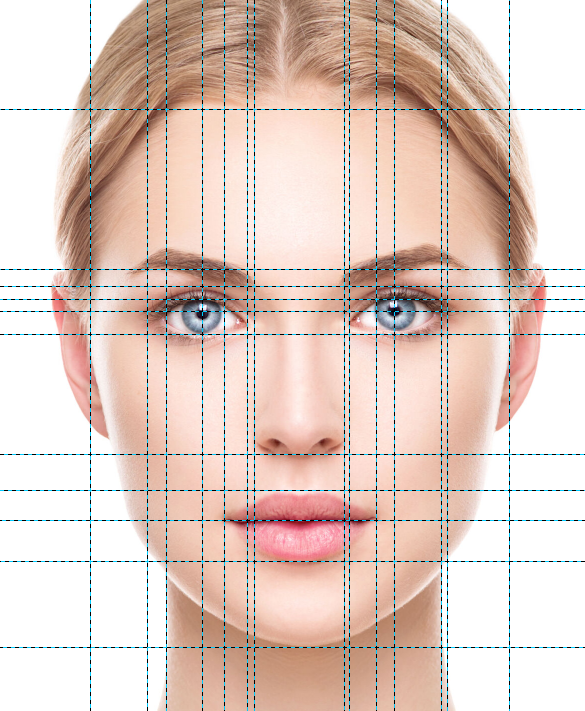
View attachment 4804658
View attachment 4804663
Example of a mapped face.

Note that everything you are doing will be pointless if the photo you're measuring is even slightly distorted. Only measure non distorted photos, if it's you or someone else that want to measure their harmony ensure you're taking the photo:

- with slight camera zoom
- using the back camera and facing directly onto the camera.
- The camera must stand at your nose height.

+ You can close your eyes and shake your head a little bit, then imagine you're looking at yourself in the mirror, finally open your eyes. This should help you fix your head at the proper position. Redo this until you know for sure your head is in the proper position.
I suggest setting a 15-30 second timer.
Photo quality also matters.

Okay, now once you mapped the face.
You can start by measuring distance between the guides you placed.

How to measure distance in GIMP?
To measure distrance in gimp you have to simply use measure tool by clicking SHIFT + M.
Photo:
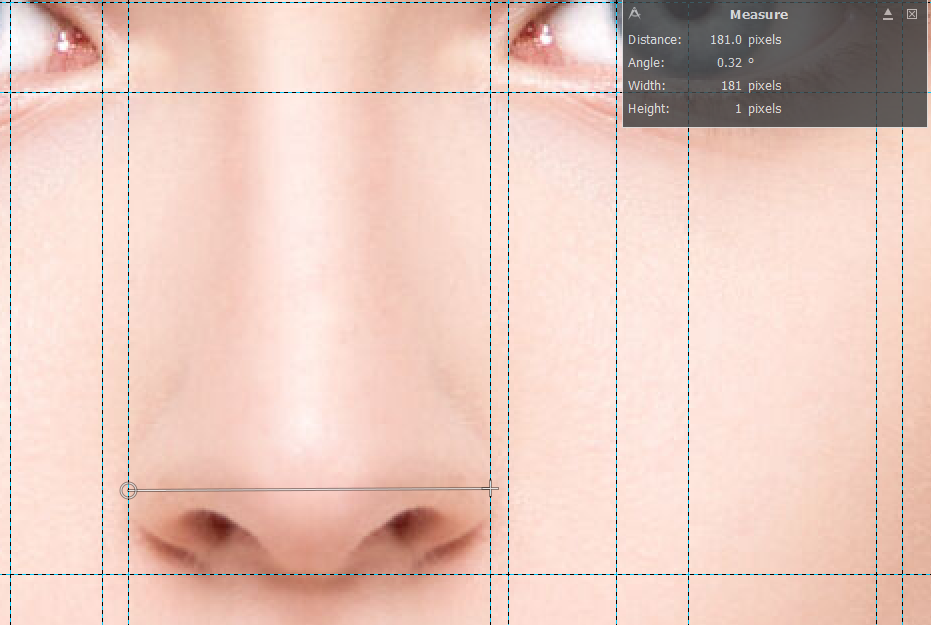
View attachment 4804673
You are going to use the pixel value and divide or multiply it depending on the ratios you are measuring

1.1 HOW TO MEASURE EACH OF THE RATIOS
I am presenting the standars most important masurements and standart harmony formula.

Eye Separation Ratio:
View attachment 4805996
RED LINE divided by GREEN LINE

Facial thirds:
View attachment 4805576

Canthal tilt
View attachment 4805582

FWHR: (in this case: 1.892)
View attachment 4805589

Jaw angle:
Always mind the soft tissue: fat, saggy skin etc.
View attachment 4805610

Cheekbone setness:
Find the place where the cheekbones are popping the most and mark it with the line. Measure the distance from this line to the lips and divide it by the distance of a line that starts at the height of pupils and of ends on the lips as well.
View attachment 4805622


Total Facial Height to Width
Divide the height of the face by width of the face
View attachment 4805631

Bigonial width
View attachment 4805644

Chin to philtrum ratio
View attachment 4805648


Neck Width
View attachment 4805650


Mouth to nose width

View attachment 4805653

Midface ratio
View attachment 4805658

Eyebrow Setness
View attachment 4805667

Eye Spacing
View attachment 4805674

Eye aspect ratio
View attachment 4805689

Lower to upper lip ratio
View attachment 4805700

Eyebrow tilt:
View attachment 4805710

This is the maximum of attachments that I can use for the thread.
Other ratios also include:

Bitemporal Width
Temples divided by bizygomatic width

Lower Third Proportion
Create a line from below of the nose (start of the philtrum) to the middle of the lips
Now, divide it by the line going also from below the nose all the way to the end of the chin.

Ipsilateral Angle
Create an angle which centre point is placed below of the nose tip and goes to the outer corners of the eyes all the way to the outer part of the brows.

Deviation of IAA and JFA
Deviation between the ipsilateral and jaw angle

2. HOW TO ASSIGN A TIER FOR EACH OF THE RATIOS
Below, I am presenting a table guiding us on which tier we assign for each range for each of the measurements we took.

EYE SEPARATION RATIO
(Tier 1) (Male) 44.3%-47.7% / (Female) 45%-47.9%
(Tier 2) 0.1-0.5 Deviation
(Tier 3) 0.6-1 Deviation
(Tier 4) 1.1-1.5 Deviation
(Tier 5) 1.6-2.3 Deviation
(Tier 6) 2.4-2.5 Deviation
(Tier 7) >2.5 Deviation


FACIAL THIRDS
(Tier 1) (Unisex) 1-3% from 33%
(Tier 2) 4% Deviation
(Tier 3) 5% Deviation
(Tier 4) 6% Deviation
(Tier 5) 7% Deviation
(Tier 6) >8% Deviation


CANTHAL TILT
(Tier 1) (Male) 5-8.5 / (Female) 6-9.5
(Tier 2) 0.1-1.25 Deviation
(Tier 3) 1.26-2.99 Deviation
(Tier 4) (Male) 0-2 / (Female) 0-3 Degree
(Tier 5) (-1) or (-2) Degree
(Tier 6) >(-2) Degree


FACIAL WIDTH TO HEIGHT RATIO (FWHR)
(Tier 1) 1.9-2.06
(Tier 2) 0.01-0.07 Deviation
(Tier 3) 0.08-0.10 Deviation
(Tier 4) 0.11-0.12 Deviation
(Tier 5) 2.19-2.23 / 1.7-1.77 Deviation
(Tier 6) >2.23 Deviation
(Tier 7) 1.55-1.69 Deviation

JAW FRONTAL ANGLE
(Tier 1) (Male) 84-95 / (Female) 86-97
(Tier 2) 0.1-3 Deviation
(Tier 3) 4-5 Deviation
(Tier 4) 6-10 Deviation
(Tier 5) 11-15 Deviation
(Tier 6) 16-20 Deviation
(Tier 7) >20 Deviation

CHEEKBONES HIGH SETEDNESS
(Tier 1) ≥81%
(Tier 2) 80%-76%
(Tier 3) 75%-70%
(Tier 4) 69%-66%
(Tier 5) 65%-60%
(Tier 6) 59%-56%
(Tier 7) <56%
TOTAL FACIAL HEIGHT TO WIDTH
(Tier 1) (Male) 1.33-1.38 / (Female) 1.29-1.33
(Tier 2) 0.01-0.05 Deviation
(Tier 3) 0.06-0.08 Deviation
(Tier 4) 0.09-0.10 Deviation
(Tier 5) 0.11-0.12 Deviation
(Tier 6) 0.13-0.16 Deviation
(Tier 7) >0.16 Deviation

BIGONIAL WIDTH
(Tier 1) (Male) 85%-92% / (Female) 82%-89%
(Tier 2) 0.1%-2% Deviation
(Tier 3) 3%-5% Deviation
(Tier 4) 6%-7% Deviation
(Tier 5) 8%-11% Deviation
(Tier 6) 12%-16% Deviation
(Tier 7) >16% Deviation

CHIN TO PHILTRUM
(Tier 1) (Male) 2.05-2.55 / (Female) 2.0-2.5
(Tier 2) 0.01-0.10 Deviation
(Tier 3) 0.11-0.25 Deviation
(Tier 4) 0.26-0.5 Deviation
(Tier 5) 0.51-1 Deviation
(Tier 6) >1 Deviation

NECK WIDTH
(Tier 1) (Male) >90% / (Female) 75%-85%
(Tier 2) 1%-5% Deviation
(Tier 3) 6%-10% Deviation
(Tier 4) 11%-15% Deviation
(Tier 5) 16%-20% Deviation
(Tier 6) >20% Deviation

MOUTH TO NOSE WIDTH
(Tier 1) (Male) 1.38-1.53 / (Female) 1.45-1.67
(Tier 2) 0.01-0.04 Deviation
(Tier 3) 0.05-0.08 Deviation
(Tier 4) 0.09-0.12 Deviation
(Tier 5) 0.13-0.16 Deviation
(Tier 6) >0.16 Deviation

MIDFACE RATIO
(Tier 1) (Male) 0.93-1.01 / (Female) 1-1.1
(Tier 2) 0.01-0.02 Deviation
(Tier 3) 0.03-0.05 Deviation
(Tier 4) 0.06-0.08 Deviation
(Tier 5) 0.09-0.13 Deviation
(Tier 6) >0.13 Deviation

EYEBROW SETEDNESS
(Tier 1) (Male) <0.66 / (Female) 0.40-0.85
(Tier 2) (Male) 0.66-0.95 / (Female) 0.86-1.20
(Tier 3) (Male) 0.96-1.20 / (Female) 1.21-1.50
(Tier 4) (Male) 1.21-1.50 / (Female) 1.51-1.80
(Tier 5) (Male) 1.51-1.80 / (Female) 1.81-2.0
(Tier 6) (Male) >1.80 / (Female) >2.0

EYE SPACING (ONE EYE TEST)
(Tier 1) 0.95-1.00, 1.00-1.05
(Tier 2) 0.01-0.03 Deviation
(Tier 3) 0.04-0.08 Deviation
(Tier 4) 0.09-0.13 Deviation
(Tier 5) 0.14-0.20 Deviation
(Tier 6) >0.20 Deviation

EYE ASPECT RATIO
(Tier 1) (Male) 2.8-3.6 / (Female) 2.5-3.3
(Tier 2) 0.01-0.2 Deviation
(Tier 3) 0.3-0.4 Deviation
(Tier 4) 0.5-0.6 Deviation
(Tier 5) 0.7-0.8 Deviation
(Tier 6) >0.8 Deviation

LOWER LIP TO UPPER LIP RATIO
(Tier 1) 1.4-2
(Tier 2) 0.01-0.2 Deviation
(Tier 3) 0.3-0.4 Deviation
(Tier 4) 0.5-0.6 Deviation
(Tier 5) 0.7-0.8 Deviation
(Tier 6) >0.8 Deviation

DEVIATION OF IAA TO JFA
(Tier 1) 0-5 Degree
(Tier 2) 6-10 Degree
(Tier 3) 11-15 Degree
(Tier 4) 16-18 Degree
(Tier 5) 19-20 Degree
(Tier 6) >20 Degree

EYEBROW TILT
(Tier 1) (Male) 5-13 / (Female) 11-19
(Tier 2) 0.1-5 Deviation
(Tier 3) (Unisex) 6-10 Positive tilt / (Female) 6-3 Degree
(Tier 4) (Men) 0-(-3) Degree / (Female) 3-0 Degree
(Tier 5) (Men) -4-(-5) Degree / (Female) -1-(-3) Degree
(Tier 6) (Men) >-5 Degree / (Female) >-3 Degree

BITEMPORAL WIDTH
(Tier 1) (Male) 84%-95% / (Female) 79%-92%
(Tier 2) 0.1%-3% Deviation
(Tier 3) 4%-5% Deviation
(Tier 4) 6%-8% Deviation
(Tier 5) 9%-13% Deviation
(Tier 6) >13% Deviation

LOWER THIRD PROPORTION
(Tier 1) <3% to 33%
(Tier 2) 4% Deviation
(Tier 3) 5% Deviation
(Tier 4) 6% Deviation
(Tier 5) 7% Deviation
(Tier 6) >8% Deviation

IPSILATERAL ALAR ANGLE
(Tier 1) (Male) 84%-95% / (Female) 86%-97%
(Tier 2) 0.1-2 Deviation
(Tier 3) 3-5 Deviation
(Tier 4) >5 Deviation

3. HOW TO CALCULATE HARMONY SCORE FROM TIERS

1. Assign the points for each ratio from the table below
Eye Separation Ratio (ESR)12.2010.986.593.66-10.98-65.88-97.5
Facial Thirds19.8317.849.915.95-5.95-11.90
Canthal Tilt12.3511.126.183.71-3.71-7.40
FWHR18.3016.479.155.49-16.47-49.41-85
Jaw Frontal Angle9.158.244.582.75-4.58-9.15-15
Cheekbone Setness201052.50-2.5-5
Face Length (Total width/height)201052.50-2.5-5
Bigonial Width (Jaw Width)20.5918.5310.296.18-18.53-46.32-65
Chin to Philtrum Ratio12.9611.676.483.89-1.95-3.89
Neck Width19.0617.169.535.72-17.16-34.31
Mouth to Nose Ratio12.3511.126.183.71-3.71-7.40
Midface Ratio11.9010.715.953.57-3.57-7.14
Eyebrow Setedness19.8317.849.915.95-5.95-11.90
Eye Spacing (One Eye Test)12.2010.986.593.66-10.98-65.88
Eye Aspect Ratio18.3016.479.155.49-5.49-10.98
Lower Lip to Upper Lip Ratio52.51.250-1.25-2.5
Deviation IAA to JFA7.53.751.880-1.88-3.75
Eyebrow Tilt1052.50-2.5-5
Bitemporal Width7.53.751.880-1.88-3.75
Lower Third Proportion52.51.250-1.25-2.5

2. Now, after we went through measuring ratios > assigning tiers > assigning points for each tier, add up all the points you scored and divide them by the maximum points (275) = Frontal Harmony Score

I decided to create a detailed thread on this topic because while many people post about facial harmony, most guides miss crucial information, specifically the ranges for each tier. You need to know these ranges to assign points accurately in the first place.

After reading this thread, you will be fully equipped to measure harmony yourself. I have broken this down into three sections:

How to properly measure ratios.
How to assign tiers to each ratio.
How to assign points per tier and calculate the overall harmony score.


1. HOW TO MEASURE RATIOS + WHICH APP TO USE AND HOW TO USE IT

To begin, we will need software capable of precise measurements. I recommend using GIMP or photoshop. Both serve the same purpose, but I find GIMP slightly more user friendly for this specific process.

First step - mapping the face.

Download and open your GIMP app.
Now, simply paste your image using CTR + V or go to FILE > OPEN and select your picture.


Next, you will have to enable some of the view settings below:

On the upper taskbar, click view and ensure the following options are checked:

View attachment 4804649
View attachment 4804650
View attachment 4804652
Don't touch the rest of the boxes that are not shown here, just leave them as they are.

Now, you should be able to see the rulers on the top and on the sides of your workspace that appeared. Click on a ruler and drag your mouse toward the photo to place a guide.


VIDEO:


If you want to undo the guide simply press CTRL + Z to go back.

Zoom into the picture to place your guides accurately.

View attachment 4804658
View attachment 4804663
Example of a mapped face.

Note that everything you are doing will be pointless if the photo you're measuring is even slightly distorted. Only measure non distorted photos, if it's you or someone else that want to measure their harmony ensure you're taking the photo:

- with slight camera zoom
- using the back camera and facing directly onto the camera.
- The camera must stand at your nose height.

+ You can close your eyes and shake your head a little bit, then imagine you're looking at yourself in the mirror, finally open your eyes. This should help you fix your head at the proper position. Redo this until you know for sure your head is in the proper position.
I suggest setting a 15-30 second timer.
Photo quality also matters.

Okay, now once you mapped the face.
You can start by measuring distance between the guides you placed.

How to measure distance in GIMP?
To measure distrance in gimp you have to simply use measure tool by clicking SHIFT + M.
Photo:
View attachment 4804673
You are going to use the pixel value and divide or multiply it depending on the ratios you are measuring

1.1 HOW TO MEASURE EACH OF THE RATIOS
I am presenting the standars most important masurements and standart harmony formula.

Eye Separation Ratio:
View attachment 4805996
RED LINE divided by GREEN LINE

Facial thirds:
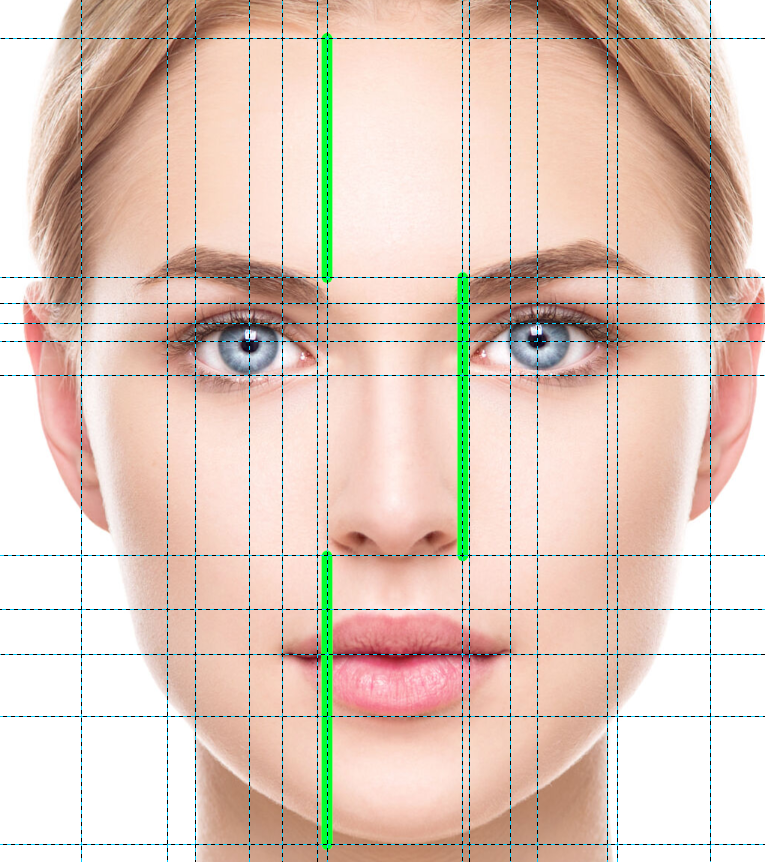
View attachment 4805576

Canthal tilt
View attachment 4805582

FWHR: (in this case: 1.892)
View attachment 4805589

Jaw angle:
Always mind the soft tissue: fat, saggy skin etc.
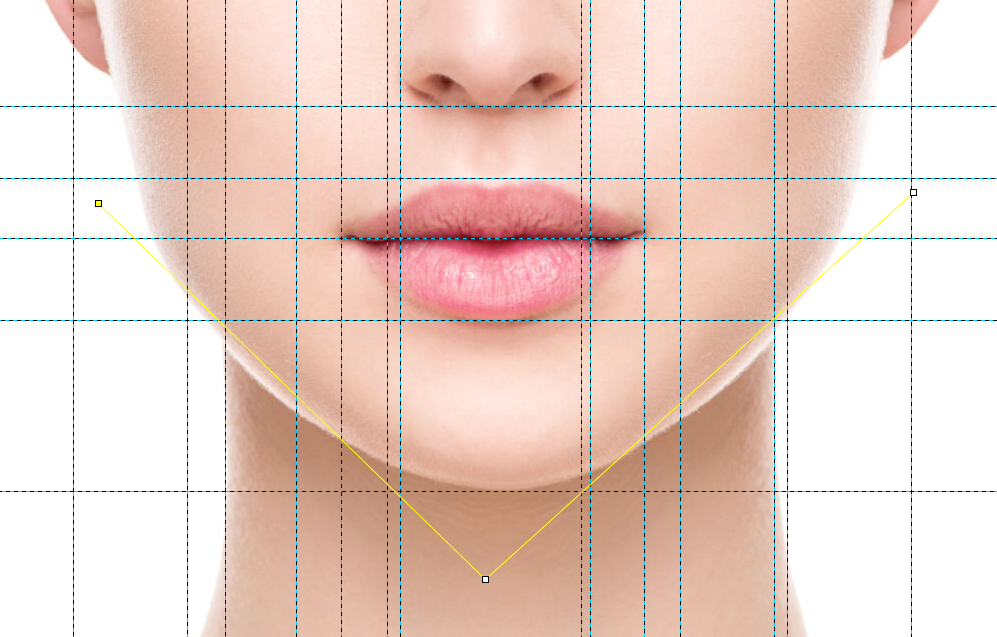
View attachment 4805610

Cheekbone setness:
Find the place where the cheekbones are popping the most and mark it with the line. Measure the distance from this line to the lips and divide it by the distance of a line that starts at the height of pupils and of ends on the lips as well.
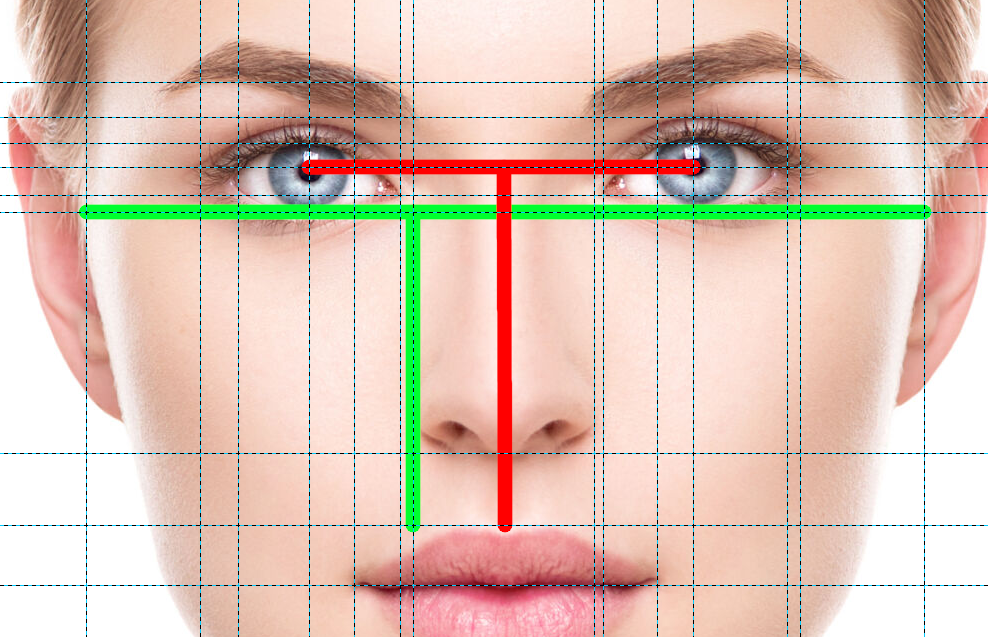
View attachment 4805622


Total Facial Height to Width
Divide the height of the face by width of the face
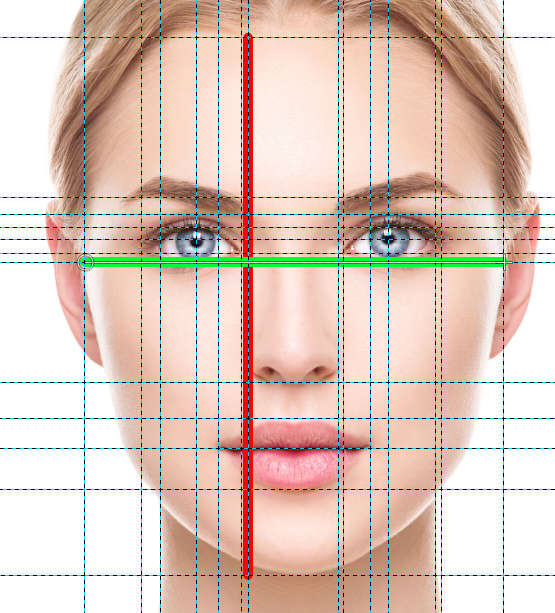
View attachment 4805631

Bigonial width
View attachment 4805644

Chin to philtrum ratio
View attachment 4805648


Neck Width
View attachment 4805650


Mouth to nose width

View attachment 4805653

Midface ratio
View attachment 4805658

Eyebrow Setness
View attachment 4805667

Eye Spacing
View attachment 4805674

Eye aspect ratio
View attachment 4805689

Lower to upper lip ratio
View attachment 4805700

Eyebrow tilt:
View attachment 4805710

This is the maximum of attachments that I can use for the thread.
Other ratios also include:

Bitemporal Width
Temples divided by bizygomatic width

Lower Third Proportion
Create a line from below of the nose (start of the philtrum) to the middle of the lips
Now, divide it by the line going also from below the nose all the way to the end of the chin.

Ipsilateral Angle
Create an angle which centre point is placed below of the nose tip and goes to the outer corners of the eyes all the way to the outer part of the brows.

Deviation of IAA and JFA
Deviation between the ipsilateral and jaw angle

2. HOW TO ASSIGN A TIER FOR EACH OF THE RATIOS
Below, I am presenting a table guiding us on which tier we assign for each range for each of the measurements we took.

EYE SEPARATION RATIO
(Tier 1) (Male) 44.3%-47.7% / (Female) 45%-47.9%
(Tier 2) 0.1-0.5 Deviation
(Tier 3) 0.6-1 Deviation
(Tier 4) 1.1-1.5 Deviation
(Tier 5) 1.6-2.3 Deviation
(Tier 6) 2.4-2.5 Deviation
(Tier 7) >2.5 Deviation


FACIAL THIRDS
(Tier 1) (Unisex) 1-3% from 33%
(Tier 2) 4% Deviation
(Tier 3) 5% Deviation
(Tier 4) 6% Deviation
(Tier 5) 7% Deviation
(Tier 6) >8% Deviation


CANTHAL TILT
(Tier 1) (Male) 5-8.5 / (Female) 6-9.5
(Tier 2) 0.1-1.25 Deviation
(Tier 3) 1.26-2.99 Deviation
(Tier 4) (Male) 0-2 / (Female) 0-3 Degree
(Tier 5) (-1) or (-2) Degree
(Tier 6) >(-2) Degree


FACIAL WIDTH TO HEIGHT RATIO (FWHR)
(Tier 1) 1.9-2.06
(Tier 2) 0.01-0.07 Deviation
(Tier 3) 0.08-0.10 Deviation
(Tier 4) 0.11-0.12 Deviation
(Tier 5) 2.19-2.23 / 1.7-1.77 Deviation
(Tier 6) >2.23 Deviation
(Tier 7) 1.55-1.69 Deviation

JAW FRONTAL ANGLE
(Tier 1) (Male) 84-95 / (Female) 86-97
(Tier 2) 0.1-3 Deviation
(Tier 3) 4-5 Deviation
(Tier 4) 6-10 Deviation
(Tier 5) 11-15 Deviation
(Tier 6) 16-20 Deviation
(Tier 7) >20 Deviation

CHEEKBONES HIGH SETEDNESS
(Tier 1) ≥81%
(Tier 2) 80%-76%
(Tier 3) 75%-70%
(Tier 4) 69%-66%
(Tier 5) 65%-60%
(Tier 6) 59%-56%
(Tier 7) <56%
TOTAL FACIAL HEIGHT TO WIDTH
(Tier 1) (Male) 1.33-1.38 / (Female) 1.29-1.33
(Tier 2) 0.01-0.05 Deviation
(Tier 3) 0.06-0.08 Deviation
(Tier 4) 0.09-0.10 Deviation
(Tier 5) 0.11-0.12 Deviation
(Tier 6) 0.13-0.16 Deviation
(Tier 7) >0.16 Deviation

BIGONIAL WIDTH
(Tier 1) (Male) 85%-92% / (Female) 82%-89%
(Tier 2) 0.1%-2% Deviation
(Tier 3) 3%-5% Deviation
(Tier 4) 6%-7% Deviation
(Tier 5) 8%-11% Deviation
(Tier 6) 12%-16% Deviation
(Tier 7) >16% Deviation

CHIN TO PHILTRUM
(Tier 1) (Male) 2.05-2.55 / (Female) 2.0-2.5
(Tier 2) 0.01-0.10 Deviation
(Tier 3) 0.11-0.25 Deviation
(Tier 4) 0.26-0.5 Deviation
(Tier 5) 0.51-1 Deviation
(Tier 6) >1 Deviation

NECK WIDTH
(Tier 1) (Male) >90% / (Female) 75%-85%
(Tier 2) 1%-5% Deviation
(Tier 3) 6%-10% Deviation
(Tier 4) 11%-15% Deviation
(Tier 5) 16%-20% Deviation
(Tier 6) >20% Deviation

MOUTH TO NOSE WIDTH
(Tier 1) (Male) 1.38-1.53 / (Female) 1.45-1.67
(Tier 2) 0.01-0.04 Deviation
(Tier 3) 0.05-0.08 Deviation
(Tier 4) 0.09-0.12 Deviation
(Tier 5) 0.13-0.16 Deviation
(Tier 6) >0.16 Deviation

MIDFACE RATIO
(Tier 1) (Male) 0.93-1.01 / (Female) 1-1.1
(Tier 2) 0.01-0.02 Deviation
(Tier 3) 0.03-0.05 Deviation
(Tier 4) 0.06-0.08 Deviation
(Tier 5) 0.09-0.13 Deviation
(Tier 6) >0.13 Deviation

EYEBROW SETEDNESS
(Tier 1) (Male) <0.66 / (Female) 0.40-0.85
(Tier 2) (Male) 0.66-0.95 / (Female) 0.86-1.20
(Tier 3) (Male) 0.96-1.20 / (Female) 1.21-1.50
(Tier 4) (Male) 1.21-1.50 / (Female) 1.51-1.80
(Tier 5) (Male) 1.51-1.80 / (Female) 1.81-2.0
(Tier 6) (Male) >1.80 / (Female) >2.0

EYE SPACING (ONE EYE TEST)
(Tier 1) 0.95-1.00, 1.00-1.05
(Tier 2) 0.01-0.03 Deviation
(Tier 3) 0.04-0.08 Deviation
(Tier 4) 0.09-0.13 Deviation
(Tier 5) 0.14-0.20 Deviation
(Tier 6) >0.20 Deviation

EYE ASPECT RATIO
(Tier 1) (Male) 2.8-3.6 / (Female) 2.5-3.3
(Tier 2) 0.01-0.2 Deviation
(Tier 3) 0.3-0.4 Deviation
(Tier 4) 0.5-0.6 Deviation
(Tier 5) 0.7-0.8 Deviation
(Tier 6) >0.8 Deviation

LOWER LIP TO UPPER LIP RATIO
(Tier 1) 1.4-2
(Tier 2) 0.01-0.2 Deviation
(Tier 3) 0.3-0.4 Deviation
(Tier 4) 0.5-0.6 Deviation
(Tier 5) 0.7-0.8 Deviation
(Tier 6) >0.8 Deviation

DEVIATION OF IAA TO JFA
(Tier 1) 0-5 Degree
(Tier 2) 6-10 Degree
(Tier 3) 11-15 Degree
(Tier 4) 16-18 Degree
(Tier 5) 19-20 Degree
(Tier 6) >20 Degree

EYEBROW TILT
(Tier 1) (Male) 5-13 / (Female) 11-19
(Tier 2) 0.1-5 Deviation
(Tier 3) (Unisex) 6-10 Positive tilt / (Female) 6-3 Degree
(Tier 4) (Men) 0-(-3) Degree / (Female) 3-0 Degree
(Tier 5) (Men) -4-(-5) Degree / (Female) -1-(-3) Degree
(Tier 6) (Men) >-5 Degree / (Female) >-3 Degree

BITEMPORAL WIDTH
(Tier 1) (Male) 84%-95% / (Female) 79%-92%
(Tier 2) 0.1%-3% Deviation
(Tier 3) 4%-5% Deviation
(Tier 4) 6%-8% Deviation
(Tier 5) 9%-13% Deviation
(Tier 6) >13% Deviation

LOWER THIRD PROPORTION
(Tier 1) <3% to 33%
(Tier 2) 4% Deviation
(Tier 3) 5% Deviation
(Tier 4) 6% Deviation
(Tier 5) 7% Deviation
(Tier 6) >8% Deviation

IPSILATERAL ALAR ANGLE
(Tier 1) (Male) 84%-95% / (Female) 86%-97%
(Tier 2) 0.1-2 Deviation
(Tier 3) 3-5 Deviation
(Tier 4) >5 Deviation

3. HOW TO CALCULATE HARMONY SCORE FROM TIERS

1. Assign the points for each ratio from the table below
Eye Separation Ratio (ESR)12.2010.986.593.66-10.98-65.88-97.5
Facial Thirds19.8317.849.915.95-5.95-11.90
Canthal Tilt12.3511.126.183.71-3.71-7.40
FWHR18.3016.479.155.49-16.47-49.41-85
Jaw Frontal Angle9.158.244.582.75-4.58-9.15-15
Cheekbone Setness201052.50-2.5-5
Face Length (Total width/height)201052.50-2.5-5
Bigonial Width (Jaw Width)20.5918.5310.296.18-18.53-46.32-65
Chin to Philtrum Ratio12.9611.676.483.89-1.95-3.89
Neck Width19.0617.169.535.72-17.16-34.31
Mouth to Nose Ratio12.3511.126.183.71-3.71-7.40
Midface Ratio11.9010.715.953.57-3.57-7.14
Eyebrow Setedness19.8317.849.915.95-5.95-11.90
Eye Spacing (One Eye Test)12.2010.986.593.66-10.98-65.88
Eye Aspect Ratio18.3016.479.155.49-5.49-10.98
Lower Lip to Upper Lip Ratio52.51.250-1.25-2.5
Deviation IAA to JFA7.53.751.880-1.88-3.75
Eyebrow Tilt1052.50-2.5-5
Bitemporal Width7.53.751.880-1.88-3.75
Lower Third Proportion52.51.250-1.25-2.5

2. Now, after we went through measuring ratios > assigning tiers > assigning points for each tier, add up all the points you scored and divide them by the maximum points (275) = Frontal Harmony Score

Very helpful guide!
 
  • +1
Reactions: Adee
this is only like 20 ratios jfl
 
got 86.7% on this formula

i typically get 80-81%, i think that you need to include more ratios

not botb worthy but a good thread:feelsokman:
 
I decided to create a detailed thread on this topic because while many people post about facial harmony, most guides miss crucial information, specifically the ranges for each tier. You need to know these ranges to assign points accurately in the first place.

After reading this thread, you will be fully equipped to measure harmony yourself. I have broken this down into three sections:

How to properly measure ratios.
How to assign tiers to each ratio.
How to assign points per tier and calculate the overall harmony score.


1. HOW TO MEASURE RATIOS + WHICH APP TO USE AND HOW TO USE IT

To begin, we will need software capable of precise measurements. I recommend using GIMP or photoshop. Both serve the same purpose, but I find GIMP slightly more user friendly for this specific process.

First step - mapping the face.

Download and open your GIMP app.
Now, simply paste your image using CTR + V or go to FILE > OPEN and select your picture.


Next, you will have to enable some of the view settings below:

On the upper taskbar, click view and ensure the following options are checked:

View attachment 4804649
View attachment 4804650
View attachment 4804652
Don't touch the rest of the boxes that are not shown here, just leave them as they are.

Now, you should be able to see the rulers on the top and on the sides of your workspace that appeared. Click on a ruler and drag your mouse toward the photo to place a guide.


VIDEO:


If you want to undo the guide simply press CTRL + Z to go back.

Zoom into the picture to place your guides accurately.

View attachment 4804658
View attachment 4804663
Example of a mapped face.

Note that everything you are doing will be pointless if the photo you're measuring is even slightly distorted. Only measure non distorted photos, if it's you or someone else that want to measure their harmony ensure you're taking the photo:

- with slight camera zoom
- using the back camera and facing directly onto the camera.
- The camera must stand at your nose height.

+ You can close your eyes and shake your head a little bit, then imagine you're looking at yourself in the mirror, finally open your eyes. This should help you fix your head at the proper position. Redo this until you know for sure your head is in the proper position.
I suggest setting a 15-30 second timer.
Photo quality also matters.

Okay, now once you mapped the face.
You can start by measuring distance between the guides you placed.

How to measure distance in GIMP?
To measure distrance in gimp you have to simply use measure tool by clicking SHIFT + M.
Photo:
View attachment 4804673
You are going to use the pixel value and divide or multiply it depending on the ratios you are measuring

1.1 HOW TO MEASURE EACH OF THE RATIOS
I am presenting the standars most important masurements and standart harmony formula.

Eye Separation Ratio:
View attachment 4805996
RED LINE divided by GREEN LINE

Facial thirds:
View attachment 4805576

Canthal tilt
View attachment 4805582

FWHR: (in this case: 1.892)
View attachment 4805589

Jaw angle:
Always mind the soft tissue: fat, saggy skin etc.
View attachment 4805610

Cheekbone setness:
Find the place where the cheekbones are popping the most and mark it with the line. Measure the distance from this line to the lips and divide it by the distance of a line that starts at the height of pupils and of ends on the lips as well.
View attachment 4805622


Total Facial Height to Width
Divide the height of the face by width of the face
View attachment 4805631

Bigonial width
View attachment 4805644

Chin to philtrum ratio
View attachment 4805648


Neck Width
View attachment 4805650


Mouth to nose width

View attachment 4805653

Midface ratio
View attachment 4805658

Eyebrow Setness
View attachment 4805667

Eye Spacing
View attachment 4805674

Eye aspect ratio
View attachment 4805689

Lower to upper lip ratio
View attachment 4805700

Eyebrow tilt:
View attachment 4805710

This is the maximum of attachments that I can use for the thread.
Other ratios also include:

Bitemporal Width
Temples divided by bizygomatic width

Lower Third Proportion
Create a line from below of the nose (start of the philtrum) to the middle of the lips
Now, divide it by the line going also from below the nose all the way to the end of the chin.

Ipsilateral Angle
Create an angle which centre point is placed below of the nose tip and goes to the outer corners of the eyes all the way to the outer part of the brows.

Deviation of IAA and JFA
Deviation between the ipsilateral and jaw angle

2. HOW TO ASSIGN A TIER FOR EACH OF THE RATIOS
Below, I am presenting a table guiding us on which tier we assign for each range for each of the measurements we took.

EYE SEPARATION RATIO
(Tier 1) (Male) 44.3%-47.7% / (Female) 45%-47.9%
(Tier 2) 0.1-0.5 Deviation
(Tier 3) 0.6-1 Deviation
(Tier 4) 1.1-1.5 Deviation
(Tier 5) 1.6-2.3 Deviation
(Tier 6) 2.4-2.5 Deviation
(Tier 7) >2.5 Deviation


FACIAL THIRDS
(Tier 1) (Unisex) 1-3% from 33%
(Tier 2) 4% Deviation
(Tier 3) 5% Deviation
(Tier 4) 6% Deviation
(Tier 5) 7% Deviation
(Tier 6) >8% Deviation


CANTHAL TILT
(Tier 1) (Male) 5-8.5 / (Female) 6-9.5
(Tier 2) 0.1-1.25 Deviation
(Tier 3) 1.26-2.99 Deviation
(Tier 4) (Male) 0-2 / (Female) 0-3 Degree
(Tier 5) (-1) or (-2) Degree
(Tier 6) >(-2) Degree


FACIAL WIDTH TO HEIGHT RATIO (FWHR)
(Tier 1) 1.9-2.06
(Tier 2) 0.01-0.07 Deviation
(Tier 3) 0.08-0.10 Deviation
(Tier 4) 0.11-0.12 Deviation
(Tier 5) 2.19-2.23 / 1.7-1.77 Deviation
(Tier 6) >2.23 Deviation
(Tier 7) 1.55-1.69 Deviation

JAW FRONTAL ANGLE
(Tier 1) (Male) 84-95 / (Female) 86-97
(Tier 2) 0.1-3 Deviation
(Tier 3) 4-5 Deviation
(Tier 4) 6-10 Deviation
(Tier 5) 11-15 Deviation
(Tier 6) 16-20 Deviation
(Tier 7) >20 Deviation

CHEEKBONES HIGH SETEDNESS
(Tier 1) ≥81%
(Tier 2) 80%-76%
(Tier 3) 75%-70%
(Tier 4) 69%-66%
(Tier 5) 65%-60%
(Tier 6) 59%-56%
(Tier 7) <56%
TOTAL FACIAL HEIGHT TO WIDTH
(Tier 1) (Male) 1.33-1.38 / (Female) 1.29-1.33
(Tier 2) 0.01-0.05 Deviation
(Tier 3) 0.06-0.08 Deviation
(Tier 4) 0.09-0.10 Deviation
(Tier 5) 0.11-0.12 Deviation
(Tier 6) 0.13-0.16 Deviation
(Tier 7) >0.16 Deviation

BIGONIAL WIDTH
(Tier 1) (Male) 85%-92% / (Female) 82%-89%
(Tier 2) 0.1%-2% Deviation
(Tier 3) 3%-5% Deviation
(Tier 4) 6%-7% Deviation
(Tier 5) 8%-11% Deviation
(Tier 6) 12%-16% Deviation
(Tier 7) >16% Deviation

CHIN TO PHILTRUM
(Tier 1) (Male) 2.05-2.55 / (Female) 2.0-2.5
(Tier 2) 0.01-0.10 Deviation
(Tier 3) 0.11-0.25 Deviation
(Tier 4) 0.26-0.5 Deviation
(Tier 5) 0.51-1 Deviation
(Tier 6) >1 Deviation

NECK WIDTH
(Tier 1) (Male) >90% / (Female) 75%-85%
(Tier 2) 1%-5% Deviation
(Tier 3) 6%-10% Deviation
(Tier 4) 11%-15% Deviation
(Tier 5) 16%-20% Deviation
(Tier 6) >20% Deviation

MOUTH TO NOSE WIDTH
(Tier 1) (Male) 1.38-1.53 / (Female) 1.45-1.67
(Tier 2) 0.01-0.04 Deviation
(Tier 3) 0.05-0.08 Deviation
(Tier 4) 0.09-0.12 Deviation
(Tier 5) 0.13-0.16 Deviation
(Tier 6) >0.16 Deviation

MIDFACE RATIO
(Tier 1) (Male) 0.93-1.01 / (Female) 1-1.1
(Tier 2) 0.01-0.02 Deviation
(Tier 3) 0.03-0.05 Deviation
(Tier 4) 0.06-0.08 Deviation
(Tier 5) 0.09-0.13 Deviation
(Tier 6) >0.13 Deviation

EYEBROW SETEDNESS
(Tier 1) (Male) <0.66 / (Female) 0.40-0.85
(Tier 2) (Male) 0.66-0.95 / (Female) 0.86-1.20
(Tier 3) (Male) 0.96-1.20 / (Female) 1.21-1.50
(Tier 4) (Male) 1.21-1.50 / (Female) 1.51-1.80
(Tier 5) (Male) 1.51-1.80 / (Female) 1.81-2.0
(Tier 6) (Male) >1.80 / (Female) >2.0

EYE SPACING (ONE EYE TEST)
(Tier 1) 0.95-1.00, 1.00-1.05
(Tier 2) 0.01-0.03 Deviation
(Tier 3) 0.04-0.08 Deviation
(Tier 4) 0.09-0.13 Deviation
(Tier 5) 0.14-0.20 Deviation
(Tier 6) >0.20 Deviation

EYE ASPECT RATIO
(Tier 1) (Male) 2.8-3.6 / (Female) 2.5-3.3
(Tier 2) 0.01-0.2 Deviation
(Tier 3) 0.3-0.4 Deviation
(Tier 4) 0.5-0.6 Deviation
(Tier 5) 0.7-0.8 Deviation
(Tier 6) >0.8 Deviation

LOWER LIP TO UPPER LIP RATIO
(Tier 1) 1.4-2
(Tier 2) 0.01-0.2 Deviation
(Tier 3) 0.3-0.4 Deviation
(Tier 4) 0.5-0.6 Deviation
(Tier 5) 0.7-0.8 Deviation
(Tier 6) >0.8 Deviation

DEVIATION OF IAA TO JFA
(Tier 1) 0-5 Degree
(Tier 2) 6-10 Degree
(Tier 3) 11-15 Degree
(Tier 4) 16-18 Degree
(Tier 5) 19-20 Degree
(Tier 6) >20 Degree

EYEBROW TILT
(Tier 1) (Male) 5-13 / (Female) 11-19
(Tier 2) 0.1-5 Deviation
(Tier 3) (Unisex) 6-10 Positive tilt / (Female) 6-3 Degree
(Tier 4) (Men) 0-(-3) Degree / (Female) 3-0 Degree
(Tier 5) (Men) -4-(-5) Degree / (Female) -1-(-3) Degree
(Tier 6) (Men) >-5 Degree / (Female) >-3 Degree

BITEMPORAL WIDTH
(Tier 1) (Male) 84%-95% / (Female) 79%-92%
(Tier 2) 0.1%-3% Deviation
(Tier 3) 4%-5% Deviation
(Tier 4) 6%-8% Deviation
(Tier 5) 9%-13% Deviation
(Tier 6) >13% Deviation

LOWER THIRD PROPORTION
(Tier 1) <3% to 33%
(Tier 2) 4% Deviation
(Tier 3) 5% Deviation
(Tier 4) 6% Deviation
(Tier 5) 7% Deviation
(Tier 6) >8% Deviation

IPSILATERAL ALAR ANGLE
(Tier 1) (Male) 84%-95% / (Female) 86%-97%
(Tier 2) 0.1-2 Deviation
(Tier 3) 3-5 Deviation
(Tier 4) >5 Deviation

3. HOW TO CALCULATE HARMONY SCORE FROM TIERS

1. Assign the points for each ratio from the table below
Eye Separation Ratio (ESR)12.2010.986.593.66-10.98-65.88-97.5
Facial Thirds19.8317.849.915.95-5.95-11.90
Canthal Tilt12.3511.126.183.71-3.71-7.40
FWHR18.3016.479.155.49-16.47-49.41-85
Jaw Frontal Angle9.158.244.582.75-4.58-9.15-15
Cheekbone Setness201052.50-2.5-5
Face Length (Total width/height)201052.50-2.5-5
Bigonial Width (Jaw Width)20.5918.5310.296.18-18.53-46.32-65
Chin to Philtrum Ratio12.9611.676.483.89-1.95-3.89
Neck Width19.0617.169.535.72-17.16-34.31
Mouth to Nose Ratio12.3511.126.183.71-3.71-7.40
Midface Ratio11.9010.715.953.57-3.57-7.14
Eyebrow Setedness19.8317.849.915.95-5.95-11.90
Eye Spacing (One Eye Test)12.2010.986.593.66-10.98-65.88
Eye Aspect Ratio18.3016.479.155.49-5.49-10.98
Lower Lip to Upper Lip Ratio52.51.250-1.25-2.5
Deviation IAA to JFA7.53.751.880-1.88-3.75
Eyebrow Tilt1052.50-2.5-5
Bitemporal Width7.53.751.880-1.88-3.75
Lower Third Proportion52.51.250-1.25-2.5

2. Now, after we went through measuring ratios > assigning tiers > assigning points for each tier, add up all the points you scored and divide them by the maximum points (275) = Frontal Harmony Score

I decided to create a detailed thread on this topic because while many people post about facial harmony, most guides miss crucial information, specifically the ranges for each tier. You need to know these ranges to assign points accurately in the first place.

After reading this thread, you will be fully equipped to measure harmony yourself. I have broken this down into three sections:

How to properly measure ratios.
How to assign tiers to each ratio.
How to assign points per tier and calculate the overall harmony score.


1. HOW TO MEASURE RATIOS + WHICH APP TO USE AND HOW TO USE IT

To begin, we will need software capable of precise measurements. I recommend using GIMP or photoshop. Both serve the same purpose, but I find GIMP slightly more user friendly for this specific process.

First step - mapping the face.

Download and open your GIMP app.
Now, simply paste your image using CTR + V or go to FILE > OPEN and select your picture.


Next, you will have to enable some of the view settings below:

On the upper taskbar, click view and ensure the following options are checked:

View attachment 4804649
View attachment 4804650
View attachment 4804652
Don't touch the rest of the boxes that are not shown here, just leave them as they are.

Now, you should be able to see the rulers on the top and on the sides of your workspace that appeared. Click on a ruler and drag your mouse toward the photo to place a guide.


VIDEO:


If you want to undo the guide simply press CTRL + Z to go back.

Zoom into the picture to place your guides accurately.

View attachment 4804658
View attachment 4804663
Example of a mapped face.

Note that everything you are doing will be pointless if the photo you're measuring is even slightly distorted. Only measure non distorted photos, if it's you or someone else that want to measure their harmony ensure you're taking the photo:

- with slight camera zoom
- using the back camera and facing directly onto the camera.
- The camera must stand at your nose height.

+ You can close your eyes and shake your head a little bit, then imagine you're looking at yourself in the mirror, finally open your eyes. This should help you fix your head at the proper position. Redo this until you know for sure your head is in the proper position.
I suggest setting a 15-30 second timer.
Photo quality also matters.

Okay, now once you mapped the face.
You can start by measuring distance between the guides you placed.

How to measure distance in GIMP?
To measure distrance in gimp you have to simply use measure tool by clicking SHIFT + M.
Photo:
View attachment 4804673
You are going to use the pixel value and divide or multiply it depending on the ratios you are measuring

1.1 HOW TO MEASURE EACH OF THE RATIOS
I am presenting the standars most important masurements and standart harmony formula.

Eye Separation Ratio:
View attachment 4805996
RED LINE divided by GREEN LINE

Facial thirds:
View attachment 4805576

Canthal tilt
View attachment 4805582

FWHR: (in this case: 1.892)
View attachment 4805589

Jaw angle:
Always mind the soft tissue: fat, saggy skin etc.
View attachment 4805610

Cheekbone setness:
Find the place where the cheekbones are popping the most and mark it with the line. Measure the distance from this line to the lips and divide it by the distance of a line that starts at the height of pupils and of ends on the lips as well.
View attachment 4805622


Total Facial Height to Width
Divide the height of the face by width of the face
View attachment 4805631

Bigonial width
View attachment 4805644

Chin to philtrum ratio
View attachment 4805648


Neck Width
View attachment 4805650


Mouth to nose width

View attachment 4805653

Midface ratio
View attachment 4805658

Eyebrow Setness
View attachment 4805667

Eye Spacing
View attachment 4805674

Eye aspect ratio
View attachment 4805689

Lower to upper lip ratio
View attachment 4805700

Eyebrow tilt:
View attachment 4805710

This is the maximum of attachments that I can use for the thread.
Other ratios also include:

Bitemporal Width
Temples divided by bizygomatic width

Lower Third Proportion
Create a line from below of the nose (start of the philtrum) to the middle of the lips
Now, divide it by the line going also from below the nose all the way to the end of the chin.

Ipsilateral Angle
Create an angle which centre point is placed below of the nose tip and goes to the outer corners of the eyes all the way to the outer part of the brows.

Deviation of IAA and JFA
Deviation between the ipsilateral and jaw angle

2. HOW TO ASSIGN A TIER FOR EACH OF THE RATIOS
Below, I am presenting a table guiding us on which tier we assign for each range for each of the measurements we took.

EYE SEPARATION RATIO
(Tier 1) (Male) 44.3%-47.7% / (Female) 45%-47.9%
(Tier 2) 0.1-0.5 Deviation
(Tier 3) 0.6-1 Deviation
(Tier 4) 1.1-1.5 Deviation
(Tier 5) 1.6-2.3 Deviation
(Tier 6) 2.4-2.5 Deviation
(Tier 7) >2.5 Deviation


FACIAL THIRDS
(Tier 1) (Unisex) 1-3% from 33%
(Tier 2) 4% Deviation
(Tier 3) 5% Deviation
(Tier 4) 6% Deviation
(Tier 5) 7% Deviation
(Tier 6) >8% Deviation


CANTHAL TILT
(Tier 1) (Male) 5-8.5 / (Female) 6-9.5
(Tier 2) 0.1-1.25 Deviation
(Tier 3) 1.26-2.99 Deviation
(Tier 4) (Male) 0-2 / (Female) 0-3 Degree
(Tier 5) (-1) or (-2) Degree
(Tier 6) >(-2) Degree


FACIAL WIDTH TO HEIGHT RATIO (FWHR)
(Tier 1) 1.9-2.06
(Tier 2) 0.01-0.07 Deviation
(Tier 3) 0.08-0.10 Deviation
(Tier 4) 0.11-0.12 Deviation
(Tier 5) 2.19-2.23 / 1.7-1.77 Deviation
(Tier 6) >2.23 Deviation
(Tier 7) 1.55-1.69 Deviation

JAW FRONTAL ANGLE
(Tier 1) (Male) 84-95 / (Female) 86-97
(Tier 2) 0.1-3 Deviation
(Tier 3) 4-5 Deviation
(Tier 4) 6-10 Deviation
(Tier 5) 11-15 Deviation
(Tier 6) 16-20 Deviation
(Tier 7) >20 Deviation

CHEEKBONES HIGH SETEDNESS
(Tier 1) ≥81%
(Tier 2) 80%-76%
(Tier 3) 75%-70%
(Tier 4) 69%-66%
(Tier 5) 65%-60%
(Tier 6) 59%-56%
(Tier 7) <56%
TOTAL FACIAL HEIGHT TO WIDTH
(Tier 1) (Male) 1.33-1.38 / (Female) 1.29-1.33
(Tier 2) 0.01-0.05 Deviation
(Tier 3) 0.06-0.08 Deviation
(Tier 4) 0.09-0.10 Deviation
(Tier 5) 0.11-0.12 Deviation
(Tier 6) 0.13-0.16 Deviation
(Tier 7) >0.16 Deviation

BIGONIAL WIDTH
(Tier 1) (Male) 85%-92% / (Female) 82%-89%
(Tier 2) 0.1%-2% Deviation
(Tier 3) 3%-5% Deviation
(Tier 4) 6%-7% Deviation
(Tier 5) 8%-11% Deviation
(Tier 6) 12%-16% Deviation
(Tier 7) >16% Deviation

CHIN TO PHILTRUM
(Tier 1) (Male) 2.05-2.55 / (Female) 2.0-2.5
(Tier 2) 0.01-0.10 Deviation
(Tier 3) 0.11-0.25 Deviation
(Tier 4) 0.26-0.5 Deviation
(Tier 5) 0.51-1 Deviation
(Tier 6) >1 Deviation

NECK WIDTH
(Tier 1) (Male) >90% / (Female) 75%-85%
(Tier 2) 1%-5% Deviation
(Tier 3) 6%-10% Deviation
(Tier 4) 11%-15% Deviation
(Tier 5) 16%-20% Deviation
(Tier 6) >20% Deviation

MOUTH TO NOSE WIDTH
(Tier 1) (Male) 1.38-1.53 / (Female) 1.45-1.67
(Tier 2) 0.01-0.04 Deviation
(Tier 3) 0.05-0.08 Deviation
(Tier 4) 0.09-0.12 Deviation
(Tier 5) 0.13-0.16 Deviation
(Tier 6) >0.16 Deviation

MIDFACE RATIO
(Tier 1) (Male) 0.93-1.01 / (Female) 1-1.1
(Tier 2) 0.01-0.02 Deviation
(Tier 3) 0.03-0.05 Deviation
(Tier 4) 0.06-0.08 Deviation
(Tier 5) 0.09-0.13 Deviation
(Tier 6) >0.13 Deviation

EYEBROW SETEDNESS
(Tier 1) (Male) <0.66 / (Female) 0.40-0.85
(Tier 2) (Male) 0.66-0.95 / (Female) 0.86-1.20
(Tier 3) (Male) 0.96-1.20 / (Female) 1.21-1.50
(Tier 4) (Male) 1.21-1.50 / (Female) 1.51-1.80
(Tier 5) (Male) 1.51-1.80 / (Female) 1.81-2.0
(Tier 6) (Male) >1.80 / (Female) >2.0

EYE SPACING (ONE EYE TEST)
(Tier 1) 0.95-1.00, 1.00-1.05
(Tier 2) 0.01-0.03 Deviation
(Tier 3) 0.04-0.08 Deviation
(Tier 4) 0.09-0.13 Deviation
(Tier 5) 0.14-0.20 Deviation
(Tier 6) >0.20 Deviation

EYE ASPECT RATIO
(Tier 1) (Male) 2.8-3.6 / (Female) 2.5-3.3
(Tier 2) 0.01-0.2 Deviation
(Tier 3) 0.3-0.4 Deviation
(Tier 4) 0.5-0.6 Deviation
(Tier 5) 0.7-0.8 Deviation
(Tier 6) >0.8 Deviation

LOWER LIP TO UPPER LIP RATIO
(Tier 1) 1.4-2
(Tier 2) 0.01-0.2 Deviation
(Tier 3) 0.3-0.4 Deviation
(Tier 4) 0.5-0.6 Deviation
(Tier 5) 0.7-0.8 Deviation
(Tier 6) >0.8 Deviation

DEVIATION OF IAA TO JFA
(Tier 1) 0-5 Degree
(Tier 2) 6-10 Degree
(Tier 3) 11-15 Degree
(Tier 4) 16-18 Degree
(Tier 5) 19-20 Degree
(Tier 6) >20 Degree

EYEBROW TILT
(Tier 1) (Male) 5-13 / (Female) 11-19
(Tier 2) 0.1-5 Deviation
(Tier 3) (Unisex) 6-10 Positive tilt / (Female) 6-3 Degree
(Tier 4) (Men) 0-(-3) Degree / (Female) 3-0 Degree
(Tier 5) (Men) -4-(-5) Degree / (Female) -1-(-3) Degree
(Tier 6) (Men) >-5 Degree / (Female) >-3 Degree

BITEMPORAL WIDTH
(Tier 1) (Male) 84%-95% / (Female) 79%-92%
(Tier 2) 0.1%-3% Deviation
(Tier 3) 4%-5% Deviation
(Tier 4) 6%-8% Deviation
(Tier 5) 9%-13% Deviation
(Tier 6) >13% Deviation

LOWER THIRD PROPORTION
(Tier 1) <3% to 33%
(Tier 2) 4% Deviation
(Tier 3) 5% Deviation
(Tier 4) 6% Deviation
(Tier 5) 7% Deviation
(Tier 6) >8% Deviation

IPSILATERAL ALAR ANGLE
(Tier 1) (Male) 84%-95% / (Female) 86%-97%
(Tier 2) 0.1-2 Deviation
(Tier 3) 3-5 Deviation
(Tier 4) >5 Deviation

3. HOW TO CALCULATE HARMONY SCORE FROM TIERS

1. Assign the points for each ratio from the table below
Eye Separation Ratio (ESR)12.2010.986.593.66-10.98-65.88-97.5
Facial Thirds19.8317.849.915.95-5.95-11.90
Canthal Tilt12.3511.126.183.71-3.71-7.40
FWHR18.3016.479.155.49-16.47-49.41-85
Jaw Frontal Angle9.158.244.582.75-4.58-9.15-15
Cheekbone Setness201052.50-2.5-5
Face Length (Total width/height)201052.50-2.5-5
Bigonial Width (Jaw Width)20.5918.5310.296.18-18.53-46.32-65
Chin to Philtrum Ratio12.9611.676.483.89-1.95-3.89
Neck Width19.0617.169.535.72-17.16-34.31
Mouth to Nose Ratio12.3511.126.183.71-3.71-7.40
Midface Ratio11.9010.715.953.57-3.57-7.14
Eyebrow Setedness19.8317.849.915.95-5.95-11.90
Eye Spacing (One Eye Test)12.2010.986.593.66-10.98-65.88
Eye Aspect Ratio18.3016.479.155.49-5.49-10.98
Lower Lip to Upper Lip Ratio52.51.250-1.25-2.5
Deviation IAA to JFA7.53.751.880-1.88-3.75
Eyebrow Tilt1052.50-2.5-5
Bitemporal Width7.53.751.880-1.88-3.75
Lower Third Proportion52.51.250-1.25-2.5

2. Now, after we went through measuring ratios > assigning tiers > assigning points for each tier, add up all the points you scored and divide them by the maximum points (275) = Frontal Harmony Score

Mirin
 

Similar threads

Space_goose
Replies
4
Views
99
VRTGO
VRTGO
futile_bob2008
Replies
21
Views
113
SilvioMoltisantiDan
SilvioMoltisantiDan
Avskinov
Replies
110
Views
812
Avskinov
Avskinov
gael44869
Replies
5
Views
71
manlet16
manlet16

Users who are viewing this thread

  • Back
    Top