Surgerymaxxer1998
Bronze
- Joined
- Aug 11, 2023
- Posts
- 324
- Reputation
- 266
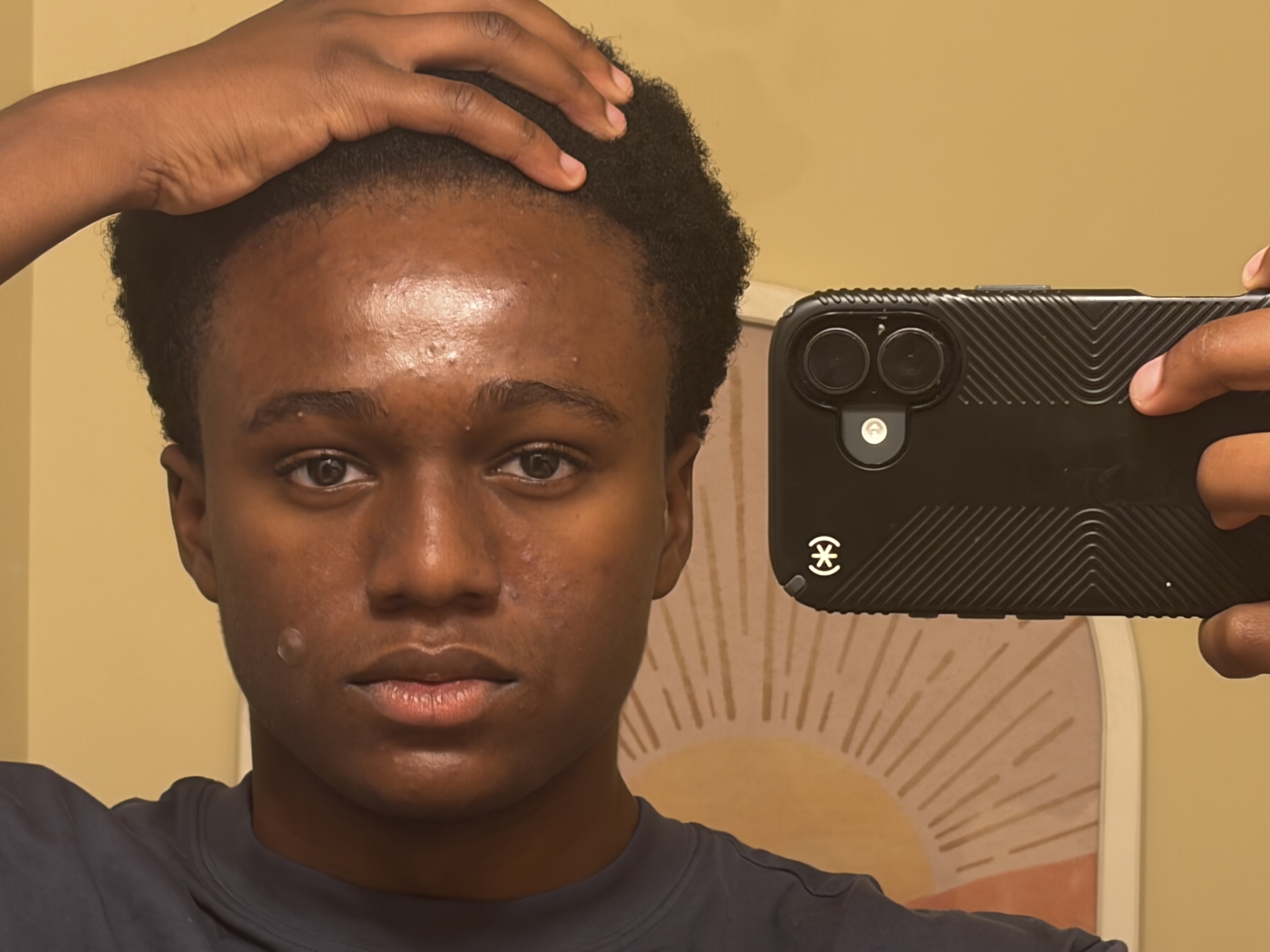
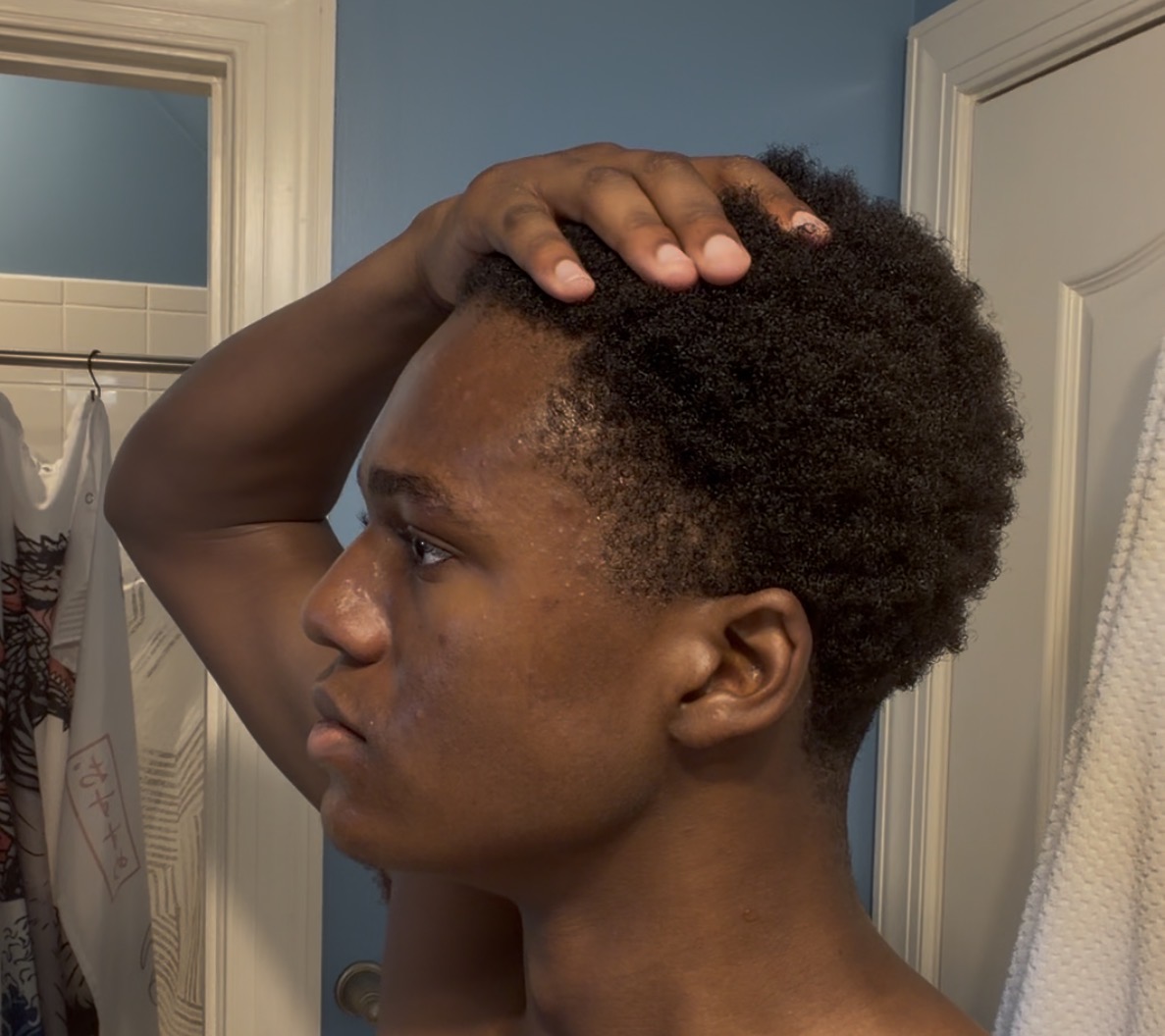
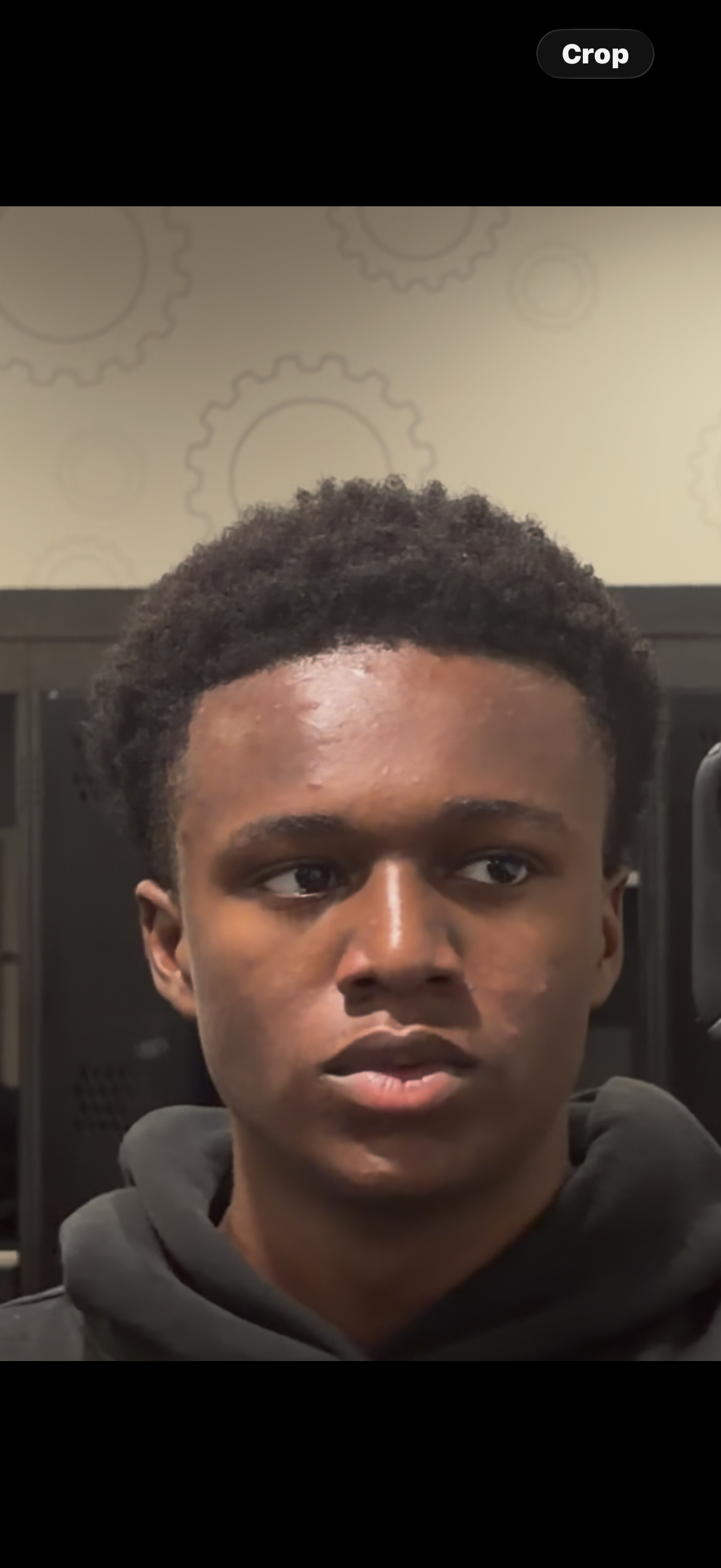
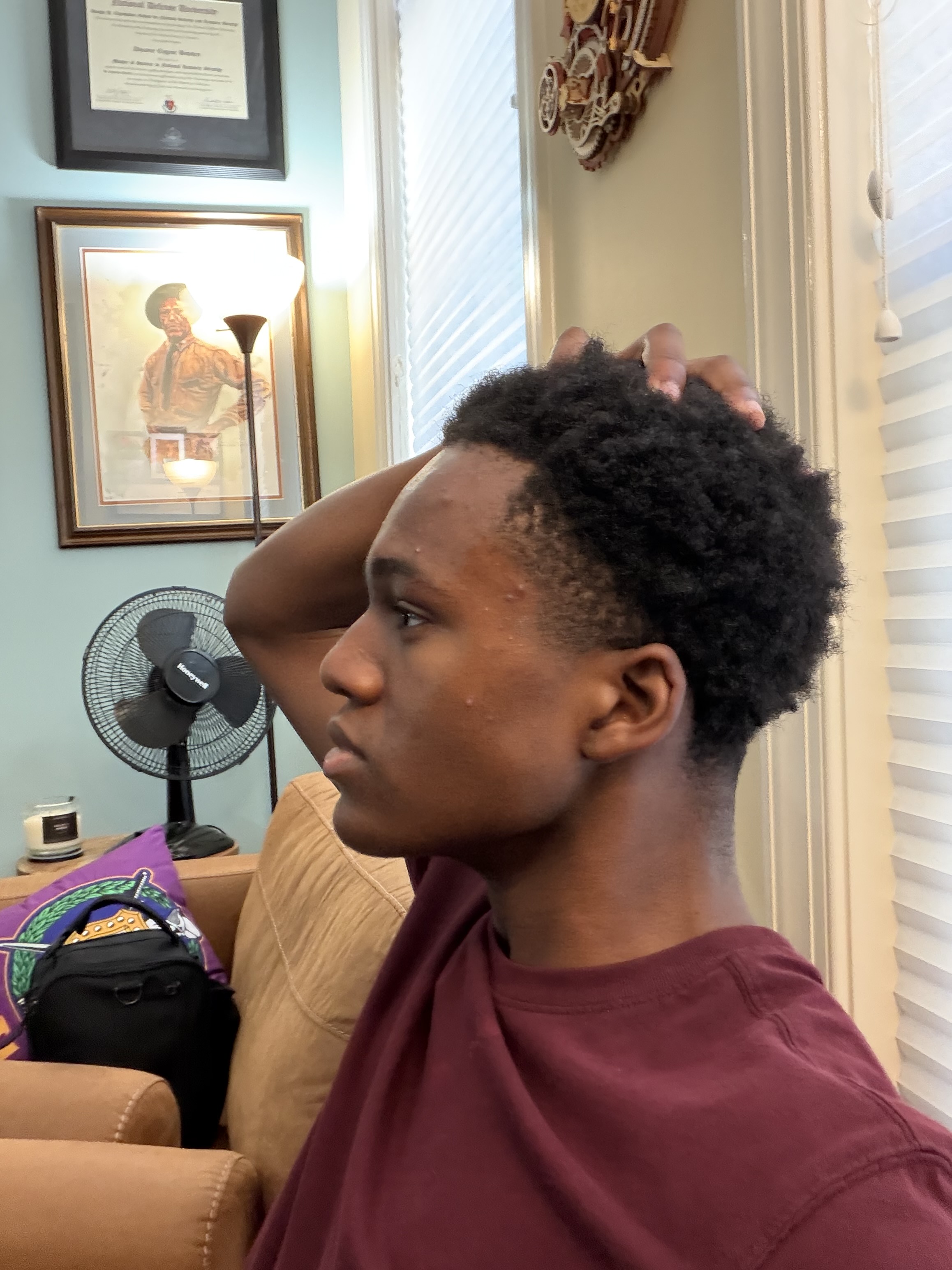
I got 66% harmony but I'm like mtn
Follow along with the video below to see how to install our site as a web app on your home screen.

Note: this_feature_currently_requires_accessing_site_using_safari



I decided to create a detailed thread on this topic because while many people post about facial harmony, most guides miss crucial information, specifically the ranges for each tier. You need to know these ranges to assign points accurately in the first place.After reading this thread, you will be fully equipped to measure harmony yourself. I have broken this down into three sections:
How to properly measure ratios.
How to assign tiers to each ratio.
How to assign points per tier and calculate the overall harmony score.
1. HOW TO MEASURE RATIOS + WHICH APP TO USE AND HOW TO USE IT
To begin, we will need software capable of precise measurements. I recommend using GIMP or photoshop. Both serve the same purpose, but I find GIMP slightly more user friendly for this specific process.
First step - mapping the face.
Download and open your GIMP app.
Now, simply paste your image using CTR + V or go to FILE > OPEN and select your picture.
Next, you will have to enable some of the view settings below:
On the upper taskbar, click view and ensure the following options are checked:
View attachment 4804649
View attachment 4804650
View attachment 4804652
Don't touch the rest of the boxes that are not shown here, just leave them as they are.
Now, you should be able to see the rulers on the top and on the sides of your workspace that appeared. Click on a ruler and drag your mouse toward the photo to place a guide.
VIDEO:
If you want to undo the guide simply press CTRL + Z to go back.
Zoom into the picture to place your guides accurately.
View attachment 4804658
View attachment 4804663
Example of a mapped face.
Note that everything you are doing will be pointless if the photo you're measuring is even slightly distorted. Only measure non distorted photos, if it's you or someone else that want to measure their harmony ensure you're taking the photo:
- with slight camera zoom
- using the back camera and facing directly onto the camera.
- The camera must stand at your nose height.
+ You can close your eyes and shake your head a little bit, then imagine you're looking at yourself in the mirror, finally open your eyes. This should help you fix your head at the proper position. Redo this until you know for sure your head is in the proper position.
I suggest setting a 15-30 second timer.
Photo quality also matters.
Okay, now once you mapped the face.
You can start by measuring distance between the guides you placed.
How to measure distance in GIMP?
To measure distrance in gimp you have to simply use measure tool by clicking SHIFT + M.
Photo:
View attachment 4804673
You are going to use the pixel value and divide or multiply it depending on the ratios you are measuring
1.1 HOW TO MEASURE EACH OF THE RATIOS
I am presenting the standars most important masurements and standart harmony formula.
Eye Separation Ratio:
View attachment 4805996
RED LINE divided by GREEN LINE
Facial thirds:
View attachment 4805576
Canthal tilt
View attachment 4805582
FWHR: (in this case: 1.892)
View attachment 4805589
Jaw angle:
Always mind the soft tissue: fat, saggy skin etc.
View attachment 4805610
Cheekbone setness:
Find the place where the cheekbones are popping the most and mark it with the line. Measure the distance from this line to the lips and divide it by the distance of a line that starts at the height of pupils and of ends on the lips as well.
View attachment 4805622
Total Facial Height to Width
Divide the height of the face by width of the face
View attachment 4805631
Bigonial width
View attachment 4805644
Chin to philtrum ratio
View attachment 4805648
Neck Width
View attachment 4805650
Mouth to nose width
View attachment 4805653
Midface ratio
View attachment 4805658
Eyebrow Setness
View attachment 4805667
Eye Spacing
View attachment 4805674
Eye aspect ratio
View attachment 4805689
Lower to upper lip ratio
View attachment 4805700
Eyebrow tilt:
View attachment 4805710
This is the maximum of attachments that I can use for the thread.
Other ratios also include:
Bitemporal Width
Temples divided by bizygomatic width
Lower Third Proportion
Create a line from below of the nose (start of the philtrum) to the middle of the lips
Now, divide it by the line going also from below the nose all the way to the end of the chin.
Ipsilateral Angle
Create an angle which centre point is placed below of the nose tip and goes to the outer corners of the eyes all the way to the outer part of the brows.
Deviation of IAA and JFA
Deviation between the ipsilateral and jaw angle
2. HOW TO ASSIGN A TIER FOR EACH OF THE RATIOS
Below, I am presenting a table guiding us on which tier we assign for each range for each of the measurements we took.
EYE SEPARATION RATIO
(Tier 1) (Male) 44.3%-47.7% / (Female) 45%-47.9%
(Tier 2) 0.1-0.5 Deviation
(Tier 3) 0.6-1 Deviation
(Tier 4) 1.1-1.5 Deviation
(Tier 5) 1.6-2.3 Deviation
(Tier 6) 2.4-2.5 Deviation
(Tier 7) >2.5 Deviation
FACIAL THIRDS
(Tier 1) (Unisex) 1-3% from 33%
(Tier 2) 4% Deviation
(Tier 3) 5% Deviation
(Tier 4) 6% Deviation
(Tier 5) 7% Deviation
(Tier 6) >8% Deviation
CANTHAL TILT
(Tier 1) (Male) 5-8.5 / (Female) 6-9.5
(Tier 2) 0.1-1.25 Deviation
(Tier 3) 1.26-2.99 Deviation
(Tier 4) (Male) 0-2 / (Female) 0-3 Degree
(Tier 5) (-1) or (-2) Degree
(Tier 6) >(-2) Degree
FACIAL WIDTH TO HEIGHT RATIO (FWHR)
(Tier 1) 1.9-2.06
(Tier 2) 0.01-0.07 Deviation
(Tier 3) 0.08-0.10 Deviation
(Tier 4) 0.11-0.12 Deviation
(Tier 5) 2.19-2.23 / 1.7-1.77 Deviation
(Tier 6) >2.23 Deviation
(Tier 7) 1.55-1.69 Deviation
JAW FRONTAL ANGLE
(Tier 1) (Male) 84-95 / (Female) 86-97
(Tier 2) 0.1-3 Deviation
(Tier 3) 4-5 Deviation
(Tier 4) 6-10 Deviation
(Tier 5) 11-15 Deviation
(Tier 6) 16-20 Deviation
(Tier 7) >20 Deviation
CHEEKBONES HIGH SETEDNESS
(Tier 1) ≥81%
(Tier 2) 80%-76%
(Tier 3) 75%-70%
(Tier 4) 69%-66%
(Tier 5) 65%-60%
(Tier 6) 59%-56%
(Tier 7) <56%
TOTAL FACIAL HEIGHT TO WIDTH
(Tier 1) (Male) 1.33-1.38 / (Female) 1.29-1.33
(Tier 2) 0.01-0.05 Deviation
(Tier 3) 0.06-0.08 Deviation
(Tier 4) 0.09-0.10 Deviation
(Tier 5) 0.11-0.12 Deviation
(Tier 6) 0.13-0.16 Deviation
(Tier 7) >0.16 Deviation
BIGONIAL WIDTH
(Tier 1) (Male) 85%-92% / (Female) 82%-89%
(Tier 2) 0.1%-2% Deviation
(Tier 3) 3%-5% Deviation
(Tier 4) 6%-7% Deviation
(Tier 5) 8%-11% Deviation
(Tier 6) 12%-16% Deviation
(Tier 7) >16% Deviation
CHIN TO PHILTRUM
(Tier 1) (Male) 2.05-2.55 / (Female) 2.0-2.5
(Tier 2) 0.01-0.10 Deviation
(Tier 3) 0.11-0.25 Deviation
(Tier 4) 0.26-0.5 Deviation
(Tier 5) 0.51-1 Deviation
(Tier 6) >1 Deviation
NECK WIDTH
(Tier 1) (Male) >90% / (Female) 75%-85%
(Tier 2) 1%-5% Deviation
(Tier 3) 6%-10% Deviation
(Tier 4) 11%-15% Deviation
(Tier 5) 16%-20% Deviation
(Tier 6) >20% Deviation
MOUTH TO NOSE WIDTH
(Tier 1) (Male) 1.38-1.53 / (Female) 1.45-1.67
(Tier 2) 0.01-0.04 Deviation
(Tier 3) 0.05-0.08 Deviation
(Tier 4) 0.09-0.12 Deviation
(Tier 5) 0.13-0.16 Deviation
(Tier 6) >0.16 Deviation
MIDFACE RATIO
(Tier 1) (Male) 0.93-1.01 / (Female) 1-1.1
(Tier 2) 0.01-0.02 Deviation
(Tier 3) 0.03-0.05 Deviation
(Tier 4) 0.06-0.08 Deviation
(Tier 5) 0.09-0.13 Deviation
(Tier 6) >0.13 Deviation
EYEBROW SETEDNESS
(Tier 1) (Male) <0.66 / (Female) 0.40-0.85
(Tier 2) (Male) 0.66-0.95 / (Female) 0.86-1.20
(Tier 3) (Male) 0.96-1.20 / (Female) 1.21-1.50
(Tier 4) (Male) 1.21-1.50 / (Female) 1.51-1.80
(Tier 5) (Male) 1.51-1.80 / (Female) 1.81-2.0
(Tier 6) (Male) >1.80 / (Female) >2.0
EYE SPACING (ONE EYE TEST)
(Tier 1) 0.95-1.00, 1.00-1.05
(Tier 2) 0.01-0.03 Deviation
(Tier 3) 0.04-0.08 Deviation
(Tier 4) 0.09-0.13 Deviation
(Tier 5) 0.14-0.20 Deviation
(Tier 6) >0.20 Deviation
EYE ASPECT RATIO
(Tier 1) (Male) 2.8-3.6 / (Female) 2.5-3.3
(Tier 2) 0.01-0.2 Deviation
(Tier 3) 0.3-0.4 Deviation
(Tier 4) 0.5-0.6 Deviation
(Tier 5) 0.7-0.8 Deviation
(Tier 6) >0.8 Deviation
LOWER LIP TO UPPER LIP RATIO
(Tier 1) 1.4-2
(Tier 2) 0.01-0.2 Deviation
(Tier 3) 0.3-0.4 Deviation
(Tier 4) 0.5-0.6 Deviation
(Tier 5) 0.7-0.8 Deviation
(Tier 6) >0.8 Deviation
DEVIATION OF IAA TO JFA
(Tier 1) 0-5 Degree
(Tier 2) 6-10 Degree
(Tier 3) 11-15 Degree
(Tier 4) 16-18 Degree
(Tier 5) 19-20 Degree
(Tier 6) >20 Degree
EYEBROW TILT
(Tier 1) (Male) 5-13 / (Female) 11-19
(Tier 2) 0.1-5 Deviation
(Tier 3) (Unisex) 6-10 Positive tilt / (Female) 6-3 Degree
(Tier 4) (Men) 0-(-3) Degree / (Female) 3-0 Degree
(Tier 5) (Men) -4-(-5) Degree / (Female) -1-(-3) Degree
(Tier 6) (Men) >-5 Degree / (Female) >-3 Degree
BITEMPORAL WIDTH
(Tier 1) (Male) 84%-95% / (Female) 79%-92%
(Tier 2) 0.1%-3% Deviation
(Tier 3) 4%-5% Deviation
(Tier 4) 6%-8% Deviation
(Tier 5) 9%-13% Deviation
(Tier 6) >13% Deviation
LOWER THIRD PROPORTION
(Tier 1) <3% to 33%
(Tier 2) 4% Deviation
(Tier 3) 5% Deviation
(Tier 4) 6% Deviation
(Tier 5) 7% Deviation
(Tier 6) >8% Deviation
IPSILATERAL ALAR ANGLE
(Tier 1) (Male) 84%-95% / (Female) 86%-97%
(Tier 2) 0.1-2 Deviation
(Tier 3) 3-5 Deviation
(Tier 4) >5 Deviation
3. HOW TO CALCULATE HARMONY SCORE FROM TIERS
1. Assign the points for each ratio from the table below
Eye Separation Ratio (ESR) 12.20 10.98 6.59 3.66 -10.98 -65.88 -97.5 Facial Thirds 19.83 17.84 9.91 5.95 -5.95 -11.90 — Canthal Tilt 12.35 11.12 6.18 3.71 -3.71 -7.40 — FWHR 18.30 16.47 9.15 5.49 -16.47 -49.41 -85 Jaw Frontal Angle 9.15 8.24 4.58 2.75 -4.58 -9.15 -15 Cheekbone Setness 20 10 5 2.5 0 -2.5 -5 Face Length (Total width/height) 20 10 5 2.5 0 -2.5 -5 Bigonial Width (Jaw Width) 20.59 18.53 10.29 6.18 -18.53 -46.32 -65 Chin to Philtrum Ratio 12.96 11.67 6.48 3.89 -1.95 -3.89 — Neck Width 19.06 17.16 9.53 5.72 -17.16 -34.31 — Mouth to Nose Ratio 12.35 11.12 6.18 3.71 -3.71 -7.40 — Midface Ratio 11.90 10.71 5.95 3.57 -3.57 -7.14 — Eyebrow Setedness 19.83 17.84 9.91 5.95 -5.95 -11.90 — Eye Spacing (One Eye Test) 12.20 10.98 6.59 3.66 -10.98 -65.88 — Eye Aspect Ratio 18.30 16.47 9.15 5.49 -5.49 -10.98 — Lower Lip to Upper Lip Ratio 5 2.5 1.25 0 -1.25 -2.5 — Deviation IAA to JFA 7.5 3.75 1.88 0 -1.88 -3.75 — Eyebrow Tilt 10 5 2.5 0 -2.5 -5 — Bitemporal Width 7.5 3.75 1.88 0 -1.88 -3.75 — Lower Third Proportion 5 2.5 1.25 0 -1.25 -2.5 —
2. Now, after we went through measuring ratios > assigning tiers > assigning points for each tier, add up all the points you scored and divide them by the maximum points (275) = Frontal Harmony Score

I decided to create a detailed thread on this topic because while many people post about facial harmony, most guides miss crucial information, specifically the ranges for each tier. You need to know these ranges to assign points accurately in the first place.After reading this thread, you will be fully equipped to measure harmony yourself. I have broken this down into three sections:
How to properly measure ratios.
How to assign tiers to each ratio.
How to assign points per tier and calculate the overall harmony score.
1. HOW TO MEASURE RATIOS + WHICH APP TO USE AND HOW TO USE IT
To begin, we will need software capable of precise measurements. I recommend using GIMP or photoshop. Both serve the same purpose, but I find GIMP slightly more user friendly for this specific process.
First step - mapping the face.
Download and open your GIMP app.
Now, simply paste your image using CTR + V or go to FILE > OPEN and select your picture.
Next, you will have to enable some of the view settings below:
On the upper taskbar, click view and ensure the following options are checked:
View attachment 4804649
View attachment 4804650
View attachment 4804652
Don't touch the rest of the boxes that are not shown here, just leave them as they are.
Now, you should be able to see the rulers on the top and on the sides of your workspace that appeared. Click on a ruler and drag your mouse toward the photo to place a guide.
VIDEO:
If you want to undo the guide simply press CTRL + Z to go back.
Zoom into the picture to place your guides accurately.
View attachment 4804658
View attachment 4804663
Example of a mapped face.
Note that everything you are doing will be pointless if the photo you're measuring is even slightly distorted. Only measure non distorted photos, if it's you or someone else that want to measure their harmony ensure you're taking the photo:
- with slight camera zoom
- using the back camera and facing directly onto the camera.
- The camera must stand at your nose height.
+ You can close your eyes and shake your head a little bit, then imagine you're looking at yourself in the mirror, finally open your eyes. This should help you fix your head at the proper position. Redo this until you know for sure your head is in the proper position.
I suggest setting a 15-30 second timer.
Photo quality also matters.
Okay, now once you mapped the face.
You can start by measuring distance between the guides you placed.
How to measure distance in GIMP?
To measure distrance in gimp you have to simply use measure tool by clicking SHIFT + M.
Photo:
View attachment 4804673
You are going to use the pixel value and divide or multiply it depending on the ratios you are measuring
1.1 HOW TO MEASURE EACH OF THE RATIOS
I am presenting the standars most important masurements and standart harmony formula.
Eye Separation Ratio:
View attachment 4805996
RED LINE divided by GREEN LINE
Facial thirds:
View attachment 4805576
Canthal tilt
View attachment 4805582
FWHR: (in this case: 1.892)
View attachment 4805589
Jaw angle:
Always mind the soft tissue: fat, saggy skin etc.
View attachment 4805610
Cheekbone setness:
Find the place where the cheekbones are popping the most and mark it with the line. Measure the distance from this line to the lips and divide it by the distance of a line that starts at the height of pupils and of ends on the lips as well.
View attachment 4805622
Total Facial Height to Width
Divide the height of the face by width of the face
View attachment 4805631
Bigonial width
View attachment 4805644
Chin to philtrum ratio
View attachment 4805648
Neck Width
View attachment 4805650
Mouth to nose width
View attachment 4805653
Midface ratio
View attachment 4805658
Eyebrow Setness
View attachment 4805667
Eye Spacing
View attachment 4805674
Eye aspect ratio
View attachment 4805689
Lower to upper lip ratio
View attachment 4805700
Eyebrow tilt:
View attachment 4805710
This is the maximum of attachments that I can use for the thread.
Other ratios also include:
Bitemporal Width
Temples divided by bizygomatic width
Lower Third Proportion
Create a line from below of the nose (start of the philtrum) to the middle of the lips
Now, divide it by the line going also from below the nose all the way to the end of the chin.
Ipsilateral Angle
Create an angle which centre point is placed below of the nose tip and goes to the outer corners of the eyes all the way to the outer part of the brows.
Deviation of IAA and JFA
Deviation between the ipsilateral and jaw angle
2. HOW TO ASSIGN A TIER FOR EACH OF THE RATIOS
Below, I am presenting a table guiding us on which tier we assign for each range for each of the measurements we took.
EYE SEPARATION RATIO
(Tier 1) (Male) 44.3%-47.7% / (Female) 45%-47.9%
(Tier 2) 0.1-0.5 Deviation
(Tier 3) 0.6-1 Deviation
(Tier 4) 1.1-1.5 Deviation
(Tier 5) 1.6-2.3 Deviation
(Tier 6) 2.4-2.5 Deviation
(Tier 7) >2.5 Deviation
FACIAL THIRDS
(Tier 1) (Unisex) 1-3% from 33%
(Tier 2) 4% Deviation
(Tier 3) 5% Deviation
(Tier 4) 6% Deviation
(Tier 5) 7% Deviation
(Tier 6) >8% Deviation
CANTHAL TILT
(Tier 1) (Male) 5-8.5 / (Female) 6-9.5
(Tier 2) 0.1-1.25 Deviation
(Tier 3) 1.26-2.99 Deviation
(Tier 4) (Male) 0-2 / (Female) 0-3 Degree
(Tier 5) (-1) or (-2) Degree
(Tier 6) >(-2) Degree
FACIAL WIDTH TO HEIGHT RATIO (FWHR)
(Tier 1) 1.9-2.06
(Tier 2) 0.01-0.07 Deviation
(Tier 3) 0.08-0.10 Deviation
(Tier 4) 0.11-0.12 Deviation
(Tier 5) 2.19-2.23 / 1.7-1.77 Deviation
(Tier 6) >2.23 Deviation
(Tier 7) 1.55-1.69 Deviation
JAW FRONTAL ANGLE
(Tier 1) (Male) 84-95 / (Female) 86-97
(Tier 2) 0.1-3 Deviation
(Tier 3) 4-5 Deviation
(Tier 4) 6-10 Deviation
(Tier 5) 11-15 Deviation
(Tier 6) 16-20 Deviation
(Tier 7) >20 Deviation
CHEEKBONES HIGH SETEDNESS
(Tier 1) ≥81%
(Tier 2) 80%-76%
(Tier 3) 75%-70%
(Tier 4) 69%-66%
(Tier 5) 65%-60%
(Tier 6) 59%-56%
(Tier 7) <56%
TOTAL FACIAL HEIGHT TO WIDTH
(Tier 1) (Male) 1.33-1.38 / (Female) 1.29-1.33
(Tier 2) 0.01-0.05 Deviation
(Tier 3) 0.06-0.08 Deviation
(Tier 4) 0.09-0.10 Deviation
(Tier 5) 0.11-0.12 Deviation
(Tier 6) 0.13-0.16 Deviation
(Tier 7) >0.16 Deviation
BIGONIAL WIDTH
(Tier 1) (Male) 85%-92% / (Female) 82%-89%
(Tier 2) 0.1%-2% Deviation
(Tier 3) 3%-5% Deviation
(Tier 4) 6%-7% Deviation
(Tier 5) 8%-11% Deviation
(Tier 6) 12%-16% Deviation
(Tier 7) >16% Deviation
CHIN TO PHILTRUM
(Tier 1) (Male) 2.05-2.55 / (Female) 2.0-2.5
(Tier 2) 0.01-0.10 Deviation
(Tier 3) 0.11-0.25 Deviation
(Tier 4) 0.26-0.5 Deviation
(Tier 5) 0.51-1 Deviation
(Tier 6) >1 Deviation
NECK WIDTH
(Tier 1) (Male) >90% / (Female) 75%-85%
(Tier 2) 1%-5% Deviation
(Tier 3) 6%-10% Deviation
(Tier 4) 11%-15% Deviation
(Tier 5) 16%-20% Deviation
(Tier 6) >20% Deviation
MOUTH TO NOSE WIDTH
(Tier 1) (Male) 1.38-1.53 / (Female) 1.45-1.67
(Tier 2) 0.01-0.04 Deviation
(Tier 3) 0.05-0.08 Deviation
(Tier 4) 0.09-0.12 Deviation
(Tier 5) 0.13-0.16 Deviation
(Tier 6) >0.16 Deviation
MIDFACE RATIO
(Tier 1) (Male) 0.93-1.01 / (Female) 1-1.1
(Tier 2) 0.01-0.02 Deviation
(Tier 3) 0.03-0.05 Deviation
(Tier 4) 0.06-0.08 Deviation
(Tier 5) 0.09-0.13 Deviation
(Tier 6) >0.13 Deviation
EYEBROW SETEDNESS
(Tier 1) (Male) <0.66 / (Female) 0.40-0.85
(Tier 2) (Male) 0.66-0.95 / (Female) 0.86-1.20
(Tier 3) (Male) 0.96-1.20 / (Female) 1.21-1.50
(Tier 4) (Male) 1.21-1.50 / (Female) 1.51-1.80
(Tier 5) (Male) 1.51-1.80 / (Female) 1.81-2.0
(Tier 6) (Male) >1.80 / (Female) >2.0
EYE SPACING (ONE EYE TEST)
(Tier 1) 0.95-1.00, 1.00-1.05
(Tier 2) 0.01-0.03 Deviation
(Tier 3) 0.04-0.08 Deviation
(Tier 4) 0.09-0.13 Deviation
(Tier 5) 0.14-0.20 Deviation
(Tier 6) >0.20 Deviation
EYE ASPECT RATIO
(Tier 1) (Male) 2.8-3.6 / (Female) 2.5-3.3
(Tier 2) 0.01-0.2 Deviation
(Tier 3) 0.3-0.4 Deviation
(Tier 4) 0.5-0.6 Deviation
(Tier 5) 0.7-0.8 Deviation
(Tier 6) >0.8 Deviation
LOWER LIP TO UPPER LIP RATIO
(Tier 1) 1.4-2
(Tier 2) 0.01-0.2 Deviation
(Tier 3) 0.3-0.4 Deviation
(Tier 4) 0.5-0.6 Deviation
(Tier 5) 0.7-0.8 Deviation
(Tier 6) >0.8 Deviation
DEVIATION OF IAA TO JFA
(Tier 1) 0-5 Degree
(Tier 2) 6-10 Degree
(Tier 3) 11-15 Degree
(Tier 4) 16-18 Degree
(Tier 5) 19-20 Degree
(Tier 6) >20 Degree
EYEBROW TILT
(Tier 1) (Male) 5-13 / (Female) 11-19
(Tier 2) 0.1-5 Deviation
(Tier 3) (Unisex) 6-10 Positive tilt / (Female) 6-3 Degree
(Tier 4) (Men) 0-(-3) Degree / (Female) 3-0 Degree
(Tier 5) (Men) -4-(-5) Degree / (Female) -1-(-3) Degree
(Tier 6) (Men) >-5 Degree / (Female) >-3 Degree
BITEMPORAL WIDTH
(Tier 1) (Male) 84%-95% / (Female) 79%-92%
(Tier 2) 0.1%-3% Deviation
(Tier 3) 4%-5% Deviation
(Tier 4) 6%-8% Deviation
(Tier 5) 9%-13% Deviation
(Tier 6) >13% Deviation
LOWER THIRD PROPORTION
(Tier 1) <3% to 33%
(Tier 2) 4% Deviation
(Tier 3) 5% Deviation
(Tier 4) 6% Deviation
(Tier 5) 7% Deviation
(Tier 6) >8% Deviation
IPSILATERAL ALAR ANGLE
(Tier 1) (Male) 84%-95% / (Female) 86%-97%
(Tier 2) 0.1-2 Deviation
(Tier 3) 3-5 Deviation
(Tier 4) >5 Deviation
3. HOW TO CALCULATE HARMONY SCORE FROM TIERS
1. Assign the points for each ratio from the table below
Eye Separation Ratio (ESR) 12.20 10.98 6.59 3.66 -10.98 -65.88 -97.5 Facial Thirds 19.83 17.84 9.91 5.95 -5.95 -11.90 — Canthal Tilt 12.35 11.12 6.18 3.71 -3.71 -7.40 — FWHR 18.30 16.47 9.15 5.49 -16.47 -49.41 -85 Jaw Frontal Angle 9.15 8.24 4.58 2.75 -4.58 -9.15 -15 Cheekbone Setness 20 10 5 2.5 0 -2.5 -5 Face Length (Total width/height) 20 10 5 2.5 0 -2.5 -5 Bigonial Width (Jaw Width) 20.59 18.53 10.29 6.18 -18.53 -46.32 -65 Chin to Philtrum Ratio 12.96 11.67 6.48 3.89 -1.95 -3.89 — Neck Width 19.06 17.16 9.53 5.72 -17.16 -34.31 — Mouth to Nose Ratio 12.35 11.12 6.18 3.71 -3.71 -7.40 — Midface Ratio 11.90 10.71 5.95 3.57 -3.57 -7.14 — Eyebrow Setedness 19.83 17.84 9.91 5.95 -5.95 -11.90 — Eye Spacing (One Eye Test) 12.20 10.98 6.59 3.66 -10.98 -65.88 — Eye Aspect Ratio 18.30 16.47 9.15 5.49 -5.49 -10.98 — Lower Lip to Upper Lip Ratio 5 2.5 1.25 0 -1.25 -2.5 — Deviation IAA to JFA 7.5 3.75 1.88 0 -1.88 -3.75 — Eyebrow Tilt 10 5 2.5 0 -2.5 -5 — Bitemporal Width 7.5 3.75 1.88 0 -1.88 -3.75 — Lower Third Proportion 5 2.5 1.25 0 -1.25 -2.5 —
2. Now, after we went through measuring ratios > assigning tiers > assigning points for each tier, add up all the points you scored and divide them by the maximum points (275) = Frontal Harmony Score


my point is im obviously not 39% harmony but keep coping w ur guide
Try hardmax net

I decided to create a detailed thread on this topic because while many people post about facial harmony, most guides miss crucial information, specifically the ranges for each tier. You need to know these ranges to assign points accurately in the first place.After reading this thread, you will be fully equipped to measure harmony yourself. I have broken this down into three sections:
How to properly measure ratios.
How to assign tiers to each ratio.
How to assign points per tier and calculate the overall harmony score.
1. HOW TO MEASURE RATIOS + WHICH APP TO USE AND HOW TO USE IT
To begin, we will need software capable of precise measurements. I recommend using GIMP or photoshop. Both serve the same purpose, but I find GIMP slightly more user friendly for this specific process.
First step - mapping the face.
Download and open your GIMP app.
Now, simply paste your image using CTR + V or go to FILE > OPEN and select your picture.
Next, you will have to enable some of the view settings below:
On the upper taskbar, click view and ensure the following options are checked:
View attachment 4804649
View attachment 4804650
View attachment 4804652
Don't touch the rest of the boxes that are not shown here, just leave them as they are.
Now, you should be able to see the rulers on the top and on the sides of your workspace that appeared. Click on a ruler and drag your mouse toward the photo to place a guide.
VIDEO:
If you want to undo the guide simply press CTRL + Z to go back.
Zoom into the picture to place your guides accurately.
View attachment 4804658
View attachment 4804663
Example of a mapped face.
Note that everything you are doing will be pointless if the photo you're measuring is even slightly distorted. Only measure non distorted photos, if it's you or someone else that want to measure their harmony ensure you're taking the photo:
- with slight camera zoom
- using the back camera and facing directly onto the camera.
- The camera must stand at your nose height.
+ You can close your eyes and shake your head a little bit, then imagine you're looking at yourself in the mirror, finally open your eyes. This should help you fix your head at the proper position. Redo this until you know for sure your head is in the proper position.
I suggest setting a 15-30 second timer.
Photo quality also matters.
Okay, now once you mapped the face.
You can start by measuring distance between the guides you placed.
How to measure distance in GIMP?
To measure distrance in gimp you have to simply use measure tool by clicking SHIFT + M.
Photo:
View attachment 4804673
You are going to use the pixel value and divide or multiply it depending on the ratios you are measuring
1.1 HOW TO MEASURE EACH OF THE RATIOS
I am presenting the standars most important masurements and standart harmony formula.
Eye Separation Ratio:
View attachment 4805996
RED LINE divided by GREEN LINE
Facial thirds:
View attachment 4805576
Canthal tilt
View attachment 4805582
FWHR: (in this case: 1.892)
View attachment 4805589
Jaw angle:
Always mind the soft tissue: fat, saggy skin etc.
View attachment 4805610
Cheekbone setness:
Find the place where the cheekbones are popping the most and mark it with the line. Measure the distance from this line to the lips and divide it by the distance of a line that starts at the height of pupils and of ends on the lips as well.
View attachment 4805622
Total Facial Height to Width
Divide the height of the face by width of the face
View attachment 4805631
Bigonial width
View attachment 4805644
Chin to philtrum ratio
View attachment 4805648
Neck Width
View attachment 4805650
Mouth to nose width
View attachment 4805653
Midface ratio
View attachment 4805658
Eyebrow Setness
View attachment 4805667
Eye Spacing
View attachment 4805674
Eye aspect ratio
View attachment 4805689
Lower to upper lip ratio
View attachment 4805700
Eyebrow tilt:
View attachment 4805710
This is the maximum of attachments that I can use for the thread.
Other ratios also include:
Bitemporal Width
Temples divided by bizygomatic width
Lower Third Proportion
Create a line from below of the nose (start of the philtrum) to the middle of the lips
Now, divide it by the line going also from below the nose all the way to the end of the chin.
Ipsilateral Angle
Create an angle which centre point is placed below of the nose tip and goes to the outer corners of the eyes all the way to the outer part of the brows.
Deviation of IAA and JFA
Deviation between the ipsilateral and jaw angle
2. HOW TO ASSIGN A TIER FOR EACH OF THE RATIOS
Below, I am presenting a table guiding us on which tier we assign for each range for each of the measurements we took.
EYE SEPARATION RATIO
(Tier 1) (Male) 44.3%-47.7% / (Female) 45%-47.9%
(Tier 2) 0.1-0.5 Deviation
(Tier 3) 0.6-1 Deviation
(Tier 4) 1.1-1.5 Deviation
(Tier 5) 1.6-2.3 Deviation
(Tier 6) 2.4-2.5 Deviation
(Tier 7) >2.5 Deviation
FACIAL THIRDS
(Tier 1) (Unisex) 1-3% from 33%
(Tier 2) 4% Deviation
(Tier 3) 5% Deviation
(Tier 4) 6% Deviation
(Tier 5) 7% Deviation
(Tier 6) >8% Deviation
CANTHAL TILT
(Tier 1) (Male) 5-8.5 / (Female) 6-9.5
(Tier 2) 0.1-1.25 Deviation
(Tier 3) 1.26-2.99 Deviation
(Tier 4) (Male) 0-2 / (Female) 0-3 Degree
(Tier 5) (-1) or (-2) Degree
(Tier 6) >(-2) Degree
FACIAL WIDTH TO HEIGHT RATIO (FWHR)
(Tier 1) 1.9-2.06
(Tier 2) 0.01-0.07 Deviation
(Tier 3) 0.08-0.10 Deviation
(Tier 4) 0.11-0.12 Deviation
(Tier 5) 2.19-2.23 / 1.7-1.77 Deviation
(Tier 6) >2.23 Deviation
(Tier 7) 1.55-1.69 Deviation
JAW FRONTAL ANGLE
(Tier 1) (Male) 84-95 / (Female) 86-97
(Tier 2) 0.1-3 Deviation
(Tier 3) 4-5 Deviation
(Tier 4) 6-10 Deviation
(Tier 5) 11-15 Deviation
(Tier 6) 16-20 Deviation
(Tier 7) >20 Deviation
CHEEKBONES HIGH SETEDNESS
(Tier 1) ≥81%
(Tier 2) 80%-76%
(Tier 3) 75%-70%
(Tier 4) 69%-66%
(Tier 5) 65%-60%
(Tier 6) 59%-56%
(Tier 7) <56%
TOTAL FACIAL HEIGHT TO WIDTH
(Tier 1) (Male) 1.33-1.38 / (Female) 1.29-1.33
(Tier 2) 0.01-0.05 Deviation
(Tier 3) 0.06-0.08 Deviation
(Tier 4) 0.09-0.10 Deviation
(Tier 5) 0.11-0.12 Deviation
(Tier 6) 0.13-0.16 Deviation
(Tier 7) >0.16 Deviation
BIGONIAL WIDTH
(Tier 1) (Male) 85%-92% / (Female) 82%-89%
(Tier 2) 0.1%-2% Deviation
(Tier 3) 3%-5% Deviation
(Tier 4) 6%-7% Deviation
(Tier 5) 8%-11% Deviation
(Tier 6) 12%-16% Deviation
(Tier 7) >16% Deviation
CHIN TO PHILTRUM
(Tier 1) (Male) 2.05-2.55 / (Female) 2.0-2.5
(Tier 2) 0.01-0.10 Deviation
(Tier 3) 0.11-0.25 Deviation
(Tier 4) 0.26-0.5 Deviation
(Tier 5) 0.51-1 Deviation
(Tier 6) >1 Deviation
NECK WIDTH
(Tier 1) (Male) >90% / (Female) 75%-85%
(Tier 2) 1%-5% Deviation
(Tier 3) 6%-10% Deviation
(Tier 4) 11%-15% Deviation
(Tier 5) 16%-20% Deviation
(Tier 6) >20% Deviation
MOUTH TO NOSE WIDTH
(Tier 1) (Male) 1.38-1.53 / (Female) 1.45-1.67
(Tier 2) 0.01-0.04 Deviation
(Tier 3) 0.05-0.08 Deviation
(Tier 4) 0.09-0.12 Deviation
(Tier 5) 0.13-0.16 Deviation
(Tier 6) >0.16 Deviation
MIDFACE RATIO
(Tier 1) (Male) 0.93-1.01 / (Female) 1-1.1
(Tier 2) 0.01-0.02 Deviation
(Tier 3) 0.03-0.05 Deviation
(Tier 4) 0.06-0.08 Deviation
(Tier 5) 0.09-0.13 Deviation
(Tier 6) >0.13 Deviation
EYEBROW SETEDNESS
(Tier 1) (Male) <0.66 / (Female) 0.40-0.85
(Tier 2) (Male) 0.66-0.95 / (Female) 0.86-1.20
(Tier 3) (Male) 0.96-1.20 / (Female) 1.21-1.50
(Tier 4) (Male) 1.21-1.50 / (Female) 1.51-1.80
(Tier 5) (Male) 1.51-1.80 / (Female) 1.81-2.0
(Tier 6) (Male) >1.80 / (Female) >2.0
EYE SPACING (ONE EYE TEST)
(Tier 1) 0.95-1.00, 1.00-1.05
(Tier 2) 0.01-0.03 Deviation
(Tier 3) 0.04-0.08 Deviation
(Tier 4) 0.09-0.13 Deviation
(Tier 5) 0.14-0.20 Deviation
(Tier 6) >0.20 Deviation
EYE ASPECT RATIO
(Tier 1) (Male) 2.8-3.6 / (Female) 2.5-3.3
(Tier 2) 0.01-0.2 Deviation
(Tier 3) 0.3-0.4 Deviation
(Tier 4) 0.5-0.6 Deviation
(Tier 5) 0.7-0.8 Deviation
(Tier 6) >0.8 Deviation
LOWER LIP TO UPPER LIP RATIO
(Tier 1) 1.4-2
(Tier 2) 0.01-0.2 Deviation
(Tier 3) 0.3-0.4 Deviation
(Tier 4) 0.5-0.6 Deviation
(Tier 5) 0.7-0.8 Deviation
(Tier 6) >0.8 Deviation
DEVIATION OF IAA TO JFA
(Tier 1) 0-5 Degree
(Tier 2) 6-10 Degree
(Tier 3) 11-15 Degree
(Tier 4) 16-18 Degree
(Tier 5) 19-20 Degree
(Tier 6) >20 Degree
EYEBROW TILT
(Tier 1) (Male) 5-13 / (Female) 11-19
(Tier 2) 0.1-5 Deviation
(Tier 3) (Unisex) 6-10 Positive tilt / (Female) 6-3 Degree
(Tier 4) (Men) 0-(-3) Degree / (Female) 3-0 Degree
(Tier 5) (Men) -4-(-5) Degree / (Female) -1-(-3) Degree
(Tier 6) (Men) >-5 Degree / (Female) >-3 Degree
BITEMPORAL WIDTH
(Tier 1) (Male) 84%-95% / (Female) 79%-92%
(Tier 2) 0.1%-3% Deviation
(Tier 3) 4%-5% Deviation
(Tier 4) 6%-8% Deviation
(Tier 5) 9%-13% Deviation
(Tier 6) >13% Deviation
LOWER THIRD PROPORTION
(Tier 1) <3% to 33%
(Tier 2) 4% Deviation
(Tier 3) 5% Deviation
(Tier 4) 6% Deviation
(Tier 5) 7% Deviation
(Tier 6) >8% Deviation
IPSILATERAL ALAR ANGLE
(Tier 1) (Male) 84%-95% / (Female) 86%-97%
(Tier 2) 0.1-2 Deviation
(Tier 3) 3-5 Deviation
(Tier 4) >5 Deviation
3. HOW TO CALCULATE HARMONY SCORE FROM TIERS
1. Assign the points for each ratio from the table below
Eye Separation Ratio (ESR) 12.20 10.98 6.59 3.66 -10.98 -65.88 -97.5 Facial Thirds 19.83 17.84 9.91 5.95 -5.95 -11.90 — Canthal Tilt 12.35 11.12 6.18 3.71 -3.71 -7.40 — FWHR 18.30 16.47 9.15 5.49 -16.47 -49.41 -85 Jaw Frontal Angle 9.15 8.24 4.58 2.75 -4.58 -9.15 -15 Cheekbone Setness 20 10 5 2.5 0 -2.5 -5 Face Length (Total width/height) 20 10 5 2.5 0 -2.5 -5 Bigonial Width (Jaw Width) 20.59 18.53 10.29 6.18 -18.53 -46.32 -65 Chin to Philtrum Ratio 12.96 11.67 6.48 3.89 -1.95 -3.89 — Neck Width 19.06 17.16 9.53 5.72 -17.16 -34.31 — Mouth to Nose Ratio 12.35 11.12 6.18 3.71 -3.71 -7.40 — Midface Ratio 11.90 10.71 5.95 3.57 -3.57 -7.14 — Eyebrow Setedness 19.83 17.84 9.91 5.95 -5.95 -11.90 — Eye Spacing (One Eye Test) 12.20 10.98 6.59 3.66 -10.98 -65.88 — Eye Aspect Ratio 18.30 16.47 9.15 5.49 -5.49 -10.98 — Lower Lip to Upper Lip Ratio 5 2.5 1.25 0 -1.25 -2.5 — Deviation IAA to JFA 7.5 3.75 1.88 0 -1.88 -3.75 — Eyebrow Tilt 10 5 2.5 0 -2.5 -5 — Bitemporal Width 7.5 3.75 1.88 0 -1.88 -3.75 — Lower Third Proportion 5 2.5 1.25 0 -1.25 -2.5 —
2. Now, after we went through measuring ratios > assigning tiers > assigning points for each tier, add up all the points you scored and divide them by the maximum points (275) = Frontal Harmony Score
amazing guideh
horrid guide gave me 39% harmony


I decided to create a detailed thread on this topic because while many people post about facial harmony, most guides miss crucial information, specifically the ranges for each tier. You need to know these ranges to assign points accurately in the first place.After reading this thread, you will be fully equipped to measure harmony yourself. I have broken this down into three sections:
How to properly measure ratios.
How to assign tiers to each ratio.
How to assign points per tier and calculate the overall harmony score.
1. HOW TO MEASURE RATIOS + WHICH APP TO USE AND HOW TO USE IT
To begin, we will need software capable of precise measurements. I recommend using GIMP or photoshop. Both serve the same purpose, but I find GIMP slightly more user friendly for this specific process.
First step - mapping the face.
Download and open your GIMP app.
Now, simply paste your image using CTR + V or go to FILE > OPEN and select your picture.
Next, you will have to enable some of the view settings below:
On the upper taskbar, click view and ensure the following options are checked:
View attachment 4804649
View attachment 4804650
View attachment 4804652
Don't touch the rest of the boxes that are not shown here, just leave them as they are.
Now, you should be able to see the rulers on the top and on the sides of your workspace that appeared. Click on a ruler and drag your mouse toward the photo to place a guide.
VIDEO:
If you want to undo the guide simply press CTRL + Z to go back.
Zoom into the picture to place your guides accurately.
View attachment 4804658
View attachment 4804663
Example of a mapped face.
Note that everything you are doing will be pointless if the photo you're measuring is even slightly distorted. Only measure non distorted photos, if it's you or someone else that want to measure their harmony ensure you're taking the photo:
- with slight camera zoom
- using the back camera and facing directly onto the camera.
- The camera must stand at your nose height.
+ You can close your eyes and shake your head a little bit, then imagine you're looking at yourself in the mirror, finally open your eyes. This should help you fix your head at the proper position. Redo this until you know for sure your head is in the proper position.
I suggest setting a 15-30 second timer.
Photo quality also matters.
Okay, now once you mapped the face.
You can start by measuring distance between the guides you placed.
How to measure distance in GIMP?
To measure distrance in gimp you have to simply use measure tool by clicking SHIFT + M.
Photo:
View attachment 4804673
You are going to use the pixel value and divide or multiply it depending on the ratios you are measuring
1.1 HOW TO MEASURE EACH OF THE RATIOS
I am presenting the standars most important masurements and standart harmony formula.
Eye Separation Ratio:
View attachment 4805996
RED LINE divided by GREEN LINE
Facial thirds:
View attachment 4805576
Canthal tilt
View attachment 4805582
FWHR: (in this case: 1.892)
View attachment 4805589
Jaw angle:
Always mind the soft tissue: fat, saggy skin etc.
View attachment 4805610
Cheekbone setness:
Find the place where the cheekbones are popping the most and mark it with the line. Measure the distance from this line to the lips and divide it by the distance of a line that starts at the height of pupils and of ends on the lips as well.
View attachment 4805622
Total Facial Height to Width
Divide the height of the face by width of the face
View attachment 4805631
Bigonial width
View attachment 4805644
Chin to philtrum ratio
View attachment 4805648
Neck Width
View attachment 4805650
Mouth to nose width
View attachment 4805653
Midface ratio
View attachment 4805658
Eyebrow Setness
View attachment 4805667
Eye Spacing
View attachment 4805674
Eye aspect ratio
View attachment 4805689
Lower to upper lip ratio
View attachment 4805700
Eyebrow tilt:
View attachment 4805710
This is the maximum of attachments that I can use for the thread.
Other ratios also include:
Bitemporal Width
Temples divided by bizygomatic width
Lower Third Proportion
Create a line from below of the nose (start of the philtrum) to the middle of the lips
Now, divide it by the line going also from below the nose all the way to the end of the chin.
Ipsilateral Angle
Create an angle which centre point is placed below of the nose tip and goes to the outer corners of the eyes all the way to the outer part of the brows.
Deviation of IAA and JFA
Deviation between the ipsilateral and jaw angle
2. HOW TO ASSIGN A TIER FOR EACH OF THE RATIOS
Below, I am presenting a table guiding us on which tier we assign for each range for each of the measurements we took.
EYE SEPARATION RATIO
(Tier 1) (Male) 44.3%-47.7% / (Female) 45%-47.9%
(Tier 2) 0.1-0.5 Deviation
(Tier 3) 0.6-1 Deviation
(Tier 4) 1.1-1.5 Deviation
(Tier 5) 1.6-2.3 Deviation
(Tier 6) 2.4-2.5 Deviation
(Tier 7) >2.5 Deviation
FACIAL THIRDS
(Tier 1) (Unisex) 1-3% from 33%
(Tier 2) 4% Deviation
(Tier 3) 5% Deviation
(Tier 4) 6% Deviation
(Tier 5) 7% Deviation
(Tier 6) >8% Deviation
CANTHAL TILT
(Tier 1) (Male) 5-8.5 / (Female) 6-9.5
(Tier 2) 0.1-1.25 Deviation
(Tier 3) 1.26-2.99 Deviation
(Tier 4) (Male) 0-2 / (Female) 0-3 Degree
(Tier 5) (-1) or (-2) Degree
(Tier 6) >(-2) Degree
FACIAL WIDTH TO HEIGHT RATIO (FWHR)
(Tier 1) 1.9-2.06
(Tier 2) 0.01-0.07 Deviation
(Tier 3) 0.08-0.10 Deviation
(Tier 4) 0.11-0.12 Deviation
(Tier 5) 2.19-2.23 / 1.7-1.77 Deviation
(Tier 6) >2.23 Deviation
(Tier 7) 1.55-1.69 Deviation
JAW FRONTAL ANGLE
(Tier 1) (Male) 84-95 / (Female) 86-97
(Tier 2) 0.1-3 Deviation
(Tier 3) 4-5 Deviation
(Tier 4) 6-10 Deviation
(Tier 5) 11-15 Deviation
(Tier 6) 16-20 Deviation
(Tier 7) >20 Deviation
CHEEKBONES HIGH SETEDNESS
(Tier 1) ≥81%
(Tier 2) 80%-76%
(Tier 3) 75%-70%
(Tier 4) 69%-66%
(Tier 5) 65%-60%
(Tier 6) 59%-56%
(Tier 7) <56%
TOTAL FACIAL HEIGHT TO WIDTH
(Tier 1) (Male) 1.33-1.38 / (Female) 1.29-1.33
(Tier 2) 0.01-0.05 Deviation
(Tier 3) 0.06-0.08 Deviation
(Tier 4) 0.09-0.10 Deviation
(Tier 5) 0.11-0.12 Deviation
(Tier 6) 0.13-0.16 Deviation
(Tier 7) >0.16 Deviation
BIGONIAL WIDTH
(Tier 1) (Male) 85%-92% / (Female) 82%-89%
(Tier 2) 0.1%-2% Deviation
(Tier 3) 3%-5% Deviation
(Tier 4) 6%-7% Deviation
(Tier 5) 8%-11% Deviation
(Tier 6) 12%-16% Deviation
(Tier 7) >16% Deviation
CHIN TO PHILTRUM
(Tier 1) (Male) 2.05-2.55 / (Female) 2.0-2.5
(Tier 2) 0.01-0.10 Deviation
(Tier 3) 0.11-0.25 Deviation
(Tier 4) 0.26-0.5 Deviation
(Tier 5) 0.51-1 Deviation
(Tier 6) >1 Deviation
NECK WIDTH
(Tier 1) (Male) >90% / (Female) 75%-85%
(Tier 2) 1%-5% Deviation
(Tier 3) 6%-10% Deviation
(Tier 4) 11%-15% Deviation
(Tier 5) 16%-20% Deviation
(Tier 6) >20% Deviation
MOUTH TO NOSE WIDTH
(Tier 1) (Male) 1.38-1.53 / (Female) 1.45-1.67
(Tier 2) 0.01-0.04 Deviation
(Tier 3) 0.05-0.08 Deviation
(Tier 4) 0.09-0.12 Deviation
(Tier 5) 0.13-0.16 Deviation
(Tier 6) >0.16 Deviation
MIDFACE RATIO
(Tier 1) (Male) 0.93-1.01 / (Female) 1-1.1
(Tier 2) 0.01-0.02 Deviation
(Tier 3) 0.03-0.05 Deviation
(Tier 4) 0.06-0.08 Deviation
(Tier 5) 0.09-0.13 Deviation
(Tier 6) >0.13 Deviation
EYEBROW SETEDNESS
(Tier 1) (Male) <0.66 / (Female) 0.40-0.85
(Tier 2) (Male) 0.66-0.95 / (Female) 0.86-1.20
(Tier 3) (Male) 0.96-1.20 / (Female) 1.21-1.50
(Tier 4) (Male) 1.21-1.50 / (Female) 1.51-1.80
(Tier 5) (Male) 1.51-1.80 / (Female) 1.81-2.0
(Tier 6) (Male) >1.80 / (Female) >2.0
EYE SPACING (ONE EYE TEST)
(Tier 1) 0.95-1.00, 1.00-1.05
(Tier 2) 0.01-0.03 Deviation
(Tier 3) 0.04-0.08 Deviation
(Tier 4) 0.09-0.13 Deviation
(Tier 5) 0.14-0.20 Deviation
(Tier 6) >0.20 Deviation
EYE ASPECT RATIO
(Tier 1) (Male) 2.8-3.6 / (Female) 2.5-3.3
(Tier 2) 0.01-0.2 Deviation
(Tier 3) 0.3-0.4 Deviation
(Tier 4) 0.5-0.6 Deviation
(Tier 5) 0.7-0.8 Deviation
(Tier 6) >0.8 Deviation
LOWER LIP TO UPPER LIP RATIO
(Tier 1) 1.4-2
(Tier 2) 0.01-0.2 Deviation
(Tier 3) 0.3-0.4 Deviation
(Tier 4) 0.5-0.6 Deviation
(Tier 5) 0.7-0.8 Deviation
(Tier 6) >0.8 Deviation
DEVIATION OF IAA TO JFA
(Tier 1) 0-5 Degree
(Tier 2) 6-10 Degree
(Tier 3) 11-15 Degree
(Tier 4) 16-18 Degree
(Tier 5) 19-20 Degree
(Tier 6) >20 Degree
EYEBROW TILT
(Tier 1) (Male) 5-13 / (Female) 11-19
(Tier 2) 0.1-5 Deviation
(Tier 3) (Unisex) 6-10 Positive tilt / (Female) 6-3 Degree
(Tier 4) (Men) 0-(-3) Degree / (Female) 3-0 Degree
(Tier 5) (Men) -4-(-5) Degree / (Female) -1-(-3) Degree
(Tier 6) (Men) >-5 Degree / (Female) >-3 Degree
BITEMPORAL WIDTH
(Tier 1) (Male) 84%-95% / (Female) 79%-92%
(Tier 2) 0.1%-3% Deviation
(Tier 3) 4%-5% Deviation
(Tier 4) 6%-8% Deviation
(Tier 5) 9%-13% Deviation
(Tier 6) >13% Deviation
LOWER THIRD PROPORTION
(Tier 1) <3% to 33%
(Tier 2) 4% Deviation
(Tier 3) 5% Deviation
(Tier 4) 6% Deviation
(Tier 5) 7% Deviation
(Tier 6) >8% Deviation
IPSILATERAL ALAR ANGLE
(Tier 1) (Male) 84%-95% / (Female) 86%-97%
(Tier 2) 0.1-2 Deviation
(Tier 3) 3-5 Deviation
(Tier 4) >5 Deviation
3. HOW TO CALCULATE HARMONY SCORE FROM TIERS
1. Assign the points for each ratio from the table below
Eye Separation Ratio (ESR) 12.20 10.98 6.59 3.66 -10.98 -65.88 -97.5 Facial Thirds 19.83 17.84 9.91 5.95 -5.95 -11.90 — Canthal Tilt 12.35 11.12 6.18 3.71 -3.71 -7.40 — FWHR 18.30 16.47 9.15 5.49 -16.47 -49.41 -85 Jaw Frontal Angle 9.15 8.24 4.58 2.75 -4.58 -9.15 -15 Cheekbone Setness 20 10 5 2.5 0 -2.5 -5 Face Length (Total width/height) 20 10 5 2.5 0 -2.5 -5 Bigonial Width (Jaw Width) 20.59 18.53 10.29 6.18 -18.53 -46.32 -65 Chin to Philtrum Ratio 12.96 11.67 6.48 3.89 -1.95 -3.89 — Neck Width 19.06 17.16 9.53 5.72 -17.16 -34.31 — Mouth to Nose Ratio 12.35 11.12 6.18 3.71 -3.71 -7.40 — Midface Ratio 11.90 10.71 5.95 3.57 -3.57 -7.14 — Eyebrow Setedness 19.83 17.84 9.91 5.95 -5.95 -11.90 — Eye Spacing (One Eye Test) 12.20 10.98 6.59 3.66 -10.98 -65.88 — Eye Aspect Ratio 18.30 16.47 9.15 5.49 -5.49 -10.98 — Lower Lip to Upper Lip Ratio 5 2.5 1.25 0 -1.25 -2.5 — Deviation IAA to JFA 7.5 3.75 1.88 0 -1.88 -3.75 — Eyebrow Tilt 10 5 2.5 0 -2.5 -5 — Bitemporal Width 7.5 3.75 1.88 0 -1.88 -3.75 — Lower Third Proportion 5 2.5 1.25 0 -1.25 -2.5 —
2. Now, after we went through measuring ratios > assigning tiers > assigning points for each tier, add up all the points you scored and divide them by the maximum points (275) = Frontal Harmony Score

What is the chart for harmony?Average is below 50%
You'd be surprised how subhuman the avg person is

I decided to create a detailed thread on this topic because while many people post about facial harmony, most guides miss crucial information, specifically the ranges for each tier. You need to know these ranges to assign points accurately in the first place.After reading this thread, you will be fully equipped to measure harmony yourself. I have broken this down into three sections:
How to properly measure ratios.
How to assign tiers to each ratio.
How to assign points per tier and calculate the overall harmony score.
1. HOW TO MEASURE RATIOS + WHICH APP TO USE AND HOW TO USE IT
To begin, we will need software capable of precise measurements. I recommend using GIMP or photoshop. Both serve the same purpose, but I find GIMP slightly more user friendly for this specific process.
First step - mapping the face.
Download and open your GIMP app.
Now, simply paste your image using CTR + V or go to FILE > OPEN and select your picture.
Next, you will have to enable some of the view settings below:
On the upper taskbar, click view and ensure the following options are checked:
View attachment 4804649
View attachment 4804650
View attachment 4804652
Don't touch the rest of the boxes that are not shown here, just leave them as they are.
Now, you should be able to see the rulers on the top and on the sides of your workspace that appeared. Click on a ruler and drag your mouse toward the photo to place a guide.
VIDEO:
If you want to undo the guide simply press CTRL + Z to go back.
Zoom into the picture to place your guides accurately.
View attachment 4804658
View attachment 4804663
Example of a mapped face.
Note that everything you are doing will be pointless if the photo you're measuring is even slightly distorted. Only measure non distorted photos, if it's you or someone else that want to measure their harmony ensure you're taking the photo:
- with slight camera zoom
- using the back camera and facing directly onto the camera.
- The camera must stand at your nose height.
+ You can close your eyes and shake your head a little bit, then imagine you're looking at yourself in the mirror, finally open your eyes. This should help you fix your head at the proper position. Redo this until you know for sure your head is in the proper position.
I suggest setting a 15-30 second timer.
Photo quality also matters.
Okay, now once you mapped the face.
You can start by measuring distance between the guides you placed.
How to measure distance in GIMP?
To measure distrance in gimp you have to simply use measure tool by clicking SHIFT + M.
Photo:
View attachment 4804673
You are going to use the pixel value and divide or multiply it depending on the ratios you are measuring
1.1 HOW TO MEASURE EACH OF THE RATIOS
I am presenting the standars most important masurements and standart harmony formula.
Eye Separation Ratio:
View attachment 4805996
RED LINE divided by GREEN LINE
Facial thirds:
View attachment 4805576
Canthal tilt
View attachment 4805582
FWHR: (in this case: 1.892)
View attachment 4805589
Jaw angle:
Always mind the soft tissue: fat, saggy skin etc.
View attachment 4805610
Cheekbone setness:
Find the place where the cheekbones are popping the most and mark it with the line. Measure the distance from this line to the lips and divide it by the distance of a line that starts at the height of pupils and of ends on the lips as well.
View attachment 4805622
Total Facial Height to Width
Divide the height of the face by width of the face
View attachment 4805631
Bigonial width
View attachment 4805644
Chin to philtrum ratio
View attachment 4805648
Neck Width
View attachment 4805650
Mouth to nose width
View attachment 4805653
Midface ratio
View attachment 4805658
Eyebrow Setness
View attachment 4805667
Eye Spacing
View attachment 4805674
Eye aspect ratio
View attachment 4805689
Lower to upper lip ratio
View attachment 4805700
Eyebrow tilt:
View attachment 4805710
This is the maximum of attachments that I can use for the thread.
Other ratios also include:
Bitemporal Width
Temples divided by bizygomatic width
Lower Third Proportion
Create a line from below of the nose (start of the philtrum) to the middle of the lips
Now, divide it by the line going also from below the nose all the way to the end of the chin.
Ipsilateral Angle
Create an angle which centre point is placed below of the nose tip and goes to the outer corners of the eyes all the way to the outer part of the brows.
Deviation of IAA and JFA
Deviation between the ipsilateral and jaw angle
2. HOW TO ASSIGN A TIER FOR EACH OF THE RATIOS
Below, I am presenting a table guiding us on which tier we assign for each range for each of the measurements we took.
EYE SEPARATION RATIO
(Tier 1) (Male) 44.3%-47.7% / (Female) 45%-47.9%
(Tier 2) 0.1-0.5 Deviation
(Tier 3) 0.6-1 Deviation
(Tier 4) 1.1-1.5 Deviation
(Tier 5) 1.6-2.3 Deviation
(Tier 6) 2.4-2.5 Deviation
(Tier 7) >2.5 Deviation
FACIAL THIRDS
(Tier 1) (Unisex) 1-3% from 33%
(Tier 2) 4% Deviation
(Tier 3) 5% Deviation
(Tier 4) 6% Deviation
(Tier 5) 7% Deviation
(Tier 6) >8% Deviation
CANTHAL TILT
(Tier 1) (Male) 5-8.5 / (Female) 6-9.5
(Tier 2) 0.1-1.25 Deviation
(Tier 3) 1.26-2.99 Deviation
(Tier 4) (Male) 0-2 / (Female) 0-3 Degree
(Tier 5) (-1) or (-2) Degree
(Tier 6) >(-2) Degree
FACIAL WIDTH TO HEIGHT RATIO (FWHR)
(Tier 1) 1.9-2.06
(Tier 2) 0.01-0.07 Deviation
(Tier 3) 0.08-0.10 Deviation
(Tier 4) 0.11-0.12 Deviation
(Tier 5) 2.19-2.23 / 1.7-1.77 Deviation
(Tier 6) >2.23 Deviation
(Tier 7) 1.55-1.69 Deviation
JAW FRONTAL ANGLE
(Tier 1) (Male) 84-95 / (Female) 86-97
(Tier 2) 0.1-3 Deviation
(Tier 3) 4-5 Deviation
(Tier 4) 6-10 Deviation
(Tier 5) 11-15 Deviation
(Tier 6) 16-20 Deviation
(Tier 7) >20 Deviation
CHEEKBONES HIGH SETEDNESS
(Tier 1) ≥81%
(Tier 2) 80%-76%
(Tier 3) 75%-70%
(Tier 4) 69%-66%
(Tier 5) 65%-60%
(Tier 6) 59%-56%
(Tier 7) <56%
TOTAL FACIAL HEIGHT TO WIDTH
(Tier 1) (Male) 1.33-1.38 / (Female) 1.29-1.33
(Tier 2) 0.01-0.05 Deviation
(Tier 3) 0.06-0.08 Deviation
(Tier 4) 0.09-0.10 Deviation
(Tier 5) 0.11-0.12 Deviation
(Tier 6) 0.13-0.16 Deviation
(Tier 7) >0.16 Deviation
BIGONIAL WIDTH
(Tier 1) (Male) 85%-92% / (Female) 82%-89%
(Tier 2) 0.1%-2% Deviation
(Tier 3) 3%-5% Deviation
(Tier 4) 6%-7% Deviation
(Tier 5) 8%-11% Deviation
(Tier 6) 12%-16% Deviation
(Tier 7) >16% Deviation
CHIN TO PHILTRUM
(Tier 1) (Male) 2.05-2.55 / (Female) 2.0-2.5
(Tier 2) 0.01-0.10 Deviation
(Tier 3) 0.11-0.25 Deviation
(Tier 4) 0.26-0.5 Deviation
(Tier 5) 0.51-1 Deviation
(Tier 6) >1 Deviation
NECK WIDTH
(Tier 1) (Male) >90% / (Female) 75%-85%
(Tier 2) 1%-5% Deviation
(Tier 3) 6%-10% Deviation
(Tier 4) 11%-15% Deviation
(Tier 5) 16%-20% Deviation
(Tier 6) >20% Deviation
MOUTH TO NOSE WIDTH
(Tier 1) (Male) 1.38-1.53 / (Female) 1.45-1.67
(Tier 2) 0.01-0.04 Deviation
(Tier 3) 0.05-0.08 Deviation
(Tier 4) 0.09-0.12 Deviation
(Tier 5) 0.13-0.16 Deviation
(Tier 6) >0.16 Deviation
MIDFACE RATIO
(Tier 1) (Male) 0.93-1.01 / (Female) 1-1.1
(Tier 2) 0.01-0.02 Deviation
(Tier 3) 0.03-0.05 Deviation
(Tier 4) 0.06-0.08 Deviation
(Tier 5) 0.09-0.13 Deviation
(Tier 6) >0.13 Deviation
EYEBROW SETEDNESS
(Tier 1) (Male) <0.66 / (Female) 0.40-0.85
(Tier 2) (Male) 0.66-0.95 / (Female) 0.86-1.20
(Tier 3) (Male) 0.96-1.20 / (Female) 1.21-1.50
(Tier 4) (Male) 1.21-1.50 / (Female) 1.51-1.80
(Tier 5) (Male) 1.51-1.80 / (Female) 1.81-2.0
(Tier 6) (Male) >1.80 / (Female) >2.0
EYE SPACING (ONE EYE TEST)
(Tier 1) 0.95-1.00, 1.00-1.05
(Tier 2) 0.01-0.03 Deviation
(Tier 3) 0.04-0.08 Deviation
(Tier 4) 0.09-0.13 Deviation
(Tier 5) 0.14-0.20 Deviation
(Tier 6) >0.20 Deviation
EYE ASPECT RATIO
(Tier 1) (Male) 2.8-3.6 / (Female) 2.5-3.3
(Tier 2) 0.01-0.2 Deviation
(Tier 3) 0.3-0.4 Deviation
(Tier 4) 0.5-0.6 Deviation
(Tier 5) 0.7-0.8 Deviation
(Tier 6) >0.8 Deviation
LOWER LIP TO UPPER LIP RATIO
(Tier 1) 1.4-2
(Tier 2) 0.01-0.2 Deviation
(Tier 3) 0.3-0.4 Deviation
(Tier 4) 0.5-0.6 Deviation
(Tier 5) 0.7-0.8 Deviation
(Tier 6) >0.8 Deviation
DEVIATION OF IAA TO JFA
(Tier 1) 0-5 Degree
(Tier 2) 6-10 Degree
(Tier 3) 11-15 Degree
(Tier 4) 16-18 Degree
(Tier 5) 19-20 Degree
(Tier 6) >20 Degree
EYEBROW TILT
(Tier 1) (Male) 5-13 / (Female) 11-19
(Tier 2) 0.1-5 Deviation
(Tier 3) (Unisex) 6-10 Positive tilt / (Female) 6-3 Degree
(Tier 4) (Men) 0-(-3) Degree / (Female) 3-0 Degree
(Tier 5) (Men) -4-(-5) Degree / (Female) -1-(-3) Degree
(Tier 6) (Men) >-5 Degree / (Female) >-3 Degree
BITEMPORAL WIDTH
(Tier 1) (Male) 84%-95% / (Female) 79%-92%
(Tier 2) 0.1%-3% Deviation
(Tier 3) 4%-5% Deviation
(Tier 4) 6%-8% Deviation
(Tier 5) 9%-13% Deviation
(Tier 6) >13% Deviation
LOWER THIRD PROPORTION
(Tier 1) <3% to 33%
(Tier 2) 4% Deviation
(Tier 3) 5% Deviation
(Tier 4) 6% Deviation
(Tier 5) 7% Deviation
(Tier 6) >8% Deviation
IPSILATERAL ALAR ANGLE
(Tier 1) (Male) 84%-95% / (Female) 86%-97%
(Tier 2) 0.1-2 Deviation
(Tier 3) 3-5 Deviation
(Tier 4) >5 Deviation
3. HOW TO CALCULATE HARMONY SCORE FROM TIERS
1. Assign the points for each ratio from the table below
Eye Separation Ratio (ESR) 12.20 10.98 6.59 3.66 -10.98 -65.88 -97.5 Facial Thirds 19.83 17.84 9.91 5.95 -5.95 -11.90 — Canthal Tilt 12.35 11.12 6.18 3.71 -3.71 -7.40 — FWHR 18.30 16.47 9.15 5.49 -16.47 -49.41 -85 Jaw Frontal Angle 9.15 8.24 4.58 2.75 -4.58 -9.15 -15 Cheekbone Setness 20 10 5 2.5 0 -2.5 -5 Face Length (Total width/height) 20 10 5 2.5 0 -2.5 -5 Bigonial Width (Jaw Width) 20.59 18.53 10.29 6.18 -18.53 -46.32 -65 Chin to Philtrum Ratio 12.96 11.67 6.48 3.89 -1.95 -3.89 — Neck Width 19.06 17.16 9.53 5.72 -17.16 -34.31 — Mouth to Nose Ratio 12.35 11.12 6.18 3.71 -3.71 -7.40 — Midface Ratio 11.90 10.71 5.95 3.57 -3.57 -7.14 — Eyebrow Setedness 19.83 17.84 9.91 5.95 -5.95 -11.90 — Eye Spacing (One Eye Test) 12.20 10.98 6.59 3.66 -10.98 -65.88 — Eye Aspect Ratio 18.30 16.47 9.15 5.49 -5.49 -10.98 — Lower Lip to Upper Lip Ratio 5 2.5 1.25 0 -1.25 -2.5 — Deviation IAA to JFA 7.5 3.75 1.88 0 -1.88 -3.75 — Eyebrow Tilt 10 5 2.5 0 -2.5 -5 — Bitemporal Width 7.5 3.75 1.88 0 -1.88 -3.75 — Lower Third Proportion 5 2.5 1.25 0 -1.25 -2.5 —
2. Now, after we went through measuring ratios > assigning tiers > assigning points for each tier, add up all the points you scored and divide them by the maximum points (275) = Frontal Harmony Score

I decided to create a detailed thread on this topic because while many people post about facial harmony, most guides miss crucial information, specifically the ranges for each tier. You need to know these ranges to assign points accurately in the first place.After reading this thread, you will be fully equipped to measure harmony yourself. I have broken this down into three sections:
How to properly measure ratios.
How to assign tiers to each ratio.
How to assign points per tier and calculate the overall harmony score.
1. HOW TO MEASURE RATIOS + WHICH APP TO USE AND HOW TO USE IT
To begin, we will need software capable of precise measurements. I recommend using GIMP or photoshop. Both serve the same purpose, but I find GIMP slightly more user friendly for this specific process.
First step - mapping the face.
Download and open your GIMP app.
Now, simply paste your image using CTR + V or go to FILE > OPEN and select your picture.
Next, you will have to enable some of the view settings below:
On the upper taskbar, click view and ensure the following options are checked:
View attachment 4804649
View attachment 4804650
View attachment 4804652
Don't touch the rest of the boxes that are not shown here, just leave them as they are.
Now, you should be able to see the rulers on the top and on the sides of your workspace that appeared. Click on a ruler and drag your mouse toward the photo to place a guide.
VIDEO:
If you want to undo the guide simply press CTRL + Z to go back.
Zoom into the picture to place your guides accurately.
View attachment 4804658
View attachment 4804663
Example of a mapped face.
Note that everything you are doing will be pointless if the photo you're measuring is even slightly distorted. Only measure non distorted photos, if it's you or someone else that want to measure their harmony ensure you're taking the photo:
- with slight camera zoom
- using the back camera and facing directly onto the camera.
- The camera must stand at your nose height.
+ You can close your eyes and shake your head a little bit, then imagine you're looking at yourself in the mirror, finally open your eyes. This should help you fix your head at the proper position. Redo this until you know for sure your head is in the proper position.
I suggest setting a 15-30 second timer.
Photo quality also matters.
Okay, now once you mapped the face.
You can start by measuring distance between the guides you placed.
How to measure distance in GIMP?
To measure distrance in gimp you have to simply use measure tool by clicking SHIFT + M.
Photo:
View attachment 4804673
You are going to use the pixel value and divide or multiply it depending on the ratios you are measuring
1.1 HOW TO MEASURE EACH OF THE RATIOS
I am presenting the standars most important masurements and standart harmony formula.
Eye Separation Ratio:
View attachment 4805996
RED LINE divided by GREEN LINE
Facial thirds:
View attachment 4805576
Canthal tilt
View attachment 4805582
FWHR: (in this case: 1.892)
View attachment 4805589
Jaw angle:
Always mind the soft tissue: fat, saggy skin etc.
View attachment 4805610
Cheekbone setness:
Find the place where the cheekbones are popping the most and mark it with the line. Measure the distance from this line to the lips and divide it by the distance of a line that starts at the height of pupils and of ends on the lips as well.
View attachment 4805622
Total Facial Height to Width
Divide the height of the face by width of the face
View attachment 4805631
Bigonial width
View attachment 4805644
Chin to philtrum ratio
View attachment 4805648
Neck Width
View attachment 4805650
Mouth to nose width
View attachment 4805653
Midface ratio
View attachment 4805658
Eyebrow Setness
View attachment 4805667
Eye Spacing
View attachment 4805674
Eye aspect ratio
View attachment 4805689
Lower to upper lip ratio
View attachment 4805700
Eyebrow tilt:
View attachment 4805710
This is the maximum of attachments that I can use for the thread.
Other ratios also include:
Bitemporal Width
Temples divided by bizygomatic width
Lower Third Proportion
Create a line from below of the nose (start of the philtrum) to the middle of the lips
Now, divide it by the line going also from below the nose all the way to the end of the chin.
Ipsilateral Angle
Create an angle which centre point is placed below of the nose tip and goes to the outer corners of the eyes all the way to the outer part of the brows.
Deviation of IAA and JFA
Deviation between the ipsilateral and jaw angle
2. HOW TO ASSIGN A TIER FOR EACH OF THE RATIOS
Below, I am presenting a table guiding us on which tier we assign for each range for each of the measurements we took.
EYE SEPARATION RATIO
(Tier 1) (Male) 44.3%-47.7% / (Female) 45%-47.9%
(Tier 2) 0.1-0.5 Deviation
(Tier 3) 0.6-1 Deviation
(Tier 4) 1.1-1.5 Deviation
(Tier 5) 1.6-2.3 Deviation
(Tier 6) 2.4-2.5 Deviation
(Tier 7) >2.5 Deviation
FACIAL THIRDS
(Tier 1) (Unisex) 1-3% from 33%
(Tier 2) 4% Deviation
(Tier 3) 5% Deviation
(Tier 4) 6% Deviation
(Tier 5) 7% Deviation
(Tier 6) >8% Deviation
CANTHAL TILT
(Tier 1) (Male) 5-8.5 / (Female) 6-9.5
(Tier 2) 0.1-1.25 Deviation
(Tier 3) 1.26-2.99 Deviation
(Tier 4) (Male) 0-2 / (Female) 0-3 Degree
(Tier 5) (-1) or (-2) Degree
(Tier 6) >(-2) Degree
FACIAL WIDTH TO HEIGHT RATIO (FWHR)
(Tier 1) 1.9-2.06
(Tier 2) 0.01-0.07 Deviation
(Tier 3) 0.08-0.10 Deviation
(Tier 4) 0.11-0.12 Deviation
(Tier 5) 2.19-2.23 / 1.7-1.77 Deviation
(Tier 6) >2.23 Deviation
(Tier 7) 1.55-1.69 Deviation
JAW FRONTAL ANGLE
(Tier 1) (Male) 84-95 / (Female) 86-97
(Tier 2) 0.1-3 Deviation
(Tier 3) 4-5 Deviation
(Tier 4) 6-10 Deviation
(Tier 5) 11-15 Deviation
(Tier 6) 16-20 Deviation
(Tier 7) >20 Deviation
CHEEKBONES HIGH SETEDNESS
(Tier 1) ≥81%
(Tier 2) 80%-76%
(Tier 3) 75%-70%
(Tier 4) 69%-66%
(Tier 5) 65%-60%
(Tier 6) 59%-56%
(Tier 7) <56%
TOTAL FACIAL HEIGHT TO WIDTH
(Tier 1) (Male) 1.33-1.38 / (Female) 1.29-1.33
(Tier 2) 0.01-0.05 Deviation
(Tier 3) 0.06-0.08 Deviation
(Tier 4) 0.09-0.10 Deviation
(Tier 5) 0.11-0.12 Deviation
(Tier 6) 0.13-0.16 Deviation
(Tier 7) >0.16 Deviation
BIGONIAL WIDTH
(Tier 1) (Male) 85%-92% / (Female) 82%-89%
(Tier 2) 0.1%-2% Deviation
(Tier 3) 3%-5% Deviation
(Tier 4) 6%-7% Deviation
(Tier 5) 8%-11% Deviation
(Tier 6) 12%-16% Deviation
(Tier 7) >16% Deviation
CHIN TO PHILTRUM
(Tier 1) (Male) 2.05-2.55 / (Female) 2.0-2.5
(Tier 2) 0.01-0.10 Deviation
(Tier 3) 0.11-0.25 Deviation
(Tier 4) 0.26-0.5 Deviation
(Tier 5) 0.51-1 Deviation
(Tier 6) >1 Deviation
NECK WIDTH
(Tier 1) (Male) >90% / (Female) 75%-85%
(Tier 2) 1%-5% Deviation
(Tier 3) 6%-10% Deviation
(Tier 4) 11%-15% Deviation
(Tier 5) 16%-20% Deviation
(Tier 6) >20% Deviation
MOUTH TO NOSE WIDTH
(Tier 1) (Male) 1.38-1.53 / (Female) 1.45-1.67
(Tier 2) 0.01-0.04 Deviation
(Tier 3) 0.05-0.08 Deviation
(Tier 4) 0.09-0.12 Deviation
(Tier 5) 0.13-0.16 Deviation
(Tier 6) >0.16 Deviation
MIDFACE RATIO
(Tier 1) (Male) 0.93-1.01 / (Female) 1-1.1
(Tier 2) 0.01-0.02 Deviation
(Tier 3) 0.03-0.05 Deviation
(Tier 4) 0.06-0.08 Deviation
(Tier 5) 0.09-0.13 Deviation
(Tier 6) >0.13 Deviation
EYEBROW SETEDNESS
(Tier 1) (Male) <0.66 / (Female) 0.40-0.85
(Tier 2) (Male) 0.66-0.95 / (Female) 0.86-1.20
(Tier 3) (Male) 0.96-1.20 / (Female) 1.21-1.50
(Tier 4) (Male) 1.21-1.50 / (Female) 1.51-1.80
(Tier 5) (Male) 1.51-1.80 / (Female) 1.81-2.0
(Tier 6) (Male) >1.80 / (Female) >2.0
EYE SPACING (ONE EYE TEST)
(Tier 1) 0.95-1.00, 1.00-1.05
(Tier 2) 0.01-0.03 Deviation
(Tier 3) 0.04-0.08 Deviation
(Tier 4) 0.09-0.13 Deviation
(Tier 5) 0.14-0.20 Deviation
(Tier 6) >0.20 Deviation
EYE ASPECT RATIO
(Tier 1) (Male) 2.8-3.6 / (Female) 2.5-3.3
(Tier 2) 0.01-0.2 Deviation
(Tier 3) 0.3-0.4 Deviation
(Tier 4) 0.5-0.6 Deviation
(Tier 5) 0.7-0.8 Deviation
(Tier 6) >0.8 Deviation
LOWER LIP TO UPPER LIP RATIO
(Tier 1) 1.4-2
(Tier 2) 0.01-0.2 Deviation
(Tier 3) 0.3-0.4 Deviation
(Tier 4) 0.5-0.6 Deviation
(Tier 5) 0.7-0.8 Deviation
(Tier 6) >0.8 Deviation
DEVIATION OF IAA TO JFA
(Tier 1) 0-5 Degree
(Tier 2) 6-10 Degree
(Tier 3) 11-15 Degree
(Tier 4) 16-18 Degree
(Tier 5) 19-20 Degree
(Tier 6) >20 Degree
EYEBROW TILT
(Tier 1) (Male) 5-13 / (Female) 11-19
(Tier 2) 0.1-5 Deviation
(Tier 3) (Unisex) 6-10 Positive tilt / (Female) 6-3 Degree
(Tier 4) (Men) 0-(-3) Degree / (Female) 3-0 Degree
(Tier 5) (Men) -4-(-5) Degree / (Female) -1-(-3) Degree
(Tier 6) (Men) >-5 Degree / (Female) >-3 Degree
BITEMPORAL WIDTH
(Tier 1) (Male) 84%-95% / (Female) 79%-92%
(Tier 2) 0.1%-3% Deviation
(Tier 3) 4%-5% Deviation
(Tier 4) 6%-8% Deviation
(Tier 5) 9%-13% Deviation
(Tier 6) >13% Deviation
LOWER THIRD PROPORTION
(Tier 1) <3% to 33%
(Tier 2) 4% Deviation
(Tier 3) 5% Deviation
(Tier 4) 6% Deviation
(Tier 5) 7% Deviation
(Tier 6) >8% Deviation
IPSILATERAL ALAR ANGLE
(Tier 1) (Male) 84%-95% / (Female) 86%-97%
(Tier 2) 0.1-2 Deviation
(Tier 3) 3-5 Deviation
(Tier 4) >5 Deviation
3. HOW TO CALCULATE HARMONY SCORE FROM TIERS
1. Assign the points for each ratio from the table below
Eye Separation Ratio (ESR) 12.20 10.98 6.59 3.66 -10.98 -65.88 -97.5 Facial Thirds 19.83 17.84 9.91 5.95 -5.95 -11.90 — Canthal Tilt 12.35 11.12 6.18 3.71 -3.71 -7.40 — FWHR 18.30 16.47 9.15 5.49 -16.47 -49.41 -85 Jaw Frontal Angle 9.15 8.24 4.58 2.75 -4.58 -9.15 -15 Cheekbone Setness 20 10 5 2.5 0 -2.5 -5 Face Length (Total width/height) 20 10 5 2.5 0 -2.5 -5 Bigonial Width (Jaw Width) 20.59 18.53 10.29 6.18 -18.53 -46.32 -65 Chin to Philtrum Ratio 12.96 11.67 6.48 3.89 -1.95 -3.89 — Neck Width 19.06 17.16 9.53 5.72 -17.16 -34.31 — Mouth to Nose Ratio 12.35 11.12 6.18 3.71 -3.71 -7.40 — Midface Ratio 11.90 10.71 5.95 3.57 -3.57 -7.14 — Eyebrow Setedness 19.83 17.84 9.91 5.95 -5.95 -11.90 — Eye Spacing (One Eye Test) 12.20 10.98 6.59 3.66 -10.98 -65.88 — Eye Aspect Ratio 18.30 16.47 9.15 5.49 -5.49 -10.98 — Lower Lip to Upper Lip Ratio 5 2.5 1.25 0 -1.25 -2.5 — Deviation IAA to JFA 7.5 3.75 1.88 0 -1.88 -3.75 — Eyebrow Tilt 10 5 2.5 0 -2.5 -5 — Bitemporal Width 7.5 3.75 1.88 0 -1.88 -3.75 — Lower Third Proportion 5 2.5 1.25 0 -1.25 -2.5 —
2. Now, after we went through measuring ratios > assigning tiers > assigning points for each tier, add up all the points you scored and divide them by the maximum points (275) = Frontal Harmony Score

I decided to create a detailed thread on this topic because while many people post about facial harmony, most guides miss crucial information, specifically the ranges for each tier. You need to know these ranges to assign points accurately in the first place.After reading this thread, you will be fully equipped to measure harmony yourself. I have broken this down into three sections:
How to properly measure ratios.
How to assign tiers to each ratio.
How to assign points per tier and calculate the overall harmony score.
1. HOW TO MEASURE RATIOS + WHICH APP TO USE AND HOW TO USE IT
To begin, we will need software capable of precise measurements. I recommend using GIMP or photoshop. Both serve the same purpose, but I find GIMP slightly more user friendly for this specific process.
First step - mapping the face.
Download and open your GIMP app.
Now, simply paste your image using CTR + V or go to FILE > OPEN and select your picture.
Next, you will have to enable some of the view settings below:
On the upper taskbar, click view and ensure the following options are checked:
View attachment 4804649
View attachment 4804650
View attachment 4804652
Don't touch the rest of the boxes that are not shown here, just leave them as they are.
Now, you should be able to see the rulers on the top and on the sides of your workspace that appeared. Click on a ruler and drag your mouse toward the photo to place a guide.
VIDEO:
If you want to undo the guide simply press CTRL + Z to go back.
Zoom into the picture to place your guides accurately.
View attachment 4804658
View attachment 4804663
Example of a mapped face.
Note that everything you are doing will be pointless if the photo you're measuring is even slightly distorted. Only measure non distorted photos, if it's you or someone else that want to measure their harmony ensure you're taking the photo:
- with slight camera zoom
- using the back camera and facing directly onto the camera.
- The camera must stand at your nose height.
+ You can close your eyes and shake your head a little bit, then imagine you're looking at yourself in the mirror, finally open your eyes. This should help you fix your head at the proper position. Redo this until you know for sure your head is in the proper position.
I suggest setting a 15-30 second timer.
Photo quality also matters.
Okay, now once you mapped the face.
You can start by measuring distance between the guides you placed.
How to measure distance in GIMP?
To measure distrance in gimp you have to simply use measure tool by clicking SHIFT + M.
Photo:
View attachment 4804673
You are going to use the pixel value and divide or multiply it depending on the ratios you are measuring
1.1 HOW TO MEASURE EACH OF THE RATIOS
I am presenting the standars most important masurements and standart harmony formula.
Eye Separation Ratio:
View attachment 4805996
RED LINE divided by GREEN LINE
Facial thirds:
View attachment 4805576
Canthal tilt
View attachment 4805582
FWHR: (in this case: 1.892)
View attachment 4805589
Jaw angle:
Always mind the soft tissue: fat, saggy skin etc.
View attachment 4805610
Cheekbone setness:
Find the place where the cheekbones are popping the most and mark it with the line. Measure the distance from this line to the lips and divide it by the distance of a line that starts at the height of pupils and of ends on the lips as well.
View attachment 4805622
Total Facial Height to Width
Divide the height of the face by width of the face
View attachment 4805631
Bigonial width
View attachment 4805644
Chin to philtrum ratio
View attachment 4805648
Neck Width
View attachment 4805650
Mouth to nose width
View attachment 4805653
Midface ratio
View attachment 4805658
Eyebrow Setness
View attachment 4805667
Eye Spacing
View attachment 4805674
Eye aspect ratio
View attachment 4805689
Lower to upper lip ratio
View attachment 4805700
Eyebrow tilt:
View attachment 4805710
This is the maximum of attachments that I can use for the thread.
Other ratios also include:
Bitemporal Width
Temples divided by bizygomatic width
Lower Third Proportion
Create a line from below of the nose (start of the philtrum) to the middle of the lips
Now, divide it by the line going also from below the nose all the way to the end of the chin.
Ipsilateral Angle
Create an angle which centre point is placed below of the nose tip and goes to the outer corners of the eyes all the way to the outer part of the brows.
Deviation of IAA and JFA
Deviation between the ipsilateral and jaw angle
2. HOW TO ASSIGN A TIER FOR EACH OF THE RATIOS
Below, I am presenting a table guiding us on which tier we assign for each range for each of the measurements we took.
EYE SEPARATION RATIO
(Tier 1) (Male) 44.3%-47.7% / (Female) 45%-47.9%
(Tier 2) 0.1-0.5 Deviation
(Tier 3) 0.6-1 Deviation
(Tier 4) 1.1-1.5 Deviation
(Tier 5) 1.6-2.3 Deviation
(Tier 6) 2.4-2.5 Deviation
(Tier 7) >2.5 Deviation
FACIAL THIRDS
(Tier 1) (Unisex) 1-3% from 33%
(Tier 2) 4% Deviation
(Tier 3) 5% Deviation
(Tier 4) 6% Deviation
(Tier 5) 7% Deviation
(Tier 6) >8% Deviation
CANTHAL TILT
(Tier 1) (Male) 5-8.5 / (Female) 6-9.5
(Tier 2) 0.1-1.25 Deviation
(Tier 3) 1.26-2.99 Deviation
(Tier 4) (Male) 0-2 / (Female) 0-3 Degree
(Tier 5) (-1) or (-2) Degree
(Tier 6) >(-2) Degree
FACIAL WIDTH TO HEIGHT RATIO (FWHR)
(Tier 1) 1.9-2.06
(Tier 2) 0.01-0.07 Deviation
(Tier 3) 0.08-0.10 Deviation
(Tier 4) 0.11-0.12 Deviation
(Tier 5) 2.19-2.23 / 1.7-1.77 Deviation
(Tier 6) >2.23 Deviation
(Tier 7) 1.55-1.69 Deviation
JAW FRONTAL ANGLE
(Tier 1) (Male) 84-95 / (Female) 86-97
(Tier 2) 0.1-3 Deviation
(Tier 3) 4-5 Deviation
(Tier 4) 6-10 Deviation
(Tier 5) 11-15 Deviation
(Tier 6) 16-20 Deviation
(Tier 7) >20 Deviation
CHEEKBONES HIGH SETEDNESS
(Tier 1) ≥81%
(Tier 2) 80%-76%
(Tier 3) 75%-70%
(Tier 4) 69%-66%
(Tier 5) 65%-60%
(Tier 6) 59%-56%
(Tier 7) <56%
TOTAL FACIAL HEIGHT TO WIDTH
(Tier 1) (Male) 1.33-1.38 / (Female) 1.29-1.33
(Tier 2) 0.01-0.05 Deviation
(Tier 3) 0.06-0.08 Deviation
(Tier 4) 0.09-0.10 Deviation
(Tier 5) 0.11-0.12 Deviation
(Tier 6) 0.13-0.16 Deviation
(Tier 7) >0.16 Deviation
BIGONIAL WIDTH
(Tier 1) (Male) 85%-92% / (Female) 82%-89%
(Tier 2) 0.1%-2% Deviation
(Tier 3) 3%-5% Deviation
(Tier 4) 6%-7% Deviation
(Tier 5) 8%-11% Deviation
(Tier 6) 12%-16% Deviation
(Tier 7) >16% Deviation
CHIN TO PHILTRUM
(Tier 1) (Male) 2.05-2.55 / (Female) 2.0-2.5
(Tier 2) 0.01-0.10 Deviation
(Tier 3) 0.11-0.25 Deviation
(Tier 4) 0.26-0.5 Deviation
(Tier 5) 0.51-1 Deviation
(Tier 6) >1 Deviation
NECK WIDTH
(Tier 1) (Male) >90% / (Female) 75%-85%
(Tier 2) 1%-5% Deviation
(Tier 3) 6%-10% Deviation
(Tier 4) 11%-15% Deviation
(Tier 5) 16%-20% Deviation
(Tier 6) >20% Deviation
MOUTH TO NOSE WIDTH
(Tier 1) (Male) 1.38-1.53 / (Female) 1.45-1.67
(Tier 2) 0.01-0.04 Deviation
(Tier 3) 0.05-0.08 Deviation
(Tier 4) 0.09-0.12 Deviation
(Tier 5) 0.13-0.16 Deviation
(Tier 6) >0.16 Deviation
MIDFACE RATIO
(Tier 1) (Male) 0.93-1.01 / (Female) 1-1.1
(Tier 2) 0.01-0.02 Deviation
(Tier 3) 0.03-0.05 Deviation
(Tier 4) 0.06-0.08 Deviation
(Tier 5) 0.09-0.13 Deviation
(Tier 6) >0.13 Deviation
EYEBROW SETEDNESS
(Tier 1) (Male) <0.66 / (Female) 0.40-0.85
(Tier 2) (Male) 0.66-0.95 / (Female) 0.86-1.20
(Tier 3) (Male) 0.96-1.20 / (Female) 1.21-1.50
(Tier 4) (Male) 1.21-1.50 / (Female) 1.51-1.80
(Tier 5) (Male) 1.51-1.80 / (Female) 1.81-2.0
(Tier 6) (Male) >1.80 / (Female) >2.0
EYE SPACING (ONE EYE TEST)
(Tier 1) 0.95-1.00, 1.00-1.05
(Tier 2) 0.01-0.03 Deviation
(Tier 3) 0.04-0.08 Deviation
(Tier 4) 0.09-0.13 Deviation
(Tier 5) 0.14-0.20 Deviation
(Tier 6) >0.20 Deviation
EYE ASPECT RATIO
(Tier 1) (Male) 2.8-3.6 / (Female) 2.5-3.3
(Tier 2) 0.01-0.2 Deviation
(Tier 3) 0.3-0.4 Deviation
(Tier 4) 0.5-0.6 Deviation
(Tier 5) 0.7-0.8 Deviation
(Tier 6) >0.8 Deviation
LOWER LIP TO UPPER LIP RATIO
(Tier 1) 1.4-2
(Tier 2) 0.01-0.2 Deviation
(Tier 3) 0.3-0.4 Deviation
(Tier 4) 0.5-0.6 Deviation
(Tier 5) 0.7-0.8 Deviation
(Tier 6) >0.8 Deviation
DEVIATION OF IAA TO JFA
(Tier 1) 0-5 Degree
(Tier 2) 6-10 Degree
(Tier 3) 11-15 Degree
(Tier 4) 16-18 Degree
(Tier 5) 19-20 Degree
(Tier 6) >20 Degree
EYEBROW TILT
(Tier 1) (Male) 5-13 / (Female) 11-19
(Tier 2) 0.1-5 Deviation
(Tier 3) (Unisex) 6-10 Positive tilt / (Female) 6-3 Degree
(Tier 4) (Men) 0-(-3) Degree / (Female) 3-0 Degree
(Tier 5) (Men) -4-(-5) Degree / (Female) -1-(-3) Degree
(Tier 6) (Men) >-5 Degree / (Female) >-3 Degree
BITEMPORAL WIDTH
(Tier 1) (Male) 84%-95% / (Female) 79%-92%
(Tier 2) 0.1%-3% Deviation
(Tier 3) 4%-5% Deviation
(Tier 4) 6%-8% Deviation
(Tier 5) 9%-13% Deviation
(Tier 6) >13% Deviation
LOWER THIRD PROPORTION
(Tier 1) <3% to 33%
(Tier 2) 4% Deviation
(Tier 3) 5% Deviation
(Tier 4) 6% Deviation
(Tier 5) 7% Deviation
(Tier 6) >8% Deviation
IPSILATERAL ALAR ANGLE
(Tier 1) (Male) 84%-95% / (Female) 86%-97%
(Tier 2) 0.1-2 Deviation
(Tier 3) 3-5 Deviation
(Tier 4) >5 Deviation
3. HOW TO CALCULATE HARMONY SCORE FROM TIERS
1. Assign the points for each ratio from the table below
Eye Separation Ratio (ESR) 12.20 10.98 6.59 3.66 -10.98 -65.88 -97.5 Facial Thirds 19.83 17.84 9.91 5.95 -5.95 -11.90 — Canthal Tilt 12.35 11.12 6.18 3.71 -3.71 -7.40 — FWHR 18.30 16.47 9.15 5.49 -16.47 -49.41 -85 Jaw Frontal Angle 9.15 8.24 4.58 2.75 -4.58 -9.15 -15 Cheekbone Setness 20 10 5 2.5 0 -2.5 -5 Face Length (Total width/height) 20 10 5 2.5 0 -2.5 -5 Bigonial Width (Jaw Width) 20.59 18.53 10.29 6.18 -18.53 -46.32 -65 Chin to Philtrum Ratio 12.96 11.67 6.48 3.89 -1.95 -3.89 — Neck Width 19.06 17.16 9.53 5.72 -17.16 -34.31 — Mouth to Nose Ratio 12.35 11.12 6.18 3.71 -3.71 -7.40 — Midface Ratio 11.90 10.71 5.95 3.57 -3.57 -7.14 — Eyebrow Setedness 19.83 17.84 9.91 5.95 -5.95 -11.90 — Eye Spacing (One Eye Test) 12.20 10.98 6.59 3.66 -10.98 -65.88 — Eye Aspect Ratio 18.30 16.47 9.15 5.49 -5.49 -10.98 — Lower Lip to Upper Lip Ratio 5 2.5 1.25 0 -1.25 -2.5 — Deviation IAA to JFA 7.5 3.75 1.88 0 -1.88 -3.75 — Eyebrow Tilt 10 5 2.5 0 -2.5 -5 — Bitemporal Width 7.5 3.75 1.88 0 -1.88 -3.75 — Lower Third Proportion 5 2.5 1.25 0 -1.25 -2.5 —
2. Now, after we went through measuring ratios > assigning tiers > assigning points for each tier, add up all the points you scored and divide them by the maximum points (275) = Frontal Harmony Score


you can use hardmax net for thisMirin the post bro will have to try myself, just asking is there another video? The one you put up is unavailable


I decided to create a detailed thread on this topic because while many people post about facial harmony, most guides miss crucial information, specifically the ranges for each tier. You need to know these ranges to assign points accurately in the first place.After reading this thread, you will be fully equipped to measure harmony yourself. I have broken this down into three sections:
How to properly measure ratios.
How to assign tiers to each ratio.
How to assign points per tier and calculate the overall harmony score.
1. HOW TO MEASURE RATIOS + WHICH APP TO USE AND HOW TO USE IT
To begin, we will need software capable of precise measurements. I recommend using GIMP or photoshop. Both serve the same purpose, but I find GIMP slightly more user friendly for this specific process.
First step - mapping the face.
Download and open your GIMP app.
Now, simply paste your image using CTR + V or go to FILE > OPEN and select your picture.
Next, you will have to enable some of the view settings below:
On the upper taskbar, click view and ensure the following options are checked:
View attachment 4804649
View attachment 4804650
View attachment 4804652
Don't touch the rest of the boxes that are not shown here, just leave them as they are.
Now, you should be able to see the rulers on the top and on the sides of your workspace that appeared. Click on a ruler and drag your mouse toward the photo to place a guide.
VIDEO:
If you want to undo the guide simply press CTRL + Z to go back.
Zoom into the picture to place your guides accurately.
View attachment 4804658
View attachment 4804663
Example of a mapped face.
Note that everything you are doing will be pointless if the photo you're measuring is even slightly distorted. Only measure non distorted photos, if it's you or someone else that want to measure their harmony ensure you're taking the photo:
- with slight camera zoom
- using the back camera and facing directly onto the camera.
- The camera must stand at your nose height.
+ You can close your eyes and shake your head a little bit, then imagine you're looking at yourself in the mirror, finally open your eyes. This should help you fix your head at the proper position. Redo this until you know for sure your head is in the proper position.
I suggest setting a 15-30 second timer.
Photo quality also matters.
Okay, now once you mapped the face.
You can start by measuring distance between the guides you placed.
How to measure distance in GIMP?
To measure distrance in gimp you have to simply use measure tool by clicking SHIFT + M.
Photo:
View attachment 4804673
You are going to use the pixel value and divide or multiply it depending on the ratios you are measuring
1.1 HOW TO MEASURE EACH OF THE RATIOS
I am presenting the standars most important masurements and standart harmony formula.
Eye Separation Ratio:
View attachment 4805996
RED LINE divided by GREEN LINE
Facial thirds:
View attachment 4805576
Canthal tilt
View attachment 4805582
FWHR: (in this case: 1.892)
View attachment 4805589
Jaw angle:
Always mind the soft tissue: fat, saggy skin etc.
View attachment 4805610
Cheekbone setness:
Find the place where the cheekbones are popping the most and mark it with the line. Measure the distance from this line to the lips and divide it by the distance of a line that starts at the height of pupils and of ends on the lips as well.
View attachment 4805622
Total Facial Height to Width
Divide the height of the face by width of the face
View attachment 4805631
Bigonial width
View attachment 4805644
Chin to philtrum ratio
View attachment 4805648
Neck Width
View attachment 4805650
Mouth to nose width
View attachment 4805653
Midface ratio
View attachment 4805658
Eyebrow Setness
View attachment 4805667
Eye Spacing
View attachment 4805674
Eye aspect ratio
View attachment 4805689
Lower to upper lip ratio
View attachment 4805700
Eyebrow tilt:
View attachment 4805710
This is the maximum of attachments that I can use for the thread.
Other ratios also include:
Bitemporal Width
Temples divided by bizygomatic width
Lower Third Proportion
Create a line from below of the nose (start of the philtrum) to the middle of the lips
Now, divide it by the line going also from below the nose all the way to the end of the chin.
Ipsilateral Angle
Create an angle which centre point is placed below of the nose tip and goes to the outer corners of the eyes all the way to the outer part of the brows.
Deviation of IAA and JFA
Deviation between the ipsilateral and jaw angle
2. HOW TO ASSIGN A TIER FOR EACH OF THE RATIOS
Below, I am presenting a table guiding us on which tier we assign for each range for each of the measurements we took.
EYE SEPARATION RATIO
(Tier 1) (Male) 44.3%-47.7% / (Female) 45%-47.9%
(Tier 2) 0.1-0.5 Deviation
(Tier 3) 0.6-1 Deviation
(Tier 4) 1.1-1.5 Deviation
(Tier 5) 1.6-2.3 Deviation
(Tier 6) 2.4-2.5 Deviation
(Tier 7) >2.5 Deviation
FACIAL THIRDS
(Tier 1) (Unisex) 1-3% from 33%
(Tier 2) 4% Deviation
(Tier 3) 5% Deviation
(Tier 4) 6% Deviation
(Tier 5) 7% Deviation
(Tier 6) >8% Deviation
CANTHAL TILT
(Tier 1) (Male) 5-8.5 / (Female) 6-9.5
(Tier 2) 0.1-1.25 Deviation
(Tier 3) 1.26-2.99 Deviation
(Tier 4) (Male) 0-2 / (Female) 0-3 Degree
(Tier 5) (-1) or (-2) Degree
(Tier 6) >(-2) Degree
FACIAL WIDTH TO HEIGHT RATIO (FWHR)
(Tier 1) 1.9-2.06
(Tier 2) 0.01-0.07 Deviation
(Tier 3) 0.08-0.10 Deviation
(Tier 4) 0.11-0.12 Deviation
(Tier 5) 2.19-2.23 / 1.7-1.77 Deviation
(Tier 6) >2.23 Deviation
(Tier 7) 1.55-1.69 Deviation
JAW FRONTAL ANGLE
(Tier 1) (Male) 84-95 / (Female) 86-97
(Tier 2) 0.1-3 Deviation
(Tier 3) 4-5 Deviation
(Tier 4) 6-10 Deviation
(Tier 5) 11-15 Deviation
(Tier 6) 16-20 Deviation
(Tier 7) >20 Deviation
CHEEKBONES HIGH SETEDNESS
(Tier 1) ≥81%
(Tier 2) 80%-76%
(Tier 3) 75%-70%
(Tier 4) 69%-66%
(Tier 5) 65%-60%
(Tier 6) 59%-56%
(Tier 7) <56%
TOTAL FACIAL HEIGHT TO WIDTH
(Tier 1) (Male) 1.33-1.38 / (Female) 1.29-1.33
(Tier 2) 0.01-0.05 Deviation
(Tier 3) 0.06-0.08 Deviation
(Tier 4) 0.09-0.10 Deviation
(Tier 5) 0.11-0.12 Deviation
(Tier 6) 0.13-0.16 Deviation
(Tier 7) >0.16 Deviation
BIGONIAL WIDTH
(Tier 1) (Male) 85%-92% / (Female) 82%-89%
(Tier 2) 0.1%-2% Deviation
(Tier 3) 3%-5% Deviation
(Tier 4) 6%-7% Deviation
(Tier 5) 8%-11% Deviation
(Tier 6) 12%-16% Deviation
(Tier 7) >16% Deviation
CHIN TO PHILTRUM
(Tier 1) (Male) 2.05-2.55 / (Female) 2.0-2.5
(Tier 2) 0.01-0.10 Deviation
(Tier 3) 0.11-0.25 Deviation
(Tier 4) 0.26-0.5 Deviation
(Tier 5) 0.51-1 Deviation
(Tier 6) >1 Deviation
NECK WIDTH
(Tier 1) (Male) >90% / (Female) 75%-85%
(Tier 2) 1%-5% Deviation
(Tier 3) 6%-10% Deviation
(Tier 4) 11%-15% Deviation
(Tier 5) 16%-20% Deviation
(Tier 6) >20% Deviation
MOUTH TO NOSE WIDTH
(Tier 1) (Male) 1.38-1.53 / (Female) 1.45-1.67
(Tier 2) 0.01-0.04 Deviation
(Tier 3) 0.05-0.08 Deviation
(Tier 4) 0.09-0.12 Deviation
(Tier 5) 0.13-0.16 Deviation
(Tier 6) >0.16 Deviation
MIDFACE RATIO
(Tier 1) (Male) 0.93-1.01 / (Female) 1-1.1
(Tier 2) 0.01-0.02 Deviation
(Tier 3) 0.03-0.05 Deviation
(Tier 4) 0.06-0.08 Deviation
(Tier 5) 0.09-0.13 Deviation
(Tier 6) >0.13 Deviation
EYEBROW SETEDNESS
(Tier 1) (Male) <0.66 / (Female) 0.40-0.85
(Tier 2) (Male) 0.66-0.95 / (Female) 0.86-1.20
(Tier 3) (Male) 0.96-1.20 / (Female) 1.21-1.50
(Tier 4) (Male) 1.21-1.50 / (Female) 1.51-1.80
(Tier 5) (Male) 1.51-1.80 / (Female) 1.81-2.0
(Tier 6) (Male) >1.80 / (Female) >2.0
EYE SPACING (ONE EYE TEST)
(Tier 1) 0.95-1.00, 1.00-1.05
(Tier 2) 0.01-0.03 Deviation
(Tier 3) 0.04-0.08 Deviation
(Tier 4) 0.09-0.13 Deviation
(Tier 5) 0.14-0.20 Deviation
(Tier 6) >0.20 Deviation
EYE ASPECT RATIO
(Tier 1) (Male) 2.8-3.6 / (Female) 2.5-3.3
(Tier 2) 0.01-0.2 Deviation
(Tier 3) 0.3-0.4 Deviation
(Tier 4) 0.5-0.6 Deviation
(Tier 5) 0.7-0.8 Deviation
(Tier 6) >0.8 Deviation
LOWER LIP TO UPPER LIP RATIO
(Tier 1) 1.4-2
(Tier 2) 0.01-0.2 Deviation
(Tier 3) 0.3-0.4 Deviation
(Tier 4) 0.5-0.6 Deviation
(Tier 5) 0.7-0.8 Deviation
(Tier 6) >0.8 Deviation
DEVIATION OF IAA TO JFA
(Tier 1) 0-5 Degree
(Tier 2) 6-10 Degree
(Tier 3) 11-15 Degree
(Tier 4) 16-18 Degree
(Tier 5) 19-20 Degree
(Tier 6) >20 Degree
EYEBROW TILT
(Tier 1) (Male) 5-13 / (Female) 11-19
(Tier 2) 0.1-5 Deviation
(Tier 3) (Unisex) 6-10 Positive tilt / (Female) 6-3 Degree
(Tier 4) (Men) 0-(-3) Degree / (Female) 3-0 Degree
(Tier 5) (Men) -4-(-5) Degree / (Female) -1-(-3) Degree
(Tier 6) (Men) >-5 Degree / (Female) >-3 Degree
BITEMPORAL WIDTH
(Tier 1) (Male) 84%-95% / (Female) 79%-92%
(Tier 2) 0.1%-3% Deviation
(Tier 3) 4%-5% Deviation
(Tier 4) 6%-8% Deviation
(Tier 5) 9%-13% Deviation
(Tier 6) >13% Deviation
LOWER THIRD PROPORTION
(Tier 1) <3% to 33%
(Tier 2) 4% Deviation
(Tier 3) 5% Deviation
(Tier 4) 6% Deviation
(Tier 5) 7% Deviation
(Tier 6) >8% Deviation
IPSILATERAL ALAR ANGLE
(Tier 1) (Male) 84%-95% / (Female) 86%-97%
(Tier 2) 0.1-2 Deviation
(Tier 3) 3-5 Deviation
(Tier 4) >5 Deviation
3. HOW TO CALCULATE HARMONY SCORE FROM TIERS
1. Assign the points for each ratio from the table below
Eye Separation Ratio (ESR) 12.20 10.98 6.59 3.66 -10.98 -65.88 -97.5 Facial Thirds 19.83 17.84 9.91 5.95 -5.95 -11.90 — Canthal Tilt 12.35 11.12 6.18 3.71 -3.71 -7.40 — FWHR 18.30 16.47 9.15 5.49 -16.47 -49.41 -85 Jaw Frontal Angle 9.15 8.24 4.58 2.75 -4.58 -9.15 -15 Cheekbone Setness 20 10 5 2.5 0 -2.5 -5 Face Length (Total width/height) 20 10 5 2.5 0 -2.5 -5 Bigonial Width (Jaw Width) 20.59 18.53 10.29 6.18 -18.53 -46.32 -65 Chin to Philtrum Ratio 12.96 11.67 6.48 3.89 -1.95 -3.89 — Neck Width 19.06 17.16 9.53 5.72 -17.16 -34.31 — Mouth to Nose Ratio 12.35 11.12 6.18 3.71 -3.71 -7.40 — Midface Ratio 11.90 10.71 5.95 3.57 -3.57 -7.14 — Eyebrow Setedness 19.83 17.84 9.91 5.95 -5.95 -11.90 — Eye Spacing (One Eye Test) 12.20 10.98 6.59 3.66 -10.98 -65.88 — Eye Aspect Ratio 18.30 16.47 9.15 5.49 -5.49 -10.98 — Lower Lip to Upper Lip Ratio 5 2.5 1.25 0 -1.25 -2.5 — Deviation IAA to JFA 7.5 3.75 1.88 0 -1.88 -3.75 — Eyebrow Tilt 10 5 2.5 0 -2.5 -5 — Bitemporal Width 7.5 3.75 1.88 0 -1.88 -3.75 — Lower Third Proportion 5 2.5 1.25 0 -1.25 -2.5 —
2. Now, after we went through measuring ratios > assigning tiers > assigning points for each tier, add up all the points you scored and divide them by the maximum points (275) = Frontal Harmony Score
I decided to create a detailed thread on this topic because while many people post about facial harmony, most guides miss crucial information, specifically the ranges for each tier. You need to know these ranges to assign points accurately in the first place.After reading this thread, you will be fully equipped to measure harmony yourself. I have broken this down into three sections:
How to properly measure ratios.
How to assign tiers to each ratio.
How to assign points per tier and calculate the overall harmony score.
1. HOW TO MEASURE RATIOS + WHICH APP TO USE AND HOW TO USE IT
To begin, we will need software capable of precise measurements. I recommend using GIMP or photoshop. Both serve the same purpose, but I find GIMP slightly more user friendly for this specific process.
First step - mapping the face.
Download and open your GIMP app.
Now, simply paste your image using CTR + V or go to FILE > OPEN and select your picture.
Next, you will have to enable some of the view settings below:
On the upper taskbar, click view and ensure the following options are checked:
View attachment 4804649
View attachment 4804650
View attachment 4804652
Don't touch the rest of the boxes that are not shown here, just leave them as they are.
Now, you should be able to see the rulers on the top and on the sides of your workspace that appeared. Click on a ruler and drag your mouse toward the photo to place a guide.
VIDEO:
If you want to undo the guide simply press CTRL + Z to go back.
Zoom into the picture to place your guides accurately.
View attachment 4804658
View attachment 4804663
Example of a mapped face.
Note that everything you are doing will be pointless if the photo you're measuring is even slightly distorted. Only measure non distorted photos, if it's you or someone else that want to measure their harmony ensure you're taking the photo:
- with slight camera zoom
- using the back camera and facing directly onto the camera.
- The camera must stand at your nose height.
+ You can close your eyes and shake your head a little bit, then imagine you're looking at yourself in the mirror, finally open your eyes. This should help you fix your head at the proper position. Redo this until you know for sure your head is in the proper position.
I suggest setting a 15-30 second timer.
Photo quality also matters.
Okay, now once you mapped the face.
You can start by measuring distance between the guides you placed.
How to measure distance in GIMP?
To measure distrance in gimp you have to simply use measure tool by clicking SHIFT + M.
Photo:
View attachment 4804673
You are going to use the pixel value and divide or multiply it depending on the ratios you are measuring
1.1 HOW TO MEASURE EACH OF THE RATIOS
I am presenting the standars most important masurements and standart harmony formula.
Eye Separation Ratio:
View attachment 4805996
RED LINE divided by GREEN LINE
Facial thirds:
View attachment 4805576
Canthal tilt
View attachment 4805582
FWHR: (in this case: 1.892)
View attachment 4805589
Jaw angle:
Always mind the soft tissue: fat, saggy skin etc.
View attachment 4805610
Cheekbone setness:
Find the place where the cheekbones are popping the most and mark it with the line. Measure the distance from this line to the lips and divide it by the distance of a line that starts at the height of pupils and of ends on the lips as well.
View attachment 4805622
Total Facial Height to Width
Divide the height of the face by width of the face
View attachment 4805631
Bigonial width
View attachment 4805644
Chin to philtrum ratio
View attachment 4805648
Neck Width
View attachment 4805650
Mouth to nose width
View attachment 4805653
Midface ratio
View attachment 4805658
Eyebrow Setness
View attachment 4805667
Eye Spacing
View attachment 4805674
Eye aspect ratio
View attachment 4805689
Lower to upper lip ratio
View attachment 4805700
Eyebrow tilt:
View attachment 4805710
This is the maximum of attachments that I can use for the thread.
Other ratios also include:
Bitemporal Width
Temples divided by bizygomatic width
Lower Third Proportion
Create a line from below of the nose (start of the philtrum) to the middle of the lips
Now, divide it by the line going also from below the nose all the way to the end of the chin.
Ipsilateral Angle
Create an angle which centre point is placed below of the nose tip and goes to the outer corners of the eyes all the way to the outer part of the brows.
Deviation of IAA and JFA
Deviation between the ipsilateral and jaw angle
2. HOW TO ASSIGN A TIER FOR EACH OF THE RATIOS
Below, I am presenting a table guiding us on which tier we assign for each range for each of the measurements we took.
EYE SEPARATION RATIO
(Tier 1) (Male) 44.3%-47.7% / (Female) 45%-47.9%
(Tier 2) 0.1-0.5 Deviation
(Tier 3) 0.6-1 Deviation
(Tier 4) 1.1-1.5 Deviation
(Tier 5) 1.6-2.3 Deviation
(Tier 6) 2.4-2.5 Deviation
(Tier 7) >2.5 Deviation
FACIAL THIRDS
(Tier 1) (Unisex) 1-3% from 33%
(Tier 2) 4% Deviation
(Tier 3) 5% Deviation
(Tier 4) 6% Deviation
(Tier 5) 7% Deviation
(Tier 6) >8% Deviation
CANTHAL TILT
(Tier 1) (Male) 5-8.5 / (Female) 6-9.5
(Tier 2) 0.1-1.25 Deviation
(Tier 3) 1.26-2.99 Deviation
(Tier 4) (Male) 0-2 / (Female) 0-3 Degree
(Tier 5) (-1) or (-2) Degree
(Tier 6) >(-2) Degree
FACIAL WIDTH TO HEIGHT RATIO (FWHR)
(Tier 1) 1.9-2.06
(Tier 2) 0.01-0.07 Deviation
(Tier 3) 0.08-0.10 Deviation
(Tier 4) 0.11-0.12 Deviation
(Tier 5) 2.19-2.23 / 1.7-1.77 Deviation
(Tier 6) >2.23 Deviation
(Tier 7) 1.55-1.69 Deviation
JAW FRONTAL ANGLE
(Tier 1) (Male) 84-95 / (Female) 86-97
(Tier 2) 0.1-3 Deviation
(Tier 3) 4-5 Deviation
(Tier 4) 6-10 Deviation
(Tier 5) 11-15 Deviation
(Tier 6) 16-20 Deviation
(Tier 7) >20 Deviation
CHEEKBONES HIGH SETEDNESS
(Tier 1) ≥81%
(Tier 2) 80%-76%
(Tier 3) 75%-70%
(Tier 4) 69%-66%
(Tier 5) 65%-60%
(Tier 6) 59%-56%
(Tier 7) <56%
TOTAL FACIAL HEIGHT TO WIDTH
(Tier 1) (Male) 1.33-1.38 / (Female) 1.29-1.33
(Tier 2) 0.01-0.05 Deviation
(Tier 3) 0.06-0.08 Deviation
(Tier 4) 0.09-0.10 Deviation
(Tier 5) 0.11-0.12 Deviation
(Tier 6) 0.13-0.16 Deviation
(Tier 7) >0.16 Deviation
BIGONIAL WIDTH
(Tier 1) (Male) 85%-92% / (Female) 82%-89%
(Tier 2) 0.1%-2% Deviation
(Tier 3) 3%-5% Deviation
(Tier 4) 6%-7% Deviation
(Tier 5) 8%-11% Deviation
(Tier 6) 12%-16% Deviation
(Tier 7) >16% Deviation
CHIN TO PHILTRUM
(Tier 1) (Male) 2.05-2.55 / (Female) 2.0-2.5
(Tier 2) 0.01-0.10 Deviation
(Tier 3) 0.11-0.25 Deviation
(Tier 4) 0.26-0.5 Deviation
(Tier 5) 0.51-1 Deviation
(Tier 6) >1 Deviation
NECK WIDTH
(Tier 1) (Male) >90% / (Female) 75%-85%
(Tier 2) 1%-5% Deviation
(Tier 3) 6%-10% Deviation
(Tier 4) 11%-15% Deviation
(Tier 5) 16%-20% Deviation
(Tier 6) >20% Deviation
MOUTH TO NOSE WIDTH
(Tier 1) (Male) 1.38-1.53 / (Female) 1.45-1.67
(Tier 2) 0.01-0.04 Deviation
(Tier 3) 0.05-0.08 Deviation
(Tier 4) 0.09-0.12 Deviation
(Tier 5) 0.13-0.16 Deviation
(Tier 6) >0.16 Deviation
MIDFACE RATIO
(Tier 1) (Male) 0.93-1.01 / (Female) 1-1.1
(Tier 2) 0.01-0.02 Deviation
(Tier 3) 0.03-0.05 Deviation
(Tier 4) 0.06-0.08 Deviation
(Tier 5) 0.09-0.13 Deviation
(Tier 6) >0.13 Deviation
EYEBROW SETEDNESS
(Tier 1) (Male) <0.66 / (Female) 0.40-0.85
(Tier 2) (Male) 0.66-0.95 / (Female) 0.86-1.20
(Tier 3) (Male) 0.96-1.20 / (Female) 1.21-1.50
(Tier 4) (Male) 1.21-1.50 / (Female) 1.51-1.80
(Tier 5) (Male) 1.51-1.80 / (Female) 1.81-2.0
(Tier 6) (Male) >1.80 / (Female) >2.0
EYE SPACING (ONE EYE TEST)
(Tier 1) 0.95-1.00, 1.00-1.05
(Tier 2) 0.01-0.03 Deviation
(Tier 3) 0.04-0.08 Deviation
(Tier 4) 0.09-0.13 Deviation
(Tier 5) 0.14-0.20 Deviation
(Tier 6) >0.20 Deviation
EYE ASPECT RATIO
(Tier 1) (Male) 2.8-3.6 / (Female) 2.5-3.3
(Tier 2) 0.01-0.2 Deviation
(Tier 3) 0.3-0.4 Deviation
(Tier 4) 0.5-0.6 Deviation
(Tier 5) 0.7-0.8 Deviation
(Tier 6) >0.8 Deviation
LOWER LIP TO UPPER LIP RATIO
(Tier 1) 1.4-2
(Tier 2) 0.01-0.2 Deviation
(Tier 3) 0.3-0.4 Deviation
(Tier 4) 0.5-0.6 Deviation
(Tier 5) 0.7-0.8 Deviation
(Tier 6) >0.8 Deviation
DEVIATION OF IAA TO JFA
(Tier 1) 0-5 Degree
(Tier 2) 6-10 Degree
(Tier 3) 11-15 Degree
(Tier 4) 16-18 Degree
(Tier 5) 19-20 Degree
(Tier 6) >20 Degree
EYEBROW TILT
(Tier 1) (Male) 5-13 / (Female) 11-19
(Tier 2) 0.1-5 Deviation
(Tier 3) (Unisex) 6-10 Positive tilt / (Female) 6-3 Degree
(Tier 4) (Men) 0-(-3) Degree / (Female) 3-0 Degree
(Tier 5) (Men) -4-(-5) Degree / (Female) -1-(-3) Degree
(Tier 6) (Men) >-5 Degree / (Female) >-3 Degree
BITEMPORAL WIDTH
(Tier 1) (Male) 84%-95% / (Female) 79%-92%
(Tier 2) 0.1%-3% Deviation
(Tier 3) 4%-5% Deviation
(Tier 4) 6%-8% Deviation
(Tier 5) 9%-13% Deviation
(Tier 6) >13% Deviation
LOWER THIRD PROPORTION
(Tier 1) <3% to 33%
(Tier 2) 4% Deviation
(Tier 3) 5% Deviation
(Tier 4) 6% Deviation
(Tier 5) 7% Deviation
(Tier 6) >8% Deviation
IPSILATERAL ALAR ANGLE
(Tier 1) (Male) 84%-95% / (Female) 86%-97%
(Tier 2) 0.1-2 Deviation
(Tier 3) 3-5 Deviation
(Tier 4) >5 Deviation
3. HOW TO CALCULATE HARMONY SCORE FROM TIERS
1. Assign the points for each ratio from the table below
Eye Separation Ratio (ESR) 12.20 10.98 6.59 3.66 -10.98 -65.88 -97.5 Facial Thirds 19.83 17.84 9.91 5.95 -5.95 -11.90 — Canthal Tilt 12.35 11.12 6.18 3.71 -3.71 -7.40 — FWHR 18.30 16.47 9.15 5.49 -16.47 -49.41 -85 Jaw Frontal Angle 9.15 8.24 4.58 2.75 -4.58 -9.15 -15 Cheekbone Setness 20 10 5 2.5 0 -2.5 -5 Face Length (Total width/height) 20 10 5 2.5 0 -2.5 -5 Bigonial Width (Jaw Width) 20.59 18.53 10.29 6.18 -18.53 -46.32 -65 Chin to Philtrum Ratio 12.96 11.67 6.48 3.89 -1.95 -3.89 — Neck Width 19.06 17.16 9.53 5.72 -17.16 -34.31 — Mouth to Nose Ratio 12.35 11.12 6.18 3.71 -3.71 -7.40 — Midface Ratio 11.90 10.71 5.95 3.57 -3.57 -7.14 — Eyebrow Setedness 19.83 17.84 9.91 5.95 -5.95 -11.90 — Eye Spacing (One Eye Test) 12.20 10.98 6.59 3.66 -10.98 -65.88 — Eye Aspect Ratio 18.30 16.47 9.15 5.49 -5.49 -10.98 — Lower Lip to Upper Lip Ratio 5 2.5 1.25 0 -1.25 -2.5 — Deviation IAA to JFA 7.5 3.75 1.88 0 -1.88 -3.75 — Eyebrow Tilt 10 5 2.5 0 -2.5 -5 — Bitemporal Width 7.5 3.75 1.88 0 -1.88 -3.75 — Lower Third Proportion 5 2.5 1.25 0 -1.25 -2.5 —
2. Now, after we went through measuring ratios > assigning tiers > assigning points for each tier, add up all the points you scored and divide them by the maximum points (275) = Frontal Harmony Score

I decided to create a detailed thread on this topic because while many people post about facial harmony, most guides miss crucial information, specifically the ranges for each tier. You need to know these ranges to assign points accurately in the first place.After reading this thread, you will be fully equipped to measure harmony yourself. I have broken this down into three sections:
How to properly measure ratios.
How to assign tiers to each ratio.
How to assign points per tier and calculate the overall harmony score.
1. HOW TO MEASURE RATIOS + WHICH APP TO USE AND HOW TO USE IT
To begin, we will need software capable of precise measurements. I recommend using GIMP or photoshop. Both serve the same purpose, but I find GIMP slightly more user friendly for this specific process.
First step - mapping the face.
Download and open your GIMP app.
Now, simply paste your image using CTR + V or go to FILE > OPEN and select your picture.
Next, you will have to enable some of the view settings below:
On the upper taskbar, click view and ensure the following options are checked:
View attachment 4804649
View attachment 4804650
View attachment 4804652
Don't touch the rest of the boxes that are not shown here, just leave them as they are.
Now, you should be able to see the rulers on the top and on the sides of your workspace that appeared. Click on a ruler and drag your mouse toward the photo to place a guide.
VIDEO:
If you want to undo the guide simply press CTRL + Z to go back.
Zoom into the picture to place your guides accurately.
View attachment 4804658
View attachment 4804663
Example of a mapped face.
Note that everything you are doing will be pointless if the photo you're measuring is even slightly distorted. Only measure non distorted photos, if it's you or someone else that want to measure their harmony ensure you're taking the photo:
- with slight camera zoom
- using the back camera and facing directly onto the camera.
- The camera must stand at your nose height.
+ You can close your eyes and shake your head a little bit, then imagine you're looking at yourself in the mirror, finally open your eyes. This should help you fix your head at the proper position. Redo this until you know for sure your head is in the proper position.
I suggest setting a 15-30 second timer.
Photo quality also matters.
Okay, now once you mapped the face.
You can start by measuring distance between the guides you placed.
How to measure distance in GIMP?
To measure distrance in gimp you have to simply use measure tool by clicking SHIFT + M.
Photo:
View attachment 4804673
You are going to use the pixel value and divide or multiply it depending on the ratios you are measuring
1.1 HOW TO MEASURE EACH OF THE RATIOS
I am presenting the standars most important masurements and standart harmony formula.
Eye Separation Ratio:
View attachment 4805996
RED LINE divided by GREEN LINE
Facial thirds:
View attachment 4805576
Canthal tilt
View attachment 4805582
FWHR: (in this case: 1.892)
View attachment 4805589
Jaw angle:
Always mind the soft tissue: fat, saggy skin etc.
View attachment 4805610
Cheekbone setness:
Find the place where the cheekbones are popping the most and mark it with the line. Measure the distance from this line to the lips and divide it by the distance of a line that starts at the height of pupils and of ends on the lips as well.
View attachment 4805622
Total Facial Height to Width
Divide the height of the face by width of the face
View attachment 4805631
Bigonial width
View attachment 4805644
Chin to philtrum ratio
View attachment 4805648
Neck Width
View attachment 4805650
Mouth to nose width
View attachment 4805653
Midface ratio
View attachment 4805658
Eyebrow Setness
View attachment 4805667
Eye Spacing
View attachment 4805674
Eye aspect ratio
View attachment 4805689
Lower to upper lip ratio
View attachment 4805700
Eyebrow tilt:
View attachment 4805710
This is the maximum of attachments that I can use for the thread.
Other ratios also include:
Bitemporal Width
Temples divided by bizygomatic width
Lower Third Proportion
Create a line from below of the nose (start of the philtrum) to the middle of the lips
Now, divide it by the line going also from below the nose all the way to the end of the chin.
Ipsilateral Angle
Create an angle which centre point is placed below of the nose tip and goes to the outer corners of the eyes all the way to the outer part of the brows.
Deviation of IAA and JFA
Deviation between the ipsilateral and jaw angle
2. HOW TO ASSIGN A TIER FOR EACH OF THE RATIOS
Below, I am presenting a table guiding us on which tier we assign for each range for each of the measurements we took.
EYE SEPARATION RATIO
(Tier 1) (Male) 44.3%-47.7% / (Female) 45%-47.9%
(Tier 2) 0.1-0.5 Deviation
(Tier 3) 0.6-1 Deviation
(Tier 4) 1.1-1.5 Deviation
(Tier 5) 1.6-2.3 Deviation
(Tier 6) 2.4-2.5 Deviation
(Tier 7) >2.5 Deviation
FACIAL THIRDS
(Tier 1) (Unisex) 1-3% from 33%
(Tier 2) 4% Deviation
(Tier 3) 5% Deviation
(Tier 4) 6% Deviation
(Tier 5) 7% Deviation
(Tier 6) >8% Deviation
CANTHAL TILT
(Tier 1) (Male) 5-8.5 / (Female) 6-9.5
(Tier 2) 0.1-1.25 Deviation
(Tier 3) 1.26-2.99 Deviation
(Tier 4) (Male) 0-2 / (Female) 0-3 Degree
(Tier 5) (-1) or (-2) Degree
(Tier 6) >(-2) Degree
FACIAL WIDTH TO HEIGHT RATIO (FWHR)
(Tier 1) 1.9-2.06
(Tier 2) 0.01-0.07 Deviation
(Tier 3) 0.08-0.10 Deviation
(Tier 4) 0.11-0.12 Deviation
(Tier 5) 2.19-2.23 / 1.7-1.77 Deviation
(Tier 6) >2.23 Deviation
(Tier 7) 1.55-1.69 Deviation
JAW FRONTAL ANGLE
(Tier 1) (Male) 84-95 / (Female) 86-97
(Tier 2) 0.1-3 Deviation
(Tier 3) 4-5 Deviation
(Tier 4) 6-10 Deviation
(Tier 5) 11-15 Deviation
(Tier 6) 16-20 Deviation
(Tier 7) >20 Deviation
CHEEKBONES HIGH SETEDNESS
(Tier 1) ≥81%
(Tier 2) 80%-76%
(Tier 3) 75%-70%
(Tier 4) 69%-66%
(Tier 5) 65%-60%
(Tier 6) 59%-56%
(Tier 7) <56%
TOTAL FACIAL HEIGHT TO WIDTH
(Tier 1) (Male) 1.33-1.38 / (Female) 1.29-1.33
(Tier 2) 0.01-0.05 Deviation
(Tier 3) 0.06-0.08 Deviation
(Tier 4) 0.09-0.10 Deviation
(Tier 5) 0.11-0.12 Deviation
(Tier 6) 0.13-0.16 Deviation
(Tier 7) >0.16 Deviation
BIGONIAL WIDTH
(Tier 1) (Male) 85%-92% / (Female) 82%-89%
(Tier 2) 0.1%-2% Deviation
(Tier 3) 3%-5% Deviation
(Tier 4) 6%-7% Deviation
(Tier 5) 8%-11% Deviation
(Tier 6) 12%-16% Deviation
(Tier 7) >16% Deviation
CHIN TO PHILTRUM
(Tier 1) (Male) 2.05-2.55 / (Female) 2.0-2.5
(Tier 2) 0.01-0.10 Deviation
(Tier 3) 0.11-0.25 Deviation
(Tier 4) 0.26-0.5 Deviation
(Tier 5) 0.51-1 Deviation
(Tier 6) >1 Deviation
NECK WIDTH
(Tier 1) (Male) >90% / (Female) 75%-85%
(Tier 2) 1%-5% Deviation
(Tier 3) 6%-10% Deviation
(Tier 4) 11%-15% Deviation
(Tier 5) 16%-20% Deviation
(Tier 6) >20% Deviation
MOUTH TO NOSE WIDTH
(Tier 1) (Male) 1.38-1.53 / (Female) 1.45-1.67
(Tier 2) 0.01-0.04 Deviation
(Tier 3) 0.05-0.08 Deviation
(Tier 4) 0.09-0.12 Deviation
(Tier 5) 0.13-0.16 Deviation
(Tier 6) >0.16 Deviation
MIDFACE RATIO
(Tier 1) (Male) 0.93-1.01 / (Female) 1-1.1
(Tier 2) 0.01-0.02 Deviation
(Tier 3) 0.03-0.05 Deviation
(Tier 4) 0.06-0.08 Deviation
(Tier 5) 0.09-0.13 Deviation
(Tier 6) >0.13 Deviation
EYEBROW SETEDNESS
(Tier 1) (Male) <0.66 / (Female) 0.40-0.85
(Tier 2) (Male) 0.66-0.95 / (Female) 0.86-1.20
(Tier 3) (Male) 0.96-1.20 / (Female) 1.21-1.50
(Tier 4) (Male) 1.21-1.50 / (Female) 1.51-1.80
(Tier 5) (Male) 1.51-1.80 / (Female) 1.81-2.0
(Tier 6) (Male) >1.80 / (Female) >2.0
EYE SPACING (ONE EYE TEST)
(Tier 1) 0.95-1.00, 1.00-1.05
(Tier 2) 0.01-0.03 Deviation
(Tier 3) 0.04-0.08 Deviation
(Tier 4) 0.09-0.13 Deviation
(Tier 5) 0.14-0.20 Deviation
(Tier 6) >0.20 Deviation
EYE ASPECT RATIO
(Tier 1) (Male) 2.8-3.6 / (Female) 2.5-3.3
(Tier 2) 0.01-0.2 Deviation
(Tier 3) 0.3-0.4 Deviation
(Tier 4) 0.5-0.6 Deviation
(Tier 5) 0.7-0.8 Deviation
(Tier 6) >0.8 Deviation
LOWER LIP TO UPPER LIP RATIO
(Tier 1) 1.4-2
(Tier 2) 0.01-0.2 Deviation
(Tier 3) 0.3-0.4 Deviation
(Tier 4) 0.5-0.6 Deviation
(Tier 5) 0.7-0.8 Deviation
(Tier 6) >0.8 Deviation
DEVIATION OF IAA TO JFA
(Tier 1) 0-5 Degree
(Tier 2) 6-10 Degree
(Tier 3) 11-15 Degree
(Tier 4) 16-18 Degree
(Tier 5) 19-20 Degree
(Tier 6) >20 Degree
EYEBROW TILT
(Tier 1) (Male) 5-13 / (Female) 11-19
(Tier 2) 0.1-5 Deviation
(Tier 3) (Unisex) 6-10 Positive tilt / (Female) 6-3 Degree
(Tier 4) (Men) 0-(-3) Degree / (Female) 3-0 Degree
(Tier 5) (Men) -4-(-5) Degree / (Female) -1-(-3) Degree
(Tier 6) (Men) >-5 Degree / (Female) >-3 Degree
BITEMPORAL WIDTH
(Tier 1) (Male) 84%-95% / (Female) 79%-92%
(Tier 2) 0.1%-3% Deviation
(Tier 3) 4%-5% Deviation
(Tier 4) 6%-8% Deviation
(Tier 5) 9%-13% Deviation
(Tier 6) >13% Deviation
LOWER THIRD PROPORTION
(Tier 1) <3% to 33%
(Tier 2) 4% Deviation
(Tier 3) 5% Deviation
(Tier 4) 6% Deviation
(Tier 5) 7% Deviation
(Tier 6) >8% Deviation
IPSILATERAL ALAR ANGLE
(Tier 1) (Male) 84%-95% / (Female) 86%-97%
(Tier 2) 0.1-2 Deviation
(Tier 3) 3-5 Deviation
(Tier 4) >5 Deviation
3. HOW TO CALCULATE HARMONY SCORE FROM TIERS
1. Assign the points for each ratio from the table below
Eye Separation Ratio (ESR) 12.20 10.98 6.59 3.66 -10.98 -65.88 -97.5 Facial Thirds 19.83 17.84 9.91 5.95 -5.95 -11.90 — Canthal Tilt 12.35 11.12 6.18 3.71 -3.71 -7.40 — FWHR 18.30 16.47 9.15 5.49 -16.47 -49.41 -85 Jaw Frontal Angle 9.15 8.24 4.58 2.75 -4.58 -9.15 -15 Cheekbone Setness 20 10 5 2.5 0 -2.5 -5 Face Length (Total width/height) 20 10 5 2.5 0 -2.5 -5 Bigonial Width (Jaw Width) 20.59 18.53 10.29 6.18 -18.53 -46.32 -65 Chin to Philtrum Ratio 12.96 11.67 6.48 3.89 -1.95 -3.89 — Neck Width 19.06 17.16 9.53 5.72 -17.16 -34.31 — Mouth to Nose Ratio 12.35 11.12 6.18 3.71 -3.71 -7.40 — Midface Ratio 11.90 10.71 5.95 3.57 -3.57 -7.14 — Eyebrow Setedness 19.83 17.84 9.91 5.95 -5.95 -11.90 — Eye Spacing (One Eye Test) 12.20 10.98 6.59 3.66 -10.98 -65.88 — Eye Aspect Ratio 18.30 16.47 9.15 5.49 -5.49 -10.98 — Lower Lip to Upper Lip Ratio 5 2.5 1.25 0 -1.25 -2.5 — Deviation IAA to JFA 7.5 3.75 1.88 0 -1.88 -3.75 — Eyebrow Tilt 10 5 2.5 0 -2.5 -5 — Bitemporal Width 7.5 3.75 1.88 0 -1.88 -3.75 — Lower Third Proportion 5 2.5 1.25 0 -1.25 -2.5 —
2. Now, after we went through measuring ratios > assigning tiers > assigning points for each tier, add up all the points you scored and divide them by the maximum points (275) = Frontal Harmony Score


I decided to create a detailed thread on this topic because while many people post about facial harmony, most guides miss crucial information, specifically the ranges for each tier. You need to know these ranges to assign points accurately in the first place.After reading this thread, you will be fully equipped to measure harmony yourself. I have broken this down into three sections:
How to properly measure ratios.
How to assign tiers to each ratio.
How to assign points per tier and calculate the overall harmony score.
1. HOW TO MEASURE RATIOS + WHICH APP TO USE AND HOW TO USE IT
To begin, we will need software capable of precise measurements. I recommend using GIMP or photoshop. Both serve the same purpose, but I find GIMP slightly more user friendly for this specific process.
First step - mapping the face.
Download and open your GIMP app.
Now, simply paste your image using CTR + V or go to FILE > OPEN and select your picture.
Next, you will have to enable some of the view settings below:
On the upper taskbar, click view and ensure the following options are checked:
View attachment 4804649
View attachment 4804650
View attachment 4804652
Don't touch the rest of the boxes that are not shown here, just leave them as they are.
Now, you should be able to see the rulers on the top and on the sides of your workspace that appeared. Click on a ruler and drag your mouse toward the photo to place a guide.
VIDEO:
If you want to undo the guide simply press CTRL + Z to go back.
Zoom into the picture to place your guides accurately.
View attachment 4804658
View attachment 4804663
Example of a mapped face.
Note that everything you are doing will be pointless if the photo you're measuring is even slightly distorted. Only measure non distorted photos, if it's you or someone else that want to measure their harmony ensure you're taking the photo:
- with slight camera zoom
- using the back camera and facing directly onto the camera.
- The camera must stand at your nose height.
+ You can close your eyes and shake your head a little bit, then imagine you're looking at yourself in the mirror, finally open your eyes. This should help you fix your head at the proper position. Redo this until you know for sure your head is in the proper position.
I suggest setting a 15-30 second timer.
Photo quality also matters.
Okay, now once you mapped the face.
You can start by measuring distance between the guides you placed.
How to measure distance in GIMP?
To measure distrance in gimp you have to simply use measure tool by clicking SHIFT + M.
Photo:
View attachment 4804673
You are going to use the pixel value and divide or multiply it depending on the ratios you are measuring
1.1 HOW TO MEASURE EACH OF THE RATIOS
I am presenting the standars most important masurements and standart harmony formula.
Eye Separation Ratio:
View attachment 4805996
RED LINE divided by GREEN LINE
Facial thirds:
View attachment 4805576
Canthal tilt
View attachment 4805582
FWHR: (in this case: 1.892)
View attachment 4805589
Jaw angle:
Always mind the soft tissue: fat, saggy skin etc.
View attachment 4805610
Cheekbone setness:
Find the place where the cheekbones are popping the most and mark it with the line. Measure the distance from this line to the lips and divide it by the distance of a line that starts at the height of pupils and of ends on the lips as well.
View attachment 4805622
Total Facial Height to Width
Divide the height of the face by width of the face
View attachment 4805631
Bigonial width
View attachment 4805644
Chin to philtrum ratio
View attachment 4805648
Neck Width
View attachment 4805650
Mouth to nose width
View attachment 4805653
Midface ratio
View attachment 4805658
Eyebrow Setness
View attachment 4805667
Eye Spacing
View attachment 4805674
Eye aspect ratio
View attachment 4805689
Lower to upper lip ratio
View attachment 4805700
Eyebrow tilt:
View attachment 4805710
This is the maximum of attachments that I can use for the thread.
Other ratios also include:
Bitemporal Width
Temples divided by bizygomatic width
Lower Third Proportion
Create a line from below of the nose (start of the philtrum) to the middle of the lips
Now, divide it by the line going also from below the nose all the way to the end of the chin.
Ipsilateral Angle
Create an angle which centre point is placed below of the nose tip and goes to the outer corners of the eyes all the way to the outer part of the brows.
Deviation of IAA and JFA
Deviation between the ipsilateral and jaw angle
2. HOW TO ASSIGN A TIER FOR EACH OF THE RATIOS
Below, I am presenting a table guiding us on which tier we assign for each range for each of the measurements we took.
EYE SEPARATION RATIO
(Tier 1) (Male) 44.3%-47.7% / (Female) 45%-47.9%
(Tier 2) 0.1-0.5 Deviation
(Tier 3) 0.6-1 Deviation
(Tier 4) 1.1-1.5 Deviation
(Tier 5) 1.6-2.3 Deviation
(Tier 6) 2.4-2.5 Deviation
(Tier 7) >2.5 Deviation
FACIAL THIRDS
(Tier 1) (Unisex) 1-3% from 33%
(Tier 2) 4% Deviation
(Tier 3) 5% Deviation
(Tier 4) 6% Deviation
(Tier 5) 7% Deviation
(Tier 6) >8% Deviation
CANTHAL TILT
(Tier 1) (Male) 5-8.5 / (Female) 6-9.5
(Tier 2) 0.1-1.25 Deviation
(Tier 3) 1.26-2.99 Deviation
(Tier 4) (Male) 0-2 / (Female) 0-3 Degree
(Tier 5) (-1) or (-2) Degree
(Tier 6) >(-2) Degree
FACIAL WIDTH TO HEIGHT RATIO (FWHR)
(Tier 1) 1.9-2.06
(Tier 2) 0.01-0.07 Deviation
(Tier 3) 0.08-0.10 Deviation
(Tier 4) 0.11-0.12 Deviation
(Tier 5) 2.19-2.23 / 1.7-1.77 Deviation
(Tier 6) >2.23 Deviation
(Tier 7) 1.55-1.69 Deviation
JAW FRONTAL ANGLE
(Tier 1) (Male) 84-95 / (Female) 86-97
(Tier 2) 0.1-3 Deviation
(Tier 3) 4-5 Deviation
(Tier 4) 6-10 Deviation
(Tier 5) 11-15 Deviation
(Tier 6) 16-20 Deviation
(Tier 7) >20 Deviation
CHEEKBONES HIGH SETEDNESS
(Tier 1) ≥81%
(Tier 2) 80%-76%
(Tier 3) 75%-70%
(Tier 4) 69%-66%
(Tier 5) 65%-60%
(Tier 6) 59%-56%
(Tier 7) <56%
TOTAL FACIAL HEIGHT TO WIDTH
(Tier 1) (Male) 1.33-1.38 / (Female) 1.29-1.33
(Tier 2) 0.01-0.05 Deviation
(Tier 3) 0.06-0.08 Deviation
(Tier 4) 0.09-0.10 Deviation
(Tier 5) 0.11-0.12 Deviation
(Tier 6) 0.13-0.16 Deviation
(Tier 7) >0.16 Deviation
BIGONIAL WIDTH
(Tier 1) (Male) 85%-92% / (Female) 82%-89%
(Tier 2) 0.1%-2% Deviation
(Tier 3) 3%-5% Deviation
(Tier 4) 6%-7% Deviation
(Tier 5) 8%-11% Deviation
(Tier 6) 12%-16% Deviation
(Tier 7) >16% Deviation
CHIN TO PHILTRUM
(Tier 1) (Male) 2.05-2.55 / (Female) 2.0-2.5
(Tier 2) 0.01-0.10 Deviation
(Tier 3) 0.11-0.25 Deviation
(Tier 4) 0.26-0.5 Deviation
(Tier 5) 0.51-1 Deviation
(Tier 6) >1 Deviation
NECK WIDTH
(Tier 1) (Male) >90% / (Female) 75%-85%
(Tier 2) 1%-5% Deviation
(Tier 3) 6%-10% Deviation
(Tier 4) 11%-15% Deviation
(Tier 5) 16%-20% Deviation
(Tier 6) >20% Deviation
MOUTH TO NOSE WIDTH
(Tier 1) (Male) 1.38-1.53 / (Female) 1.45-1.67
(Tier 2) 0.01-0.04 Deviation
(Tier 3) 0.05-0.08 Deviation
(Tier 4) 0.09-0.12 Deviation
(Tier 5) 0.13-0.16 Deviation
(Tier 6) >0.16 Deviation
MIDFACE RATIO
(Tier 1) (Male) 0.93-1.01 / (Female) 1-1.1
(Tier 2) 0.01-0.02 Deviation
(Tier 3) 0.03-0.05 Deviation
(Tier 4) 0.06-0.08 Deviation
(Tier 5) 0.09-0.13 Deviation
(Tier 6) >0.13 Deviation
EYEBROW SETEDNESS
(Tier 1) (Male) <0.66 / (Female) 0.40-0.85
(Tier 2) (Male) 0.66-0.95 / (Female) 0.86-1.20
(Tier 3) (Male) 0.96-1.20 / (Female) 1.21-1.50
(Tier 4) (Male) 1.21-1.50 / (Female) 1.51-1.80
(Tier 5) (Male) 1.51-1.80 / (Female) 1.81-2.0
(Tier 6) (Male) >1.80 / (Female) >2.0
EYE SPACING (ONE EYE TEST)
(Tier 1) 0.95-1.00, 1.00-1.05
(Tier 2) 0.01-0.03 Deviation
(Tier 3) 0.04-0.08 Deviation
(Tier 4) 0.09-0.13 Deviation
(Tier 5) 0.14-0.20 Deviation
(Tier 6) >0.20 Deviation
EYE ASPECT RATIO
(Tier 1) (Male) 2.8-3.6 / (Female) 2.5-3.3
(Tier 2) 0.01-0.2 Deviation
(Tier 3) 0.3-0.4 Deviation
(Tier 4) 0.5-0.6 Deviation
(Tier 5) 0.7-0.8 Deviation
(Tier 6) >0.8 Deviation
LOWER LIP TO UPPER LIP RATIO
(Tier 1) 1.4-2
(Tier 2) 0.01-0.2 Deviation
(Tier 3) 0.3-0.4 Deviation
(Tier 4) 0.5-0.6 Deviation
(Tier 5) 0.7-0.8 Deviation
(Tier 6) >0.8 Deviation
DEVIATION OF IAA TO JFA
(Tier 1) 0-5 Degree
(Tier 2) 6-10 Degree
(Tier 3) 11-15 Degree
(Tier 4) 16-18 Degree
(Tier 5) 19-20 Degree
(Tier 6) >20 Degree
EYEBROW TILT
(Tier 1) (Male) 5-13 / (Female) 11-19
(Tier 2) 0.1-5 Deviation
(Tier 3) (Unisex) 6-10 Positive tilt / (Female) 6-3 Degree
(Tier 4) (Men) 0-(-3) Degree / (Female) 3-0 Degree
(Tier 5) (Men) -4-(-5) Degree / (Female) -1-(-3) Degree
(Tier 6) (Men) >-5 Degree / (Female) >-3 Degree
BITEMPORAL WIDTH
(Tier 1) (Male) 84%-95% / (Female) 79%-92%
(Tier 2) 0.1%-3% Deviation
(Tier 3) 4%-5% Deviation
(Tier 4) 6%-8% Deviation
(Tier 5) 9%-13% Deviation
(Tier 6) >13% Deviation
LOWER THIRD PROPORTION
(Tier 1) <3% to 33%
(Tier 2) 4% Deviation
(Tier 3) 5% Deviation
(Tier 4) 6% Deviation
(Tier 5) 7% Deviation
(Tier 6) >8% Deviation
IPSILATERAL ALAR ANGLE
(Tier 1) (Male) 84%-95% / (Female) 86%-97%
(Tier 2) 0.1-2 Deviation
(Tier 3) 3-5 Deviation
(Tier 4) >5 Deviation
3. HOW TO CALCULATE HARMONY SCORE FROM TIERS
1. Assign the points for each ratio from the table below
Eye Separation Ratio (ESR) 12.20 10.98 6.59 3.66 -10.98 -65.88 -97.5 Facial Thirds 19.83 17.84 9.91 5.95 -5.95 -11.90 — Canthal Tilt 12.35 11.12 6.18 3.71 -3.71 -7.40 — FWHR 18.30 16.47 9.15 5.49 -16.47 -49.41 -85 Jaw Frontal Angle 9.15 8.24 4.58 2.75 -4.58 -9.15 -15 Cheekbone Setness 20 10 5 2.5 0 -2.5 -5 Face Length (Total width/height) 20 10 5 2.5 0 -2.5 -5 Bigonial Width (Jaw Width) 20.59 18.53 10.29 6.18 -18.53 -46.32 -65 Chin to Philtrum Ratio 12.96 11.67 6.48 3.89 -1.95 -3.89 — Neck Width 19.06 17.16 9.53 5.72 -17.16 -34.31 — Mouth to Nose Ratio 12.35 11.12 6.18 3.71 -3.71 -7.40 — Midface Ratio 11.90 10.71 5.95 3.57 -3.57 -7.14 — Eyebrow Setedness 19.83 17.84 9.91 5.95 -5.95 -11.90 — Eye Spacing (One Eye Test) 12.20 10.98 6.59 3.66 -10.98 -65.88 — Eye Aspect Ratio 18.30 16.47 9.15 5.49 -5.49 -10.98 — Lower Lip to Upper Lip Ratio 5 2.5 1.25 0 -1.25 -2.5 — Deviation IAA to JFA 7.5 3.75 1.88 0 -1.88 -3.75 — Eyebrow Tilt 10 5 2.5 0 -2.5 -5 — Bitemporal Width 7.5 3.75 1.88 0 -1.88 -3.75 — Lower Third Proportion 5 2.5 1.25 0 -1.25 -2.5 —
2. Now, after we went through measuring ratios > assigning tiers > assigning points for each tier, add up all the points you scored and divide them by the maximum points (275) = Frontal Harmony Score

try it on hardmax.netAccording to this I have 80% harmoney and I am ltn.

yes pleaseanyone have access to the video? its archived now

I decided to create a detailed thread on this topic because while many people post about facial harmony, most guides miss crucial information, specifically the ranges for each tier. You need to know these ranges to assign points accurately in the first place.After reading this thread, you will be fully equipped to measure harmony yourself. I have broken this down into three sections:
How to properly measure ratios.
How to assign tiers to each ratio.
How to assign points per tier and calculate the overall harmony score.
1. HOW TO MEASURE RATIOS + WHICH APP TO USE AND HOW TO USE IT
To begin, we will need software capable of precise measurements. I recommend using GIMP or photoshop. Both serve the same purpose, but I find GIMP slightly more user friendly for this specific process.
First step - mapping the face.
Download and open your GIMP app.
Now, simply paste your image using CTR + V or go to FILE > OPEN and select your picture.
Next, you will have to enable some of the view settings below:
On the upper taskbar, click view and ensure the following options are checked:
View attachment 4804649
View attachment 4804650
View attachment 4804652
Don't touch the rest of the boxes that are not shown here, just leave them as they are.
Now, you should be able to see the rulers on the top and on the sides of your workspace that appeared. Click on a ruler and drag your mouse toward the photo to place a guide.
VIDEO:
If you want to undo the guide simply press CTRL + Z to go back.
Zoom into the picture to place your guides accurately.
View attachment 4804658
View attachment 4804663
Example of a mapped face.
Note that everything you are doing will be pointless if the photo you're measuring is even slightly distorted. Only measure non distorted photos, if it's you or someone else that want to measure their harmony ensure you're taking the photo:
- with slight camera zoom
- using the back camera and facing directly onto the camera.
- The camera must stand at your nose height.
+ You can close your eyes and shake your head a little bit, then imagine you're looking at yourself in the mirror, finally open your eyes. This should help you fix your head at the proper position. Redo this until you know for sure your head is in the proper position.
I suggest setting a 15-30 second timer.
Photo quality also matters.
Okay, now once you mapped the face.
You can start by measuring distance between the guides you placed.
How to measure distance in GIMP?
To measure distrance in gimp you have to simply use measure tool by clicking SHIFT + M.
Photo:
View attachment 4804673
You are going to use the pixel value and divide or multiply it depending on the ratios you are measuring
1.1 HOW TO MEASURE EACH OF THE RATIOS
I am presenting the standars most important masurements and standart harmony formula.
Eye Separation Ratio:
View attachment 4805996
RED LINE divided by GREEN LINE
Facial thirds:
View attachment 4805576
Canthal tilt
View attachment 4805582
FWHR: (in this case: 1.892)
View attachment 4805589
Jaw angle:
Always mind the soft tissue: fat, saggy skin etc.
View attachment 4805610
Cheekbone setness:
Find the place where the cheekbones are popping the most and mark it with the line. Measure the distance from this line to the lips and divide it by the distance of a line that starts at the height of pupils and of ends on the lips as well.
View attachment 4805622
Total Facial Height to Width
Divide the height of the face by width of the face
View attachment 4805631
Bigonial width
View attachment 4805644
Chin to philtrum ratio
View attachment 4805648
Neck Width
View attachment 4805650
Mouth to nose width
View attachment 4805653
Midface ratio
View attachment 4805658
Eyebrow Setness
View attachment 4805667
Eye Spacing
View attachment 4805674
Eye aspect ratio
View attachment 4805689
Lower to upper lip ratio
View attachment 4805700
Eyebrow tilt:
View attachment 4805710
This is the maximum of attachments that I can use for the thread.
Other ratios also include:
Bitemporal Width
Temples divided by bizygomatic width
Lower Third Proportion
Create a line from below of the nose (start of the philtrum) to the middle of the lips
Now, divide it by the line going also from below the nose all the way to the end of the chin.
Ipsilateral Angle
Create an angle which centre point is placed below of the nose tip and goes to the outer corners of the eyes all the way to the outer part of the brows.
Deviation of IAA and JFA
Deviation between the ipsilateral and jaw angle
2. HOW TO ASSIGN A TIER FOR EACH OF THE RATIOS
Below, I am presenting a table guiding us on which tier we assign for each range for each of the measurements we took.
EYE SEPARATION RATIO
(Tier 1) (Male) 44.3%-47.7% / (Female) 45%-47.9%
(Tier 2) 0.1-0.5 Deviation
(Tier 3) 0.6-1 Deviation
(Tier 4) 1.1-1.5 Deviation
(Tier 5) 1.6-2.3 Deviation
(Tier 6) 2.4-2.5 Deviation
(Tier 7) >2.5 Deviation
FACIAL THIRDS
(Tier 1) (Unisex) 1-3% from 33%
(Tier 2) 4% Deviation
(Tier 3) 5% Deviation
(Tier 4) 6% Deviation
(Tier 5) 7% Deviation
(Tier 6) >8% Deviation
CANTHAL TILT
(Tier 1) (Male) 5-8.5 / (Female) 6-9.5
(Tier 2) 0.1-1.25 Deviation
(Tier 3) 1.26-2.99 Deviation
(Tier 4) (Male) 0-2 / (Female) 0-3 Degree
(Tier 5) (-1) or (-2) Degree
(Tier 6) >(-2) Degree
FACIAL WIDTH TO HEIGHT RATIO (FWHR)
(Tier 1) 1.9-2.06
(Tier 2) 0.01-0.07 Deviation
(Tier 3) 0.08-0.10 Deviation
(Tier 4) 0.11-0.12 Deviation
(Tier 5) 2.19-2.23 / 1.7-1.77 Deviation
(Tier 6) >2.23 Deviation
(Tier 7) 1.55-1.69 Deviation
JAW FRONTAL ANGLE
(Tier 1) (Male) 84-95 / (Female) 86-97
(Tier 2) 0.1-3 Deviation
(Tier 3) 4-5 Deviation
(Tier 4) 6-10 Deviation
(Tier 5) 11-15 Deviation
(Tier 6) 16-20 Deviation
(Tier 7) >20 Deviation
CHEEKBONES HIGH SETEDNESS
(Tier 1) ≥81%
(Tier 2) 80%-76%
(Tier 3) 75%-70%
(Tier 4) 69%-66%
(Tier 5) 65%-60%
(Tier 6) 59%-56%
(Tier 7) <56%
TOTAL FACIAL HEIGHT TO WIDTH
(Tier 1) (Male) 1.33-1.38 / (Female) 1.29-1.33
(Tier 2) 0.01-0.05 Deviation
(Tier 3) 0.06-0.08 Deviation
(Tier 4) 0.09-0.10 Deviation
(Tier 5) 0.11-0.12 Deviation
(Tier 6) 0.13-0.16 Deviation
(Tier 7) >0.16 Deviation
BIGONIAL WIDTH
(Tier 1) (Male) 85%-92% / (Female) 82%-89%
(Tier 2) 0.1%-2% Deviation
(Tier 3) 3%-5% Deviation
(Tier 4) 6%-7% Deviation
(Tier 5) 8%-11% Deviation
(Tier 6) 12%-16% Deviation
(Tier 7) >16% Deviation
CHIN TO PHILTRUM
(Tier 1) (Male) 2.05-2.55 / (Female) 2.0-2.5
(Tier 2) 0.01-0.10 Deviation
(Tier 3) 0.11-0.25 Deviation
(Tier 4) 0.26-0.5 Deviation
(Tier 5) 0.51-1 Deviation
(Tier 6) >1 Deviation
NECK WIDTH
(Tier 1) (Male) >90% / (Female) 75%-85%
(Tier 2) 1%-5% Deviation
(Tier 3) 6%-10% Deviation
(Tier 4) 11%-15% Deviation
(Tier 5) 16%-20% Deviation
(Tier 6) >20% Deviation
MOUTH TO NOSE WIDTH
(Tier 1) (Male) 1.38-1.53 / (Female) 1.45-1.67
(Tier 2) 0.01-0.04 Deviation
(Tier 3) 0.05-0.08 Deviation
(Tier 4) 0.09-0.12 Deviation
(Tier 5) 0.13-0.16 Deviation
(Tier 6) >0.16 Deviation
MIDFACE RATIO
(Tier 1) (Male) 0.93-1.01 / (Female) 1-1.1
(Tier 2) 0.01-0.02 Deviation
(Tier 3) 0.03-0.05 Deviation
(Tier 4) 0.06-0.08 Deviation
(Tier 5) 0.09-0.13 Deviation
(Tier 6) >0.13 Deviation
EYEBROW SETEDNESS
(Tier 1) (Male) <0.66 / (Female) 0.40-0.85
(Tier 2) (Male) 0.66-0.95 / (Female) 0.86-1.20
(Tier 3) (Male) 0.96-1.20 / (Female) 1.21-1.50
(Tier 4) (Male) 1.21-1.50 / (Female) 1.51-1.80
(Tier 5) (Male) 1.51-1.80 / (Female) 1.81-2.0
(Tier 6) (Male) >1.80 / (Female) >2.0
EYE SPACING (ONE EYE TEST)
(Tier 1) 0.95-1.00, 1.00-1.05
(Tier 2) 0.01-0.03 Deviation
(Tier 3) 0.04-0.08 Deviation
(Tier 4) 0.09-0.13 Deviation
(Tier 5) 0.14-0.20 Deviation
(Tier 6) >0.20 Deviation
EYE ASPECT RATIO
(Tier 1) (Male) 2.8-3.6 / (Female) 2.5-3.3
(Tier 2) 0.01-0.2 Deviation
(Tier 3) 0.3-0.4 Deviation
(Tier 4) 0.5-0.6 Deviation
(Tier 5) 0.7-0.8 Deviation
(Tier 6) >0.8 Deviation
LOWER LIP TO UPPER LIP RATIO
(Tier 1) 1.4-2
(Tier 2) 0.01-0.2 Deviation
(Tier 3) 0.3-0.4 Deviation
(Tier 4) 0.5-0.6 Deviation
(Tier 5) 0.7-0.8 Deviation
(Tier 6) >0.8 Deviation
DEVIATION OF IAA TO JFA
(Tier 1) 0-5 Degree
(Tier 2) 6-10 Degree
(Tier 3) 11-15 Degree
(Tier 4) 16-18 Degree
(Tier 5) 19-20 Degree
(Tier 6) >20 Degree
EYEBROW TILT
(Tier 1) (Male) 5-13 / (Female) 11-19
(Tier 2) 0.1-5 Deviation
(Tier 3) (Unisex) 6-10 Positive tilt / (Female) 6-3 Degree
(Tier 4) (Men) 0-(-3) Degree / (Female) 3-0 Degree
(Tier 5) (Men) -4-(-5) Degree / (Female) -1-(-3) Degree
(Tier 6) (Men) >-5 Degree / (Female) >-3 Degree
BITEMPORAL WIDTH
(Tier 1) (Male) 84%-95% / (Female) 79%-92%
(Tier 2) 0.1%-3% Deviation
(Tier 3) 4%-5% Deviation
(Tier 4) 6%-8% Deviation
(Tier 5) 9%-13% Deviation
(Tier 6) >13% Deviation
LOWER THIRD PROPORTION
(Tier 1) <3% to 33%
(Tier 2) 4% Deviation
(Tier 3) 5% Deviation
(Tier 4) 6% Deviation
(Tier 5) 7% Deviation
(Tier 6) >8% Deviation
IPSILATERAL ALAR ANGLE
(Tier 1) (Male) 84%-95% / (Female) 86%-97%
(Tier 2) 0.1-2 Deviation
(Tier 3) 3-5 Deviation
(Tier 4) >5 Deviation
3. HOW TO CALCULATE HARMONY SCORE FROM TIERS
1. Assign the points for each ratio from the table below
Eye Separation Ratio (ESR) 12.20 10.98 6.59 3.66 -10.98 -65.88 -97.5 Facial Thirds 19.83 17.84 9.91 5.95 -5.95 -11.90 — Canthal Tilt 12.35 11.12 6.18 3.71 -3.71 -7.40 — FWHR 18.30 16.47 9.15 5.49 -16.47 -49.41 -85 Jaw Frontal Angle 9.15 8.24 4.58 2.75 -4.58 -9.15 -15 Cheekbone Setness 20 10 5 2.5 0 -2.5 -5 Face Length (Total width/height) 20 10 5 2.5 0 -2.5 -5 Bigonial Width (Jaw Width) 20.59 18.53 10.29 6.18 -18.53 -46.32 -65 Chin to Philtrum Ratio 12.96 11.67 6.48 3.89 -1.95 -3.89 — Neck Width 19.06 17.16 9.53 5.72 -17.16 -34.31 — Mouth to Nose Ratio 12.35 11.12 6.18 3.71 -3.71 -7.40 — Midface Ratio 11.90 10.71 5.95 3.57 -3.57 -7.14 — Eyebrow Setedness 19.83 17.84 9.91 5.95 -5.95 -11.90 — Eye Spacing (One Eye Test) 12.20 10.98 6.59 3.66 -10.98 -65.88 — Eye Aspect Ratio 18.30 16.47 9.15 5.49 -5.49 -10.98 — Lower Lip to Upper Lip Ratio 5 2.5 1.25 0 -1.25 -2.5 — Deviation IAA to JFA 7.5 3.75 1.88 0 -1.88 -3.75 — Eyebrow Tilt 10 5 2.5 0 -2.5 -5 — Bitemporal Width 7.5 3.75 1.88 0 -1.88 -3.75 — Lower Third Proportion 5 2.5 1.25 0 -1.25 -2.5 —
2. Now, after we went through measuring ratios > assigning tiers > assigning points for each tier, add up all the points you scored and divide them by the maximum points (275) = Frontal Harmony Score
I decided to create a detailed thread on this topic because while many people post about facial harmony, most guides miss crucial information, specifically the ranges for each tier. You need to know these ranges to assign points accurately in the first place.After reading this thread, you will be fully equipped to measure harmony yourself. I have broken this down into three sections:
How to properly measure ratios.
How to assign tiers to each ratio.
How to assign points per tier and calculate the overall harmony score.
1. HOW TO MEASURE RATIOS + WHICH APP TO USE AND HOW TO USE IT
To begin, we will need software capable of precise measurements. I recommend using GIMP or photoshop. Both serve the same purpose, but I find GIMP slightly more user friendly for this specific process.
First step - mapping the face.
Download and open your GIMP app.
Now, simply paste your image using CTR + V or go to FILE > OPEN and select your picture.
Next, you will have to enable some of the view settings below:
On the upper taskbar, click view and ensure the following options are checked:
View attachment 4804649
View attachment 4804650
View attachment 4804652
Don't touch the rest of the boxes that are not shown here, just leave them as they are.
Now, you should be able to see the rulers on the top and on the sides of your workspace that appeared. Click on a ruler and drag your mouse toward the photo to place a guide.
VIDEO:
If you want to undo the guide simply press CTRL + Z to go back.
Zoom into the picture to place your guides accurately.
View attachment 4804658
View attachment 4804663
Example of a mapped face.
Note that everything you are doing will be pointless if the photo you're measuring is even slightly distorted. Only measure non distorted photos, if it's you or someone else that want to measure their harmony ensure you're taking the photo:
- with slight camera zoom
- using the back camera and facing directly onto the camera.
- The camera must stand at your nose height.
+ You can close your eyes and shake your head a little bit, then imagine you're looking at yourself in the mirror, finally open your eyes. This should help you fix your head at the proper position. Redo this until you know for sure your head is in the proper position.
I suggest setting a 15-30 second timer.
Photo quality also matters.
Okay, now once you mapped the face.
You can start by measuring distance between the guides you placed.
How to measure distance in GIMP?
To measure distrance in gimp you have to simply use measure tool by clicking SHIFT + M.
Photo:
View attachment 4804673
You are going to use the pixel value and divide or multiply it depending on the ratios you are measuring
1.1 HOW TO MEASURE EACH OF THE RATIOS
I am presenting the standars most important masurements and standart harmony formula.
Eye Separation Ratio:
View attachment 4805996
RED LINE divided by GREEN LINE
Facial thirds:
View attachment 4805576
Canthal tilt
View attachment 4805582
FWHR: (in this case: 1.892)
View attachment 4805589
Jaw angle:
Always mind the soft tissue: fat, saggy skin etc.
View attachment 4805610
Cheekbone setness:
Find the place where the cheekbones are popping the most and mark it with the line. Measure the distance from this line to the lips and divide it by the distance of a line that starts at the height of pupils and of ends on the lips as well.
View attachment 4805622
Total Facial Height to Width
Divide the height of the face by width of the face
View attachment 4805631
Bigonial width
View attachment 4805644
Chin to philtrum ratio
View attachment 4805648
Neck Width
View attachment 4805650
Mouth to nose width
View attachment 4805653
Midface ratio
View attachment 4805658
Eyebrow Setness
View attachment 4805667
Eye Spacing
View attachment 4805674
Eye aspect ratio
View attachment 4805689
Lower to upper lip ratio
View attachment 4805700
Eyebrow tilt:
View attachment 4805710
This is the maximum of attachments that I can use for the thread.
Other ratios also include:
Bitemporal Width
Temples divided by bizygomatic width
Lower Third Proportion
Create a line from below of the nose (start of the philtrum) to the middle of the lips
Now, divide it by the line going also from below the nose all the way to the end of the chin.
Ipsilateral Angle
Create an angle which centre point is placed below of the nose tip and goes to the outer corners of the eyes all the way to the outer part of the brows.
Deviation of IAA and JFA
Deviation between the ipsilateral and jaw angle
2. HOW TO ASSIGN A TIER FOR EACH OF THE RATIOS
Below, I am presenting a table guiding us on which tier we assign for each range for each of the measurements we took.
EYE SEPARATION RATIO
(Tier 1) (Male) 44.3%-47.7% / (Female) 45%-47.9%
(Tier 2) 0.1-0.5 Deviation
(Tier 3) 0.6-1 Deviation
(Tier 4) 1.1-1.5 Deviation
(Tier 5) 1.6-2.3 Deviation
(Tier 6) 2.4-2.5 Deviation
(Tier 7) >2.5 Deviation
FACIAL THIRDS
(Tier 1) (Unisex) 1-3% from 33%
(Tier 2) 4% Deviation
(Tier 3) 5% Deviation
(Tier 4) 6% Deviation
(Tier 5) 7% Deviation
(Tier 6) >8% Deviation
CANTHAL TILT
(Tier 1) (Male) 5-8.5 / (Female) 6-9.5
(Tier 2) 0.1-1.25 Deviation
(Tier 3) 1.26-2.99 Deviation
(Tier 4) (Male) 0-2 / (Female) 0-3 Degree
(Tier 5) (-1) or (-2) Degree
(Tier 6) >(-2) Degree
FACIAL WIDTH TO HEIGHT RATIO (FWHR)
(Tier 1) 1.9-2.06
(Tier 2) 0.01-0.07 Deviation
(Tier 3) 0.08-0.10 Deviation
(Tier 4) 0.11-0.12 Deviation
(Tier 5) 2.19-2.23 / 1.7-1.77 Deviation
(Tier 6) >2.23 Deviation
(Tier 7) 1.55-1.69 Deviation
JAW FRONTAL ANGLE
(Tier 1) (Male) 84-95 / (Female) 86-97
(Tier 2) 0.1-3 Deviation
(Tier 3) 4-5 Deviation
(Tier 4) 6-10 Deviation
(Tier 5) 11-15 Deviation
(Tier 6) 16-20 Deviation
(Tier 7) >20 Deviation
CHEEKBONES HIGH SETEDNESS
(Tier 1) ≥81%
(Tier 2) 80%-76%
(Tier 3) 75%-70%
(Tier 4) 69%-66%
(Tier 5) 65%-60%
(Tier 6) 59%-56%
(Tier 7) <56%
TOTAL FACIAL HEIGHT TO WIDTH
(Tier 1) (Male) 1.33-1.38 / (Female) 1.29-1.33
(Tier 2) 0.01-0.05 Deviation
(Tier 3) 0.06-0.08 Deviation
(Tier 4) 0.09-0.10 Deviation
(Tier 5) 0.11-0.12 Deviation
(Tier 6) 0.13-0.16 Deviation
(Tier 7) >0.16 Deviation
BIGONIAL WIDTH
(Tier 1) (Male) 85%-92% / (Female) 82%-89%
(Tier 2) 0.1%-2% Deviation
(Tier 3) 3%-5% Deviation
(Tier 4) 6%-7% Deviation
(Tier 5) 8%-11% Deviation
(Tier 6) 12%-16% Deviation
(Tier 7) >16% Deviation
CHIN TO PHILTRUM
(Tier 1) (Male) 2.05-2.55 / (Female) 2.0-2.5
(Tier 2) 0.01-0.10 Deviation
(Tier 3) 0.11-0.25 Deviation
(Tier 4) 0.26-0.5 Deviation
(Tier 5) 0.51-1 Deviation
(Tier 6) >1 Deviation
NECK WIDTH
(Tier 1) (Male) >90% / (Female) 75%-85%
(Tier 2) 1%-5% Deviation
(Tier 3) 6%-10% Deviation
(Tier 4) 11%-15% Deviation
(Tier 5) 16%-20% Deviation
(Tier 6) >20% Deviation
MOUTH TO NOSE WIDTH
(Tier 1) (Male) 1.38-1.53 / (Female) 1.45-1.67
(Tier 2) 0.01-0.04 Deviation
(Tier 3) 0.05-0.08 Deviation
(Tier 4) 0.09-0.12 Deviation
(Tier 5) 0.13-0.16 Deviation
(Tier 6) >0.16 Deviation
MIDFACE RATIO
(Tier 1) (Male) 0.93-1.01 / (Female) 1-1.1
(Tier 2) 0.01-0.02 Deviation
(Tier 3) 0.03-0.05 Deviation
(Tier 4) 0.06-0.08 Deviation
(Tier 5) 0.09-0.13 Deviation
(Tier 6) >0.13 Deviation
EYEBROW SETEDNESS
(Tier 1) (Male) <0.66 / (Female) 0.40-0.85
(Tier 2) (Male) 0.66-0.95 / (Female) 0.86-1.20
(Tier 3) (Male) 0.96-1.20 / (Female) 1.21-1.50
(Tier 4) (Male) 1.21-1.50 / (Female) 1.51-1.80
(Tier 5) (Male) 1.51-1.80 / (Female) 1.81-2.0
(Tier 6) (Male) >1.80 / (Female) >2.0
EYE SPACING (ONE EYE TEST)
(Tier 1) 0.95-1.00, 1.00-1.05
(Tier 2) 0.01-0.03 Deviation
(Tier 3) 0.04-0.08 Deviation
(Tier 4) 0.09-0.13 Deviation
(Tier 5) 0.14-0.20 Deviation
(Tier 6) >0.20 Deviation
EYE ASPECT RATIO
(Tier 1) (Male) 2.8-3.6 / (Female) 2.5-3.3
(Tier 2) 0.01-0.2 Deviation
(Tier 3) 0.3-0.4 Deviation
(Tier 4) 0.5-0.6 Deviation
(Tier 5) 0.7-0.8 Deviation
(Tier 6) >0.8 Deviation
LOWER LIP TO UPPER LIP RATIO
(Tier 1) 1.4-2
(Tier 2) 0.01-0.2 Deviation
(Tier 3) 0.3-0.4 Deviation
(Tier 4) 0.5-0.6 Deviation
(Tier 5) 0.7-0.8 Deviation
(Tier 6) >0.8 Deviation
DEVIATION OF IAA TO JFA
(Tier 1) 0-5 Degree
(Tier 2) 6-10 Degree
(Tier 3) 11-15 Degree
(Tier 4) 16-18 Degree
(Tier 5) 19-20 Degree
(Tier 6) >20 Degree
EYEBROW TILT
(Tier 1) (Male) 5-13 / (Female) 11-19
(Tier 2) 0.1-5 Deviation
(Tier 3) (Unisex) 6-10 Positive tilt / (Female) 6-3 Degree
(Tier 4) (Men) 0-(-3) Degree / (Female) 3-0 Degree
(Tier 5) (Men) -4-(-5) Degree / (Female) -1-(-3) Degree
(Tier 6) (Men) >-5 Degree / (Female) >-3 Degree
BITEMPORAL WIDTH
(Tier 1) (Male) 84%-95% / (Female) 79%-92%
(Tier 2) 0.1%-3% Deviation
(Tier 3) 4%-5% Deviation
(Tier 4) 6%-8% Deviation
(Tier 5) 9%-13% Deviation
(Tier 6) >13% Deviation
LOWER THIRD PROPORTION
(Tier 1) <3% to 33%
(Tier 2) 4% Deviation
(Tier 3) 5% Deviation
(Tier 4) 6% Deviation
(Tier 5) 7% Deviation
(Tier 6) >8% Deviation
IPSILATERAL ALAR ANGLE
(Tier 1) (Male) 84%-95% / (Female) 86%-97%
(Tier 2) 0.1-2 Deviation
(Tier 3) 3-5 Deviation
(Tier 4) >5 Deviation
3. HOW TO CALCULATE HARMONY SCORE FROM TIERS
1. Assign the points for each ratio from the table below
Eye Separation Ratio (ESR) 12.20 10.98 6.59 3.66 -10.98 -65.88 -97.5 Facial Thirds 19.83 17.84 9.91 5.95 -5.95 -11.90 — Canthal Tilt 12.35 11.12 6.18 3.71 -3.71 -7.40 — FWHR 18.30 16.47 9.15 5.49 -16.47 -49.41 -85 Jaw Frontal Angle 9.15 8.24 4.58 2.75 -4.58 -9.15 -15 Cheekbone Setness 20 10 5 2.5 0 -2.5 -5 Face Length (Total width/height) 20 10 5 2.5 0 -2.5 -5 Bigonial Width (Jaw Width) 20.59 18.53 10.29 6.18 -18.53 -46.32 -65 Chin to Philtrum Ratio 12.96 11.67 6.48 3.89 -1.95 -3.89 — Neck Width 19.06 17.16 9.53 5.72 -17.16 -34.31 — Mouth to Nose Ratio 12.35 11.12 6.18 3.71 -3.71 -7.40 — Midface Ratio 11.90 10.71 5.95 3.57 -3.57 -7.14 — Eyebrow Setedness 19.83 17.84 9.91 5.95 -5.95 -11.90 — Eye Spacing (One Eye Test) 12.20 10.98 6.59 3.66 -10.98 -65.88 — Eye Aspect Ratio 18.30 16.47 9.15 5.49 -5.49 -10.98 — Lower Lip to Upper Lip Ratio 5 2.5 1.25 0 -1.25 -2.5 — Deviation IAA to JFA 7.5 3.75 1.88 0 -1.88 -3.75 — Eyebrow Tilt 10 5 2.5 0 -2.5 -5 — Bitemporal Width 7.5 3.75 1.88 0 -1.88 -3.75 — Lower Third Proportion 5 2.5 1.25 0 -1.25 -2.5 —
2. Now, after we went through measuring ratios > assigning tiers > assigning points for each tier, add up all the points you scored and divide them by the maximum points (275) = Frontal Harmony Score