How to Increase Your Social Class [Definitive Guide]

Seth Walsh

Seth Walsh

Iconoclast
Contributor
Joined
Jan 12, 2020
Posts
11,075
Reputation
22,654
HOW TO INCREASE YOUR SOCIAL CLASS
The Definitive Unprole Guide: money, competence, network, culture, household

photo-1507679799987-c73779587ccf


The goal is not to look rich. The goal is to become difficult to make poor, unemployable, socially disposable or culturally helpless.


0. CLASS IS A STACK, NOT A COSTUME

Social class is the interaction of:

Financial capital — income, cash runway, low bad debt and productive assets.
Human capital — scarce skills, credentials, judgment and proof of work.
Social capital — people who trust, recommend and expose you to better information.
Cultural capital — speech, dress, taste, etiquette and institutional literacy.
Physical/domestic capital — health, self-command, an orderly home and durable relationships.

A man with only money is nouveau riche bait. A man with only taste is a broke aesthete. A man with credentials but no network is invisible. A man with a network but no competence is eventually exposed.

THE EVIDENCE PANEL

4–5 generations: OECD estimate for descendants of a low-income family to reach average income.

+20% adult income: counterfactual estimate if low-SES children had high-SES levels of economic connectedness.

1.66× weekly earnings: US 2024 median for bachelor’s-degree holders versus high-school graduates.

These are population-level associations, not personal guarantees.

The correct order is substance → proof → signals. Never reverse it.

This is not permission to sneer at poor people. A broke man can have standards; a wealthy man can still be vulgar, impulsive and unserious. “Prole” here describes drift in your own behaviour: immediate consumption, passive leisure, counterfeit status and refusal of long horizons.


1. WHAT “PROLE DRIFT” MEANS

Paul Fussell used the term for the gravitational pull of mass marketing towards the broadest, cheapest common denominator.

The modern Unprole field guide applies it to attire, hobbies, culture, marriage, vocation, parenting, speech, furniture, housing and dining.

Its strongest insight is not “old = good.” It is this:

Decline is often sold back to you as freedom.

Disposable furniture becomes “minimalism.” Indefinite precarity becomes “flexibility.” An employment gap becomes “building my brand.” Passive scrolling becomes a “hobby.”

The constraint may be real—but the cope vocabulary prevents you from planning your exit.

High-IQ filter: keep the insights about short-termism, skill atrophy, collapsed register and self-deception. Do not turn this into 1950s cosplay. The site’s hereditary and macropolitical claims are contested and mostly useless to an individual plan.

Your actionable levers remain behaviour, skill, environment, association and time horizon.


2. BUILD FINANCIAL CAPITAL — YOUR FLOOR

Your first class signal is not a watch. It is optionality.

  1. Know your numbers. Track net income, fixed costs, consumer debt, liquid runway and monthly investable surplus.
  2. Kill catastrophic leakage. Sports betting, leveraged punts, daily delivery, nicotine, BNPL, revolving credit and status purchases on debt attack future agency.
  3. Build runway. Save one month of essential expenses, then work towards 3–6 months according to job stability.
  4. Automate productive ownership. Use the diversified, low-cost and tax-advantaged vehicles available in your country.
  5. Buy housing rationally. Compare ownership costs with rent, mobility needs and local prices. An unaffordable mortgage is not ascension.

Rule: never buy a visible status object while an invisible liability is compounding faster.

Use the official Investor.gov compound-interest calculator for illustrations. Returns are never guaranteed.


3. BUILD HUMAN CAPITAL — YOUR ENGINE

The market does not pay for how ambitious you feel. It pays for expensive problems you can solve with little supervision.

Choose a lane using four filters:

  • Demand: are employers or clients already paying for it?
  • Scarcity: is competent supply limited?
  • Proof: can you demonstrate ability through output, exams, a portfolio or results?
  • Leverage: can software, capital, media or a team multiply your output?

Run the credential + proof + distribution stack:

  1. Earn the minimum credible credential.
  2. Build 2–3 pieces of undeniable proof.
  3. Place that proof where decision-makers see it.
  4. Request difficult, visible work and document the result.
  5. Reprice yourself through promotion, a new employer, better clients or equity.

In US 2024 data, median weekly earnings for full-time workers aged 25+ were $1,543 with a bachelor’s degree versus $930 with a high-school diploma. Unemployment was 2.5% versus 4.2%.

That is descriptive—not proof that any random degree causes the difference. Apprenticeships and specialised training also matter.

Source: US Bureau of Labor Statistics.

Never self-appoint a title. “Founder,” “consultant,” “trader,” “coach” and “creator” are claims. Revenue, credentials, clients and output are evidence.


4. BUILD SOCIAL CAPITAL — YOUR MULTIPLIER

This is not shallow networking. It is repeated usefulness inside institutions.

A 2022 Nature study using 21 billion Facebook friendships found that economic connectedness—cross-SES friendship—was among the strongest area-level predictors of upward income mobility identified.

Its counterfactual estimate: if low-SES children grew up with the connectedness typical of high-SES children, their adult incomes would be approximately 20% higher on average.

This is a population association, not a personal guarantee.

Source: Opportunity Insights / Chetty et al.

How to acquire social capital:

  • Join mixed-status institutions: professional bodies, alumni groups, serious sports clubs, churches, volunteering and demanding classes.
  • Become useful before asking: send a lead, make an introduction or solve a small problem.
  • Use 24/7/30 follow-up: reply within 24 hours, add value within seven days and reconnect within 30.
  • Build peers, not only mentors. Today’s competent peer may become tomorrow’s founder, allocator or hiring manager.
  • Protect your reputation. Arrive early, keep confidences, pay promptly, write clearly and do what you promised.

Do not beg rich people for secrets. Enter rooms where competent people can observe you being competent.


photo-1507842217343-583bb7270b66

5. BUILD CULTURAL CAPITAL — YOUR TRANSLATOR

Cultural capital lets your competence travel between rooms.

Speech: slow down, remove filler, enunciate and stop making swearing your only intensifier. Do not fake an accent. Learn to change register without changing identity.

Dress: fit, condition and context beat logos. Build a small uniform: dark trousers, clean leather shoes, fitted neutral shirts, knitwear, structured outerwear and one proper suit.

Reading: replace one hour of nightly feed with difficult books. Rotate history, biography, economics, literature and one technical field.

After each book, write 150 words covering:

  • The thesis
  • The strongest evidence
  • Where you disagree
  • What you will apply

Culture: attend museums, classical music, theatre, architecture walks or serious lectures—then read enough to understand what you saw. The purpose is trained attention, not posting the ticket.

Etiquette: learn introductions, RSVP discipline, table manners, thank-you notes and hosting. Courtesy towards people beneath you in a hierarchy signals more than polished manners towards powerful people.


6. BUILD PHYSICAL + DOMESTIC CAPITAL — YOUR BASE CAMP

You cannot project order from a life that is physically chaotic.

  • Train 3–4 times weekly, sleep consistently and maintain your teeth, skin and hair.
  • Cook 5–10 reliable meals from scratch. Eat at a table without your phone.
  • Own fewer, better objects; repair before replacing. Used solid wood beats financed fast furniture.
  • Keep your home guest-ready. Hosting converts private order into social capital.
  • Choose long-horizon relationships. Stable institutions generate coordination, memory and resilience.

The aim is not sterile minimalism or a fake gentleman set. It is a household that supports work, health, hospitality and continuity.


7. THE PROLE-DRIFT KILL LIST

For the next 90 days, remove or sharply limit:

  • Gambling and lottery mentality
  • Consumer debt used for visible status
  • Doomscrolling, reality television and autoplay after midnight
  • Delivery and frozen-food dependence
  • Daily intoxicants and nicotine
  • Graphic/logo clothing in serious settings
  • Public emotional outbursts and default crude speech
  • Self-branding unsupported by work
  • “Late bloomer,” “soft life,” “creator,” “minimalist” or “free spirit” language used to sedate a solvable constraint

You may genuinely prefer renting, childlessness, travel or casual clothes. Fine.

The test is:

Is this an examined preference—or a constraint made into an identity so you never have to attack it?


8. THE 90-DAY UNPROLE PROTOCOL

DAYS 1–7 — AUDIT

Record every expense and every hour. List debts, assets, credentials, skills, weak habits and the ten people you speak to most. Photograph your wardrobe and every room.

DAYS 8–30 — STOP THE BLEEDING

Cancel leakage. Build the starter emergency fund. Fix sleep. Remove the worst clothes. Deep-clean your home. Block feeds. Cook. Read nightly.

DAYS 31–60 — CREATE PROOF

Choose one marketable skill. Complete one credential or module. Ship one portfolio project. Rewrite your CV around measurable results. Practise speaking on camera weekly.

DAYS 61–90 — ENTER BETTER ROOMS

Attend four serious events. Send ten useful messages. Request two informational calls. Host one dinner. Apply for ten roles or projects above your present level using tailored evidence.

Weekly scorecard—seven numbers only:

Code:
net income | savings rate | deep-work hours | skill outputs | training sessions | useful follow-ups | shared home-cooked meals


9. YOUR FIVE-YEAR TARGET

Write one page dated five years from today:

  • Income and role
  • Liquid runway and invested assets
  • Credential and portfolio
  • City, neighbourhood and housing decision
  • Health markers and wardrobe
  • Core relationships, institutions and household rituals
  • What you can make, repair, teach or host

Reverse-engineer it:

5 annual milestones → 20 quarterly projects → this week’s calendar

The OECD estimated that it can take four to five generations, on average, for descendants of a low-income family to reach average income across OECD countries.

The system is sticky. That is not an excuse. It is a reason to stop confusing motivation with a plan.

Source: A Broken Social Elevator? (OECD, 2018).

FINAL RULE

Acquire what cannot be faked:

cash runway • scarce skill • proof • trusted relationships • judgment • health • a stable household


Dress like the day matters. Speak like words cost something. Work on what compounds. Buy for the long term. Sit at the table. Become useful.


Sources and further reading:

Unprole — Theory
Ten case studies
Self-audit toolkit
Paul Fussell, Class (1983) and BAD (1991) •
Chetty et al., Nature (2022)
US BLS (2024 data)
OECD social-mobility report
Investor.gov calculator

Educational only; not personal financial advice. Investment values can fall. Fees, taxes and local law matter.
 
  • +1
  • JFL
Reactions: prettyboylite, krieg, Navity and 11 others
nice
 
  • Love it
Reactions: Seth Walsh
HOW TO INCREASE YOUR SOCIAL CLASS
The Definitive Unprole Guide: money, competence, network, culture, household

photo-1507679799987-c73779587ccf


The goal is not to look rich. The goal is to become difficult to make poor, unemployable, socially disposable or culturally helpless.


0. CLASS IS A STACK, NOT A COSTUME

Social class is the interaction of:

Financial capital — income, cash runway, low bad debt and productive assets.
Human capital — scarce skills, credentials, judgment and proof of work.
Social capital — people who trust, recommend and expose you to better information.
Cultural capital — speech, dress, taste, etiquette and institutional literacy.
Physical/domestic capital — health, self-command, an orderly home and durable relationships.

A man with only money is nouveau riche bait. A man with only taste is a broke aesthete. A man with credentials but no network is invisible. A man with a network but no competence is eventually exposed.


The correct order is substance → proof → signals. Never reverse it.

This is not permission to sneer at poor people. A broke man can have standards; a wealthy man can still be vulgar, impulsive and unserious. “Prole” here describes drift in your own behaviour: immediate consumption, passive leisure, counterfeit status and refusal of long horizons.


1. WHAT “PROLE DRIFT” MEANS

Paul Fussell used the term for the gravitational pull of mass marketing towards the broadest, cheapest common denominator.

The modern Unprole field guide applies it to attire, hobbies, culture, marriage, vocation, parenting, speech, furniture, housing and dining.

Its strongest insight is not “old = good.” It is this:


Disposable furniture becomes “minimalism.” Indefinite precarity becomes “flexibility.” An employment gap becomes “building my brand.” Passive scrolling becomes a “hobby.”

The constraint may be real—but the cope vocabulary prevents you from planning your exit.

High-IQ filter: keep the insights about short-termism, skill atrophy, collapsed register and self-deception. Do not turn this into 1950s cosplay. The site’s hereditary and macropolitical claims are contested and mostly useless to an individual plan.

Your actionable levers remain behaviour, skill, environment, association and time horizon.


2. BUILD FINANCIAL CAPITAL — YOUR FLOOR

Your first class signal is not a watch. It is optionality.

  1. Know your numbers. Track net income, fixed costs, consumer debt, liquid runway and monthly investable surplus.
  2. Kill catastrophic leakage. Sports betting, leveraged punts, daily delivery, nicotine, BNPL, revolving credit and status purchases on debt attack future agency.
  3. Build runway. Save one month of essential expenses, then work towards 3–6 months according to job stability.
  4. Automate productive ownership. Use the diversified, low-cost and tax-advantaged vehicles available in your country.
  5. Buy housing rationally. Compare ownership costs with rent, mobility needs and local prices. An unaffordable mortgage is not ascension.

Rule: never buy a visible status object while an invisible liability is compounding faster.

Use the official Investor.gov compound-interest calculator for illustrations. Returns are never guaranteed.


3. BUILD HUMAN CAPITAL — YOUR ENGINE

The market does not pay for how ambitious you feel. It pays for expensive problems you can solve with little supervision.

Choose a lane using four filters:

  • Demand: are employers or clients already paying for it?
  • Scarcity: is competent supply limited?
  • Proof: can you demonstrate ability through output, exams, a portfolio or results?
  • Leverage: can software, capital, media or a team multiply your output?

Run the credential + proof + distribution stack:

  1. Earn the minimum credible credential.
  2. Build 2–3 pieces of undeniable proof.
  3. Place that proof where decision-makers see it.
  4. Request difficult, visible work and document the result.
  5. Reprice yourself through promotion, a new employer, better clients or equity.

In US 2024 data, median weekly earnings for full-time workers aged 25+ were $1,543 with a bachelor’s degree versus $930 with a high-school diploma. Unemployment was 2.5% versus 4.2%.

That is descriptive—not proof that any random degree causes the difference. Apprenticeships and specialised training also matter.

Source: US Bureau of Labor Statistics.

Never self-appoint a title. “Founder,” “consultant,” “trader,” “coach” and “creator” are claims. Revenue, credentials, clients and output are evidence.


4. BUILD SOCIAL CAPITAL — YOUR MULTIPLIER

This is not shallow networking. It is repeated usefulness inside institutions.

A 2022 Nature study using 21 billion Facebook friendships found that economic connectedness—cross-SES friendship—was among the strongest area-level predictors of upward income mobility identified.

Its counterfactual estimate: if low-SES children grew up with the connectedness typical of high-SES children, their adult incomes would be approximately 20% higher on average.

This is a population association, not a personal guarantee.

Source: Opportunity Insights / Chetty et al.

How to acquire social capital:

  • Join mixed-status institutions: professional bodies, alumni groups, serious sports clubs, churches, volunteering and demanding classes.
  • Become useful before asking: send a lead, make an introduction or solve a small problem.
  • Use 24/7/30 follow-up: reply within 24 hours, add value within seven days and reconnect within 30.
  • Build peers, not only mentors. Today’s competent peer may become tomorrow’s founder, allocator or hiring manager.
  • Protect your reputation. Arrive early, keep confidences, pay promptly, write clearly and do what you promised.

Do not beg rich people for secrets. Enter rooms where competent people can observe you being competent.


photo-1507842217343-583bb7270b66

5. BUILD CULTURAL CAPITAL — YOUR TRANSLATOR

Cultural capital lets your competence travel between rooms.

Speech: slow down, remove filler, enunciate and stop making swearing your only intensifier. Do not fake an accent. Learn to change register without changing identity.

Dress: fit, condition and context beat logos. Build a small uniform: dark trousers, clean leather shoes, fitted neutral shirts, knitwear, structured outerwear and one proper suit.

Reading: replace one hour of nightly feed with difficult books. Rotate history, biography, economics, literature and one technical field.

After each book, write 150 words covering:

  • The thesis
  • The strongest evidence
  • Where you disagree
  • What you will apply

Culture: attend museums, classical music, theatre, architecture walks or serious lectures—then read enough to understand what you saw. The purpose is trained attention, not posting the ticket.

Etiquette: learn introductions, RSVP discipline, table manners, thank-you notes and hosting. Courtesy towards people beneath you in a hierarchy signals more than polished manners towards powerful people.


6. BUILD PHYSICAL + DOMESTIC CAPITAL — YOUR BASE CAMP

You cannot project order from a life that is physically chaotic.

  • Train 3–4 times weekly, sleep consistently and maintain your teeth, skin and hair.
  • Cook 5–10 reliable meals from scratch. Eat at a table without your phone.
  • Own fewer, better objects; repair before replacing. Used solid wood beats financed fast furniture.
  • Keep your home guest-ready. Hosting converts private order into social capital.
  • Choose long-horizon relationships. Stable institutions generate coordination, memory and resilience.

The aim is not sterile minimalism or a fake gentleman set. It is a household that supports work, health, hospitality and continuity.


7. THE PROLE-DRIFT KILL LIST

For the next 90 days, remove or sharply limit:

  • Gambling and lottery mentality
  • Consumer debt used for visible status
  • Doomscrolling, reality television and autoplay after midnight
  • Delivery and frozen-food dependence
  • Daily intoxicants and nicotine
  • Graphic/logo clothing in serious settings
  • Public emotional outbursts and default crude speech
  • Self-branding unsupported by work
  • “Late bloomer,” “soft life,” “creator,” “minimalist” or “free spirit” language used to sedate a solvable constraint

You may genuinely prefer renting, childlessness, travel or casual clothes. Fine.

The test is:


8. THE 90-DAY UNPROLE PROTOCOL

DAYS 1–7 — AUDIT

Record every expense and every hour. List debts, assets, credentials, skills, weak habits and the ten people you speak to most. Photograph your wardrobe and every room.

DAYS 8–30 — STOP THE BLEEDING

Cancel leakage. Build the starter emergency fund. Fix sleep. Remove the worst clothes. Deep-clean your home. Block feeds. Cook. Read nightly.

DAYS 31–60 — CREATE PROOF

Choose one marketable skill. Complete one credential or module. Ship one portfolio project. Rewrite your CV around measurable results. Practise speaking on camera weekly.

DAYS 61–90 — ENTER BETTER ROOMS

Attend four serious events. Send ten useful messages. Request two informational calls. Host one dinner. Apply for ten roles or projects above your present level using tailored evidence.

Weekly scorecard—seven numbers only:

Code:
net income | savings rate | deep-work hours | skill outputs | training sessions | useful follow-ups | shared home-cooked meals


9. YOUR FIVE-YEAR TARGET

Write one page dated five years from today:

  • Income and role
  • Liquid runway and invested assets
  • Credential and portfolio
  • City, neighbourhood and housing decision
  • Health markers and wardrobe
  • Core relationships, institutions and household rituals
  • What you can make, repair, teach or host

Reverse-engineer it:

5 annual milestones → 20 quarterly projects → this week’s calendar

The OECD estimated that it can take four to five generations, on average, for descendants of a low-income family to reach average income across OECD countries.

The system is sticky. That is not an excuse. It is a reason to stop confusing motivation with a plan.

Source: A Broken Social Elevator? (OECD, 2018).

FINAL RULE

Acquire what cannot be faked:

cash runway • scarce skill • proof • trusted relationships • judgment • health • a stable household


Dress like the day matters. Speak like words cost something. Work on what compounds. Buy for the long term. Sit at the table. Become useful.


Sources and further reading:

Unprole — Theory
Ten case studies
Self-audit toolkit
Paul Fussell, Class (1983) and BAD (1991) •
Chetty et al., Nature (2022)
US BLS (2024 data)
OECD social-mobility report
Investor.gov calculator

Educational only; not personal financial advice. Investment values can fall. Fees, taxes and local law matter.
inb4 botb nigger
 
  • Love it
Reactions: Seth Walsh
Is this thread satire?

1781954577101
 
  • +1
  • JFL
Reactions: Serialsuicide, ase and Don_and-idk
bump
 
  • Love it
Reactions: Seth Walsh
Holy hard making thread
 
  • Love it
Reactions: Seth Walsh
HOW TO INCREASE YOUR SOCIAL CLASS
The Definitive Unprole Guide: money, competence, network, culture, household

photo-1507679799987-c73779587ccf


The goal is not to look rich. The goal is to become difficult to make poor, unemployable, socially disposable or culturally helpless.


0. CLASS IS A STACK, NOT A COSTUME

Social class is the interaction of:

Financial capital — income, cash runway, low bad debt and productive assets.
Human capital — scarce skills, credentials, judgment and proof of work.
Social capital — people who trust, recommend and expose you to better information.
Cultural capital — speech, dress, taste, etiquette and institutional literacy.
Physical/domestic capital — health, self-command, an orderly home and durable relationships.

A man with only money is nouveau riche bait. A man with only taste is a broke aesthete. A man with credentials but no network is invisible. A man with a network but no competence is eventually exposed.


The correct order is substance → proof → signals. Never reverse it.

This is not permission to sneer at poor people. A broke man can have standards; a wealthy man can still be vulgar, impulsive and unserious. “Prole” here describes drift in your own behaviour: immediate consumption, passive leisure, counterfeit status and refusal of long horizons.


1. WHAT “PROLE DRIFT” MEANS

Paul Fussell used the term for the gravitational pull of mass marketing towards the broadest, cheapest common denominator.

The modern Unprole field guide applies it to attire, hobbies, culture, marriage, vocation, parenting, speech, furniture, housing and dining.

Its strongest insight is not “old = good.” It is this:


Disposable furniture becomes “minimalism.” Indefinite precarity becomes “flexibility.” An employment gap becomes “building my brand.” Passive scrolling becomes a “hobby.”

The constraint may be real—but the cope vocabulary prevents you from planning your exit.

High-IQ filter: keep the insights about short-termism, skill atrophy, collapsed register and self-deception. Do not turn this into 1950s cosplay. The site’s hereditary and macropolitical claims are contested and mostly useless to an individual plan.

Your actionable levers remain behaviour, skill, environment, association and time horizon.


2. BUILD FINANCIAL CAPITAL — YOUR FLOOR

Your first class signal is not a watch. It is optionality.

  1. Know your numbers. Track net income, fixed costs, consumer debt, liquid runway and monthly investable surplus.
  2. Kill catastrophic leakage. Sports betting, leveraged punts, daily delivery, nicotine, BNPL, revolving credit and status purchases on debt attack future agency.
  3. Build runway. Save one month of essential expenses, then work towards 3–6 months according to job stability.
  4. Automate productive ownership. Use the diversified, low-cost and tax-advantaged vehicles available in your country.
  5. Buy housing rationally. Compare ownership costs with rent, mobility needs and local prices. An unaffordable mortgage is not ascension.

Rule: never buy a visible status object while an invisible liability is compounding faster.

Use the official Investor.gov compound-interest calculator for illustrations. Returns are never guaranteed.


3. BUILD HUMAN CAPITAL — YOUR ENGINE

The market does not pay for how ambitious you feel. It pays for expensive problems you can solve with little supervision.

Choose a lane using four filters:

  • Demand: are employers or clients already paying for it?
  • Scarcity: is competent supply limited?
  • Proof: can you demonstrate ability through output, exams, a portfolio or results?
  • Leverage: can software, capital, media or a team multiply your output?

Run the credential + proof + distribution stack:

  1. Earn the minimum credible credential.
  2. Build 2–3 pieces of undeniable proof.
  3. Place that proof where decision-makers see it.
  4. Request difficult, visible work and document the result.
  5. Reprice yourself through promotion, a new employer, better clients or equity.

In US 2024 data, median weekly earnings for full-time workers aged 25+ were $1,543 with a bachelor’s degree versus $930 with a high-school diploma. Unemployment was 2.5% versus 4.2%.

That is descriptive—not proof that any random degree causes the difference. Apprenticeships and specialised training also matter.

Source: US Bureau of Labor Statistics.

Never self-appoint a title. “Founder,” “consultant,” “trader,” “coach” and “creator” are claims. Revenue, credentials, clients and output are evidence.


4. BUILD SOCIAL CAPITAL — YOUR MULTIPLIER

This is not shallow networking. It is repeated usefulness inside institutions.

A 2022 Nature study using 21 billion Facebook friendships found that economic connectedness—cross-SES friendship—was among the strongest area-level predictors of upward income mobility identified.

Its counterfactual estimate: if low-SES children grew up with the connectedness typical of high-SES children, their adult incomes would be approximately 20% higher on average.

This is a population association, not a personal guarantee.

Source: Opportunity Insights / Chetty et al.

How to acquire social capital:

  • Join mixed-status institutions: professional bodies, alumni groups, serious sports clubs, churches, volunteering and demanding classes.
  • Become useful before asking: send a lead, make an introduction or solve a small problem.
  • Use 24/7/30 follow-up: reply within 24 hours, add value within seven days and reconnect within 30.
  • Build peers, not only mentors. Today’s competent peer may become tomorrow’s founder, allocator or hiring manager.
  • Protect your reputation. Arrive early, keep confidences, pay promptly, write clearly and do what you promised.

Do not beg rich people for secrets. Enter rooms where competent people can observe you being competent.


photo-1507842217343-583bb7270b66

5. BUILD CULTURAL CAPITAL — YOUR TRANSLATOR

Cultural capital lets your competence travel between rooms.

Speech: slow down, remove filler, enunciate and stop making swearing your only intensifier. Do not fake an accent. Learn to change register without changing identity.

Dress: fit, condition and context beat logos. Build a small uniform: dark trousers, clean leather shoes, fitted neutral shirts, knitwear, structured outerwear and one proper suit.

Reading: replace one hour of nightly feed with difficult books. Rotate history, biography, economics, literature and one technical field.

After each book, write 150 words covering:

  • The thesis
  • The strongest evidence
  • Where you disagree
  • What you will apply

Culture: attend museums, classical music, theatre, architecture walks or serious lectures—then read enough to understand what you saw. The purpose is trained attention, not posting the ticket.

Etiquette: learn introductions, RSVP discipline, table manners, thank-you notes and hosting. Courtesy towards people beneath you in a hierarchy signals more than polished manners towards powerful people.


6. BUILD PHYSICAL + DOMESTIC CAPITAL — YOUR BASE CAMP

You cannot project order from a life that is physically chaotic.

  • Train 3–4 times weekly, sleep consistently and maintain your teeth, skin and hair.
  • Cook 5–10 reliable meals from scratch. Eat at a table without your phone.
  • Own fewer, better objects; repair before replacing. Used solid wood beats financed fast furniture.
  • Keep your home guest-ready. Hosting converts private order into social capital.
  • Choose long-horizon relationships. Stable institutions generate coordination, memory and resilience.

The aim is not sterile minimalism or a fake gentleman set. It is a household that supports work, health, hospitality and continuity.


7. THE PROLE-DRIFT KILL LIST

For the next 90 days, remove or sharply limit:

  • Gambling and lottery mentality
  • Consumer debt used for visible status
  • Doomscrolling, reality television and autoplay after midnight
  • Delivery and frozen-food dependence
  • Daily intoxicants and nicotine
  • Graphic/logo clothing in serious settings
  • Public emotional outbursts and default crude speech
  • Self-branding unsupported by work
  • “Late bloomer,” “soft life,” “creator,” “minimalist” or “free spirit” language used to sedate a solvable constraint

You may genuinely prefer renting, childlessness, travel or casual clothes. Fine.

The test is:


8. THE 90-DAY UNPROLE PROTOCOL

DAYS 1–7 — AUDIT

Record every expense and every hour. List debts, assets, credentials, skills, weak habits and the ten people you speak to most. Photograph your wardrobe and every room.

DAYS 8–30 — STOP THE BLEEDING

Cancel leakage. Build the starter emergency fund. Fix sleep. Remove the worst clothes. Deep-clean your home. Block feeds. Cook. Read nightly.

DAYS 31–60 — CREATE PROOF

Choose one marketable skill. Complete one credential or module. Ship one portfolio project. Rewrite your CV around measurable results. Practise speaking on camera weekly.

DAYS 61–90 — ENTER BETTER ROOMS

Attend four serious events. Send ten useful messages. Request two informational calls. Host one dinner. Apply for ten roles or projects above your present level using tailored evidence.

Weekly scorecard—seven numbers only:

Code:
net income | savings rate | deep-work hours | skill outputs | training sessions | useful follow-ups | shared home-cooked meals


9. YOUR FIVE-YEAR TARGET

Write one page dated five years from today:

  • Income and role
  • Liquid runway and invested assets
  • Credential and portfolio
  • City, neighbourhood and housing decision
  • Health markers and wardrobe
  • Core relationships, institutions and household rituals
  • What you can make, repair, teach or host

Reverse-engineer it:

5 annual milestones → 20 quarterly projects → this week’s calendar

The OECD estimated that it can take four to five generations, on average, for descendants of a low-income family to reach average income across OECD countries.

The system is sticky. That is not an excuse. It is a reason to stop confusing motivation with a plan.

Source: A Broken Social Elevator? (OECD, 2018).

FINAL RULE

Acquire what cannot be faked:

cash runway • scarce skill • proof • trusted relationships • judgment • health • a stable household


Dress like the day matters. Speak like words cost something. Work on what compounds. Buy for the long term. Sit at the table. Become useful.


Sources and further reading:

Unprole — Theory
Ten case studies
Self-audit toolkit
Paul Fussell, Class (1983) and BAD (1991) •
Chetty et al., Nature (2022)
US BLS (2024 data)
OECD social-mobility report
Investor.gov calculator

Educational only; not personal financial advice. Investment values can fall. Fees, taxes and local law matter.
Finally something non water bookmarked
 
  • Love it
Reactions: Seth Walsh
HOW TO INCREASE YOUR SOCIAL CLASS
The Definitive Unprole Guide: money, competence, network, culture, household

photo-1507679799987-c73779587ccf


The goal is not to look rich. The goal is to become difficult to make poor, unemployable, socially disposable or culturally helpless.


0. CLASS IS A STACK, NOT A COSTUME

Social class is the interaction of:

Financial capital — income, cash runway, low bad debt and productive assets.
Human capital — scarce skills, credentials, judgment and proof of work.
Social capital — people who trust, recommend and expose you to better information.
Cultural capital — speech, dress, taste, etiquette and institutional literacy.
Physical/domestic capital — health, self-command, an orderly home and durable relationships.

A man with only money is nouveau riche bait. A man with only taste is a broke aesthete. A man with credentials but no network is invisible. A man with a network but no competence is eventually exposed.


The correct order is substance → proof → signals. Never reverse it.

This is not permission to sneer at poor people. A broke man can have standards; a wealthy man can still be vulgar, impulsive and unserious. “Prole” here describes drift in your own behaviour: immediate consumption, passive leisure, counterfeit status and refusal of long horizons.


1. WHAT “PROLE DRIFT” MEANS

Paul Fussell used the term for the gravitational pull of mass marketing towards the broadest, cheapest common denominator.

The modern Unprole field guide applies it to attire, hobbies, culture, marriage, vocation, parenting, speech, furniture, housing and dining.

Its strongest insight is not “old = good.” It is this:


Disposable furniture becomes “minimalism.” Indefinite precarity becomes “flexibility.” An employment gap becomes “building my brand.” Passive scrolling becomes a “hobby.”

The constraint may be real—but the cope vocabulary prevents you from planning your exit.

High-IQ filter: keep the insights about short-termism, skill atrophy, collapsed register and self-deception. Do not turn this into 1950s cosplay. The site’s hereditary and macropolitical claims are contested and mostly useless to an individual plan.

Your actionable levers remain behaviour, skill, environment, association and time horizon.


2. BUILD FINANCIAL CAPITAL — YOUR FLOOR

Your first class signal is not a watch. It is optionality.

  1. Know your numbers. Track net income, fixed costs, consumer debt, liquid runway and monthly investable surplus.
  2. Kill catastrophic leakage. Sports betting, leveraged punts, daily delivery, nicotine, BNPL, revolving credit and status purchases on debt attack future agency.
  3. Build runway. Save one month of essential expenses, then work towards 3–6 months according to job stability.
  4. Automate productive ownership. Use the diversified, low-cost and tax-advantaged vehicles available in your country.
  5. Buy housing rationally. Compare ownership costs with rent, mobility needs and local prices. An unaffordable mortgage is not ascension.

Rule: never buy a visible status object while an invisible liability is compounding faster.

Use the official Investor.gov compound-interest calculator for illustrations. Returns are never guaranteed.


3. BUILD HUMAN CAPITAL — YOUR ENGINE

The market does not pay for how ambitious you feel. It pays for expensive problems you can solve with little supervision.

Choose a lane using four filters:

  • Demand: are employers or clients already paying for it?
  • Scarcity: is competent supply limited?
  • Proof: can you demonstrate ability through output, exams, a portfolio or results?
  • Leverage: can software, capital, media or a team multiply your output?

Run the credential + proof + distribution stack:

  1. Earn the minimum credible credential.
  2. Build 2–3 pieces of undeniable proof.
  3. Place that proof where decision-makers see it.
  4. Request difficult, visible work and document the result.
  5. Reprice yourself through promotion, a new employer, better clients or equity.

In US 2024 data, median weekly earnings for full-time workers aged 25+ were $1,543 with a bachelor’s degree versus $930 with a high-school diploma. Unemployment was 2.5% versus 4.2%.

That is descriptive—not proof that any random degree causes the difference. Apprenticeships and specialised training also matter.

Source: US Bureau of Labor Statistics.

Never self-appoint a title. “Founder,” “consultant,” “trader,” “coach” and “creator” are claims. Revenue, credentials, clients and output are evidence.


4. BUILD SOCIAL CAPITAL — YOUR MULTIPLIER

This is not shallow networking. It is repeated usefulness inside institutions.

A 2022 Nature study using 21 billion Facebook friendships found that economic connectedness—cross-SES friendship—was among the strongest area-level predictors of upward income mobility identified.

Its counterfactual estimate: if low-SES children grew up with the connectedness typical of high-SES children, their adult incomes would be approximately 20% higher on average.

This is a population association, not a personal guarantee.

Source: Opportunity Insights / Chetty et al.

How to acquire social capital:

  • Join mixed-status institutions: professional bodies, alumni groups, serious sports clubs, churches, volunteering and demanding classes.
  • Become useful before asking: send a lead, make an introduction or solve a small problem.
  • Use 24/7/30 follow-up: reply within 24 hours, add value within seven days and reconnect within 30.
  • Build peers, not only mentors. Today’s competent peer may become tomorrow’s founder, allocator or hiring manager.
  • Protect your reputation. Arrive early, keep confidences, pay promptly, write clearly and do what you promised.

Do not beg rich people for secrets. Enter rooms where competent people can observe you being competent.


photo-1507842217343-583bb7270b66

5. BUILD CULTURAL CAPITAL — YOUR TRANSLATOR

Cultural capital lets your competence travel between rooms.

Speech: slow down, remove filler, enunciate and stop making swearing your only intensifier. Do not fake an accent. Learn to change register without changing identity.

Dress: fit, condition and context beat logos. Build a small uniform: dark trousers, clean leather shoes, fitted neutral shirts, knitwear, structured outerwear and one proper suit.

Reading: replace one hour of nightly feed with difficult books. Rotate history, biography, economics, literature and one technical field.

After each book, write 150 words covering:

  • The thesis
  • The strongest evidence
  • Where you disagree
  • What you will apply

Culture: attend museums, classical music, theatre, architecture walks or serious lectures—then read enough to understand what you saw. The purpose is trained attention, not posting the ticket.

Etiquette: learn introductions, RSVP discipline, table manners, thank-you notes and hosting. Courtesy towards people beneath you in a hierarchy signals more than polished manners towards powerful people.


6. BUILD PHYSICAL + DOMESTIC CAPITAL — YOUR BASE CAMP

You cannot project order from a life that is physically chaotic.

  • Train 3–4 times weekly, sleep consistently and maintain your teeth, skin and hair.
  • Cook 5–10 reliable meals from scratch. Eat at a table without your phone.
  • Own fewer, better objects; repair before replacing. Used solid wood beats financed fast furniture.
  • Keep your home guest-ready. Hosting converts private order into social capital.
  • Choose long-horizon relationships. Stable institutions generate coordination, memory and resilience.

The aim is not sterile minimalism or a fake gentleman set. It is a household that supports work, health, hospitality and continuity.


7. THE PROLE-DRIFT KILL LIST

For the next 90 days, remove or sharply limit:

  • Gambling and lottery mentality
  • Consumer debt used for visible status
  • Doomscrolling, reality television and autoplay after midnight
  • Delivery and frozen-food dependence
  • Daily intoxicants and nicotine
  • Graphic/logo clothing in serious settings
  • Public emotional outbursts and default crude speech
  • Self-branding unsupported by work
  • “Late bloomer,” “soft life,” “creator,” “minimalist” or “free spirit” language used to sedate a solvable constraint

You may genuinely prefer renting, childlessness, travel or casual clothes. Fine.

The test is:


8. THE 90-DAY UNPROLE PROTOCOL

DAYS 1–7 — AUDIT

Record every expense and every hour. List debts, assets, credentials, skills, weak habits and the ten people you speak to most. Photograph your wardrobe and every room.

DAYS 8–30 — STOP THE BLEEDING

Cancel leakage. Build the starter emergency fund. Fix sleep. Remove the worst clothes. Deep-clean your home. Block feeds. Cook. Read nightly.

DAYS 31–60 — CREATE PROOF

Choose one marketable skill. Complete one credential or module. Ship one portfolio project. Rewrite your CV around measurable results. Practise speaking on camera weekly.

DAYS 61–90 — ENTER BETTER ROOMS

Attend four serious events. Send ten useful messages. Request two informational calls. Host one dinner. Apply for ten roles or projects above your present level using tailored evidence.

Weekly scorecard—seven numbers only:

Code:
net income | savings rate | deep-work hours | skill outputs | training sessions | useful follow-ups | shared home-cooked meals


9. YOUR FIVE-YEAR TARGET

Write one page dated five years from today:

  • Income and role
  • Liquid runway and invested assets
  • Credential and portfolio
  • City, neighbourhood and housing decision
  • Health markers and wardrobe
  • Core relationships, institutions and household rituals
  • What you can make, repair, teach or host

Reverse-engineer it:

5 annual milestones → 20 quarterly projects → this week’s calendar

The OECD estimated that it can take four to five generations, on average, for descendants of a low-income family to reach average income across OECD countries.

The system is sticky. That is not an excuse. It is a reason to stop confusing motivation with a plan.

Source: A Broken Social Elevator? (OECD, 2018).

FINAL RULE

Acquire what cannot be faked:

cash runway • scarce skill • proof • trusted relationships • judgment • health • a stable household


Dress like the day matters. Speak like words cost something. Work on what compounds. Buy for the long term. Sit at the table. Become useful.


Sources and further reading:

Unprole — Theory
Ten case studies
Self-audit toolkit
Paul Fussell, Class (1983) and BAD (1991) •
Chetty et al., Nature (2022)
US BLS (2024 data)
OECD social-mobility report
Investor.gov calculator

Educational only; not personal financial advice. Investment values can fall. Fees, taxes and local law matter.
Not a single molecule
 
  • +1
Reactions: Seth Walsh
1.Be tall
 
  • JFL
  • +1
Reactions: RichardSpencel and Seth Walsh
cute thread
 
  • Love it
Reactions: Seth Walsh
bump, mirin thread :love:
 
  • Love it
Reactions: Seth Walsh
Always look clean, smell good, and most importantly no tattoos, tattoos will make you look low class
 
Always look clean, smell good, and most importantly no tattoos, tattoos will make you look low class
Mega IQ.

Tattoos = low class
Wearing gym gear outside of the gym = low class
 
  • +1
Reactions: R@m@
mirin effort, another good walsh post. AI assisted != slop and some people can't understand that.

question: how to balance all of this elite lifemaxxing with the need to be a normie to achieve the looksmax goal of being attractive to the most people?

i would say i'm doing well along your checklist: currently ethnic mtn, no sloppy dressing (i work in an IB anyways), good job, rarely drink or smoke, have talents and abilities and not super addicted to anything (except validation, obvs why i'm here).
but being all of these good things means a lot of the 'lower' classes are out of reach, just due to my circles and the fact that I have to dedicate time to these productive things instead, and i'm not attractive enough to get anyone easily.

how to address the fact that being in these circles will cut off some of the lower class people (either exposure to them, or stifle attraction)? bear in mind i value their validation and it's my goal.
 
  • +1
Reactions: Seth Walsh and Viriato_catholic
Dnr bookmarked repped
 
Social class is pretty much your education and job
I went to a private school and learned the manners and speech, you never forget that
 
  • +1
Reactions: Seth Walsh
Always look clean, smell good, and most importantly no tattoos, tattoos will make you look low class
A lot of people I know who went to private schools have tattoos
 
  • +1
Reactions: Seth Walsh, Hollywood and R@m@
  • +1
  • JFL
Reactions: Seth Walsh and Deleted member 345435
A lot of people I know who went to private schools have tattoos
Yeah but having no tattoos will cause a better impression of yourself with high class people, specially if you're tattoos are on your hand, neck or face, people will see you as low trust and low class
 
  • +1
Reactions: Seth Walsh
A lot of people I know who went to private schools have tattoos

Ah well because the 10 people u know who went private school have tattoos then that must make it an upper class decision then

That's anecdotal, it defo does make you seem lower trust and lower class to have tatts
 
  • +1
Reactions: Seth Walsh
I’ll read this at a later time, but I hope this provides authentic information rhat does not obviously come from fucking ChatGPT.

Looks will transcend essentially everything, but I guess climbing the ladder is still worth discussing. I hope my fantasies of old money Great Gatsby living will be tickled when I read.
 
  • Love it
Reactions: Seth Walsh
You're delusional. AI police.

I am here writing these threads myself.
truly an inspiration, bro didnt dnr, read it all for 20 mins
 
  • Love it
Reactions: Seth Walsh
Social class is pretty much your education and job
I went to a private school and learned the manners and speech, you never forget that
No it's not just education and job.
 
Ah well because the 10 people u know who went private school have tattoos then that must make it an upper class decision then

That's anecdotal, it defo does make you seem lower trust and lower class to have tatts
Dude I went to a private school myself
Did you?
 
  • +1
Reactions: Hollywood
No it's not just education and job.
Yes it is? Because you'll learn everything there
That's why you can't take the hood away from someone, even if they made it into IB
 
Yeah but having no tattoos will cause a better impression of yourself with high class people, specially if you're tattoos are on your hand, neck or face, people will see you as low trust and low class
No they don't care these days, although it depends on the thpe of tattoo
They tend to have simple ones
 
HOW TO INCREASE YOUR SOCIAL CLASS
The Definitive Unprole Guide: money, competence, network, culture, household

photo-1507679799987-c73779587ccf


The goal is not to look rich. The goal is to become difficult to make poor, unemployable, socially disposable or culturally helpless.


0. CLASS IS A STACK, NOT A COSTUME

Social class is the interaction of:

Financial capital — income, cash runway, low bad debt and productive assets.
Human capital — scarce skills, credentials, judgment and proof of work.
Social capital — people who trust, recommend and expose you to better information.
Cultural capital — speech, dress, taste, etiquette and institutional literacy.
Physical/domestic capital — health, self-command, an orderly home and durable relationships.

A man with only money is nouveau riche bait. A man with only taste is a broke aesthete. A man with credentials but no network is invisible. A man with a network but no competence is eventually exposed.


The correct order is substance → proof → signals. Never reverse it.

This is not permission to sneer at poor people. A broke man can have standards; a wealthy man can still be vulgar, impulsive and unserious. “Prole” here describes drift in your own behaviour: immediate consumption, passive leisure, counterfeit status and refusal of long horizons.


1. WHAT “PROLE DRIFT” MEANS

Paul Fussell used the term for the gravitational pull of mass marketing towards the broadest, cheapest common denominator.

The modern Unprole field guide applies it to attire, hobbies, culture, marriage, vocation, parenting, speech, furniture, housing and dining.

Its strongest insight is not “old = good.” It is this:


Disposable furniture becomes “minimalism.” Indefinite precarity becomes “flexibility.” An employment gap becomes “building my brand.” Passive scrolling becomes a “hobby.”

The constraint may be real—but the cope vocabulary prevents you from planning your exit.

High-IQ filter: keep the insights about short-termism, skill atrophy, collapsed register and self-deception. Do not turn this into 1950s cosplay. The site’s hereditary and macropolitical claims are contested and mostly useless to an individual plan.

Your actionable levers remain behaviour, skill, environment, association and time horizon.


2. BUILD FINANCIAL CAPITAL — YOUR FLOOR

Your first class signal is not a watch. It is optionality.

  1. Know your numbers. Track net income, fixed costs, consumer debt, liquid runway and monthly investable surplus.
  2. Kill catastrophic leakage. Sports betting, leveraged punts, daily delivery, nicotine, BNPL, revolving credit and status purchases on debt attack future agency.
  3. Build runway. Save one month of essential expenses, then work towards 3–6 months according to job stability.
  4. Automate productive ownership. Use the diversified, low-cost and tax-advantaged vehicles available in your country.
  5. Buy housing rationally. Compare ownership costs with rent, mobility needs and local prices. An unaffordable mortgage is not ascension.

Rule: never buy a visible status object while an invisible liability is compounding faster.

Use the official Investor.gov compound-interest calculator for illustrations. Returns are never guaranteed.


3. BUILD HUMAN CAPITAL — YOUR ENGINE

The market does not pay for how ambitious you feel. It pays for expensive problems you can solve with little supervision.

Choose a lane using four filters:

  • Demand: are employers or clients already paying for it?
  • Scarcity: is competent supply limited?
  • Proof: can you demonstrate ability through output, exams, a portfolio or results?
  • Leverage: can software, capital, media or a team multiply your output?

Run the credential + proof + distribution stack:

  1. Earn the minimum credible credential.
  2. Build 2–3 pieces of undeniable proof.
  3. Place that proof where decision-makers see it.
  4. Request difficult, visible work and document the result.
  5. Reprice yourself through promotion, a new employer, better clients or equity.

In US 2024 data, median weekly earnings for full-time workers aged 25+ were $1,543 with a bachelor’s degree versus $930 with a high-school diploma. Unemployment was 2.5% versus 4.2%.

That is descriptive—not proof that any random degree causes the difference. Apprenticeships and specialised training also matter.

Source: US Bureau of Labor Statistics.

Never self-appoint a title. “Founder,” “consultant,” “trader,” “coach” and “creator” are claims. Revenue, credentials, clients and output are evidence.


4. BUILD SOCIAL CAPITAL — YOUR MULTIPLIER

This is not shallow networking. It is repeated usefulness inside institutions.

A 2022 Nature study using 21 billion Facebook friendships found that economic connectedness—cross-SES friendship—was among the strongest area-level predictors of upward income mobility identified.

Its counterfactual estimate: if low-SES children grew up with the connectedness typical of high-SES children, their adult incomes would be approximately 20% higher on average.

This is a population association, not a personal guarantee.

Source: Opportunity Insights / Chetty et al.

How to acquire social capital:

  • Join mixed-status institutions: professional bodies, alumni groups, serious sports clubs, churches, volunteering and demanding classes.
  • Become useful before asking: send a lead, make an introduction or solve a small problem.
  • Use 24/7/30 follow-up: reply within 24 hours, add value within seven days and reconnect within 30.
  • Build peers, not only mentors. Today’s competent peer may become tomorrow’s founder, allocator or hiring manager.
  • Protect your reputation. Arrive early, keep confidences, pay promptly, write clearly and do what you promised.

Do not beg rich people for secrets. Enter rooms where competent people can observe you being competent.


photo-1507842217343-583bb7270b66

5. BUILD CULTURAL CAPITAL — YOUR TRANSLATOR

Cultural capital lets your competence travel between rooms.

Speech: slow down, remove filler, enunciate and stop making swearing your only intensifier. Do not fake an accent. Learn to change register without changing identity.

Dress: fit, condition and context beat logos. Build a small uniform: dark trousers, clean leather shoes, fitted neutral shirts, knitwear, structured outerwear and one proper suit.

Reading: replace one hour of nightly feed with difficult books. Rotate history, biography, economics, literature and one technical field.

After each book, write 150 words covering:

  • The thesis
  • The strongest evidence
  • Where you disagree
  • What you will apply

Culture: attend museums, classical music, theatre, architecture walks or serious lectures—then read enough to understand what you saw. The purpose is trained attention, not posting the ticket.

Etiquette: learn introductions, RSVP discipline, table manners, thank-you notes and hosting. Courtesy towards people beneath you in a hierarchy signals more than polished manners towards powerful people.


6. BUILD PHYSICAL + DOMESTIC CAPITAL — YOUR BASE CAMP

You cannot project order from a life that is physically chaotic.

  • Train 3–4 times weekly, sleep consistently and maintain your teeth, skin and hair.
  • Cook 5–10 reliable meals from scratch. Eat at a table without your phone.
  • Own fewer, better objects; repair before replacing. Used solid wood beats financed fast furniture.
  • Keep your home guest-ready. Hosting converts private order into social capital.
  • Choose long-horizon relationships. Stable institutions generate coordination, memory and resilience.

The aim is not sterile minimalism or a fake gentleman set. It is a household that supports work, health, hospitality and continuity.


7. THE PROLE-DRIFT KILL LIST

For the next 90 days, remove or sharply limit:

  • Gambling and lottery mentality
  • Consumer debt used for visible status
  • Doomscrolling, reality television and autoplay after midnight
  • Delivery and frozen-food dependence
  • Daily intoxicants and nicotine
  • Graphic/logo clothing in serious settings
  • Public emotional outbursts and default crude speech
  • Self-branding unsupported by work
  • “Late bloomer,” “soft life,” “creator,” “minimalist” or “free spirit” language used to sedate a solvable constraint

You may genuinely prefer renting, childlessness, travel or casual clothes. Fine.

The test is:


8. THE 90-DAY UNPROLE PROTOCOL

DAYS 1–7 — AUDIT

Record every expense and every hour. List debts, assets, credentials, skills, weak habits and the ten people you speak to most. Photograph your wardrobe and every room.

DAYS 8–30 — STOP THE BLEEDING

Cancel leakage. Build the starter emergency fund. Fix sleep. Remove the worst clothes. Deep-clean your home. Block feeds. Cook. Read nightly.

DAYS 31–60 — CREATE PROOF

Choose one marketable skill. Complete one credential or module. Ship one portfolio project. Rewrite your CV around measurable results. Practise speaking on camera weekly.

DAYS 61–90 — ENTER BETTER ROOMS

Attend four serious events. Send ten useful messages. Request two informational calls. Host one dinner. Apply for ten roles or projects above your present level using tailored evidence.

Weekly scorecard—seven numbers only:

Code:
net income | savings rate | deep-work hours | skill outputs | training sessions | useful follow-ups | shared home-cooked meals


9. YOUR FIVE-YEAR TARGET

Write one page dated five years from today:

  • Income and role
  • Liquid runway and invested assets
  • Credential and portfolio
  • City, neighbourhood and housing decision
  • Health markers and wardrobe
  • Core relationships, institutions and household rituals
  • What you can make, repair, teach or host

Reverse-engineer it:

5 annual milestones → 20 quarterly projects → this week’s calendar

The OECD estimated that it can take four to five generations, on average, for descendants of a low-income family to reach average income across OECD countries.

The system is sticky. That is not an excuse. It is a reason to stop confusing motivation with a plan.

Source: A Broken Social Elevator? (OECD, 2018).

FINAL RULE

Acquire what cannot be faked:

cash runway • scarce skill • proof • trusted relationships • judgment • health • a stable household


Dress like the day matters. Speak like words cost something. Work on what compounds. Buy for the long term. Sit at the table. Become useful.


Sources and further reading:

Unprole — Theory
Ten case studies
Self-audit toolkit
Paul Fussell, Class (1983) and BAD (1991) •
Chetty et al., Nature (2022)
US BLS (2024 data)
OECD social-mobility report
Investor.gov calculator

Educational only; not personal financial advice. Investment values can fall. Fees, taxes and local law matter.
this guy spams threads
 
  • Hmm...
Reactions: Seth Walsh
Dude I went to a private school myself
Did you?

Yeah I did, but the fact you keep coming back to that seems to highlight that you don't understand what anecdotal is..
 
  • +1
Reactions: Seth Walsh
Yeah I did, but the fact you keep coming back to that seems to highlight that you don't understand what anecdotal is..
They dont have any trouble with their peers for having tattoos, thats stupid as fuck
Better go to therapy for your autism
 
  • JFL
Reactions: Hollywood
They dont have any trouble with their peers for having tattoos, thats stupid as fuck
Better go to therapy for your autism

This guy's parents paid for him to go private school and he's still that retarded that he doesn't understand the concept of an anecdote :lul::lul::lul::lul::lul:

If u were autistic maybe you'd understand the point that is being made (y)
 
This guy's parents paid for him to go private school and he's still that retarded that he doesn't understand the concept of an anecdote :lul::lul::lul::lul::lul:

If u were autistic maybe you'd understand the point that is being made (y)
Do you want a scientific stoody then you sperg? Do you have any?
 
  • +1
Reactions: Hollywood
 
Do you want a scientific stoody then you sperg? Do you have any?

One study found tattoos lowered perceived credibility even when attractiveness did not change.


Another study found people hold negative implicit (automatic) attitudes toward tattooed individuals, associating them with lower warmth and competence. Older participants tended to show stronger bias.

 
HOW TO INCREASE YOUR SOCIAL CLASS
The Definitive Unprole Guide: money, competence, network, culture, household

photo-1507679799987-c73779587ccf


The goal is not to look rich. The goal is to become difficult to make poor, unemployable, socially disposable or culturally helpless.


0. CLASS IS A STACK, NOT A COSTUME

Social class is the interaction of:

Financial capital — income, cash runway, low bad debt and productive assets.
Human capital — scarce skills, credentials, judgment and proof of work.
Social capital — people who trust, recommend and expose you to better information.
Cultural capital — speech, dress, taste, etiquette and institutional literacy.
Physical/domestic capital — health, self-command, an orderly home and durable relationships.

A man with only money is nouveau riche bait. A man with only taste is a broke aesthete. A man with credentials but no network is invisible. A man with a network but no competence is eventually exposed.


The correct order is substance → proof → signals. Never reverse it.

This is not permission to sneer at poor people. A broke man can have standards; a wealthy man can still be vulgar, impulsive and unserious. “Prole” here describes drift in your own behaviour: immediate consumption, passive leisure, counterfeit status and refusal of long horizons.


1. WHAT “PROLE DRIFT” MEANS

Paul Fussell used the term for the gravitational pull of mass marketing towards the broadest, cheapest common denominator.

The modern Unprole field guide applies it to attire, hobbies, culture, marriage, vocation, parenting, speech, furniture, housing and dining.

Its strongest insight is not “old = good.” It is this:


Disposable furniture becomes “minimalism.” Indefinite precarity becomes “flexibility.” An employment gap becomes “building my brand.” Passive scrolling becomes a “hobby.”

The constraint may be real—but the cope vocabulary prevents you from planning your exit.

High-IQ filter: keep the insights about short-termism, skill atrophy, collapsed register and self-deception. Do not turn this into 1950s cosplay. The site’s hereditary and macropolitical claims are contested and mostly useless to an individual plan.

Your actionable levers remain behaviour, skill, environment, association and time horizon.


2. BUILD FINANCIAL CAPITAL — YOUR FLOOR

Your first class signal is not a watch. It is optionality.

  1. Know your numbers. Track net income, fixed costs, consumer debt, liquid runway and monthly investable surplus.
  2. Kill catastrophic leakage. Sports betting, leveraged punts, daily delivery, nicotine, BNPL, revolving credit and status purchases on debt attack future agency.
  3. Build runway. Save one month of essential expenses, then work towards 3–6 months according to job stability.
  4. Automate productive ownership. Use the diversified, low-cost and tax-advantaged vehicles available in your country.
  5. Buy housing rationally. Compare ownership costs with rent, mobility needs and local prices. An unaffordable mortgage is not ascension.

Rule: never buy a visible status object while an invisible liability is compounding faster.

Use the official Investor.gov compound-interest calculator for illustrations. Returns are never guaranteed.


3. BUILD HUMAN CAPITAL — YOUR ENGINE

The market does not pay for how ambitious you feel. It pays for expensive problems you can solve with little supervision.

Choose a lane using four filters:

  • Demand: are employers or clients already paying for it?
  • Scarcity: is competent supply limited?
  • Proof: can you demonstrate ability through output, exams, a portfolio or results?
  • Leverage: can software, capital, media or a team multiply your output?

Run the credential + proof + distribution stack:

  1. Earn the minimum credible credential.
  2. Build 2–3 pieces of undeniable proof.
  3. Place that proof where decision-makers see it.
  4. Request difficult, visible work and document the result.
  5. Reprice yourself through promotion, a new employer, better clients or equity.

In US 2024 data, median weekly earnings for full-time workers aged 25+ were $1,543 with a bachelor’s degree versus $930 with a high-school diploma. Unemployment was 2.5% versus 4.2%.

That is descriptive—not proof that any random degree causes the difference. Apprenticeships and specialised training also matter.

Source: US Bureau of Labor Statistics.

Never self-appoint a title. “Founder,” “consultant,” “trader,” “coach” and “creator” are claims. Revenue, credentials, clients and output are evidence.


4. BUILD SOCIAL CAPITAL — YOUR MULTIPLIER

This is not shallow networking. It is repeated usefulness inside institutions.

A 2022 Nature study using 21 billion Facebook friendships found that economic connectedness—cross-SES friendship—was among the strongest area-level predictors of upward income mobility identified.

Its counterfactual estimate: if low-SES children grew up with the connectedness typical of high-SES children, their adult incomes would be approximately 20% higher on average.

This is a population association, not a personal guarantee.

Source: Opportunity Insights / Chetty et al.

How to acquire social capital:

  • Join mixed-status institutions: professional bodies, alumni groups, serious sports clubs, churches, volunteering and demanding classes.
  • Become useful before asking: send a lead, make an introduction or solve a small problem.
  • Use 24/7/30 follow-up: reply within 24 hours, add value within seven days and reconnect within 30.
  • Build peers, not only mentors. Today’s competent peer may become tomorrow’s founder, allocator or hiring manager.
  • Protect your reputation. Arrive early, keep confidences, pay promptly, write clearly and do what you promised.

Do not beg rich people for secrets. Enter rooms where competent people can observe you being competent.


photo-1507842217343-583bb7270b66

5. BUILD CULTURAL CAPITAL — YOUR TRANSLATOR

Cultural capital lets your competence travel between rooms.

Speech: slow down, remove filler, enunciate and stop making swearing your only intensifier. Do not fake an accent. Learn to change register without changing identity.

Dress: fit, condition and context beat logos. Build a small uniform: dark trousers, clean leather shoes, fitted neutral shirts, knitwear, structured outerwear and one proper suit.

Reading: replace one hour of nightly feed with difficult books. Rotate history, biography, economics, literature and one technical field.

After each book, write 150 words covering:

  • The thesis
  • The strongest evidence
  • Where you disagree
  • What you will apply

Culture: attend museums, classical music, theatre, architecture walks or serious lectures—then read enough to understand what you saw. The purpose is trained attention, not posting the ticket.

Etiquette: learn introductions, RSVP discipline, table manners, thank-you notes and hosting. Courtesy towards people beneath you in a hierarchy signals more than polished manners towards powerful people.


6. BUILD PHYSICAL + DOMESTIC CAPITAL — YOUR BASE CAMP

You cannot project order from a life that is physically chaotic.

  • Train 3–4 times weekly, sleep consistently and maintain your teeth, skin and hair.
  • Cook 5–10 reliable meals from scratch. Eat at a table without your phone.
  • Own fewer, better objects; repair before replacing. Used solid wood beats financed fast furniture.
  • Keep your home guest-ready. Hosting converts private order into social capital.
  • Choose long-horizon relationships. Stable institutions generate coordination, memory and resilience.

The aim is not sterile minimalism or a fake gentleman set. It is a household that supports work, health, hospitality and continuity.


7. THE PROLE-DRIFT KILL LIST

For the next 90 days, remove or sharply limit:

  • Gambling and lottery mentality
  • Consumer debt used for visible status
  • Doomscrolling, reality television and autoplay after midnight
  • Delivery and frozen-food dependence
  • Daily intoxicants and nicotine
  • Graphic/logo clothing in serious settings
  • Public emotional outbursts and default crude speech
  • Self-branding unsupported by work
  • “Late bloomer,” “soft life,” “creator,” “minimalist” or “free spirit” language used to sedate a solvable constraint

You may genuinely prefer renting, childlessness, travel or casual clothes. Fine.

The test is:


8. THE 90-DAY UNPROLE PROTOCOL

DAYS 1–7 — AUDIT

Record every expense and every hour. List debts, assets, credentials, skills, weak habits and the ten people you speak to most. Photograph your wardrobe and every room.

DAYS 8–30 — STOP THE BLEEDING

Cancel leakage. Build the starter emergency fund. Fix sleep. Remove the worst clothes. Deep-clean your home. Block feeds. Cook. Read nightly.

DAYS 31–60 — CREATE PROOF

Choose one marketable skill. Complete one credential or module. Ship one portfolio project. Rewrite your CV around measurable results. Practise speaking on camera weekly.

DAYS 61–90 — ENTER BETTER ROOMS

Attend four serious events. Send ten useful messages. Request two informational calls. Host one dinner. Apply for ten roles or projects above your present level using tailored evidence.

Weekly scorecard—seven numbers only:

Code:
net income | savings rate | deep-work hours | skill outputs | training sessions | useful follow-ups | shared home-cooked meals


9. YOUR FIVE-YEAR TARGET

Write one page dated five years from today:

  • Income and role
  • Liquid runway and invested assets
  • Credential and portfolio
  • City, neighbourhood and housing decision
  • Health markers and wardrobe
  • Core relationships, institutions and household rituals
  • What you can make, repair, teach or host

Reverse-engineer it:

5 annual milestones → 20 quarterly projects → this week’s calendar

The OECD estimated that it can take four to five generations, on average, for descendants of a low-income family to reach average income across OECD countries.

The system is sticky. That is not an excuse. It is a reason to stop confusing motivation with a plan.

Source: A Broken Social Elevator? (OECD, 2018).

FINAL RULE

Acquire what cannot be faked:

cash runway • scarce skill • proof • trusted relationships • judgment • health • a stable household


Dress like the day matters. Speak like words cost something. Work on what compounds. Buy for the long term. Sit at the table. Become useful.


Sources and further reading:

Unprole — Theory
Ten case studies
Self-audit toolkit
Paul Fussell, Class (1983) and BAD (1991) •
Chetty et al., Nature (2022)
US BLS (2024 data)
OECD social-mobility report
Investor.gov calculator

Educational only; not personal financial advice. Investment values can fall. Fees, taxes and local law matter.
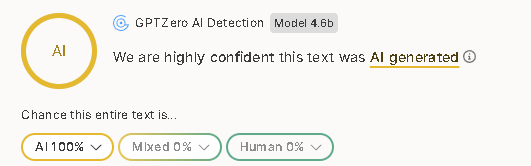
bump, good thread
 
  • Love it
Reactions: Seth Walsh
we making it to oxbridge with this one
 
  • Love it
Reactions: Seth Walsh
bump - making my last ever social class thread as we speak - after that; no more.
 

Similar threads

Seth Walsh
Replies
8
Views
105
ase
ase
2s2f
Replies
23
Views
121
Orka
Orka
Seth Walsh
Replies
2
Views
67
Seth Walsh
Seth Walsh
Seth Walsh
Replies
8
Views
175
Seth Walsh
Seth Walsh

Users who are viewing this thread

Back
Top