


hooker
Iron
- Joined
- Aug 19, 2026
- Posts
- 3
- Reputation
- 0
CLASCOTERONE
(In depth guide on cb-03-01)
What is this topical and why is it 30% better and faster than tretinoin?


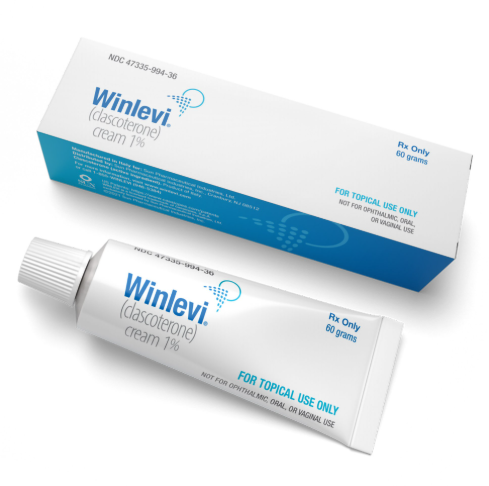
Clascoterone, also known by its development name CB-03-01 and sold under Winlevi, is a topical androgen-receptor inhibitor developed specifically to target one of the hormonal pathways involved in acne. It is a steroidal molecule whose chemical structure allows it to interact with the androgen receptor, the same receptor that naturally responds to hormones such as testosterone and dihydrotestosterone (DHT). Winlevi is an incredible choice for topical treatment of acne vulgaris. Unlike benzoyl peroxide, which primarily has antimicrobial and oxidative effects, or retinoids, which primarily affect follicular differentiation and keratinization, clascoterone's defining pharmacological action is blocking androgen signaling in the skin.
The reason this is relevant to acne is that the skin contains its own highly active hormonal environment. Sebaceous glands contain sebocytes, specialized cells responsible for producing sebum, and these cells contain androgen receptors. Androgens are an important regulator of sebaceous-gland biology. Testosterone can be converted locally into DHT by the enzyme 5α-reductase, and DHT is a particularly potent activator of the androgen receptor. This means that someone can have completely normal hormone levels in their bloodstream while their sebaceous glands are still responding strongly to normal androgen signaling. Acne isn't caused by having "too much testosterone" jfl ; the response of the pilosebaceous unit to androgen signaling is an important part of the disease.
Clascoterone was designed around this concept. Rather than trying to eliminate testosterone or DHT from the body, it attempts to interfere with their action at the androgen receptor in the skin. This is what makes it different from a systemic antiandrogen. It is essentially a tissue-targeted approach to a hormonal pathway.
The most important part of clascoterone's mechanism is the androgen receptor (AR). The androgen receptor is an intracellular protein that belongs to the nuclear-receptor. When an androgen like DHT enters an androgen responsive cell, it can bind to the receptor. The receptor then undergoes a structural change, and the activated androgen-receptor complex can ultimately influence gene transcription inside the nucleus. In sebocytes, androgen-receptor signaling influences biological programs associated with lipid production and inflammatory signaling.
The pathway can be simplified to:
Testosterone → DHT → androgen receptor → gene transcription → sebocyte activity → lipid/sebum production + inflammatory signaling
Clascoterone interrupts that pathway at the receptor:
Testosterone → DHT → ✕ androgen receptor
Clascoterone doesn't primarily destroy testosterone or DHT. Instead, its steroid like structure allows it to bind to the androgen receptor and compete with androgens for the receptor's binding site. Because clascoterone occupies the receptor without producing the normal androgenic activation, the androgen signal is reduced. Experimental studies have shown that clascoterone binds the androgen receptor, inhibits androgen-regulated transcription, and reduces androgen-dependent lipid and inflammatory-cytokine production in human sebocytes.
That is an important chemical distinction. Imagine the androgen receptor as a molecular switch. DHT is a molecule that fits into the switch and turns it on. Clascoterone is shaped sufficiently like a steroid ligand to occupy the switch, but instead of producing the normal "on" signal, it prevents the androgen from activating it. It therefore acts as a competitive androgen-receptor antagonist.
This matters because the sebaceous gland isn't simply a bag of oil. Sebocytes are living, metabolically active cells. Their behavior is influenced by hormones, inflammatory signals, and the local environment of the pilosebaceous unit. Androgen signaling can increase sebocyte activity and contribute to lipid production. Those lipids become part of sebum, which enters the follicle. Acne itself is a much more complicated process than just excess oil: it involves abnormal follicular keratinization, sebum changes, the follicular microbial environment involving Cutibacterium acnes, and inflammation. Clascoterone mainly intervenes in the androgen-dependent component of that system rather than directly killing C. acnes or directly removing a keratin plug.
There is also evidence that androgen signaling affects inflammatory activity in sebocytes. Experimental work has shown that clascoterone can reduce androgen-regulated inflammatory cytokine production as well as lipid production. Therefore, its potential effect isn't simply "less oil"; it can also interfere with some of the inflammatory signaling associated with androgen activity in the sebaceous gland.
Androgens are necessary throughout the body. Testosterone and DHT don't exist merely to influence acne; androgen signaling has important roles in many tissues. If you use a systemic antiandrogen, the drug enters the bloodstream and can potentially interfere with androgen receptors throughout the body. That's why systemic antiandrogen treatments can have much broader physiological consequences.
Clascoterone puts the androgen-receptor antagonist directly into the tissue where androgen signaling is contributing to the problem.
The skin is actually very well suited to this type of treatment because it is a biologically active organ containing the exact structures that matter for acne: the epidermis, hair follicles, sebaceous glands, immune cells, and local steroid-metabolizing enzymes. Topical administration allows the drug to start at the skin rather than having to travel through the gastrointestinal tract and bloodstream before reaching the pilosebaceous unit.
The basic pharmacological idea is:
topical application → skin → pilosebaceous unit → androgen receptor → local androgen blockade
rather than:
oral drug → gastrointestinal tract → bloodstream → entire body → skin
This is called local or tissue-directed pharmacology. The goal isn't to make the entire body antiandrogenic. The goal is to make the treated skin less responsive to androgen signaling.
The skin barrier is also important here. The outermost layer of the skin, the stratum corneum, is a highly effective barrier that regulates the movement of substances into and through the skin. A topical drug has to partition into this barrier and then diffuse through the skin to reach deeper structures. Clascoterone's steroidal and relatively lipophilic characteristics help it interact with the lipid-rich environment of the skin and penetrate into the tissue where androgen receptors are located. This is one reason the chemical properties of the molecule matter: it isn't enough for a compound to bind the androgen receptor in a laboratory; it has to physically reach the receptor in living skin.
Once clascoterone reaches the relevant cells, its high local concentration allows it to compete with endogenous androgens for androgen receptors. This creates the intended local concentration-to-systemic concentration advantage: the drug is concentrated at the tissue being treated while systemic exposure is comparatively lower than it would be with a medication designed to circulate throughout the body. Reviews describe clascoterone as having highly localized antiandrogenic activity, which is one of the major reasons it was developed as a topical rather than systemic antiandrogen.
Importantly, "localized" doesn't mean "zero absorption." Some drug can enter systemic circulation, and this is why clascoterone still has safety warnings. But pharmacologically, the objective is very different from deliberately changing the body's overall androgen state.
Another interesting aspect is that clascoterone is metabolized after absorption, including conversion to cortexolone, which contributes to its pharmacokinetic behavior. This metabolism is relevant to why researchers have been interested in it as a local antiandrogen rather than simply using a conventional systemic androgen-receptor blocker.
acnecels
The most common problems are local skin reactions, rather than the classic systemic effects associated with systemic antiandrogens. Reported reactions include redness/erythema, itching, burning, dryness, scaling, and sometimes swelling. Clinical trials found local reactions to be relatively uncommon and generally similar in frequency to those seen with the vehicle cream.
The more scientifically interesting safety issue is systemic absorption. Although clascoterone is designed to work locally, some of the drug can enter the bloodstream. The FDA labeling contains a warning about possible hypothalamic-pituitary-adrenal (HPA) axis suppression, which is a different hormonal system from the androgen receptor. In clinical pharmacology studies, biochemical evidence of HPA-axis suppression occurred in some participants and resolved after discontinuation. Reviews particularly note this finding in some adolescent participants.
Clascoterone is designed to have predominantly localized antiandrogenic activity in the skin, but systemic absorption can occur and certain systemic effects are possible.
Testosterone → local conversion to DHT → DHT enters androgen-responsive sebocytes → DHT binds the androgen receptor → androgen receptor becomes activated → receptor signaling changes gene transcription → increased androgen-dependent sebocyte activity/lipid production and inflammatory signaling → contribution to the acne-prone follicular environment.
Clascoterone essentially inserts itself into that chain at the receptor:
Clascoterone → enters skin → reaches sebocytes → binds androgen receptor → competes with DHT → reduces androgen-receptor activation → reduces downstream androgen-responsive signaling → potentially reduces sebaceous/lipid and inflammatory processes contributing to acne.
SOURCES:
(In depth guide on cb-03-01)
What is this topical and why is it 30% better and faster than tretinoin?
What is clascoterone?
Clascoterone, also known by its development name CB-03-01 and sold under Winlevi, is a topical androgen-receptor inhibitor developed specifically to target one of the hormonal pathways involved in acne. It is a steroidal molecule whose chemical structure allows it to interact with the androgen receptor, the same receptor that naturally responds to hormones such as testosterone and dihydrotestosterone (DHT). Winlevi is an incredible choice for topical treatment of acne vulgaris. Unlike benzoyl peroxide, which primarily has antimicrobial and oxidative effects, or retinoids, which primarily affect follicular differentiation and keratinization, clascoterone's defining pharmacological action is blocking androgen signaling in the skin.
The reason this is relevant to acne is that the skin contains its own highly active hormonal environment. Sebaceous glands contain sebocytes, specialized cells responsible for producing sebum, and these cells contain androgen receptors. Androgens are an important regulator of sebaceous-gland biology. Testosterone can be converted locally into DHT by the enzyme 5α-reductase, and DHT is a particularly potent activator of the androgen receptor. This means that someone can have completely normal hormone levels in their bloodstream while their sebaceous glands are still responding strongly to normal androgen signaling. Acne isn't caused by having "too much testosterone" jfl ; the response of the pilosebaceous unit to androgen signaling is an important part of the disease.
Clascoterone was designed around this concept. Rather than trying to eliminate testosterone or DHT from the body, it attempts to interfere with their action at the androgen receptor in the skin. This is what makes it different from a systemic antiandrogen. It is essentially a tissue-targeted approach to a hormonal pathway.
How does it work?
The most important part of clascoterone's mechanism is the androgen receptor (AR). The androgen receptor is an intracellular protein that belongs to the nuclear-receptor. When an androgen like DHT enters an androgen responsive cell, it can bind to the receptor. The receptor then undergoes a structural change, and the activated androgen-receptor complex can ultimately influence gene transcription inside the nucleus. In sebocytes, androgen-receptor signaling influences biological programs associated with lipid production and inflammatory signaling.
The pathway can be simplified to:
Testosterone → DHT → androgen receptor → gene transcription → sebocyte activity → lipid/sebum production + inflammatory signaling
Clascoterone interrupts that pathway at the receptor:
Testosterone → DHT → ✕ androgen receptor
Clascoterone doesn't primarily destroy testosterone or DHT. Instead, its steroid like structure allows it to bind to the androgen receptor and compete with androgens for the receptor's binding site. Because clascoterone occupies the receptor without producing the normal androgenic activation, the androgen signal is reduced. Experimental studies have shown that clascoterone binds the androgen receptor, inhibits androgen-regulated transcription, and reduces androgen-dependent lipid and inflammatory-cytokine production in human sebocytes.
That is an important chemical distinction. Imagine the androgen receptor as a molecular switch. DHT is a molecule that fits into the switch and turns it on. Clascoterone is shaped sufficiently like a steroid ligand to occupy the switch, but instead of producing the normal "on" signal, it prevents the androgen from activating it. It therefore acts as a competitive androgen-receptor antagonist.
This matters because the sebaceous gland isn't simply a bag of oil. Sebocytes are living, metabolically active cells. Their behavior is influenced by hormones, inflammatory signals, and the local environment of the pilosebaceous unit. Androgen signaling can increase sebocyte activity and contribute to lipid production. Those lipids become part of sebum, which enters the follicle. Acne itself is a much more complicated process than just excess oil: it involves abnormal follicular keratinization, sebum changes, the follicular microbial environment involving Cutibacterium acnes, and inflammation. Clascoterone mainly intervenes in the androgen-dependent component of that system rather than directly killing C. acnes or directly removing a keratin plug.
There is also evidence that androgen signaling affects inflammatory activity in sebocytes. Experimental work has shown that clascoterone can reduce androgen-regulated inflammatory cytokine production as well as lipid production. Therefore, its potential effect isn't simply "less oil"; it can also interfere with some of the inflammatory signaling associated with androgen activity in the sebaceous gland.
Why is targeting the skin so much better?
Androgens are necessary throughout the body. Testosterone and DHT don't exist merely to influence acne; androgen signaling has important roles in many tissues. If you use a systemic antiandrogen, the drug enters the bloodstream and can potentially interfere with androgen receptors throughout the body. That's why systemic antiandrogen treatments can have much broader physiological consequences.
Clascoterone puts the androgen-receptor antagonist directly into the tissue where androgen signaling is contributing to the problem.
The skin is actually very well suited to this type of treatment because it is a biologically active organ containing the exact structures that matter for acne: the epidermis, hair follicles, sebaceous glands, immune cells, and local steroid-metabolizing enzymes. Topical administration allows the drug to start at the skin rather than having to travel through the gastrointestinal tract and bloodstream before reaching the pilosebaceous unit.
The basic pharmacological idea is:
topical application → skin → pilosebaceous unit → androgen receptor → local androgen blockade
rather than:
oral drug → gastrointestinal tract → bloodstream → entire body → skin
This is called local or tissue-directed pharmacology. The goal isn't to make the entire body antiandrogenic. The goal is to make the treated skin less responsive to androgen signaling.
The skin barrier is also important here. The outermost layer of the skin, the stratum corneum, is a highly effective barrier that regulates the movement of substances into and through the skin. A topical drug has to partition into this barrier and then diffuse through the skin to reach deeper structures. Clascoterone's steroidal and relatively lipophilic characteristics help it interact with the lipid-rich environment of the skin and penetrate into the tissue where androgen receptors are located. This is one reason the chemical properties of the molecule matter: it isn't enough for a compound to bind the androgen receptor in a laboratory; it has to physically reach the receptor in living skin.
Once clascoterone reaches the relevant cells, its high local concentration allows it to compete with endogenous androgens for androgen receptors. This creates the intended local concentration-to-systemic concentration advantage: the drug is concentrated at the tissue being treated while systemic exposure is comparatively lower than it would be with a medication designed to circulate throughout the body. Reviews describe clascoterone as having highly localized antiandrogenic activity, which is one of the major reasons it was developed as a topical rather than systemic antiandrogen.
Importantly, "localized" doesn't mean "zero absorption." Some drug can enter systemic circulation, and this is why clascoterone still has safety warnings. But pharmacologically, the objective is very different from deliberately changing the body's overall androgen state.
Another interesting aspect is that clascoterone is metabolized after absorption, including conversion to cortexolone, which contributes to its pharmacokinetic behavior. This metabolism is relevant to why researchers have been interested in it as a local antiandrogen rather than simply using a conventional systemic androgen-receptor blocker.
Who is it for?
acnecels
Side effects
The most common problems are local skin reactions, rather than the classic systemic effects associated with systemic antiandrogens. Reported reactions include redness/erythema, itching, burning, dryness, scaling, and sometimes swelling. Clinical trials found local reactions to be relatively uncommon and generally similar in frequency to those seen with the vehicle cream.
The more scientifically interesting safety issue is systemic absorption. Although clascoterone is designed to work locally, some of the drug can enter the bloodstream. The FDA labeling contains a warning about possible hypothalamic-pituitary-adrenal (HPA) axis suppression, which is a different hormonal system from the androgen receptor. In clinical pharmacology studies, biochemical evidence of HPA-axis suppression occurred in some participants and resolved after discontinuation. Reviews particularly note this finding in some adolescent participants.
Clascoterone is designed to have predominantly localized antiandrogenic activity in the skin, but systemic absorption can occur and certain systemic effects are possible.
The entire mechanism in one chain
Testosterone → local conversion to DHT → DHT enters androgen-responsive sebocytes → DHT binds the androgen receptor → androgen receptor becomes activated → receptor signaling changes gene transcription → increased androgen-dependent sebocyte activity/lipid production and inflammatory signaling → contribution to the acne-prone follicular environment.
Clascoterone essentially inserts itself into that chain at the receptor:
Clascoterone → enters skin → reaches sebocytes → binds androgen receptor → competes with DHT → reduces androgen-receptor activation → reduces downstream androgen-responsive signaling → potentially reduces sebaceous/lipid and inflammatory processes contributing to acne.
SOURCES:


