

Voicemaxxing guide for males from a choir singer!

Disclaimer: This guide is designed for males, specifically those who have some understanding of musical tone notation and nomenclature, and can at least recreate a melody by humming (no nonmusical mortals will understand and benefit from this guide).


Introduction
Unless you're a singer and you know better for yourself - YOU NEED A DEEP VOICE. A deep and resonant voice is naturally seen by both genders as dominant and masculine. While making friends in a new environment or talking to a girl you just met, people pay more attention to your voice than to what words come out of your mouth. Having a good voice can make anything you talk about interesting, it doesn't matter if you're giving a speech, talking with your friends, or trying to make the one fall in love with you. Imagine a chad looking fabulous, but the moment he opens his mouth everyone bursts in laughter because of his weak, high voice.

Saying briefly: Deep voice = dominance, masculinity; High voice = weakness, femininity.

Basics
Some people use a wierd scale made up by the BP community (voicecell, deep voice chad etc.), but it's basically bullshit. Why create another scale when one literally has been there for centuries?

Official male voice classification (only those for voicemaxxing needs):
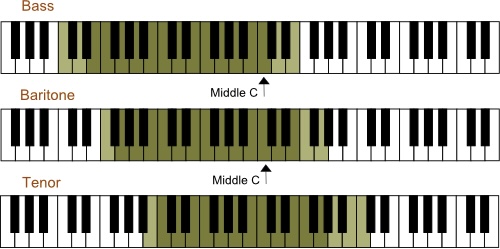
  • Tenor - high male voice. Great for singing but ass for seductive or dominant talking. Ranges from C3 to C5 (130.81Hz - 523.25Hz). Examples: Bruno Mars, Freddie Mercury. Video: Luciano Pavarotti (THE GOAT!) (skip to 2:11)
  • Baritone - medium voice, and the most common one. G2 - G4 (~98Hz - 392Hz). Examples: Elvis Presley, Kurt Cobain. Video: Andrey Zhilikhovsky (skip to 4:14)
  • Bass - the low, deep voice. Starting to get masculine here. A bass’ range is around D2 - D4 (73.42Hz - 293.66Hz). Examples: Avi Kaplan, Geoff Castellucci. Video: William Thomas (skip to 2:43)
  • Basso profondo (a.k.a. oktavist) - the deepest of all voices. Basically the chad when it comes to voicemaxxing. Almost only found in slavic countries, mostly Russia. A profondo’s range is not defined specifically, because it really depends on how skilled the singer is, however I’d say the range is something like F1 - F3 (43.65Hz - 174.61Hz). Examples: Vladimir Pasyukov, Glenn Miller, Vladimir Miller, Ioannis Tsoumaris, Krzysztof Ratajski. Video: Oktavists from ”The Orthodox Singers” (skip to 2:43, volume up!)

IMG 7919

Know your voice
Before changing anything, you need to identify your voice type:
- Firstly, take any instrument you have (preferably piano) or a tuner.
- Secondly, start singing a bit loudly from your comfortable range, going down in semitones while playing the notes or actively checking them if you’re using a tuner. Keep your throat relaxed and don’t strain it! Remember the lowest note you can sing with no major decrease in volume. You must use your chest voice, you can’t do fry (explanation in video below)

- Lastly, do the same but going up. Still remember about relaxing your voice, rather than forcing it to go up. You must still use your chest voice, you mustn’t use head voice or falsetto.


Now that you have your voice range, check which one of the male voice type ranges is the closest to yours. Look more at the lowest note than the highest.

Another thing to do to know your voice is record yourself singing songs (out loud), reading or just talking, then listen to it carefully. It might feel weird to hear your own voice recorded, it may sound higher than you hear yourself. That’s because when you speak, your ear collects sound waves of your speech primarily from your skull vibrating. Bone transfers low frequencies better, so you hear your voice a little bit more resonant and deeper than it actually is. That’s the case for everyone, so don’t fret, you’ll get used to it in no time.


Realistic goals
Now that you know your voice well, you should know what you want to achieve. You can’t become a profondo overnight, a realistic expectation for lowering your voice would be one voice type down (bari to bass, tenor to bari etc.) in a year, so don’t expect becoming el macho in a week.

How to train?
Before any training, you need to prepare:
  • Sleep a lot - often overlooked, but crucial when it comes to lowering and caring for your voice. Notice how your voice is the deepest in the morning, that’s because of letting it rest while you sleep. It also works long term, making sure that your vocal chords are well rested.
  • Drink a lot of water - also necessary for a healthy throat, and good conditioned vocal folds. I must disappoint you however, you can’t have ice cold water the whole time because it can irritate your throat. Room temperature water is preferred.
  • Boost your testosterone - especially during puberty. Your teen years are the time when your whole vocal apparatus changes the most, so we don’t want to waste this time, do we? Testosterone makes your larynx grow bigger, which means that more resonant and deeper notes are possible.
  • Breathe and speak with your diaphragm, rather than your upper lungs - it makes your voice sound more relaxed and sexy, while giving you more room for resonance and a little deeper vocal range.
  • Relax your muscles - stretch primarily your neck, chest, and shoulders, though you must stretch and warm up your whole body. Released tension from muscles = released tension from your voice.
Once you’ve introduced these habits to yourself, you can begin training:


Aside from what’s said in the video, play with your voice. Try to sing lower and lower every day. Explore your lower registers.


Facts
Your voice develops primarily until your puberty ends. Though it never stops changing.

The youngest oktavist is ~38 years of age (from what i heard), so it’s never too late.

Treat your voice like a muscle - train it and let it rest.


The taller you are, and the longer your neck is, the more potential you have for a deep voice.

Regular smoking or vaping will kill your voice.

Even though alcohol can deepen your voice, it destroys its timbre and makes you sound like a hobo so it’s not worth it.


Hearing is the second most dominant sense in humans, so why overlook how you sound to others?
 
  • +1
Reactions: Whatever, Sabork and jliftsbrah
Disclaimer: This guide is designed for males, specifically those who have some understanding of musical tone notation and nomenclature, and can at least recreate a melody by humming (no nonmusical mortals will understand and benefit from this guide).


Introduction
Unless you're a singer and you know better for yourself - YOU NEED A DEEP VOICE. A deep and resonant voice is naturally seen by both genders as dominant and masculine. While making friends in a new environment or talking to a girl you just met, people pay more attention to your voice than to what words come out of your mouth. Having a good voice can make anything you talk about interesting, it doesn't matter if you're giving a speech, talking with your friends, or trying to make the one fall in love with you. Imagine a chad looking fabulous, but the moment he opens his mouth everyone bursts in laughter because of his weak, high voice.

Saying briefly: Deep voice = dominance, masculinity; High voice = weakness, femininity.

Basics
Some people use a wierd scale made up by the BP community (voicecell, deep voice chad etc.), but it's basically bullshit. Why create another scale when one literally has been there for centuries?

Official male voice classification (only those for voicemaxxing needs):
  • Tenor - high male voice. Great for singing but ass for seductive or dominant talking. Ranges from C3 to C5 (130.81Hz - 523.25Hz). Examples: Bruno Mars, Freddie Mercury. Video: Luciano Pavarotti (THE GOAT!) (skip to 2:11)
  • Baritone - medium voice, and the most common one. G2 - G4 (~98Hz - 392Hz). Examples: Elvis Presley, Kurt Cobain. Video: Andrey Zhilikhovsky (skip to 4:14)
  • Bass - the low, deep voice. Starting to get masculine here. A bass’ range is around D2 - D4 (73.42Hz - 293.66Hz). Examples: Avi Kaplan, Geoff Castellucci. Video: William Thomas (skip to 2:43)
  • Basso profondo (a.k.a. oktavist) - the deepest of all voices. Basically the chad when it comes to voicemaxxing. Almost only found in slavic countries, mostly Russia. A profondo’s range is not defined specifically, because it really depends on how skilled the singer is, however I’d say the range is something like F1 - F3 (43.65Hz - 174.61Hz). Examples: Vladimir Pasyukov, Glenn Miller, Vladimir Miller, Ioannis Tsoumaris, Krzysztof Ratajski. Video: Oktavists from ”The Orthodox Singers” (skip to 2:43, volume up!)

View attachment 5014537
Know your voice
Before changing anything, you need to identify your voice type:
- Firstly, take any instrument you have (preferably piano) or a tuner.
- Secondly, start singing a bit loudly from your comfortable range, going down in semitones while playing the notes or actively checking them if you’re using a tuner. Keep your throat relaxed and don’t strain it! Remember the lowest note you can sing with no major decrease in volume. You must use your chest voice, you can’t do fry (explanation in video below)

- Lastly, do the same but going up. Still remember about relaxing your voice, rather than forcing it to go up. You must still use your chest voice, you mustn’t use head voice or falsetto.


Now that you have your voice range, check which one of the male voice type ranges is the closest to yours. Look more at the lowest note than the highest.

Another thing to do to know your voice is record yourself singing songs (out loud), reading or just talking, then listen to it carefully. It might feel weird to hear your own voice recorded, it may sound higher than you hear yourself. That’s because when you speak, your ear collects sound waves of your speech primarily from your skull vibrating. Bone transfers low frequencies better, so you hear your voice a little bit more resonant and deeper than it actually is. That’s the case for everyone, so don’t fret, you’ll get used to it in no time.


Realistic goals
Now that you know your voice well, you should know what you want to achieve. You can’t become a profondo overnight, a realistic expectation for lowering your voice would be one voice type down (bari to bass, tenor to bari etc.) in a year, so don’t expect becoming el macho in a week.

How to train?
Before any training, you need to prepare:
  • Sleep a lot - often overlooked, but crucial when it comes to lowering and caring for your voice. Notice how your voice is the deepest in the morning, that’s because of letting it rest while you sleep. It also works long term, making sure that your vocal chords are well rested.
  • Drink a lot of water - also necessary for a healthy throat, and good conditioned vocal folds. I must disappoint you however, you can’t have ice cold water the whole time because it can irritate your throat. Room temperature water is preferred.
  • Boost your testosterone - especially during puberty. Your teen years are the time when your whole vocal apparatus changes the most, so we don’t want to waste this time, do we? Testosterone makes your larynx grow bigger, which means that more resonant and deeper notes are possible.
  • Breathe and speak with your diaphragm, rather than your upper lungs - it makes your voice sound more relaxed and sexy, while giving you more room for resonance and a little deeper vocal range.
  • Relax your muscles - stretch primarily your neck, chest, and shoulders, though you must stretch and warm up your whole body. Released tension from muscles = released tension from your voice.
Once you’ve introduced these habits to yourself, you can begin training:


Aside from what’s said in the video, play with your voice. Try to sing lower and lower every day. Explore your lower registers.


Facts
Your voice develops primarily until your puberty ends. Though it never stops changing.

The youngest oktavist is ~38 years of age (from what i heard), so it’s never too late.

Treat your voice like a muscle - train it and let it rest.


The taller you are, and the longer your neck is, the more potential you have for a deep voice.

Regular smoking or vaping will kill your voice.

Even though alcohol can deepen your voice, it destroys its timbre and makes you sound like a hobo so it’s not worth it.


Hearing is the second most dominant sense in humans, so why overlook how you sound to others?

dnr, just blast test
 
  • JFL
  • +1
Reactions: moliuny, davidlaidisme67 and cursed4channer
im not reading allat
 
  • JFL
Reactions: davidlaidisme67
Disclaimer: This guide is designed for males, specifically those who have some understanding of musical tone notation and nomenclature, and can at least recreate a melody by humming (no nonmusical mortals will understand and benefit from this guide).


Introduction
Unless you're a singer and you know better for yourself - YOU NEED A DEEP VOICE. A deep and resonant voice is naturally seen by both genders as dominant and masculine. While making friends in a new environment or talking to a girl you just met, people pay more attention to your voice than to what words come out of your mouth. Having a good voice can make anything you talk about interesting, it doesn't matter if you're giving a speech, talking with your friends, or trying to make the one fall in love with you. Imagine a chad looking fabulous, but the moment he opens his mouth everyone bursts in laughter because of his weak, high voice.

Saying briefly: Deep voice = dominance, masculinity; High voice = weakness, femininity.

Basics
Some people use a wierd scale made up by the BP community (voicecell, deep voice chad etc.), but it's basically bullshit. Why create another scale when one literally has been there for centuries?

Official male voice classification (only those for voicemaxxing needs):
  • Tenor - high male voice. Great for singing but ass for seductive or dominant talking. Ranges from C3 to C5 (130.81Hz - 523.25Hz). Examples: Bruno Mars, Freddie Mercury. Video: Luciano Pavarotti (THE GOAT!) (skip to 2:11)
  • Baritone - medium voice, and the most common one. G2 - G4 (~98Hz - 392Hz). Examples: Elvis Presley, Kurt Cobain. Video: Andrey Zhilikhovsky (skip to 4:14)
  • Bass - the low, deep voice. Starting to get masculine here. A bass’ range is around D2 - D4 (73.42Hz - 293.66Hz). Examples: Avi Kaplan, Geoff Castellucci. Video: William Thomas (skip to 2:43)
  • Basso profondo (a.k.a. oktavist) - the deepest of all voices. Basically the chad when it comes to voicemaxxing. Almost only found in slavic countries, mostly Russia. A profondo’s range is not defined specifically, because it really depends on how skilled the singer is, however I’d say the range is something like F1 - F3 (43.65Hz - 174.61Hz). Examples: Vladimir Pasyukov, Glenn Miller, Vladimir Miller, Ioannis Tsoumaris, Krzysztof Ratajski. Video: Oktavists from ”The Orthodox Singers” (skip to 2:43, volume up!)

View attachment 5014537
Know your voice
Before changing anything, you need to identify your voice type:
- Firstly, take any instrument you have (preferably piano) or a tuner.
- Secondly, start singing a bit loudly from your comfortable range, going down in semitones while playing the notes or actively checking them if you’re using a tuner. Keep your throat relaxed and don’t strain it! Remember the lowest note you can sing with no major decrease in volume. You must use your chest voice, you can’t do fry (explanation in video below)

- Lastly, do the same but going up. Still remember about relaxing your voice, rather than forcing it to go up. You must still use your chest voice, you mustn’t use head voice or falsetto.


Now that you have your voice range, check which one of the male voice type ranges is the closest to yours. Look more at the lowest note than the highest.

Another thing to do to know your voice is record yourself singing songs (out loud), reading or just talking, then listen to it carefully. It might feel weird to hear your own voice recorded, it may sound higher than you hear yourself. That’s because when you speak, your ear collects sound waves of your speech primarily from your skull vibrating. Bone transfers low frequencies better, so you hear your voice a little bit more resonant and deeper than it actually is. That’s the case for everyone, so don’t fret, you’ll get used to it in no time.


Realistic goals
Now that you know your voice well, you should know what you want to achieve. You can’t become a profondo overnight, a realistic expectation for lowering your voice would be one voice type down (bari to bass, tenor to bari etc.) in a year, so don’t expect becoming el macho in a week.

How to train?
Before any training, you need to prepare:
  • Sleep a lot - often overlooked, but crucial when it comes to lowering and caring for your voice. Notice how your voice is the deepest in the morning, that’s because of letting it rest while you sleep. It also works long term, making sure that your vocal chords are well rested.
  • Drink a lot of water - also necessary for a healthy throat, and good conditioned vocal folds. I must disappoint you however, you can’t have ice cold water the whole time because it can irritate your throat. Room temperature water is preferred.
  • Boost your testosterone - especially during puberty. Your teen years are the time when your whole vocal apparatus changes the most, so we don’t want to waste this time, do we? Testosterone makes your larynx grow bigger, which means that more resonant and deeper notes are possible.
  • Breathe and speak with your diaphragm, rather than your upper lungs - it makes your voice sound more relaxed and sexy, while giving you more room for resonance and a little deeper vocal range.
  • Relax your muscles - stretch primarily your neck, chest, and shoulders, though you must stretch and warm up your whole body. Released tension from muscles = released tension from your voice.
Once you’ve introduced these habits to yourself, you can begin training:


Aside from what’s said in the video, play with your voice. Try to sing lower and lower every day. Explore your lower registers.


Facts
Your voice develops primarily until your puberty ends. Though it never stops changing.

The youngest oktavist is ~38 years of age (from what i heard), so it’s never too late.

Treat your voice like a muscle - train it and let it rest.


The taller you are, and the longer your neck is, the more potential you have for a deep voice.

Regular smoking or vaping will kill your voice.

Even though alcohol can deepen your voice, it destroys its timbre and makes you sound like a hobo so it’s not worth it.


Hearing is the second most dominant sense in humans, so why overlook how you sound to others?

Good shit brah
 
  • +1
Reactions: hubi and Sabork
W thread, good example of this

 
  • +1
Reactions: jliftsbrah and hubi
  • +1
Reactions: jliftsbrah and hubi

Similar threads

eplejuice
Replies
12
Views
124
Monsieur Charismeur
Monsieur Charismeur
81xa
Replies
7
Views
416
elhipnotista
E
dragons6422
Replies
3
Views
61
jony🇮🇳🖤
jony🇮🇳🖤
buccalfatremoval
Replies
26
Views
156
ascendingpath
ascendingpath
nothingforsale
Replies
2
Views
37
Vrowding
Vrowding

Users who are viewing this thread

Back
Top