Seth Walsh

Iconoclast
Contributor
- Joined
- Jan 12, 2020
- Posts
- 11,075
- Reputation
- 22,654
The system taxes movement more than ownership.
If you:
…you touch the tax system constantly.

But if you:
…the state struggles to tax you efficiently without forcing liquidation. The illusion of physical freedom and independence are often paradoxical to real wealth.


So two people can have identical economic reality growth, but radically different tax outcomes depending on structure.
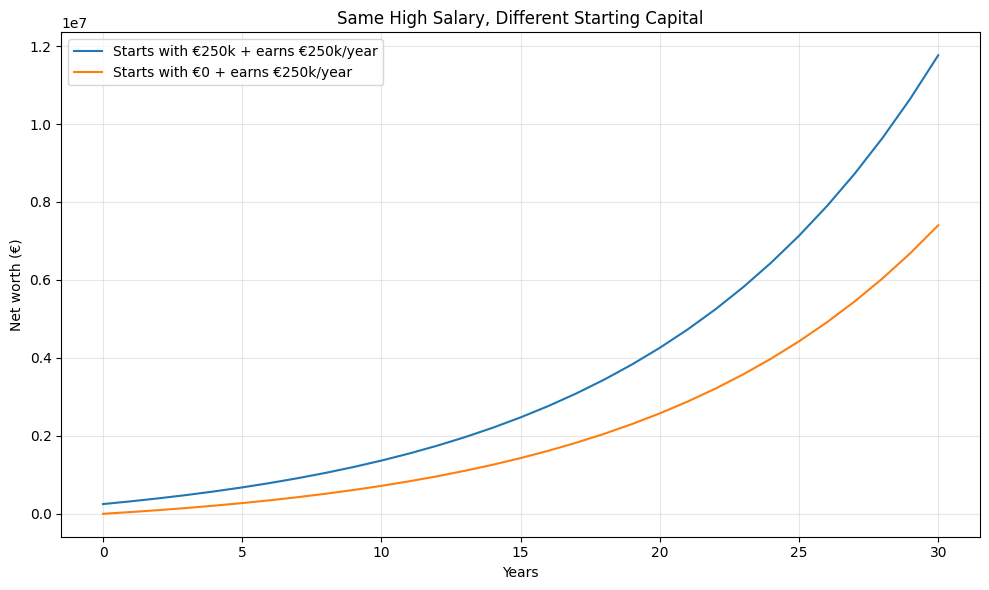
Example:
That gap compounds recursively.
Then another layer appears:
Assets themselves become collateral generators.
Once collateral is accepted:

At high enough scale:
The average person thinks:

The ownership class thinks:

Different game entirely.
If you:
- work
- trade time
- realize gains
- rotate capital
- sell to survive
- rent
- consume from income
…you touch the tax system constantly.
But if you:
- already own appreciating assets
- never sell
- borrow instead (borrow against the appreciating assets to fund lifestyle, 0 income tax)
- live off collateralized liquidity
- hold through decades
- die with the assets, heirs inherit on step up basis and capital gains tax disappear forever
…the state struggles to tax you efficiently without forcing liquidation. The illusion of physical freedom and independence are often paradoxical to real wealth.
So two people can have identical economic reality growth, but radically different tax outcomes depending on structure.
Example:
| Person A | Person B |
|---|---|
| €250k salary | €250k stock appreciation |
| taxed yearly | untaxed unrealized gain |
| must liquidate for spending | borrows against assets |
| exposed to rent inflation | owns appreciating collateral |
| starts compounding after tax | compounds pre-tax |
Then another layer appears:
Assets themselves become collateral generators.
Once collateral is accepted:
- you stop needing cash flow
- banks compete to lend to you
- volatility becomes borrowable energy
- liquidity appears without sale
At high enough scale:
- asset appreciation creates borrowing capacity
- borrowing capacity preserves ownership
- preserved ownership creates more appreciation
- appreciation creates political protection
- political protection stabilizes the system benefiting owners
- dynastic wealth
- asset inflation
- housing capture
- financialization
- ownership aristocracies
The average person thinks:
“I need higher income.”
The ownership class thinks:
“How do I avoid ever interrupting compounding?”
Different game entirely.